The Chicago Car Crash Crisis: 112,006 and Counting
In 2024, Chicago recorded 112,006 car crashes — the third-highest year since 2015. Those crashes produced a record-breaking 25,692 injuries, representing an 11.6% increase in injury crashes and a 12.9% increase in total injuries compared to previous years. Statewide, Illinois saw 303,913 total crashes and 219 pedestrian fatalities — 38 of them in Chicago alone.
Every day, more than 300 car crashes occur on Chicago streets. The Dan Ryan Expressway, Kennedy Expressway, Eisenhower Expressway, and Lake Shore Drive function as daily injury production lines. Intersections like Madison and Halsted in the Loop, Cicero and Irving Park on the Northwest Side, and Stony Island and 79th on the South Side account for disproportionate collision volumes. Pedestrian fatalities surged 9.5% statewide. (For how AI is transforming PI intake across the Midwest, see our coverage of Indianapolis and how James — the first-ever PI AI Employee is handling 16 roles at a personal injury firm.)
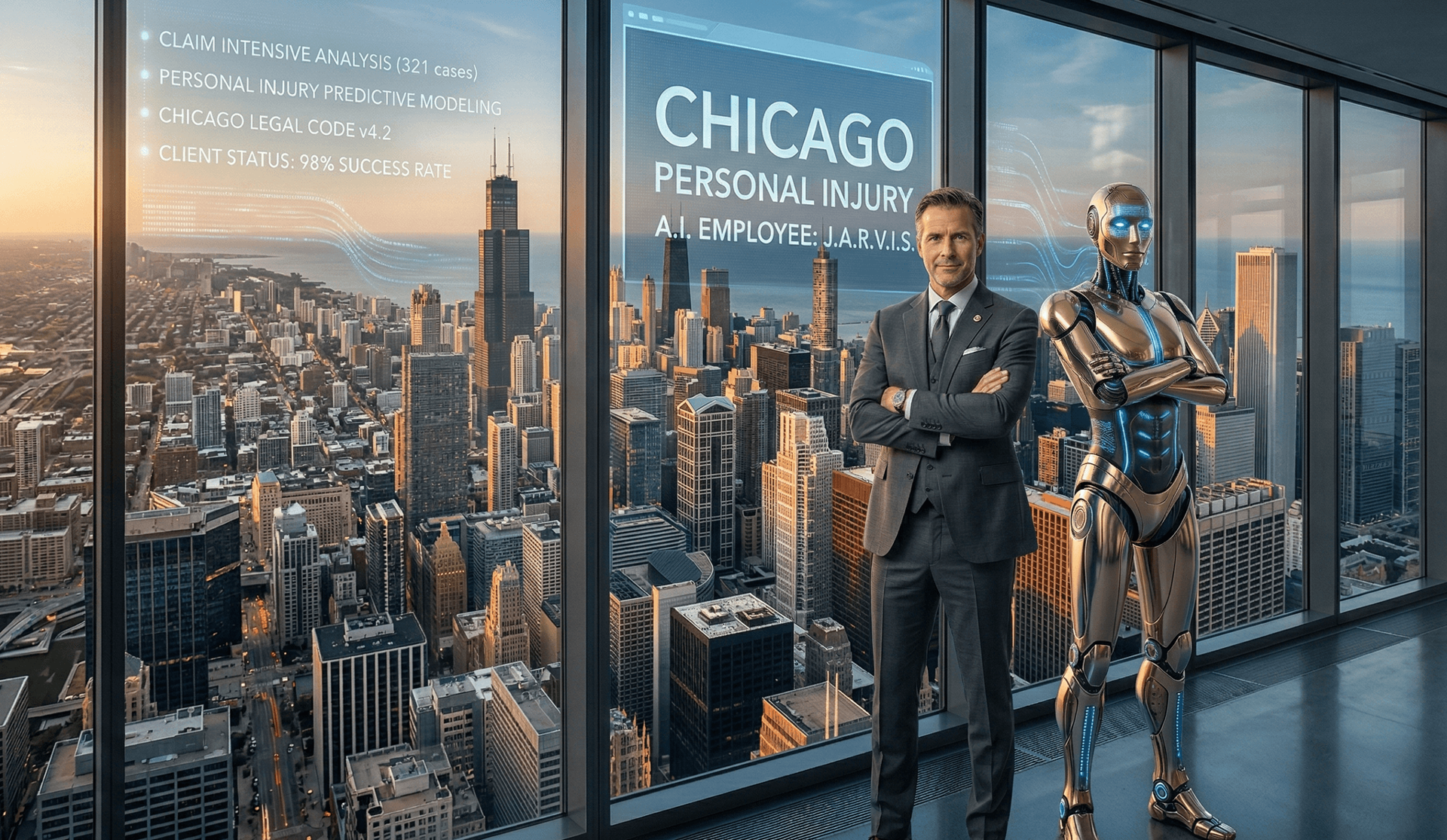
For Chicago personal injury attorneys, this data represents both extraordinary opportunity and crushing pressure. Opportunity because the sheer volume of accidents creates a massive potential client base. Pressure because every other PI firm in Chicago — and there are thousands — sees the same numbers and competes for the same cases. An AI Employee built for Chicago PI law changes the math entirely.
The Dangerous Intersection Effect
Illinois' 50% Comparative Negligence Trap
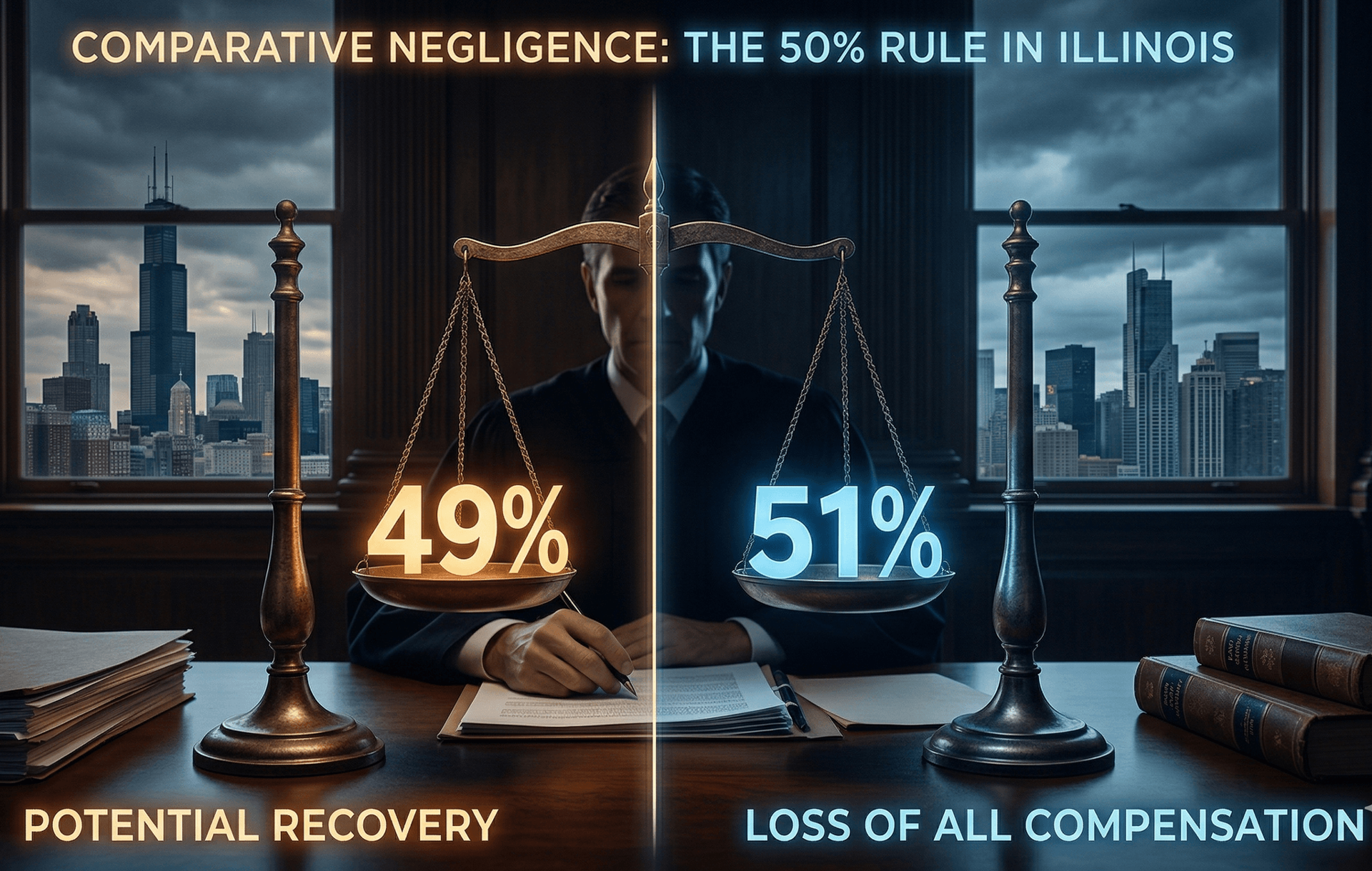
Here is the legal reality that makes Chicago PI practice uniquely challenging: In 2023, Illinois reformed its tort law, shifting from pure comparative negligence to a modified comparative negligence rule with a 50% bar. If your client is found 50% or more at fault for their injuries, they recover nothing. Zero. The case is dead.
This is not academic. This is the difference between a $500,000 settlement and a $0 recovery. Insurance companies know this math cold. Their adjusters are trained to shift maximum fault to the injured party. Every percentage point of fault they assign to your client is money saved — and at 50%, they save everything. See how James — the first-ever PI AI Employee handles fault screening in real time. The Illinois comparative negligence rule creates a high-stakes environment where intake quality determines case outcomes.
The Fault Calculation Math
Even when your client is under the 50% bar, their recovery is reduced proportionally:
This creates a brutal intake reality. Every case that comes through your door needs immediate liability assessment. Is this a clear liability case where the other driver ran a red light on Michigan Avenue? Or is this a comparative negligence minefield where your client was speeding on Lake Shore Drive, or texting on the Kennedy, or jaywalking across State Street? Getting this assessment wrong at intake has consequences that echo through the entire case.
The 2023 Reform Changed Everything
The Intake Arms Race: Speed Wins Cases
Chicago's personal injury market is the most saturated in the Midwest. 14,000+ licensed attorneys practice in Cook County. Billboards for PI firms line every expressway — the Kennedy, the Dan Ryan, the Eisenhower, I-290, I-294. TV commercials run during every Cubs, Bears, Bulls, and Blackhawks broadcast. Bus wraps cover CTA routes across every neighborhood. Google Ads for “Chicago car accident lawyer” cost $50-$100+ per click.
All that marketing spend funnels leads to one place: the phone. And the data is unequivocal: the first firm to respond to an inquiry wins the case approximately 67% of the time. Not the best firm. Not the most experienced. Not the one with the biggest verdict history. The first firm that makes the potential client feel heard and represented. In Chicago, where a Saturday night Dan Ryan crash victim is calling three firms simultaneously, the one that answers in 2 seconds wins. The one that sends to voicemail loses — permanently.
The Chicago Commuter Problem
Chicago's geography creates specific intake patterns that punish firms with traditional business hours. The reverse commute — suburban residents driving into the city — produces morning rush hour crashes on inbound expressways between 6:30 and 9:00 AM. The evening outbound crush creates another accident peak from 4:30 to 7:30 PM. Weekend traffic on Lake Shore Drive, Michigan Avenue, and the expressway interchanges generates a steady stream of collisions when most firms have nobody answering.
An AI Employee does not recognize “business hours.” It answers the 6:30 AM call from someone rear-ended on the inbound Kennedy. It handles the 7:45 PM call from a crash on the outbound Dan Ryan. It captures the Saturday afternoon Lake Shore Drive collision and the Sunday morning CTA bus accident on Ashland. Every call. Every time. No voicemail. No missed opportunities. No hold music.
The Dan Ryan at Midnight
Saturday night. 11:23 PM. A 28-year-old nurse finishing her shift at University of Chicago Medical Center is rear-ended at high speed on the Dan Ryan near 95th Street. The other driver was intoxicated — clear liability. She is in the back of an ambulance with whiplash, a suspected herniated disc, and enough adrenaline to think about calling a lawyer. She opens Google on her phone and searches “Chicago car accident lawyer.” She calls three firms.
Voicemail. “Thank you for calling. Our office hours are Monday through Friday, 9 AM to 5 PM. Please leave a message and we will return your call on the next business day.”
She does not leave a message. 80% of callers don't. By Monday morning, when the paralegal checks voicemail, this nurse has already signed with another firm. Revenue lost: $15,000-$50,000+ in contingency fees. The firm will never know she called.
An operator answers. Takes her name, phone number, and a one-sentence description: “Car accident on the Dan Ryan.” Emails the message to the firm. Says someone will call her back.
Nobody calls back until Monday at 10 AM — 34 hours later. She's already signed with Firm C. The answering service cost the firm $300/month and produced nothing.
The AI Employee answers in 1.8 seconds. It speaks with warmth and professionalism. It learns she was rear-ended by an intoxicated driver. It collects accident location, time, police report number, ambulance destination, insurance information, and witness details. It screens for comparative negligence — she was stopped in traffic, zero fault indicators. High-viability case. It schedules a consultation for Sunday morning at 10 AM.
It triggers evidence preservation: spoliation letter to the other driver's insurance company, surveillance footage request to businesses near 95th and the Dan Ryan, and EDR data preservation demand. It texts the senior partner with a case summary.
11:31 PM — 8 minutes after the call started. Full intake complete. Evidence preservation underway. Consultation booked. Client feels heard, represented, and relieved. Total time from accident to signed retainer: under 15 minutes. Firms A and B never had a chance.
This is not a technology demo. This scenario plays out in Chicago every night. The Dan Ryan alone accounts for thousands of crashes per year. The Kennedy, the Eisenhower, Lake Shore Drive — they all produce after-hours cases that go to whichever firm answers. This is exactly what Delventhal Law Office experienced when they deployed James — their AI Employee handles after-hours intake, medical records analysis, lead scoring, and 13 other roles. An AI Employee ensures that firm is yours. Every time.
What an AI Employee Does for Chicago PI Firms
An AI Employee for a Chicago personal injury firm is not a chatbot. It is a purpose-built system trained on Illinois personal injury law, integrated with your case management software, and capable of handling the entire intake-to-investigation workflow. It runs on dedicated hardware installed at your office — your client data never leaves your building.
24/7 Live Intake
- Answers every call in under 2 seconds — no voicemail, no hold
- Natural, empathetic conversations — callers cannot tell it is AI
- Collects accident details, injuries, police report, insurance, witnesses
- Identifies high-liability cases for immediate attorney review
- Schedules consultations based on your real-time availability
Liability Assessment
- Screens for Illinois comparative negligence issues (50% bar)
- Estimates fault percentage based on structured intake questions
- Anticipates insurance company defenses
- Generates case viability scores — high, medium, low
- Flags cases near the 50% threshold for priority attorney review
Chicago Local Knowledge
- Recognizes dangerous intersections by name and cross-street
- Knows Cook County court procedures and filing requirements
- Connected to Chicago trauma center and medical provider networks
- Understands CPD reporting protocols and FOIA timelines
- Identifies multi-defendant scenarios (trucking, premises, product)
Evidence Preservation
- Triggers spoliation letters within hours of intake
- Requests surveillance footage before 30-day deletion cycles
- Preserves dash cam and EDR data from all involved vehicles
- Collects and contacts witnesses immediately
- Coordinates with investigators for scene documentation
Multilingual Intake
- Full intake in English, Spanish, Polish, and Mandarin
- Native-level legal and medical terminology in each language
- Serves Chicago's diverse neighborhoods authentically
- Complete English-language case summary regardless of intake language
- Expands your firm's accessibility to underserved communities
Deadline & Follow-Up Management
- Calculates 2-year statute of limitations automatically
- Escalating reminders at 18, 21, and 23 months
- Client follow-up sequences for consultation no-shows
- Treatment status check-ins during active cases
- Complete audit trail for every interaction and deadline
All of these capabilities run simultaneously — powered by specialized sub-agents that divide and conquer like an AI C-suite. While the AI Employee is on a call with a new accident victim, it is also following up with a client who missed their consultation, checking statute of limitations deadlines, and preparing a case briefing from last night's intakes. And because it has persistent memory, it remembers every client, every case, every conversation — nothing falls through the cracks. See the full list of 98 AI Employee capabilities for the complete scope.
Instant Fault Assessment and Case Scoring
When a potential client calls, the AI Employee conducts a structured intake conversation engineered to assess liability under Illinois' comparative negligence framework. This is not a generic questionnaire. It is a decision-tree built on Illinois case law, designed to surface the information attorneys need to evaluate viability:
- Accident reconstruction. When, where, how. Road conditions. Weather. Traffic signals. Lane positions. Speed estimates. The AI builds a preliminary liability picture from the caller's account.
- Party identification. All drivers, passengers, pedestrians. Witnesses who stopped. Police responding officers. Citations issued. The AI identifies all potential defendants and third parties.
- Fault indicators. Traffic violations. Distracted driving signs. Speeding. Impairment. Failure to yield. The AI flags clear liability factors that strengthen your case.
- Comparative negligence screening. Was your client speeding? On their phone? Running late and changing lanes aggressively? The AI identifies every potential fault allocation issue the insurance company will raise.
- Evidence availability. Dash cams? Surveillance cameras at nearby businesses? Witnesses who stayed? Traffic cameras? The AI assesses evidentiary opportunities and triggers preservation.
- Case scoring. Based on all factors, the AI generates a viability score — high, medium, or low probability of successful recovery above the 50% bar.
The Human Approval Gate
Evidence Preservation: The 30-Day Clock
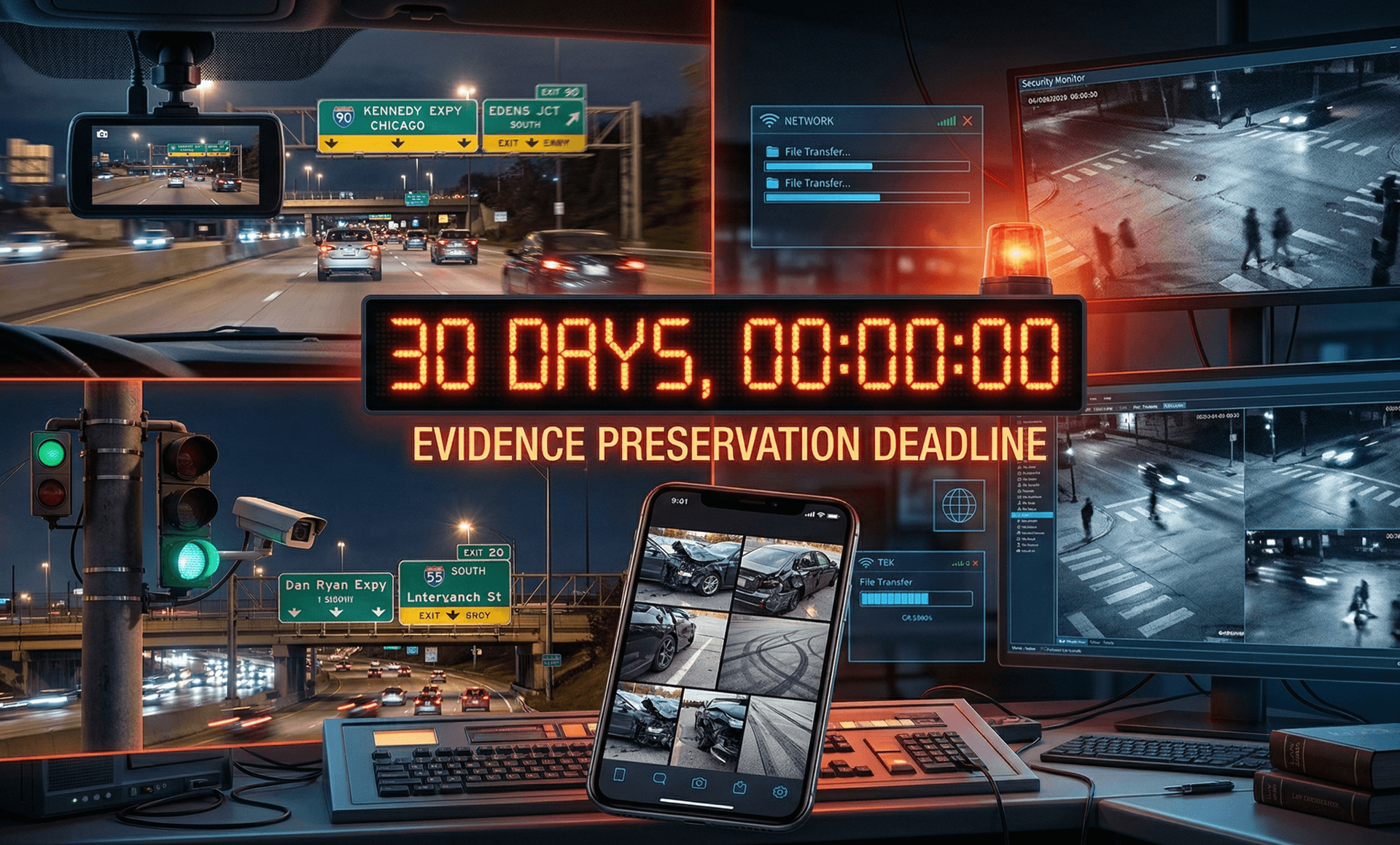
In Chicago PI cases, evidence has a brutally short shelf life. Surveillance footage from businesses near crash sites typically gets deleted on 30-day automatic cycles. Dash cam footage gets recorded over. Event data recorders can be reset. Witnesses become harder to locate as days turn into weeks. The police report captures a snapshot — not the full story.
The firm that moves fastest to preserve evidence builds the strongest cases. The firm that waits until Monday morning to start investigation has already lost ground. While your staff sleeps, the AI Employee is working through the night, triggering evidence preservation protocols within hours of the initial call — not days later when staff gets to it:
Spoliation Letters
Sent within 2 hours of intakeAutomatically generated and sent to insurance companies, demanding preservation of all evidence related to the crash — vehicle inspections, EDR data, adjuster notes, recorded statements.
Surveillance Footage Requests
Sent within 4 hours of intakeIdentifies businesses near the crash site with potential camera coverage — gas stations, restaurants, convenience stores, parking garages — and sends immediate preservation requests before the 30-day deletion cycle destroys the evidence.
Dash Cam & EDR Preservation
Included in spoliation letterDemands preservation of event data recorder information from all involved vehicles — speed, braking, steering inputs, airbag deployment. This data can prove or disprove fault claims definitively.
Witness Outreach
Initiated same day as intakeCollects contact information for all witnesses identified by the client and triggers immediate outreach — confirming their account, scheduling statements, and preserving their testimony while memory is fresh.
The AI Employee never forgets a deadline or a follow-up task. Every preservation request is tracked. Every response (or non-response) is documented. Every action creates an audit trail that strengthens your case and protects against malpractice exposure.
The Chicago Advantage: Local Knowledge
Chicago is not a generic market. It is a massive urban center with unique characteristics that directly affect personal injury practice. An AI Employee trained for Chicago PI work understands the geography, the institutions, and the patterns that outsiders miss.
Dangerous Intersections and Corridors
The AI recognizes high-risk locations and adjusts intake protocols accordingly:
- Madison and Halsted (The Loop): High pedestrian/bicycle conflict zone with documented safety deficiencies. Priority handling for pedestrian strikes — the location history strengthens the liability argument.
- Cicero and Irving Park (Northwest Side): Complex multi-way intersection with chronic crash history. Requires specific investigation protocols and traffic signal analysis.
- Stony Island and 79th (South Side): Major arterial with high-speed collisions. Frequently involves catastrophic injuries and multi-vehicle pileups.
- Lake Shore Drive S-Curve: High-speed corridor with geometric design challenges. Specific CPD reporting protocols and CDOT maintenance records are relevant to liability.
- Dan Ryan / I-94 interchanges: Construction zones, merging conflicts, and high commercial vehicle traffic. Trucking cases with Federal Motor Carrier Safety Regulations implications.
Trauma Centers and Medical Networks
The AI knows Chicago's Level I trauma centers — Northwestern Memorial, University of Chicago Medical Center, Rush University Medical Center, John H. Stroger Jr. Hospital (Cook County), Loyola University Medical Center, Advocate Christ Medical Center. It understands which facilities generate which types of records, how to request them, and the typical timelines for record production. For firms handling sensitive medical records, our security checklist details the encryption and access controls that protect client data.
Cook County Courts
The AI is trained on Cook County Circuit Court procedures, the Law Division's case management protocols, and the specific filing requirements that affect Chicago PI cases. It understands venue selection considerations, motion practice timelines, and the practical realities of litigating in the largest unified court system in the country.
Pilsen in Spanish, Jackowo in Polish
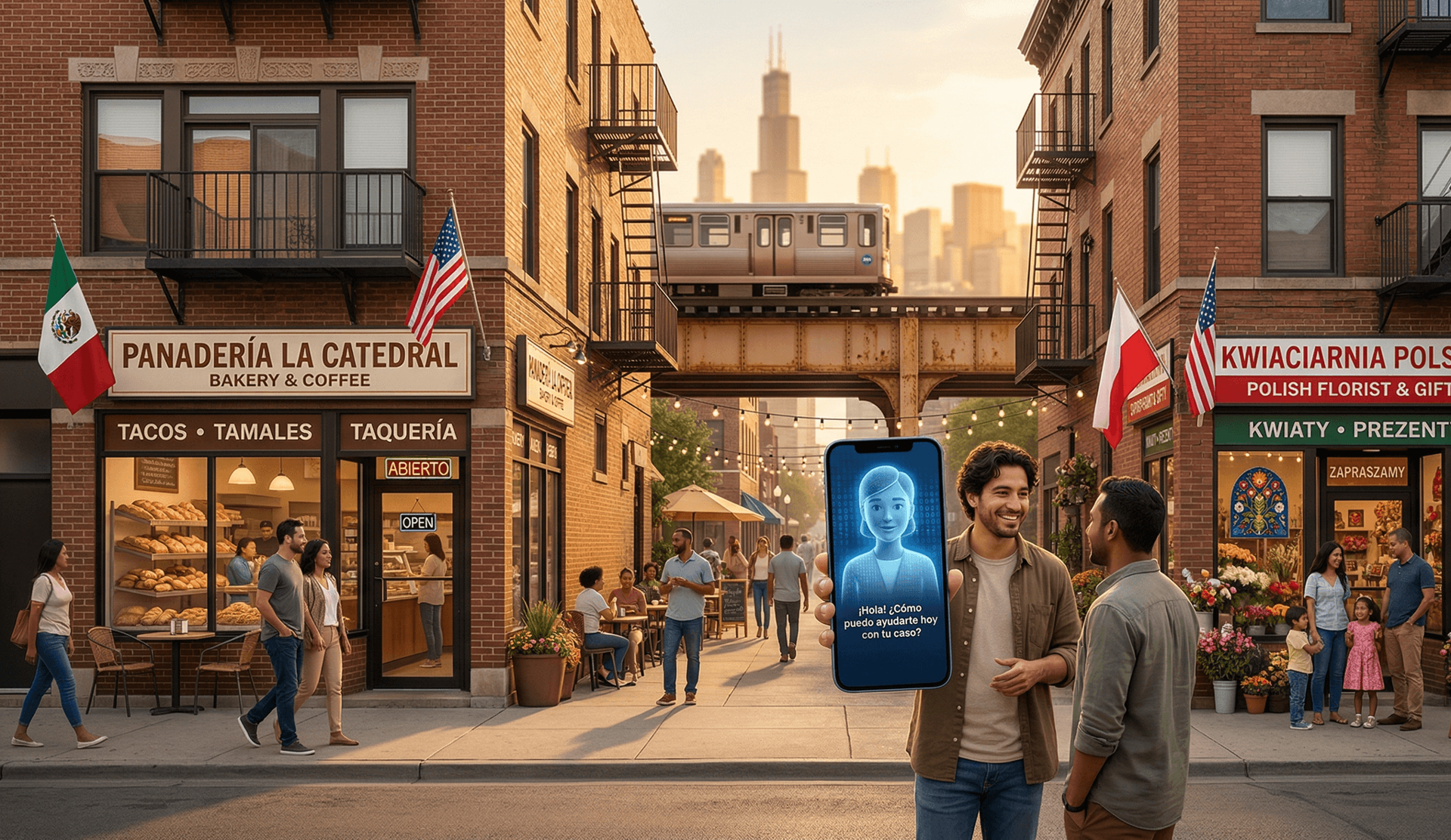
Chicago is one of the most linguistically diverse cities in America. According to the U.S. Census Bureau, over 35% of Chicago residents speak a language other than English at home. In neighborhoods like Pilsen, Little Village, and Back of the Yards, Spanish is the dominant language. In Jackowo, Avondale, and Niles, Polish is spoken widely. In Chinatown and Bridgeport, Mandarin and Cantonese are primary.
For a PI firm, language barriers are not just a customer service issue — they are a revenue issue. A crash victim from Pilsen who calls your firm and reaches an English-only voicemail does not leave a message. They call the firm that answers in Spanish. A factory worker from Jackowo who is injured in a truck accident on Cicero Avenue needs to describe complex medical symptoms and accident details — in Polish.
Your AI Employee conducts full, professional intake in English, Spanish, Polish, and Mandarin — with native-level legal and medical terminology in each language. It is not running the conversation through Google Translate. It is conducting the entire intake natively, understanding context, nuance, and the specific vocabulary needed to capture accurate accident and injury details. And unlike shadow AI tools that route client data through third-party servers, the AI Employee runs on dedicated hardware at your office — every conversation stays within your walls. Every intake produces a complete English-language case summary for the attorney regardless of the original language.
The Accessibility Advantage
The Math: $30K/Year vs. $600K in Revenue
Let's talk economics — specifically, Chicago PI firm economics.
An intake specialist in the Chicago metro area costs $45,000-$65,000 per year plus benefits. That person works 40 hours per week and handles one call at a time. To cover evenings and weekends, you need a second person — another $35,000-$50,000. Total for reasonable intake coverage: $80,000-$115,000/year. And you still have gaps at 2 AM, on holidays, and during lunch breaks. Compare that to our transparent AI Employee pricing.
| Intake Staff (2) | Answering Service | AI Employee | |
|---|---|---|---|
| Annual cost | $80,000-$115,000 | $300-$800/mo | $2,497/mo ($29,964/yr) |
| Hours of coverage | ~80 hrs/week | After hours only | 24/7/365 |
| Simultaneous calls | 1-2 | 1-2 | Unlimited |
| Conducts full intake | ✓ Yes | ✗ No | ✓ Yes |
| Screens comparative negligence | ✗ No | ✗ No | ✓ Yes |
| Evidence preservation | ✗ No | ✗ No | ✓ Yes |
| Case viability scoring | ✗ No | ✗ No | ✓ Yes |
| Multilingual (4 languages) | ✗ No | ✗ No | ✓ Yes |
| Statute tracking & reminders | Manual | ✗ No | ✓ Yes |
| Integrates with case mgmt | Manual entry | ✗ No | ✓ Yes |
| Available holidays/sick days | No | Yes | Yes |
The Conservative Scenario
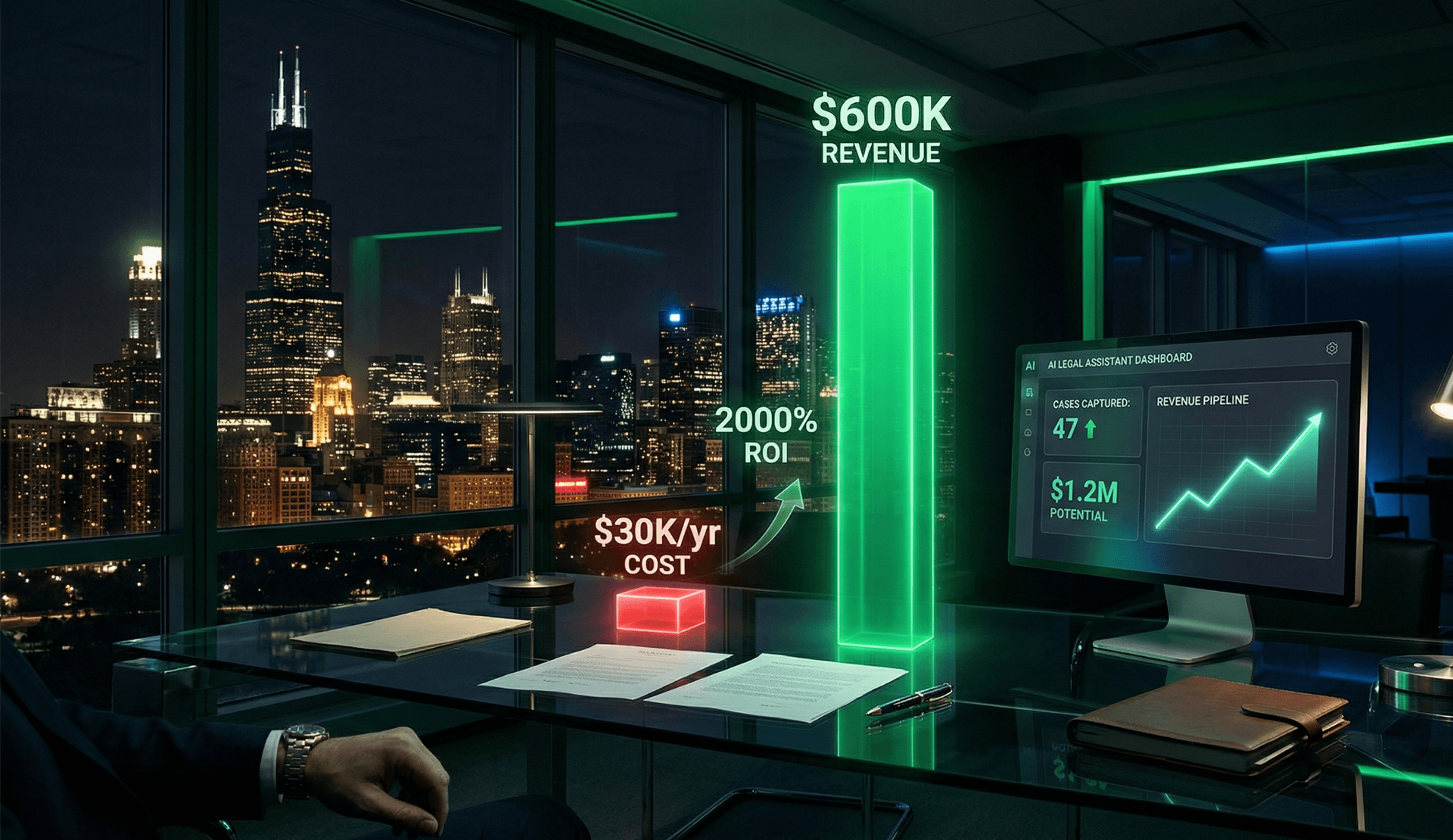
Your AI Employee captures one additional case per month that would have otherwise gone to voicemail — a typical car crash case with a $150,000 settlement and a $50,000 contingency fee. That is $600,000 in annual revenue on a $29,964 investment. A 20x return.
The Catastrophic Injury Scenario
A commercial vehicle crash on the Eisenhower. Multiple surgeries. Permanent impairment. $1.5 million settlement. Your contingency fee: $500,000. The client called at 8 PM on a Saturday. Most firms sent them to voicemail. Your AI Employee answered, conducted intake, and scheduled a Sunday morning consultation. You signed the case. You made $500,000. On a $30,000/year investment.
Run the numbers for your own firm with our ROI calculator, or read the comprehensive ROI guide for a deeper analysis. The math is not close.
We Drive to Your Chicago Office
Cloud Radix is based in Auburn, Indiana — 3 hours east of Chicago via I-80/I-90. We are not a Silicon Valley SaaS company. We drive to your office. We install the dedicated hardware. We integrate with your case management system — Clio, MyCase, Filevine, Litify, PracticePanther. We train the AI on Illinois personal injury law and your firm's specific protocols. We train your staff. We verify everything is working before we leave.
We serve PI firms across Chicagoland — the Loop, River North, West Loop, Lincoln Park, Lakeview, Wicker Park, Pilsen, Hyde Park, Naperville, Schaumburg, Oak Brook, Joliet, Aurora, and everywhere in between. We also serve firms across our entire Chicago service area, as well as Fort Wayne, Indianapolis, Detroit, Milwaukee, and Cleveland.
Frequently Asked Questions
Chicago PI attorneys ask us these questions before deploying an AI Employee. Here are direct answers.
Q1.Can an AI Employee really assess comparative negligence during intake?
Yes. The AI Employee is trained on Illinois' modified comparative negligence law — specifically the 2023 reform that established the 50% bar. It conducts structured intake conversations that identify liability factors, potential defenses, and fault allocation issues. It flags cases where the client's fault percentage might approach the 50% threshold and prioritizes high-viability matters for immediate attorney review. See how James — the first-ever PI AI Employee handles this at a real firm.
Q2.What happens when someone calls after a crash on the Dan Ryan at midnight?
The AI Employee answers immediately — no hold, no voicemail, no phone tree. It conducts a full structured intake: accident location, time, vehicles involved, injuries sustained, police report number, insurance information, witness details. It assesses injury severity and screens for comparative negligence indicators. It schedules a consultation for the next morning. It triggers evidence preservation protocols. The AI Employee never forgets a single detail. By the time the attorney arrives at the office, they have a complete case briefing.
Q3.How does the AI handle Chicago's dangerous intersection cases?
The AI Employee recognizes high-risk Chicago locations — Madison and Halsted in the Loop, Cicero and Irving Park on the Northwest Side, Stony Island and 79th on the South Side, the Lake Shore Drive S-curve — and automatically flags these cases for priority handling. It knows which intersections have documented safety issues, prior litigation history, and specific evidentiary requirements. Cases from known dangerous locations get expedited investigation and evidence preservation because the location itself strengthens the liability argument.
Q4.Can the AI Employee help with evidence preservation?
Yes — and speed is everything. The AI triggers immediate evidence preservation protocols: spoliation letters to insurance companies, surveillance footage requests before 30-day deletion cycles erase them, dash cam and EDR preservation demands, and witness contact collection. While your staff sleeps, the AI is working through the night to preserve your case.
Q5.What about the two-year statute of limitations?
The AI Employee timestamps every intake, calculates the statute of limitations deadline automatically based on the accident date, and creates escalating reminder sequences at 18 months, 21 months, and 23 months. It also tracks discovery rule exceptions for cases where injury discovery is delayed. No case expires due to a missed deadline — the system is designed to make that impossible.
Q6.How does the AI work with Chicago's diverse population?
The AI Employee communicates fluently in English, Spanish, Polish, and Mandarin — the most common languages in Chicago's neighborhoods. A caller from Pilsen gets full intake in Spanish. A caller from Jackowo gets intake in Polish. Every caller gets the same professional, empathetic experience in their preferred language. This is not a translation overlay — the AI conducts the entire conversation natively, including legal terminology and medical vocabulary.
Q7.Is this compliant with Illinois attorney advertising and ethics rules?
Yes. The AI Employee operates as an intake tool under the supervising attorney's direction — it does not provide legal advice, make representations about case outcomes, or solicit clients. All communications are logged with complete audit trails per our security checklist. The system complies with Illinois Rules of Professional Conduct and ARDC requirements. Attorney-client privilege is maintained through on-premise data storage and encryption.
Q8.How long does deployment take for a Chicago PI firm?
Most Chicago PI firms are fully operational within 1-2 weeks. Cloud Radix drives from our Auburn, Indiana headquarters (3 hours east via I-80/I-90), installs dedicated hardware at your office, integrates with your case management system, trains the AI on Illinois personal injury law and your firm's specific protocols, and conducts live testing before going live.
Q9.What does an AI Employee cost compared to hiring intake staff?
An intake specialist in Chicago costs $45,000-$65,000/year plus benefits — and works 40 hours a week. Total for reasonable coverage: $80,000-$115,000/year with gaps. An AI Employee on the Professional plan is $2,497/month ($29,964/year), works 24/7/365, and handles unlimited simultaneous calls. Run the numbers with our ROI calculator.
Q10.How is an AI Employee different from an answering service?
An answering service takes a message and emails it the next morning. By then, the client signed with the firm that answered live. An AI Employee conducts full structured intake — accident details, injury severity, liability screening, witness information, insurance data — books a consultation, triggers evidence preservation, and delivers a complete case briefing. It is not a chatbot. It knows Illinois comparative negligence law, your schedule, and every client who has ever called.
Sources
- Power Rogers — Chicago Accident Statistics 2025
- Briskman & Briskman — Chicago Car Accident Statistics: Fatal Accidents Down, Injuries Up
- Illinois Department of Transportation — 2024 Illinois Crash Facts
- Illinois Department of Insurance — Comparative Negligence in Illinois
- Chicago Lawyer Magazine — How Illinois Comparative Negligence Rule Affects Your Injury Settlement
- Salvi, Schostok & Pritchard — Chicago Lawyer's 2025 Settlement Report
Win the Chicago PI Arms Race
112,006 crashes. 25,692 injuries. 14,000+ competing attorneys. One chance to answer each call. In Chicago's hyper-competitive PI market, the firm that answers wins the case. Deploy an AI Employee and capture 100% of your opportunities — 24/7/365.
Based in Auburn, IN · 3 hours from Chicago · Call 260.577.3009