An AI Employee Is Already Doing This for a Personal Injury Firm
Before we talk about Indianapolis crash statistics or Indiana law, here is the headline: an AI Employee is already deployed at a personal injury firm, handling 16+ roles on the Professional plan. Not a chatbot. Not an answering service. Not a SaaS tool with AI bolted on. A dedicated AI Employee that answers every after-hours call, conducts full legal intake conversations, scores leads, analyzes medical records, drafts demand letters, creates content, manages social media, rebuilds the firm's entire website, and is building custom case management software with an integrated CRM.
His name is James. He is deployed at Delventhal Law Office, a personal injury practice. Powered by Pistol Shrimp AI on dedicated hardware installed at the firm, James answers every call from 5 PM to 9 AM on weekdays and all day on weekends and holidays. He does not send anyone to voicemail. Ever.
What Happens When a PI Firm Has an AI Employee
Here is a scenario that plays out every weekend at Delventhal Law Office — and what it would look like at your Indianapolis firm:
A car accident victim calls from the emergency room. The office is closed. Their family is panicking.
Voicemail. The family Googles "personal injury lawyer near me" and calls three other firms. Someone answers. You lose a six-figure case you never even knew existed.
The AI Employee answers instantly. Expresses empathy, collects accident details, insurance information, and hospital location. Scores the lead as high-priority. Books a Monday morning consultation. Sends the attorney a full case briefing within minutes.
This is not a hypothetical. This is exactly what James does at Delventhal Law Office — every night, every weekend, every holiday. The same AI Employee that answers the phone also knows every case the firm has ever taken and every case it has declined. That institutional memory compounds over time, making every intake decision, every case evaluation, and every demand letter sharper than the last.
This Is Not a Pitch — It Is a Case Study
What an AI Employee Actually Does for PI Firms
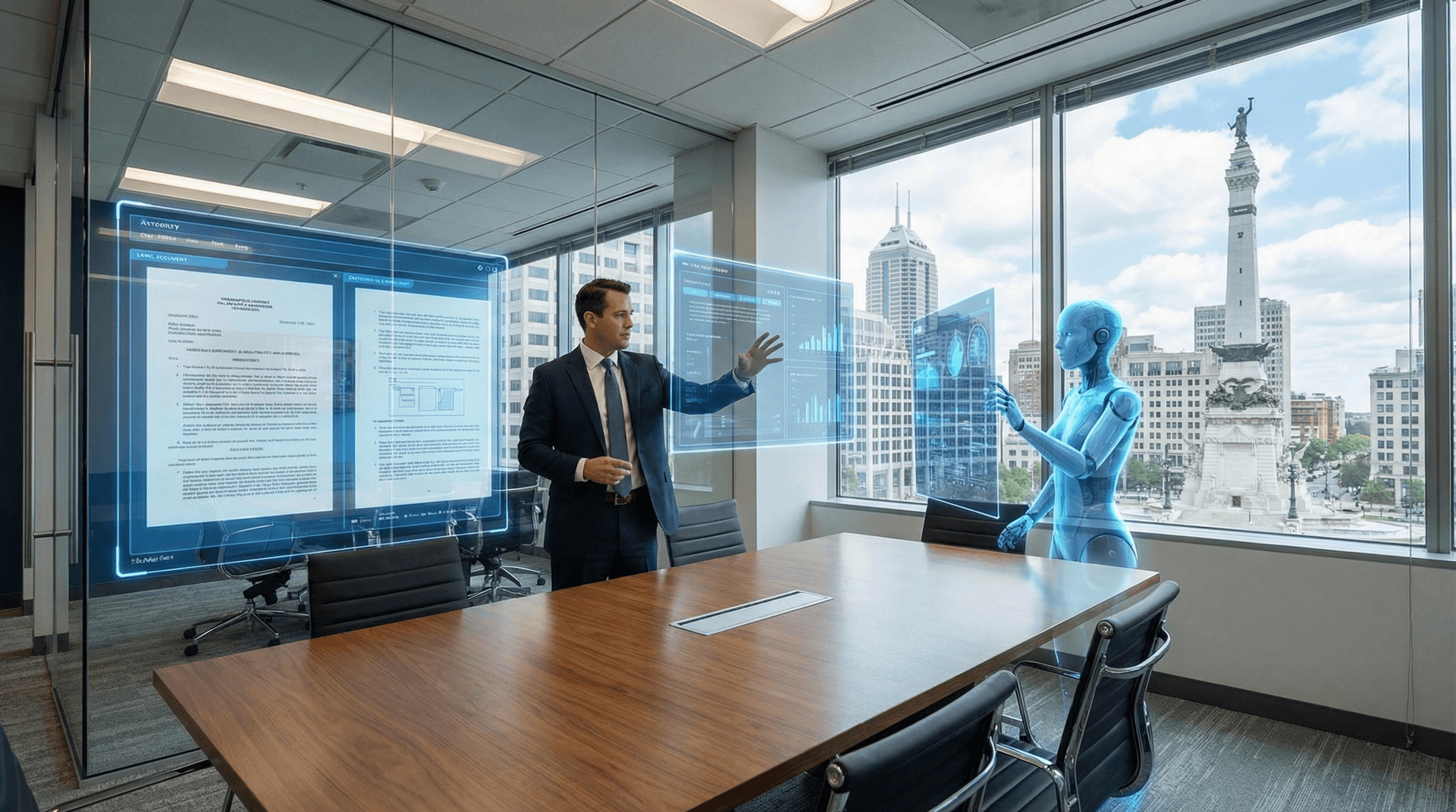
An AI Employee for an Indianapolis personal injury firm is not a chatbot on a website. It is not an answering service reading from a script. It is not a widget that pops up and asks "How can I help you?" It is a purpose-built AI system trained on Indiana personal injury law, integrated with your firm's processes, and capable of handling the entire intake workflow from first call to case evaluation.
24/7 Intake
- Answers every call — no voicemail, ever
- Conducts empathetic, professional conversations
- Collects accident details and injury information
- Gathers insurance and coverage data
- Captures comparative fault indicators
- Schedules consultations directly
- Delivers complete briefings to attorneys
Indiana Legal Intelligence
- Trained on Indiana's 51% bar comparative fault
- Understands 2-year statute of limitations
- Assesses uninsured/underinsured motorist coverage
- Evaluates liability indicators from intake
- Flags high-value cases immediately
- Maintains compliance with Indiana Bar rules
Case Scoring
- Lead qualification and scoring
- Case viability assessment
- Damages estimation
- Liability analysis with fault allocation indicators
- Priority ranking for attorney review
- Pattern recognition from case history
Documentation
- Automated intake forms
- Statute of limitations tracking
- Deadline management and reminders
- Medical records request letters
- Client communication logs
- Case file organization and retrieval
Integration, Not Replacement
Why Indianapolis Needs This Now: 200+ Deaths, 30,000+ Crashes
Indianapolis is the 16th-largest city in the United States — and one of the most dangerous places to drive in the Midwest. In 2024, Marion County recorded over 200 traffic fatalities, making it the deadliest county in Indiana by a wide margin. That number has been climbing steadily since 2020, when pandemic-era driving behavior changes pushed fatalities roughly 40-50% above pre-pandemic levels. They never came back down.
With over 30,000 reported crashes annually and 1,500+ serious injury crashes in Marion County alone, the caseload opportunity for Indianapolis PI firms is enormous. But most of those potential clients are calling law firms after 5 PM, on weekends, and on holidays — calling from emergency rooms, from the side of the road, from their couches at midnight when the adrenaline has worn off. And when they call most firms, they get voicemail.
The data is brutal but clear: 67% of personal injury leads go to the first firm that responds. Not the best firm. Not the firm with the most experience. Not the firm with the biggest billboard on I-465. The first firm that answers the phone and makes the caller feel heard. In a market as competitive as Indianapolis, where the Indianapolis Business Journal regularly profiles the city's largest PI firms and their marketing wars, speed of response is the single biggest determinant of case acquisition.
The Crossroads of America Problem
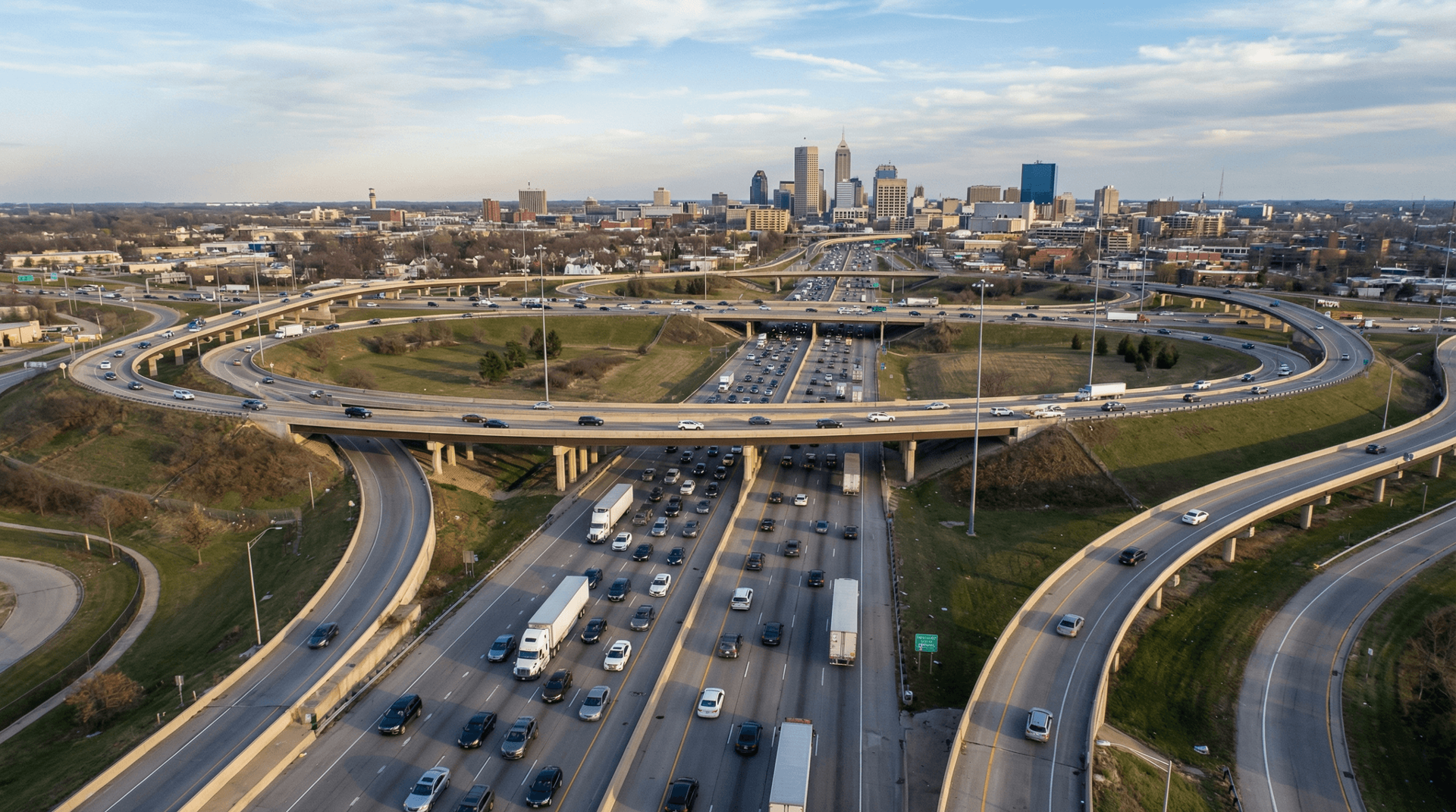
More interstate highways converge in Indianapolis than in any other city in the country. I-65 runs north-south to Chicago and Louisville. I-70 runs east-west to Columbus and St. Louis. I-69 runs northeast to Fort Wayne. I-74 connects to Cincinnati. And I-465 forms a 53-mile loop around the entire metro. The Indiana Department of Transportation consistently ranks these Indianapolis-area segments among the most dangerous in the state.
The I-465 loop alone produces thousands of crashes annually — high-speed collisions, commercial vehicle accidents, multi-party pileups. The I-65/I-70 downtown "Spaghetti Bowl" is among the highest-crash-density segments in Indiana. The I-69 corridor through Fishers and Noblesville produces a growing share of cases from affluent Hamilton County suburbs. Each of these corridors generates cases where speed of intake matters most — and where voicemail costs you the most money.
Multi-Jurisdiction Complexity
The Indianapolis Paradox
Personal injury is just one of the industries where AI Employees are transforming Indianapolis businesses. Explore the full range of AI Employee solutions for Indianapolis — from healthcare and dental practices to insurance agencies and logistics companies.
Indiana's Comparative Fault Doctrine: The 51% Bar That Changes Everything
Indiana uses a modified comparative fault system with what attorneys call the "51% bar." Under Indiana Code 34-51-2, a plaintiff can recover damages only if their fault is less than 51%. If they are found 51% or more at fault, they recover nothing. Zero. And if they are found, say, 30% at fault, their recovery is reduced by 30%.
This matters enormously at the intake stage. Here is why: the very first conversation with a potential client often reveals facts that will determine whether the case is viable under Indiana's comparative fault framework. A caller who says "I ran the red light but the other driver was speeding" presents a fundamentally different case than one who says "I was stopped at a red light and got rear-ended."
Most answering services — and most human intake specialists working late on a Friday — do not know to ask the right follow-up questions. They do not understand that comparative fault in Indiana is not just a defense strategy — it is a threshold question that determines whether the case exists at all. An AI Employee trained on Indiana personal injury law asks the questions that matter:
- Traffic signal status — Who had the green light? Was there a turn arrow? Was the signal functioning?
- Speed and road conditions — Estimated speeds of all vehicles. Road surface conditions. Weather factors. Construction zones.
- Witness availability — Were there witnesses? Did anyone stop? Did the caller get contact information?
- Police report — Was a report filed? Was either driver cited? What did the reporting officer note?
- The caller's own actions — Were they wearing a seatbelt? Were they on their phone? Had they been drinking? These questions are sensitive, but they are essential for evaluating comparative fault exposure.
- Dashcam and surveillance footage — Does the caller have dashcam footage? Were there nearby traffic cameras or business surveillance cameras?
The AI Employee does not evaluate fault — that is the attorney's job. But it collects the information that allows the attorney to make a rapid, informed assessment. A complete intake that addresses comparative fault indicators is worth infinitely more than a message that says "caller was in a car accident, please call back."
The 51% Threshold in Practice
Indiana's comparative fault system also interacts with multiple other legal factors that affect case value: the 2-year statute of limitations (shorter than many states), the collateral source rule, damage caps in medical malpractice cases, and uninsured/underinsured motorist coverage requirements. An AI Employee trained on Indiana PI law captures the data points relevant to all of these factors during a single intake conversation — building a comprehensive case profile from the very first call.
After-Hours: Where Indianapolis PI Firms Hemorrhage Cases
Here is a scenario that plays out every night in Indianapolis: A car accident on I-465 at 11:30 PM near the Keystone Avenue exit. The driver is injured, shaken, sitting in an ER waiting room at Community Health Network, and searching for a lawyer on their phone. They find your firm. They call. They get voicemail.
They don't leave a message. Nobody does. They call the next firm on Google. That firm answers — maybe an answering service, maybe an actual person, maybe an AI Employee. Whoever answers, that firm gets the case. You never even knew the lead existed.
This isn't hypothetical. Research from Clio's Legal Trends Report and the National Law Review consistently shows that 40% of personal injury leads come in after traditional business hours — evenings, weekends, holidays. And the firms that capture those leads have a massive competitive advantage over those that do not.
The math is simple: if you are only answering calls during business hours, you are effectively ignoring 40% of your potential case volume. In the Indianapolis market — where the Indianapolis Bar Association lists hundreds of PI attorneys competing for the same cases — that 40% is going directly to your competitors.
The Weekend Effect in Indianapolis
Weekends are particularly brutal for traditional intake models. Accidents happen at the same rate on Saturday and Sunday as on weekdays — sometimes higher due to impaired driving, which the Indiana Criminal Justice Institute reports as a factor in roughly 20% of Indiana fatal crashes. But most Indianapolis PI firms have minimal weekend coverage. Some have answering services. Many just send callers to voicemail.
An AI Employee does not recognize weekends. It answers Saturday at 2 AM with the same professionalism as Tuesday at 10 AM. It conducts full intake conversations, schedules consultations, and delivers briefings to the attorney — who wakes up Monday morning with a queue of qualified leads ready for follow-up. Every lead scored. Every case assessed. Every consultation already scheduled.
Holiday Crashes: The Leads Nobody Captures
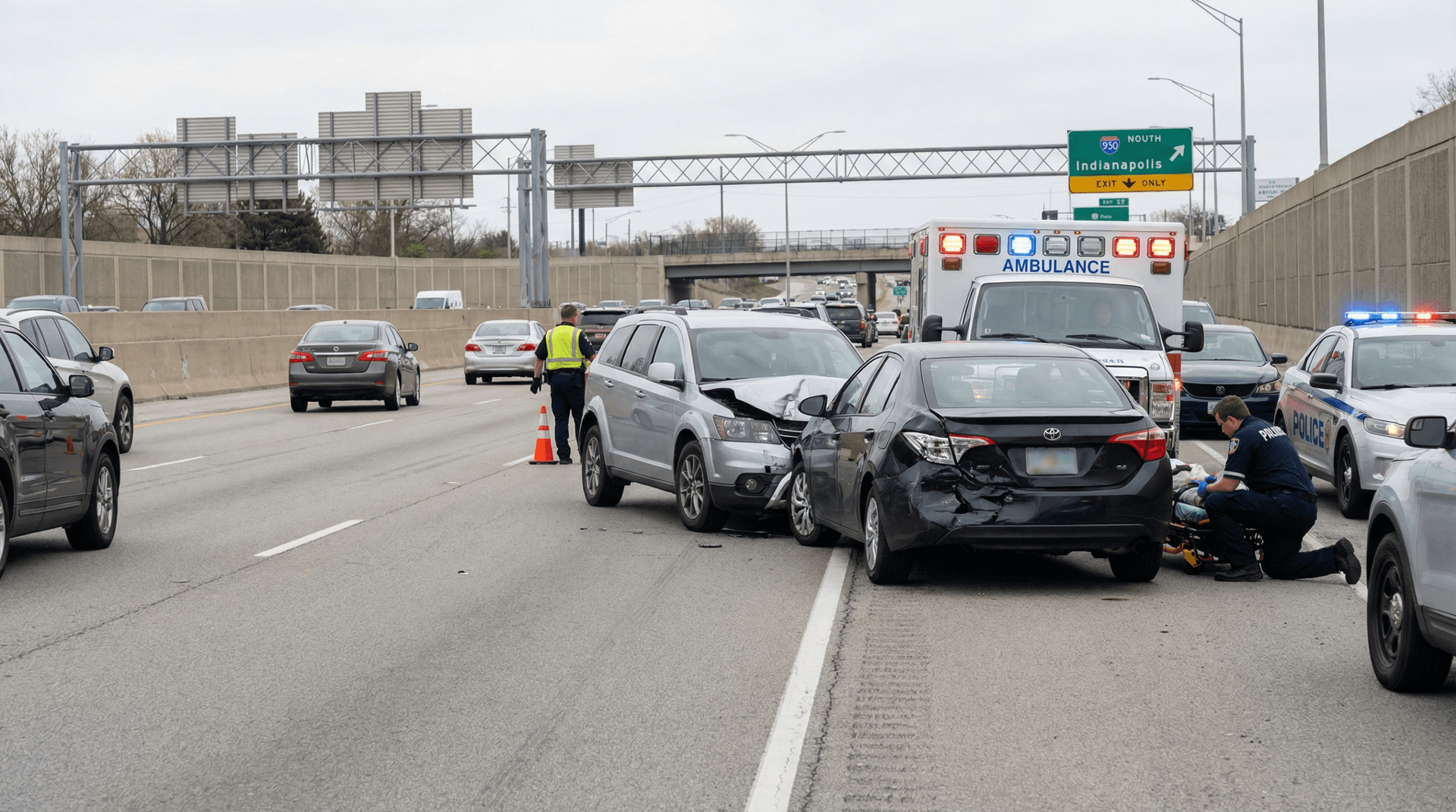
Indianapolis sees spikes in serious accidents around every major holiday — Memorial Day weekend at the Indianapolis Motor Speedway (when the city's population effectively doubles), Fourth of July, Labor Day, Thanksgiving, and New Year's Eve. These are exactly the times when PI firms have zero coverage. Your office is closed. Your answering service has skeleton staffing. And your potential clients are calling from ERs across the city.
An AI Employee answers on Christmas morning the same way it answers on a Tuesday in February. Full intake. Complete case assessment. Consultation scheduled. Attorney briefing delivered. No exceptions. No holidays. No gaps.
The Indy 500 Weekend
Intake That Understands Indiana Personal Injury Law
When a potential client calls an Indianapolis PI firm, the intake conversation is not just about being friendly and collecting contact information. It is a legal interview that determines whether the firm can help, what kind of case exists, and what immediate actions are required. Most answering services — and many human intake specialists — treat it as a glorified message-taking exercise. That approach loses cases.

Here is what happens when someone calls your firm and an AI Employee answers:
- Immediate answer. No hold music. No "press 1 for..." menu. No "please hold while I transfer you." A direct, conversational greeting within seconds.
- Empathetic engagement. The caller is likely in crisis — injured, stressed, possibly medicated, possibly calling from an ER. The AI acknowledges their situation, expresses appropriate concern, and creates rapport before transitioning to intake. This is not robotic — it is conversational, warm, and human.
- Accident details. When, where, how. Specific road or intersection. Interstate or surface street. Speed estimates. Road conditions. Weather. Police involvement. Citations issued. Whether an ambulance responded. The AI collects the facts an attorney needs to assess liability.
- Injury assessment. Type of injuries. Medical treatment received or planned. Current symptoms. Emergency room visit. Hospitalization. Surgery performed or recommended. Ongoing care needs. Pre-existing conditions that may complicate the case.
- Insurance information. The caller's auto insurance. The at-fault party's insurance (if known). Uninsured/underinsured motorist coverage. Health insurance that may have a subrogation interest. Commercial vehicle insurance if applicable.
- Comparative fault screening. Using Indiana's 51% bar framework, the AI gathers information relevant to fault allocation — the caller's actions, the other driver's actions, road conditions, witness accounts. This is not legal analysis — it is structured data collection that helps the attorney assess fault early.
- Statute of limitations calculation. The AI timestamps the call, confirms the date of the accident, and calculates the 2-year filing deadline. Cases approaching the deadline are flagged with urgency markers.
- Consultation scheduling. The AI has access to the attorney's calendar and can schedule consultations in real-time — no callbacks, no phone tag, no missed opportunities.
- Briefing delivery. Before the attorney arrives the next morning, a complete case brief is waiting — all the facts, the AI's assessment, recommended next steps, and the consultation already scheduled. The highest-value cases are at the top of the queue.
Compare that to what most Indianapolis PI firms offer after hours: voicemail. Or an answering service that takes a name, number, and a one-sentence summary. The difference in conversion rate between "we completed your intake, assessed your case, and scheduled your consultation" and "someone will call you back Monday" is not marginal — it is massive.
And the AI does this consistently. The same framework applied to every call. No off days. No rushing through a Friday afternoon call because the human intake specialist wants to leave early. No missing a critical detail because the caller was rambling and the specialist stopped paying attention. Every call. Every detail. Every time.
Multilingual Intake for Indianapolis
Instant Case Viability Scoring for Indiana Cases
Not every call is a good case. Not every accident results in a viable claim under Indiana law. Not every injury justifies the firm's time and resources. The challenge for Indianapolis PI firms is identifying the high-value cases quickly — while not dismissing legitimate matters that need deeper review.
An AI Employee scores every intake on multiple dimensions specific to Indiana personal injury law:
- Liability clarity — Clear fault? Disputed liability? Multiple parties? Where does the caller likely fall on the comparative fault spectrum?
- Injury severity — Soft tissue? Fractures? Surgical intervention? Permanent impairment? TBI indicators?
- Coverage adequacy — What insurance is available? Are there uninsured/underinsured motorist issues? Is there a commercial policy with higher limits?
- Comparative fault exposure — Based on the caller's description, how likely is a defense argument that pushes fault above 50%? This is the threshold question in Indiana cases.
- Damages estimate — Medical costs incurred, projected future treatment, lost wages, earning capacity impact
- Timeline factors — How close is the 2-year statute of limitations? Are there discovery issues that need immediate attention?
High-scoring cases are flagged for immediate attorney attention — even at 2 AM if the case warrants it. Complex matters are queued for detailed review during business hours. Cases that do not meet your firm's criteria receive professional, empathetic responses that preserve your reputation and refer them appropriately.
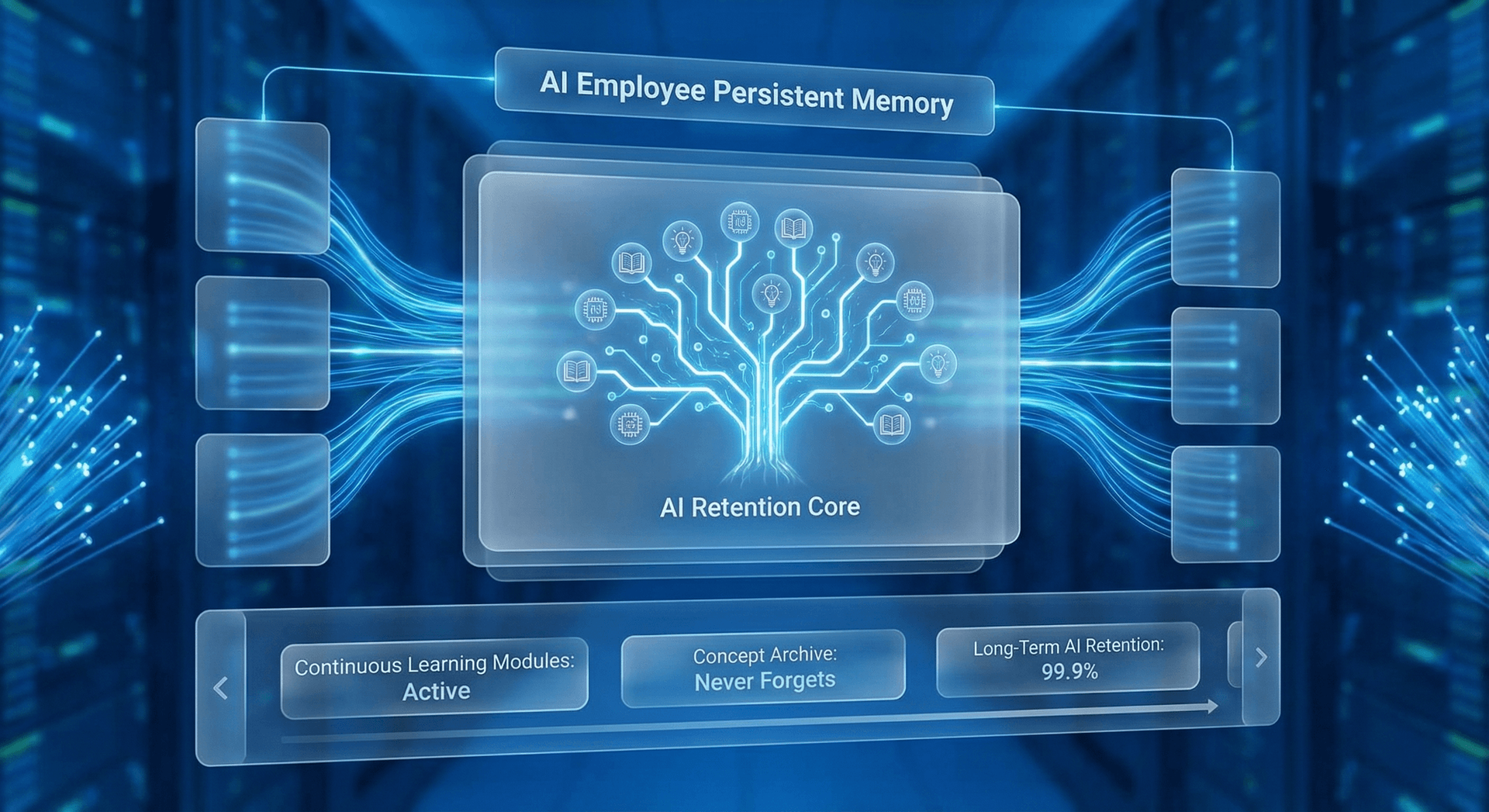
The scoring system also learns over time. As your firm takes cases and resolves them, the AI Employee develops pattern recognition that improves with every matter. After six months, the scoring model reflects your firm's actual experience — which case types settle favorably, which lead sources produce the highest-value clients, which injury patterns predict larger recoveries. That kind of institutional intelligence usually takes a firm decades to develop. An AI Employee develops it in months. We wrote a comprehensive analysis of how persistent AI memory compounds institutional knowledge over time.
Documentation and Deadline Automation
Indiana's 2-year statute of limitations is shorter than many states. Miss it, and the case is gone — permanently. For a busy PI firm managing dozens or hundreds of active matters, deadline management is not optional. It is existential.
An AI Employee automates the entire documentation and deadline workflow:
- Statute of limitations tracking — Every case gets a calculated deadline from day one, with automated reminders at 18 months, 12 months, 6 months, 90 days, 60 days, and 30 days before expiration.
- Medical records requests — Automated request letters to hospitals, physicians, and imaging centers across Indianapolis. Tracking of which records have been received and which are still outstanding.
- Insurance correspondence — Documentation of every communication with insurance carriers. Claim numbers, adjuster names, coverage confirmations, and settlement discussions — all logged and organized.
- Case file organization — Every document categorized, tagged, and instantly retrievable. Medical records, police reports, correspondence, photographs, witness statements — organized by case and by type.
- Client communication logs — Every interaction documented. No more "did we call Mrs. Johnson back about her case status?" questions. The AI knows — because the AI handled it.
The result: your paralegals spend less time on paperwork and more time on substantive legal work. Your cases move faster. Nothing falls through the cracks. And when a client calls asking "where is my case?" — one of the biggest time drains for PI firms — the AI Employee answers instantly with real-time case status, freeing your team to actually work cases instead of answering status calls.
This is the kind of operational efficiency that separates growing firms from stagnant ones. If your paralegals are spending 30% of their time on administrative tasks that an AI Employee handles automatically, that is 30% more capacity for case work — without hiring anyone new. For a deeper look at how AI Employees handle the work that keeps human teams awake at night, read Your AI Employee Works While You Sleep.
Marion County Court Integration
The Compounding Advantage: Institutional Memory
This is the section that separates an AI Employee from every chatbot, every answering service, and every SaaS platform on the market. And it is the capability that will matter most twelve months from now.
An AI Employee remembers everything. Every case taken. Every case declined. Every intake conversation. Every comparative fault assessment. Every case score. Every outcome. Every settlement range. Every insurance adjuster's negotiation pattern. Every type of injury and how it resolved.
This is not a feature — it is an architecture. The AI Employee is built on persistent memory systems that retain and organize institutional knowledge across every interaction. When a new lead calls in with a case similar to one the AI evaluated three months ago, it recognizes the pattern. When a medical record shows an injury profile the AI has seen in twelve previous cases, it applies what it learned from those cases to the current analysis.
A new paralegal starts from zero. They spend weeks learning the firm's preferences, the attorney's case selection criteria, which case types the firm likes, which ones to decline. Then they leave, and the next one starts from zero again. Staff turnover in legal support roles averages 25-30% annually — meaning you are effectively rebuilding your intake knowledge base every three to four years.
An AI Employee started from zero once, in week one, and has been building institutional knowledge every day since. Month 1 it is capable. Month 6 it is dramatically better. Month 12 it has a depth of institutional knowledge about your firm's operations, case patterns, and Indianapolis market dynamics that no individual human employee could match — because no human remembers every detail of every case, every lead, every conversation, every outcome.
The Compounding Effect

The Math: $3K/Month vs. $200K in Lost Cases
Let's talk economics. An AI Employee for an Indianapolis PI firm costs Professional plan pricing. API and model usage costs are billed separately and disclosed upfront — we are transparent about costs because we think hidden fees are dishonest. What does that investment buy you compared to traditional staffing?
The Human Alternative
According to the Bureau of Labor Statistics, legal support staff salaries in the Indianapolis metro area break down as follows:
- Intake specialist / receptionist: $38,000-48,000/year salary + benefits = $50,000-60,000 total cost
- Evening/weekend coverage: Additional staff or answering service = $15,000-25,000/year
- Paralegal support: For documentation and case management = $45,000-55,000/year
- Total: $110,000-140,000/year for coverage that still has gaps
The AI Employee Alternative
- Monthly cost: $2,497/month (Professional plan)
- Annual cost: $29,964
- Coverage: 24/7/365 with zero gaps
- Capacity: Handles intake volume equivalent to 3-4 human staff
- Turnover: 0%
- Training time: 5-7 days, once
But the real ROI is not in cost savings — it is in revenue capture. If an AI Employee helps you sign just one additional case per month that you would have lost to voicemail, and that case has an average contingency fee of $15,000-$25,000, you have generated $180,000-$300,000 in additional annual revenue for a $30,000 investment.

For a solo practitioner or a two-attorney firm in Indianapolis, this math is not incremental — it is existential. These firms cannot afford to hire three people to cover intake, documentation, and after-hours calls. They either go without — missing leads, losing cases to voicemail, using spreadsheets for case management — or they deploy an AI Employee that does it all for less than the cost of one entry-level hire.
Want to run the numbers for your specific firm? Our ROI Calculator lets you input your firm's details and see the projected impact.
The ROI Is Proven
What This Means for Every Indianapolis PI Firm
The question is not whether AI will change personal injury law in Indianapolis. That question was settled when we deployed the first-ever PI AI Employee. The question — the only question that matters right now — is whether your firm will be the one using AI or the one losing cases to the firm that does.
Consider the competitive dynamics. When one firm in the Indianapolis market has an AI Employee answering every after-hours call while competitors send leads to voicemail, the firm with the AI Employee captures those cases. When one firm has a system that understands Indiana's comparative fault doctrine and collects the right data during intake while competitors rely on answering services that take messages, the firm with the AI Employee evaluates cases faster and more accurately.
These advantages compound. A 6-month head start becomes a 12-month gap. A 12-month gap becomes a moat. And the firm that moves second will be trying to catch up to an AI Employee that has been learning, adapting, and improving every single day since deployment.
Cloud Radix deploys AI Employees for personal injury firms across the Midwest — in Indianapolis, in Fort Wayne, Detroit, Chicago, Cleveland, Louisville, and across Indiana, Ohio, Michigan, Illinois, Wisconsin, and Kentucky. Each AI Employee is custom-trained on the specific firm's operations, practice areas, and local market. No templates. No one-size-fits-all.
The Window Is Open — For Now
Frequently Asked Questions
Q1.Can an AI Employee handle intake calls at 2 AM after a crash on I-465?
Yes. Accidents on I-465, I-65, I-70, and I-69 happen around the clock. Your AI Employee answers every call instantly — capturing accident date, location, injuries, insurance details, police report number, and medical treatment status. Urgent cases route directly to your on-call attorney. In the Indianapolis PI market, the first firm to respond wins the case more often than not.
Q2.Does the AI Employee understand Indiana's 51% comparative fault rule?
Your AI Employee is custom-trained on your firm's intake criteria, including Indiana's modified comparative fault doctrine — the 51% bar rule. It asks the right questions to help your attorneys assess fault allocation early: witness availability, traffic camera footage, police report details, and the caller's account of what happened. It does not practice law — it gathers the information your attorneys need to evaluate cases faster.
Q3.How does the AI handle Indiana's 2-year statute of limitations?
The AI automatically timestamps every intake, calculates the 2-year filing deadline from the date of injury, and creates automated calendar reminders for both the firm and the client. It flags cases approaching deadlines and ensures nothing slips through the cracks — even for cases that come in 18 months post-accident.
Q4.Can the AI Employee evaluate if a case has strong liability indicators?
The AI conducts a structured assessment during intake: accident circumstances, witness availability, police report details, traffic conditions, road hazards, and the caller's account of fault. It scores each case on liability clarity, injury severity, and estimated damages — flagging high-value matters for immediate attorney review.
Q5.What about language barriers in Indianapolis's diverse communities?
The AI Employee communicates fluently in English, Spanish, Burmese, and other languages common in the Indianapolis metro area. Every caller gets the same professional intake experience in their preferred language — critical in a city where over 15% of residents speak a language other than English at home.
Q6.How long does deployment take for an Indianapolis PI firm?
Typical deployment is 5-7 business days: discovery, system integration, AI training on your firm's specific processes, and live testing. Most firms are operational within one week.
Q7.Is this compliant with Indiana State Bar advertising rules?
Yes. The AI operates as an extension of your firm's intake process. All communications are professional, non-deceptive, and compliant with Indiana Rules of Professional Conduct. The attorney maintains full oversight and approval authority over every action.
Q8.What does this cost compared to hiring intake staff?
An AI Employee starts at $2,497/month on the Professional plan. A full-time intake specialist in Indianapolis costs $40,000-50,000/year plus benefits. The AI works 24/7/365, never calls in sick, handles the workload of 3-4 human staff members, and captures cases at 2 AM that your human staff would send to voicemail.
Q9.Can the AI Employee integrate with my existing case management software?
Yes. The AI Employee integrates with popular legal case management platforms — or Cloud Radix can build custom case management software tailored specifically to your firm's workflows. Either way, intake data flows directly into your system with zero manual data entry.
Q10.How is this different from an answering service?
An answering service reads from a script and takes a message. An AI Employee conducts a complete legal intake conversation — collecting accident details, assessing injury severity, evaluating liability indicators, scheduling consultations, and delivering scored case briefings to the attorney. It is the difference between a message pad and a trained intake specialist who works 24/7 and never forgets a detail.
Sources
- Indiana Criminal Justice Institute — Indiana Traffic Safety Facts and Annual Reports
- Indiana Department of Transportation — INDOT Highway Safety Data and Crash Reports
- NHTSA FARS — Fatality Analysis Reporting System: Indiana Data
- Indiana General Assembly — Indiana Code 34-51-2: Comparative Fault
- American Bar Association — Technology and Innovation in Law Practice 2025
- Clio — Legal Trends Report: Client Intake and Response Times
- National Law Review — After-Hours Lead Response and Client Acquisition Rates
- Bureau of Labor Statistics — Occupational Employment and Wages: Legal Occupations
- Indianapolis Bar Association — Indianapolis Legal Community Resources
Stop Losing Indianapolis Cases to Voicemail
Every after-hours call you miss is a case your competitor takes. In Indiana's comparative fault system, speed of response is not just an advantage — it is the difference between a thriving practice and a struggling one. Deploy an AI Employee and capture 100% of your leads, 24/7/365.
Or explore Indianapolis PI AI Employee solutions in detail.