The Rise of AI Teammates
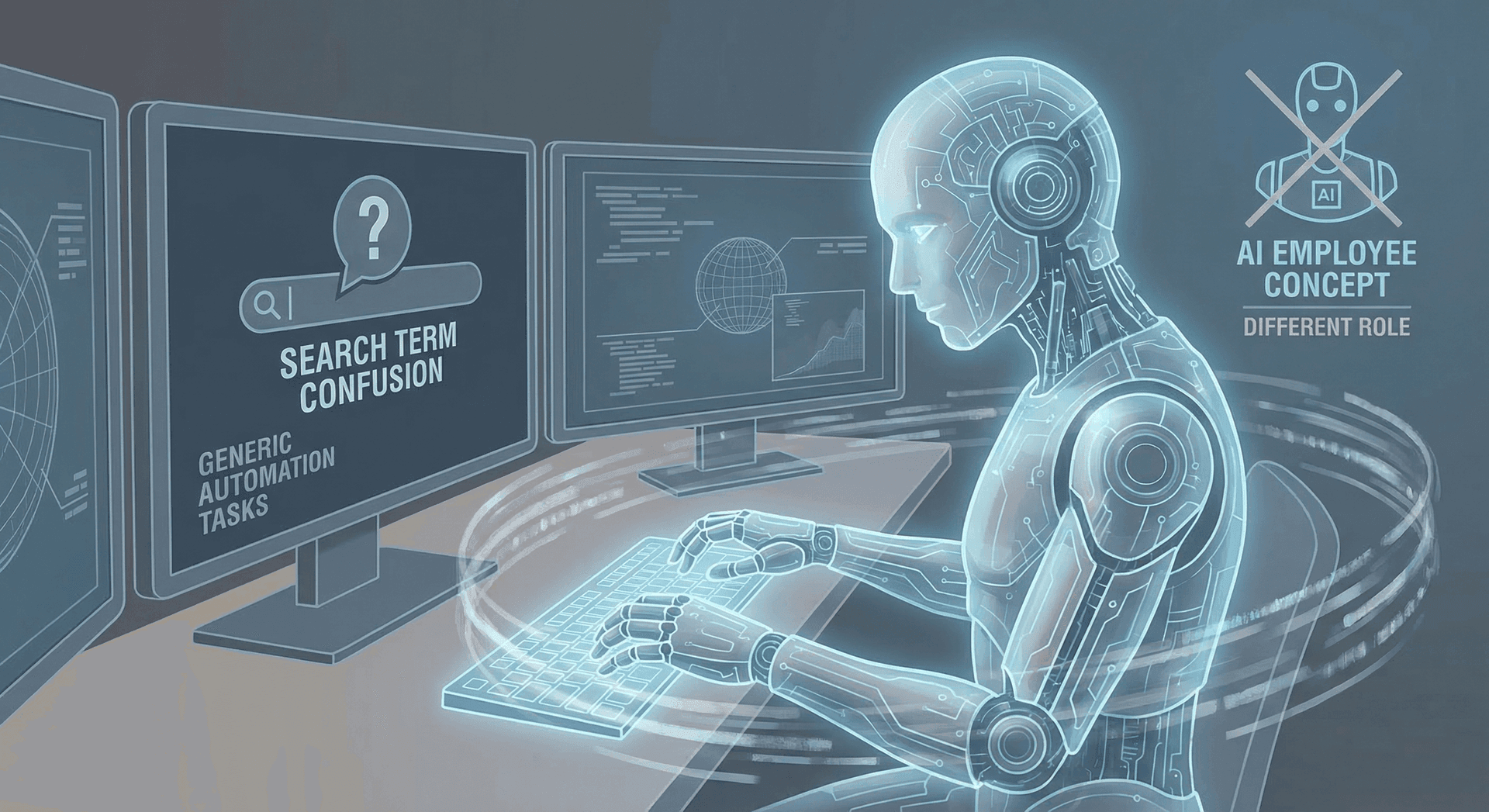
Something fundamental shifted in how businesses use artificial intelligence over the past two years. AI is no longer a tool you open in a browser tab, type a question into, and close when you are done. For a growing number of Fort Wayne businesses, AI has become a teammate — a persistent, knowledgeable, always-available member of the team that handles real work, learns from experience, and collaborates with human colleagues every day.
This is not science fiction. It is not a Silicon Valley experiment. Right here in northeast Indiana, small and mid-sized businesses are integrating AI teammates into their daily operations and seeing measurable results. Law firms where an AI teammate handles client intake while attorneys focus on practicing law. HVAC companies where an AI teammate answers after-hours emergency calls and dispatches technicians. Medical practices where an AI teammate manages scheduling, insurance verification, and patient communication — freeing front desk staff to provide the kind of personal, face-to-face care that patients remember.
The evolution happened gradually, then all at once. Early AI tools were impressive but isolated. You could ask ChatGPT to draft an email or summarize a document, but it did not know your business. It did not remember the conversation you had yesterday. It could not pick up the phone, check your calendar, and book an appointment. It was helpful, but it was not a teammate.
Today's AI teammates are different. They are trained on your specific business data — your services, your pricing, your processes, your FAQs, your brand voice. They connect to your real tools: your CRM, your calendar, your phone system, your email. They remember context across interactions, learning from every call and every conversation. And they work alongside your human team, handling the routine volume so your people can focus on the work that requires human creativity, empathy, and judgment.
This guide is for Fort Wayne business owners who are curious about what it actually looks like to add an AI teammate to their team. We will cover what makes a great AI teammate, how they fit into specific industries across northeast Indiana, what the onboarding process looks like, what it costs, and how real local businesses are already making it work.

What Makes a Great AI Teammate?
Not all AI is built to be a teammate. A good AI teammate shares many of the same qualities you would look for in a great human hire — reliability, knowledge, adaptability, and the ability to work well with others. Here are the characteristics that separate a genuine AI teammate from a generic AI tool.
Deep Understanding of Your Business
A generic AI can answer general questions. An AI teammate can answer your questions. It knows your service areas, your pricing structure, your scheduling rules, your most common customer inquiries, and the specific language your brand uses. This is not about programming a decision tree — it is about training an AI on the full context of your business so it can handle novel situations intelligently, the same way a well-trained human employee would.
For a Fort Wayne HVAC company, that means the AI teammate knows the difference between a routine maintenance request and an emergency furnace failure in January. It knows which technicians handle which types of equipment. It knows your service radius covers Fort Wayne, New Haven, Huntertown, and Leo-Cedarville but not Decatur. This depth of understanding makes the difference between an AI that frustrates customers and one that genuinely helps them.
Context Memory Across Interactions
One of the most frustrating experiences in customer service is having to repeat yourself. Great AI teammates maintain context — not just within a single conversation, but across interactions over time. When a patient calls your medical practice for the third time about the same billing question, the AI teammate knows the history. It does not start from scratch. It picks up where the last conversation left off.
This kind of contextual memory is something that even human front desk staff struggle with, especially in busy practices with dozens of calls per day. An AI teammate has perfect recall. Every interaction is logged, and that history informs every future interaction. The result is a more personalized, more efficient experience for your customers and patients.
Multi-Channel Communication
Your customers reach out in different ways. Some call. Some email. Some text. Some use the chat widget on your website. Some send a message on Facebook. A great AI teammate works across all of these channels with a consistent voice and consistent knowledge. Whether a customer calls your main line at 2 PM or sends a text message at 10 PM, they get the same quality of service.
This multi-channel capability is especially valuable for Fort Wayne businesses that serve a broad demographic. Younger customers may prefer text or chat. Older customers may prefer phone calls. Business clients may prefer email. Your AI teammate meets every customer where they are, without requiring you to staff each channel separately.
Handling Routine Work So Humans Handle High-Value Work
The most important thing an AI teammate does is not the work it handles — it is the work it frees your human team to do. Every routine call your AI teammate answers is a call your office manager does not have to take, giving them time to handle a complex insurance dispute or a sensitive patient conversation. Every lead your AI teammate qualifies is a lead your sales team receives warm and ready, rather than raw and unvetted.
This is the core of the human-AI team dynamic. The AI handles volume, consistency, and availability. The humans handle relationships, creativity, and judgment. Together, the team is stronger than either could be alone. For a detailed look at everything an AI teammate can handle, see 98 things your AI Employee can do.
Always Available Without Burnout
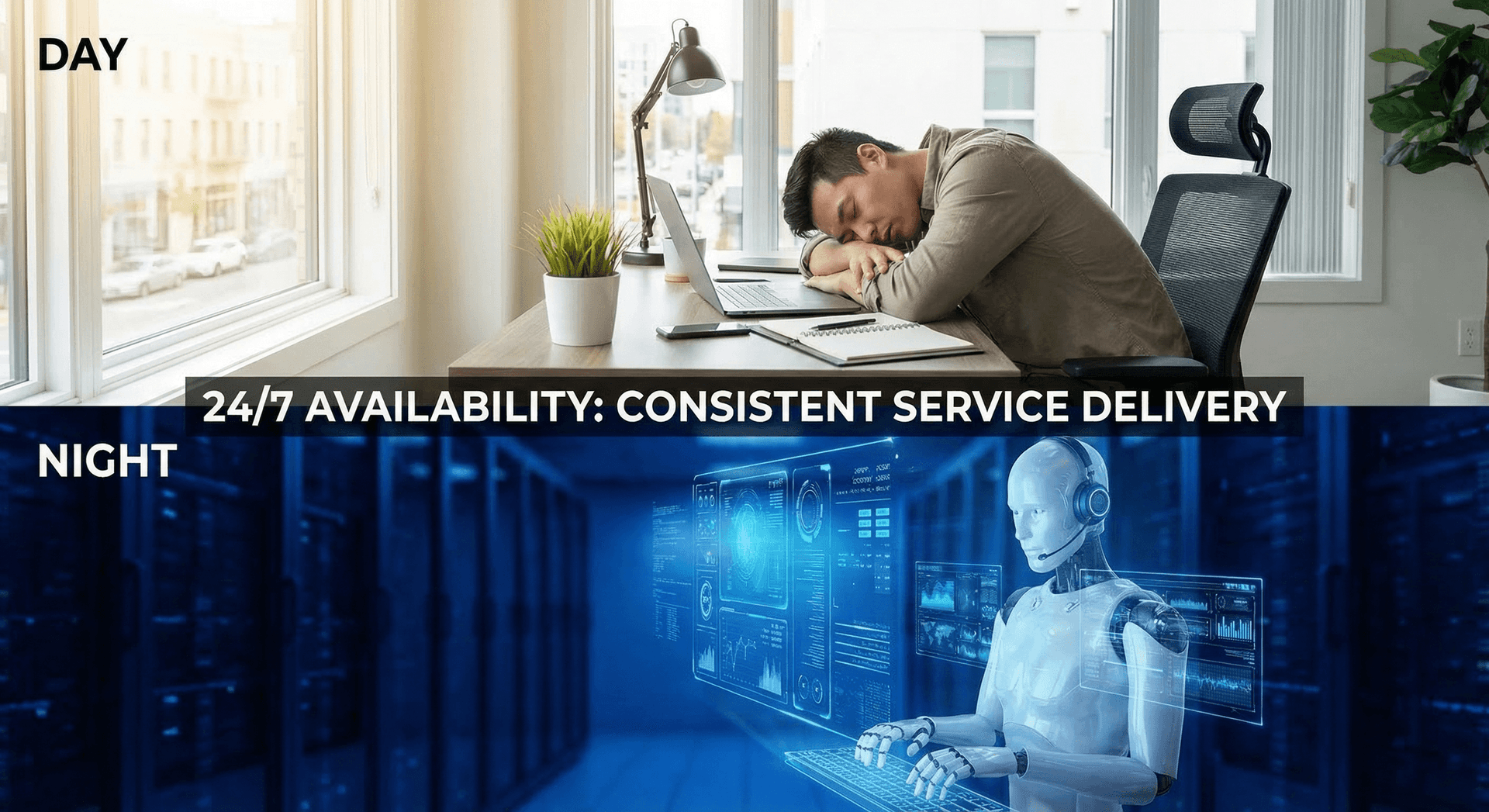
Your AI teammate does not get tired. It does not have a bad day. It does not call in sick or take vacation. It handles the 50th call of the day with the same patience and professionalism as the first. For businesses that experience high call volume or operate outside traditional business hours, this consistency is transformative.
This is not about replacing humans with machines. It is about acknowledging a simple reality: there is a category of work — high-volume, repetitive, time-sensitive — where consistency matters more than creativity. AI excels at that work. Humans excel at the work that requires empathy, improvisation, and relationship building. A well-designed team leverages both.
Continuous Improvement
Every human employee has a learning curve. So does an AI teammate — but the curve is steeper and the plateau is higher. AI teammates improve with every interaction. When you correct a mistake or add new information to the training data, that improvement applies instantly and permanently. There is no need to retrain the entire team on a new process. Update the AI once, and the improvement is live.
Over weeks and months, your AI teammate becomes deeply attuned to your business. It learns which types of inquiries are most common, which responses lead to the best outcomes, and which situations require human escalation. The AI teammate you have after six months is significantly more capable than the one you started with.
Integration With Your Existing Tools
An AI teammate that lives in its own silo is not very useful. The real value comes when it connects to the tools your business already uses — your CRM, your scheduling software, your phone system, your email platform, your accounting system. When your AI teammate books an appointment, it appears in your real calendar. When it qualifies a lead, the lead appears in your real CRM with full notes. There is no copy-pasting, no double entry, no manual syncing.
For Fort Wayne businesses, this integration is critical. Most local businesses are not starting from scratch with their technology stack. They have systems they know and rely on. A great AI teammate works within those systems, enhancing them rather than replacing them.

The Teammate Test
How AI Teammates Fit Into Fort Wayne Businesses
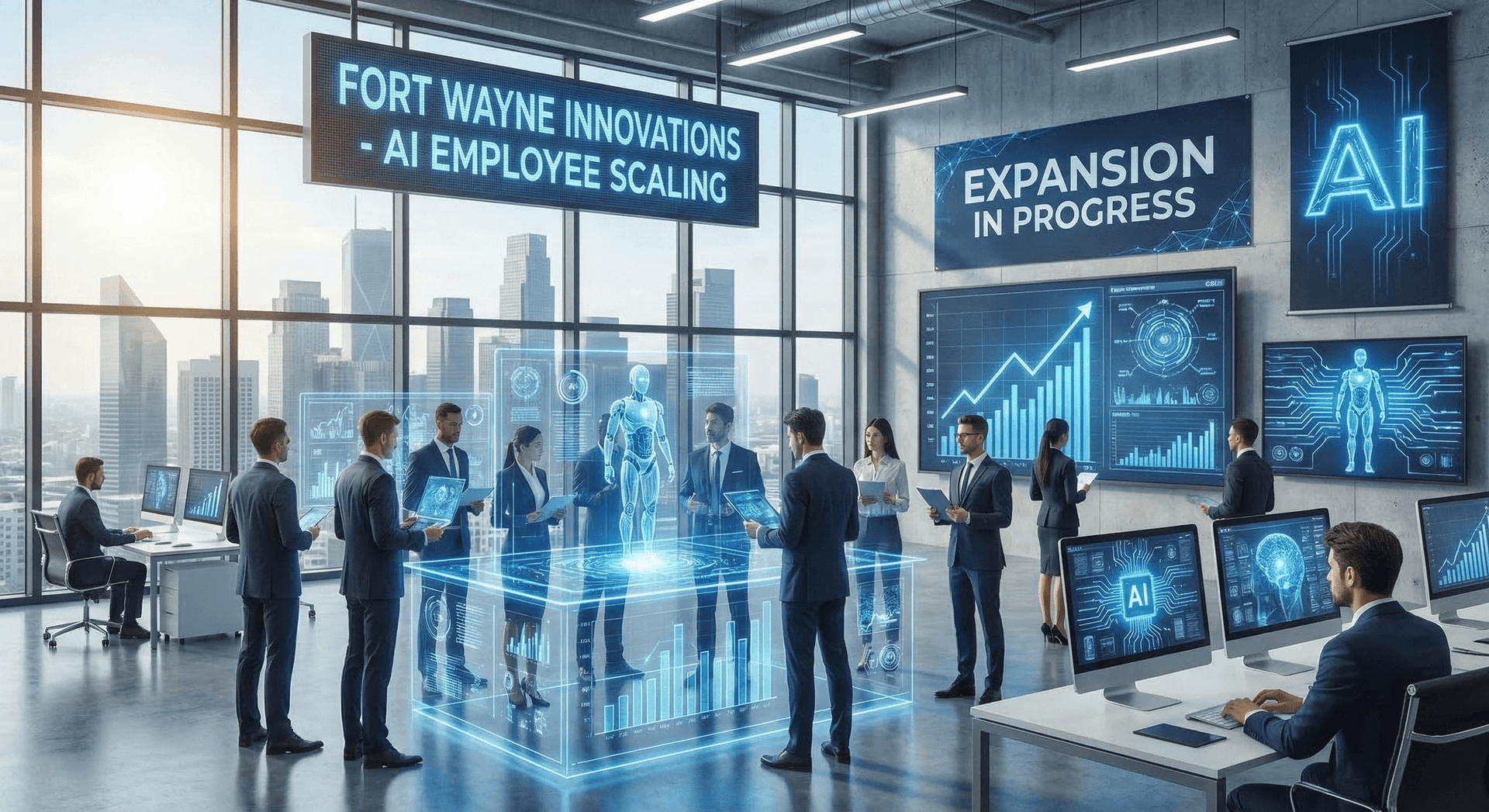
Theory is helpful, but Fort Wayne business owners want to know what this looks like in practice. Below are five detailed scenarios showing how AI teammates integrate with specific types of businesses across northeast Indiana. These are based on real deployment patterns, adapted to illustrate the range of what is possible.
The Two-Person Law Firm
Consider a small law firm in downtown Fort Wayne — two attorneys and no dedicated receptionist. They handle family law: divorces, custody, adoptions, estate planning. Their phone rings constantly, and every missed call is a potential client who moves on to the next name in their search results.
Before an AI teammate: The attorneys take turns answering the phone between client meetings. When both are in court or in consultations, calls go to voicemail. They return calls at the end of the day, but by then, many callers have already contacted another firm. Intake forms sit in a stack on the desk, waiting to be entered into the case management system. Scheduling happens through a back-and-forth of phone calls and emails.
With an AI teammate: The AI handles every inbound call with professional warmth. It understands the difference between a new client inquiry and an existing client with a case question. For new inquiries, it gathers intake information — nature of the case, timeline, basic facts — and schedules a consultation directly on the attorney's calendar. For existing clients, it checks the case status in the management system and provides updates or routes to the appropriate attorney. After hours, it handles calls the same way, ensuring that a parent calling about a custody emergency at 9 PM gets a response, not a voicemail.
The attorneys still do everything that requires a law license: legal advice, court appearances, negotiations, document drafting. But they are no longer spending two hours a day on the phone doing intake and scheduling. That time goes back into billable work, case preparation, and client relationships. The AI teammate is not practicing law. It is handling the administrative work that kept two talented attorneys from practicing law as effectively as they could.
The HVAC Company
An HVAC company serving the greater Fort Wayne area — New Haven, Leo-Cedarville, Huntertown, Aboite, Grabill, and surrounding communities. Ten technicians, a dispatcher, and an office manager. Peak season means 60 to 80 calls per day. After-hours emergencies are a significant part of revenue.
Before an AI teammate: The office manager and dispatcher split phone duties during business hours. After 5 PM, an answering service takes messages that get returned the next morning — or the on-call technician's personal cell phone is listed, leading to burnout and inconsistent customer experiences. Weekend calls are especially problematic. The answering service captures names and numbers, but by the time someone calls back, the customer has already hired the competitor who answered.
With an AI teammate: During business hours, the AI handles overflow calls when the office manager and dispatcher are busy. It books routine maintenance appointments, answers common questions about service areas and pricing, and collects information for quote requests. After hours, the AI becomes the primary point of contact. It assesses urgency — a broken furnace in February is treated differently than a question about summer AC tune-up pricing. For true emergencies, it checks the on-call technician's availability, dispatches with full details, and sends the customer a text with the tech's name and estimated arrival time. For non-urgent calls, it books the first available appointment and sends a confirmation.
The dispatcher still handles complex scheduling, rerouting technicians for emergencies, and managing the daily workflow. The office manager still handles billing, vendor relationships, and customer escalations. But neither of them is answering routine calls about operating hours or whether the company services Roanoke. The AI teammate handles the volume; the humans handle the complexity.
The Medical Practice
A multi-provider medical practice on the southwest side of Fort Wayne. Four physicians, two nurse practitioners, and a front desk team of three. They see 80 to 120 patients per day, and the phone never stops ringing.
Before an AI teammate: The front desk is the bottleneck. Three staff members juggle check-ins, check-outs, phone calls, insurance verifications, prescription refill requests, and referral coordination. Hold times regularly exceed five minutes. Patients complain about difficulty reaching the office. Staff members are stressed and turnover is high.
With an AI teammate: The AI handles the highest-volume, most repetitive phone tasks: appointment scheduling, appointment confirmations and reminders, prescription refill requests (routed to the appropriate provider for approval), insurance verification, and general office information. It speaks naturally, understands medical scheduling nuances (provider availability, appointment types, prep instructions), and enters everything directly into the practice management system.
The front desk team still handles in-person check-ins, complex insurance questions, patient complaints, and clinical coordination. But they are no longer answering 150 phone calls a day. The AI teammate reduces phone volume to the front desk by handling the routine calls, giving staff the bandwidth to provide better in-person care and tackle the complex administrative work that actually requires human judgment.
Patients experience shorter wait times on the phone, faster appointment scheduling, and more reliable reminders. Staff experience less stress, fewer interruptions, and more time for meaningful work. The physicians barely notice the change — except that their schedules are fuller and their staff is happier.
The Manufacturer
A mid-sized manufacturer in the Fort Wayne industrial corridor. They make custom metal components for the automotive and aerospace supply chain. Their customer base is B2B — purchasing managers, engineers, and procurement teams who need quotes, order status updates, quality certifications, and delivery timelines.
Before an AI teammate: Customer service is handled by two inside sales reps who also manage quoting, order entry, and account management. When they are on the phone with one customer, others go to voicemail. Quote turnaround time averages three to five days because the reps are constantly interrupted. Order status inquiries eat up hours of time that could be spent developing new business.
With an AI teammate: The AI handles inbound customer service inquiries: order status, delivery timelines, quality certification requests, and basic specification questions. It pulls data directly from the ERP system, so the information is always current. When a purchasing manager calls at 4:45 PM asking about a delivery date, the AI provides an instant, accurate answer instead of putting them through to voicemail.
The inside sales reps still handle new quotes, complex technical questions, pricing negotiations, and relationship management. But they are no longer spending half their day answering “where is my order?” questions. That time goes into faster quoting, proactive account management, and developing new business opportunities. The AI teammate handles the volume of routine inquiries; the humans handle the high-value sales and relationship work.
The Real Estate Agency
A real estate agency covering Allen County and surrounding areas. Eight agents, a broker, and one office administrator. Their business depends on responsiveness — the agent who responds first to a new lead typically wins the client.
Before an AI teammate: Leads come in from Zillow, Realtor.com, the agency website, social media, and phone calls. The office administrator distributes leads manually. Response time varies wildly — sometimes five minutes, sometimes five hours, depending on when the assigned agent checks their phone. Open house follow-ups happen inconsistently. Many leads go cold simply because no one reached out quickly enough.
With an AI teammate: Every new lead gets an immediate response, regardless of channel or time of day. The AI qualifies the lead — budget, timeline, location preferences, pre-approval status — and routes qualified leads to the appropriate agent with full context. It schedules showings directly on the agent's calendar. It follows up with leads who go quiet, checking in at appropriate intervals without being pushy. It handles listing inquiries, providing property details, comparable sales data, and scheduling information.
The agents still do everything that requires the human touch: conducting showings, negotiating offers, building relationships, advising on pricing strategy, and guiding clients through the emotional journey of buying or selling a home. But they are no longer losing leads to slow response times or spending their evenings returning calls from tire kickers. The AI teammate handles lead qualification and scheduling; the agents handle the relationships and the deals.
Industry-Specific Training Matters
The Human + AI Team Dynamic
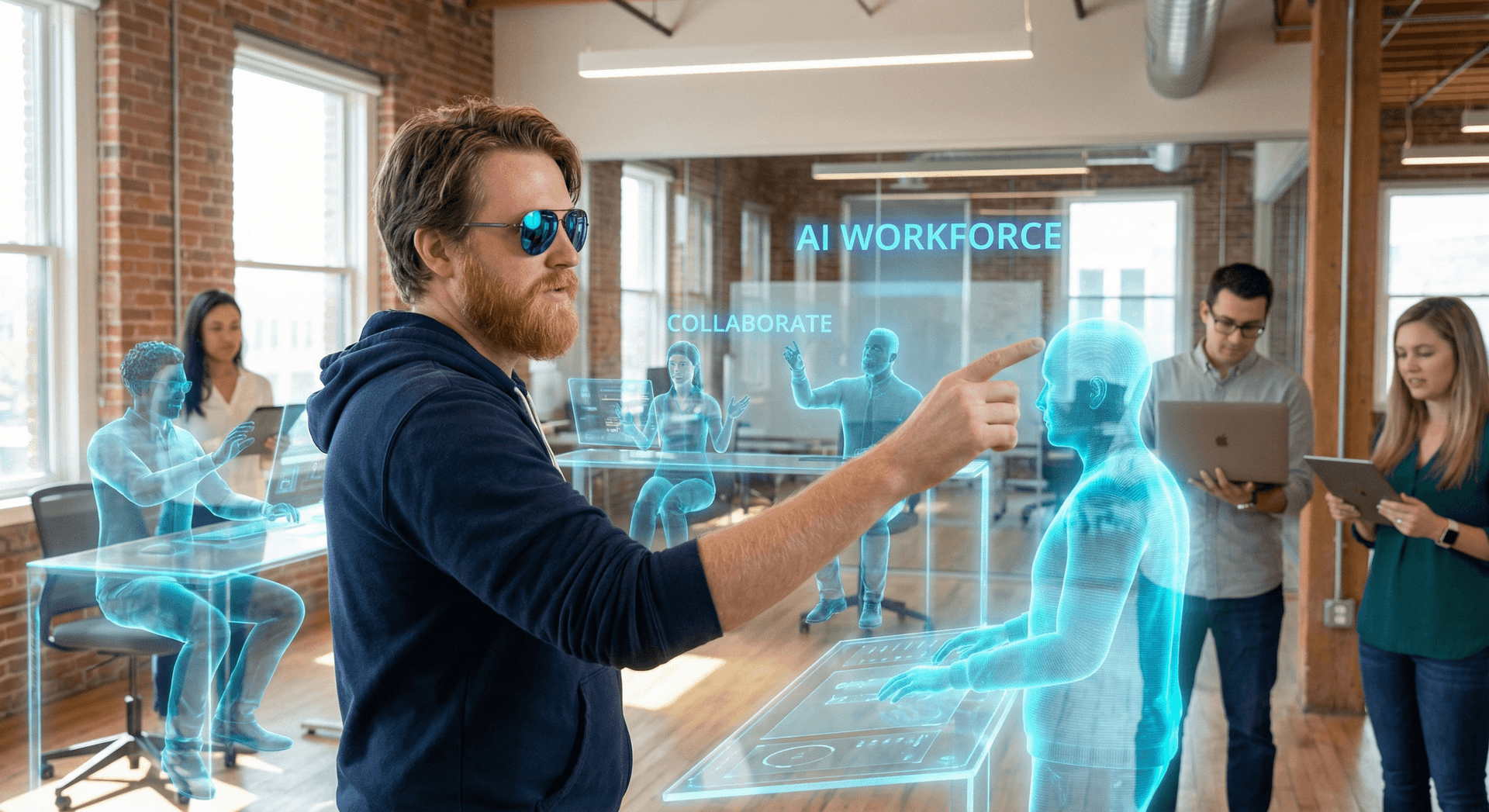
The most successful AI deployments are not about the AI alone. They are about how the AI and the human team work together. This dynamic — when it works well — creates a team that is more capable, more responsive, and more resilient than either humans or AI could be on their own.
What Humans Bring to the Team
Humans bring the qualities that AI cannot replicate: genuine empathy, creative problem-solving, moral judgment, relationship depth, and physical presence. When a long-time patient calls your medical practice in tears because they just received a difficult diagnosis, they need a human. When a homeowner is angry about a repair that went wrong, they need a human who can listen, empathize, and make it right. When a strategic business decision requires weighing intangibles — market intuition, relationship capital, ethical considerations — that is human territory.
Humans also bring strategic thinking. They set the direction for the business, define the boundaries within which the AI operates, and make the judgment calls that shape the company's reputation and culture. The AI teammate works within a framework that humans design and continuously refine.
What AI Brings to the Team
AI brings qualities that are difficult for humans to sustain: perfect consistency, unlimited availability, instant data recall, and the ability to handle many conversations simultaneously. Your AI teammate answers the phone the same way whether it is the first call of the day or the hundredth. It never forgets a detail, never gets flustered by a rude caller, and never needs a break.
AI also brings scale. A single AI teammate can handle the call volume that would require three or four human staff members. It can monitor multiple communication channels simultaneously. It can process data — checking schedules, verifying insurance, looking up order statuses — in seconds rather than minutes. This is not about speed for speed's sake. It is about removing bottlenecks that prevent your human team from doing their best work.
The Sweet Spot: How They Work Together
The best human-AI teams follow a clear division of labor. The AI handles the first touch — answering the call, gathering initial information, determining the nature of the request, and resolving routine matters autonomously. When the situation requires human judgment, empathy, or authority, the AI escalates seamlessly, passing along full context so the human does not have to start from scratch.
Think of it like a medical triage system. The AI teammate is the triage nurse — assessing the situation, handling the routine cases, and routing the complex ones to the right specialist. The human team members are the specialists — handling the cases that require their specific expertise, creativity, or emotional intelligence.
This model works because it respects what each team member — human and AI — does best. It does not ask the AI to fake empathy or make judgment calls beyond its capability. It does not ask humans to answer 80 routine calls a day when their talent is better used on the 10 calls that truly need a human touch.
| Capability | Human Team Members | AI Teammate |
|---|---|---|
| Empathy and emotional intelligence | Exceptional | Limited |
| Consistency across 100+ interactions/day | Difficult to sustain | Effortless |
| Creative problem-solving | Excellent | Rule-based only |
| 24/7 availability | Requires shifts/overtime | Built-in |
| Multi-channel simultaneous coverage | One conversation at a time | Unlimited concurrent |
| Institutional memory / data recall | Varies, often imperfect | Perfect recall |
| Relationship building | Genuine and lasting | Transactional |
| Processing speed (scheduling, lookup) | Minutes | Seconds |
| Handling ambiguity and nuance | Strong | Improving but limited |
| Scaling with demand | Requires hiring | Instant |
The Team Multiplier Effect

Real Fort Wayne Teams
The human-AI team model is not theoretical in Fort Wayne. It is already happening. Here are two partnerships between local business leaders and their AI teammates that illustrate what this looks like in practice.
Kyle Dudgeon + Ava
Kyle Dudgeon operates in a professional services environment where client communication is constant and the stakes are high. His AI teammate, Ava, manages the communication flow — handling initial client outreach, scheduling, follow-ups, and routine questions that do not require Kyle's direct expertise.
What makes this partnership effective is the escalation protocol. Ava knows exactly when to handle something autonomously and when to bring Kyle in. Routine scheduling? Ava handles it. A client with a complex situation that requires professional judgment? Ava gathers the relevant information and routes it to Kyle with full context, so he can respond efficiently and thoroughly. There is no gap in communication — Ava ensures that every client gets a response quickly, and Kyle ensures that every response requiring his expertise is handled with the care it deserves.
Kyle has described the dynamic as having a highly competent assistant who never drops the ball on the routine work, freeing him to focus entirely on the high-value work that his clients hire him for. That is the human-AI team in action.
Ken Button + Skywalker
Ken Button, founder of Cloud Radix, works alongside Skywalker — the AI that also serves as the company's primary content creator and knowledge base. This partnership is a daily collaboration. Ken provides the strategic direction, the industry expertise, and the client relationships. Skywalker handles research, content creation, data analysis, and communication workflows.
What is notable about this partnership is how deeply integrated it is. Skywalker does not operate in a separate silo — it is woven into the daily workflow of the business. When Ken identifies a new market opportunity, Skywalker researches the landscape, drafts the positioning, and creates the content. When a client needs a custom AI solution, Ken handles the relationship and strategy while Skywalker supports the technical implementation and documentation.
This is the model Cloud Radix recommends to every Fort Wayne business: not AI as a replacement for human leadership, but AI as an extension of it. Ken's expertise and judgment guide the business. Skywalker's speed, consistency, and breadth of knowledge amplify what Ken can accomplish in a day. The result is a business that punches well above its weight class.
Every Partnership Is Unique
Onboarding Your AI Teammate
Adding an AI teammate to your Fort Wayne business is not an overnight flip of a switch. It is a structured process — similar to onboarding a new human employee — that ensures the AI is properly trained, your team is prepared, and the transition is smooth. Here is what the process looks like, week by week.
Week One: Discovery and Data Gathering
The first week is about understanding your business deeply. This involves a detailed discovery session where we learn your services, your processes, your common customer questions, your scheduling rules, your escalation procedures, and your brand voice. We review your existing tools — CRM, calendar, phone system, website — and plan the integrations.
We also gather the data that will train your AI teammate: your FAQ documents, your service descriptions, your pricing information, your past call transcripts (if available), your email templates, and any standard operating procedures. The more data we have, the more capable your AI teammate will be from day one.
During this week, we also meet with your human team. Change management matters. Your staff needs to understand what the AI teammate will do, what it will not do, and how it will make their jobs easier rather than threatening them. We have found that when teams understand the AI is taking over the work they like least — the repetitive calls, the after-hours interruptions, the routine data entry — they welcome it.
Week Two: Training and Configuration
During the second week, we build and train your AI teammate using the data gathered in week one. This involves configuring the AI's knowledge base, setting up integrations with your business tools, defining the conversation flows for common scenarios, and establishing escalation rules.
We also configure the AI's personality and communication style to match your brand. If your business has a warm, casual tone, the AI matches that. If your business is more formal and professional, the AI adapts accordingly. We pay particular attention to how the AI handles sensitive topics, sets expectations around pricing and availability, and manages difficult callers.
Integration testing happens during this week as well. We ensure that when the AI books an appointment, it appears correctly in your calendar. When it logs a lead, the CRM entry has all the right fields. When it needs to escalate, the notification reaches the right person through the right channel.
Week Three: Testing With Your Team
Week three is about testing in a controlled environment. Your team interacts with the AI teammate in realistic scenarios — calling in as customers, sending test emails, trying to stump it with unusual questions. This testing phase serves two purposes: it validates the AI's performance and it builds your team's confidence in the technology.
We track every test interaction and refine the AI based on feedback. If the AI mishandles a common scenario, we correct it before launch. If your team identifies a gap — a question the AI cannot answer, a process it does not know — we fill it. This iterative testing is critical. An AI teammate that launches prematurely can damage customer trust; one that launches well-prepared builds trust from day one.
We also use this week to finalize the handoff protocols between the AI and your human team. When does the AI escalate? How does the escalation happen — warm transfer, notification, or queued callback? Who is the primary human contact for different types of escalations? These details matter enormously in practice.
Week Four: Monitored Go-Live
In the fourth week, your AI teammate goes live with real customers. But it is not unsupervised. We monitor every interaction during the first week of live operation, reviewing call transcripts, checking outcomes, and making real-time adjustments. Your team has a direct line to our support team for any issues or questions.
Most businesses see strong performance from day one of go-live, because of the thorough training and testing in weeks two and three. But there are always edge cases — unusual customer requests, unexpected phrasing, scenarios we did not anticipate — that come up in live operation. We catch and address these quickly, typically within hours.
By the end of week four, your AI teammate is operating independently within its defined boundaries, your human team is comfortable with the new workflow, and you have a clear dashboard showing exactly what the AI is handling and how it is performing.
Change Management Tips for Your Human Team
The technology is usually the easy part. The human dynamics require more attention. Here are the change management practices we have found most effective across Fort Wayne businesses:
- Involve your team early. Do not surprise your staff with an AI teammate. Include them in the discovery process. Ask what tasks they would love to offload. When people have input, they have ownership.
- Frame it as addition, not replacement. Be explicit: the AI teammate is joining the team to handle the work that nobody wants to do. Nobody is losing their job. Everyone is getting a better job.
- Celebrate the first wins. When the AI teammate handles a difficult after-hours call successfully, share it with the team. When it books an appointment that would have been a missed call, make sure everyone knows. Early wins build momentum.
- Create a feedback loop. Your team members will notice things the AI does well and things it could do better. Create a simple way for them to share that feedback — a shared document, a weekly check-in, a Slack channel. Their observations are invaluable for refining the AI's performance.
- Be patient with the learning curve. Just like a new human hire, your AI teammate will have a ramp-up period. It will make mistakes. The difference is that each mistake, once corrected, never happens again. Give it a few weeks to hit its stride.
Most Teams Love Their AI Teammate
What AI Teammates Do Best vs What Humans Do Best
Honest assessment matters. AI teammates are not good at everything, and neither are humans. The strongest teams leverage the genuine strengths of each and avoid asking either to do work they are not suited for. Here is an honest comparison.
Where AI Teammates Excel
Consistency. An AI teammate handles the 200th call of the week with the same energy, accuracy, and professionalism as the first. Humans naturally experience fatigue, mood fluctuations, and the cumulative effect of repetitive work. For tasks where consistency directly impacts customer experience — greeting callers, providing accurate information, following up on time — AI is exceptionally reliable.
Speed. An AI teammate can check a calendar, look up a customer record, verify insurance eligibility, and provide an answer in seconds. A human performing the same steps might take two to five minutes — not because they are slow, but because they are navigating multiple screens, reading through records, and processing information sequentially. For customers who value quick answers, this speed difference is meaningful.
Availability. AI teammates work around the clock without overtime, shift scheduling, or coverage gaps. For Fort Wayne businesses that compete on responsiveness — where the first company to answer gets the job — 24/7 availability is a significant competitive advantage.
Data processing. AI teammates can process, cross-reference, and analyze data at a scale and speed that humans simply cannot match. Reviewing a month of customer interactions for patterns, pulling metrics from a CRM, or generating reports — these are tasks where AI saves hours of human labor.
Multi-tasking. An AI teammate can handle dozens of conversations simultaneously across different channels. A human can handle one conversation at a time, maybe two if they are experienced. For businesses with high inbound volume, this parallelism eliminates wait times and missed contacts.
Where Humans Excel
Genuine empathy. When a patient is scared, a client is grieving, or a customer is furious, humans can connect emotionally in a way that AI cannot. This is not a limitation that AI will simply train away — empathy requires lived experience, emotional intelligence, and the ability to genuinely care. For moments that define customer relationships, human empathy is irreplaceable.
Creative problem-solving. When a situation falls outside the defined rules — when the standard process does not work and someone needs to improvise — humans excel. Creative problem-solving requires the ability to draw on diverse experiences, consider unconventional approaches, and take calculated risks. AI teammates follow their training; humans can think beyond it.
Judgment in ambiguous situations. Many business decisions involve incomplete information, conflicting priorities, and ethical considerations. Should you make an exception to your return policy for a long-time customer going through a tough time? Should you take on a project that stretches your team's capacity? These are human judgment calls that require wisdom, not just data.
Deep relationship building. Customers choose to work with people they trust. That trust is built through personal interactions, shared experiences, and the small moments — remembering a child's name, asking about a recent vacation, celebrating a milestone together — that create lasting business relationships. AI can be polite and professional, but it does not build relationships in the same way.
Physical presence and action. AI teammates live in the digital world. They cannot fix a furnace, examine a patient, show a house, or shake a hand. The physical work of every business remains firmly in human territory.
| Strength | AI Teammates | Human Team Members |
|---|---|---|
| Consistency under high volume | Excellent | Degrades with fatigue |
| Processing speed | Seconds | Minutes |
| 24/7 availability | Built-in | Requires shifts |
| Handling concurrent conversations | Unlimited | One at a time |
| Empathy in difficult moments | Simulated | Genuine |
| Creative problem-solving | Rule-based | Unlimited |
| Judgment in ambiguous situations | Limited | Strong |
| Relationship depth | Transactional | Personal and lasting |
| Physical tasks | None | Full capability |
| Learning from corrections | Instant and permanent | Gradual, may need reminders |
The takeaway is not that one is better than the other. The takeaway is that they are complementary. The best Fort Wayne businesses will be the ones that build teams where AI and humans each do what they do best, creating a combined capability that neither could achieve alone.
Cost of Adding an AI Teammate
Let us talk about money honestly. AI teammates are not free, and they are not a magic cost-cutting tool. They are an investment that, for the right businesses, delivers meaningful returns. Here is how to think about the costs and the value.
What It Costs
Cloud Radix AI teammates start at $997 per month for the Starter tier. The Professional tier is $2,497 per month for multi-channel operation and advanced integrations, and Enterprise is custom-priced for complex deployments. Additional AI Employees can be added for $697 per month each. API and model costs — the underlying AI processing — are billed separately based on your actual usage.
There is also an onboarding cost for the initial setup, training, and configuration. This varies based on the complexity of your business and the number of integrations required. We provide a detailed quote during the discovery process so there are no surprises. For a deeper cost breakdown, see our AI Employee pricing guide.
For context, here is how those costs compare to the human alternatives:
| Option | Monthly Cost | Availability |
|---|---|---|
| Full-time receptionist/admin (Fort Wayne avg.) | $3,000 - $4,500 + benefits | 40 hrs/week, minus PTO and sick time |
| Part-time receptionist | $1,500 - $2,500 | 20-25 hrs/week |
| Answering service | $300 - $1,200 | After hours only, message taking only |
| AI teammate (Cloud Radix) | $997 - $2,497 + API costs billed separately | 24/7/365, full workflow handling |
How to Think About ROI
The return on an AI teammate comes from several sources, and the mix depends on your business:
- Captured revenue from missed calls. If your business misses calls during busy periods or after hours, every captured call that converts to a customer is direct revenue that would not have existed otherwise. For many Fort Wayne service businesses, capturing even a handful of additional customers per month more than covers the cost of the AI teammate.
- Staff time redeployed to higher-value work. When your office manager spends two fewer hours per day on routine phone calls, that time can go toward work that directly grows the business — client relationships, process improvements, new service development. The value of this redeployed time often exceeds the cost of the AI.
- Reduced hiring pressure. Adding an AI teammate is not about eliminating headcount. It is about reducing the urgency to hire for roles that are hard to fill. If you are struggling to find a reliable receptionist — a common challenge in the Fort Wayne market — an AI teammate can bridge that gap while you search for the right human hire, or it can permanently handle the routine work so you can hire for a higher-value role instead.
- Improved customer experience. Faster response times, fewer missed calls, and more consistent service lead to better reviews, more referrals, and higher customer retention. These are harder to quantify but often represent the largest long-term value.
- Reduced overtime and after-hours costs. If you currently pay staff overtime for after-hours coverage or use an expensive answering service, an AI teammate that provides full-service after-hours support can reduce those costs significantly.
What AI Teammates Do Not Replace
It is important to be clear about what an AI teammate does not do. It does not replace your need for skilled human employees. Your HVAC company still needs technicians. Your law firm still needs attorneys. Your medical practice still needs clinicians. The AI teammate handles communication, scheduling, and administrative automation workflows — it does not do the core work of your business.
Think of it as adding a highly capable team member to handle a specific category of work, not as a strategy for reducing headcount. The businesses that get the most value from AI teammates are the ones that use the freed-up human capacity to grow — serving more customers, improving quality, expanding services — rather than cutting staff.

The Right Way to Think About Cost
Frequently Asked Questions
Q1.What exactly is an AI teammate?
An AI teammate is a purpose-built AI system that joins your business team to handle specific workflows — phone calls, scheduling, customer inquiries, lead qualification, and more. Unlike generic AI tools, it is trained on your business data, integrated with your tools, and designed to work alongside your human team as a reliable, always-available collaborator.
Q2.Will customers know they are talking to AI?
Modern AI teammates communicate naturally across phone, email, text, and chat. We recommend transparency — letting customers know they are interacting with an AI if they ask. In practice, most customers focus on whether their issue is resolved quickly and correctly, regardless of who or what is handling it.
Q3.How is this different from a chatbot?
Traditional chatbots follow rigid scripts and break down when a conversation goes off-script. AI teammates understand natural language, maintain context across long conversations, handle unexpected questions intelligently, and take real actions in your business systems — booking appointments, checking availability, routing calls. The experience is closer to talking with a knowledgeable human team member than clicking through a decision tree.
Q4.What happens when the AI cannot handle a situation?
Every AI teammate is configured with clear escalation protocols. When it encounters a situation outside its training or authority, it transfers to the appropriate human team member with full context of the conversation. The customer never falls through the cracks. The AI recognizes its limits and routes to a human smoothly.
Q5.Will this replace my staff?
No. AI teammates handle the routine, repetitive work that takes up your team's time — answering common questions, scheduling appointments, processing routine requests. Your human team is freed to focus on complex work, relationships, and the tasks that genuinely require human expertise. Most businesses find their team is happier and more productive after adding an AI teammate.
Q6.How long does onboarding take?
Typical onboarding takes about four weeks: one week of discovery and data gathering, one week of training and configuration, one week of testing with your team, and one week of monitored go-live. By the end of week four, your AI teammate is operating independently within defined boundaries.
Q7.What does it cost?
Cloud Radix AI teammates start at $997 per month (Starter tier), with Professional at $2,497 per month and Enterprise at custom pricing. API and model costs are billed separately based on usage. Compare that to $3,000 to $4,500 per month for a full-time receptionist or admin hire, plus benefits.
Q8.Can the AI teammate work with my existing software?
Yes. AI teammates integrate with your existing CRM, calendar, phone system, email platform, and other business tools. When the AI books an appointment, it appears in your real calendar. When it logs a lead, it shows up in your real CRM. No double entry, no manual syncing.
Q9.Is my business data secure?
Absolutely. Cloud Radix uses enterprise-grade encryption for data at rest and in transit. Your business data is never shared with other clients and never used to train public AI models. You retain full ownership and control of all your data.
Q10.What industries work best with AI teammates in Fort Wayne?
Any business with significant inbound communication volume benefits. In Fort Wayne, we see especially strong results with law firms, HVAC and home service companies, medical and dental practices, manufacturers, real estate agencies, insurance offices, and professional service firms.
Q11.Can I start small and expand later?
Yes. Many Fort Wayne businesses start with a single channel — usually phone handling — and expand to email, text, chat, and additional workflows as they see results and build confidence. You can grow your AI teammate's responsibilities at your own pace.
Q12.What if I am not happy with the results?
Cloud Radix does not lock you into long-term contracts. We earn your business month to month. If your AI teammate is not delivering value, we work with you to improve it. If it still does not work for your business, you can cancel without penalty.
Sources
This article draws on Cloud Radix's direct experience deploying AI teammates for Fort Wayne businesses, as well as the following general references:
- Bureau of Labor Statistics. Occupational Employment and Wage Statistics for Receptionists and Information Clerks (May 2025 data). Used for Fort Wayne-area salary benchmarking. bls.gov/oes
- McKinsey Global Institute. “The Economic Potential of Generative AI: The Next Productivity Frontier” (June 2023). General framework for understanding AI's impact on knowledge work and business operations. mckinsey.com
- Harvard Business Review. Research and articles on human-AI collaboration, change management in AI adoption, and the future of work. General thought leadership referenced for the team dynamic sections. hbr.org
- Cloud Radix client deployments. First-party data and observations from AI teammate deployments across Fort Wayne businesses in legal, HVAC, medical, manufacturing, and real estate sectors (2025-2026).
- Greater Fort Wayne Inc. Regional economic data and workforce statistics for northeast Indiana. Used for context on local business landscape and staffing challenges. greaterfortwayneinc.com
Add an AI Teammate to Your Fort Wayne Business
Whether you need help with phone calls, scheduling, lead qualification, or customer service — we will build an AI teammate that works alongside your team and makes everyone more effective.
Schedule a Free ConsultationNo contracts. No pressure. Just an honest conversation about what would help your business.