What Are AI Workers?
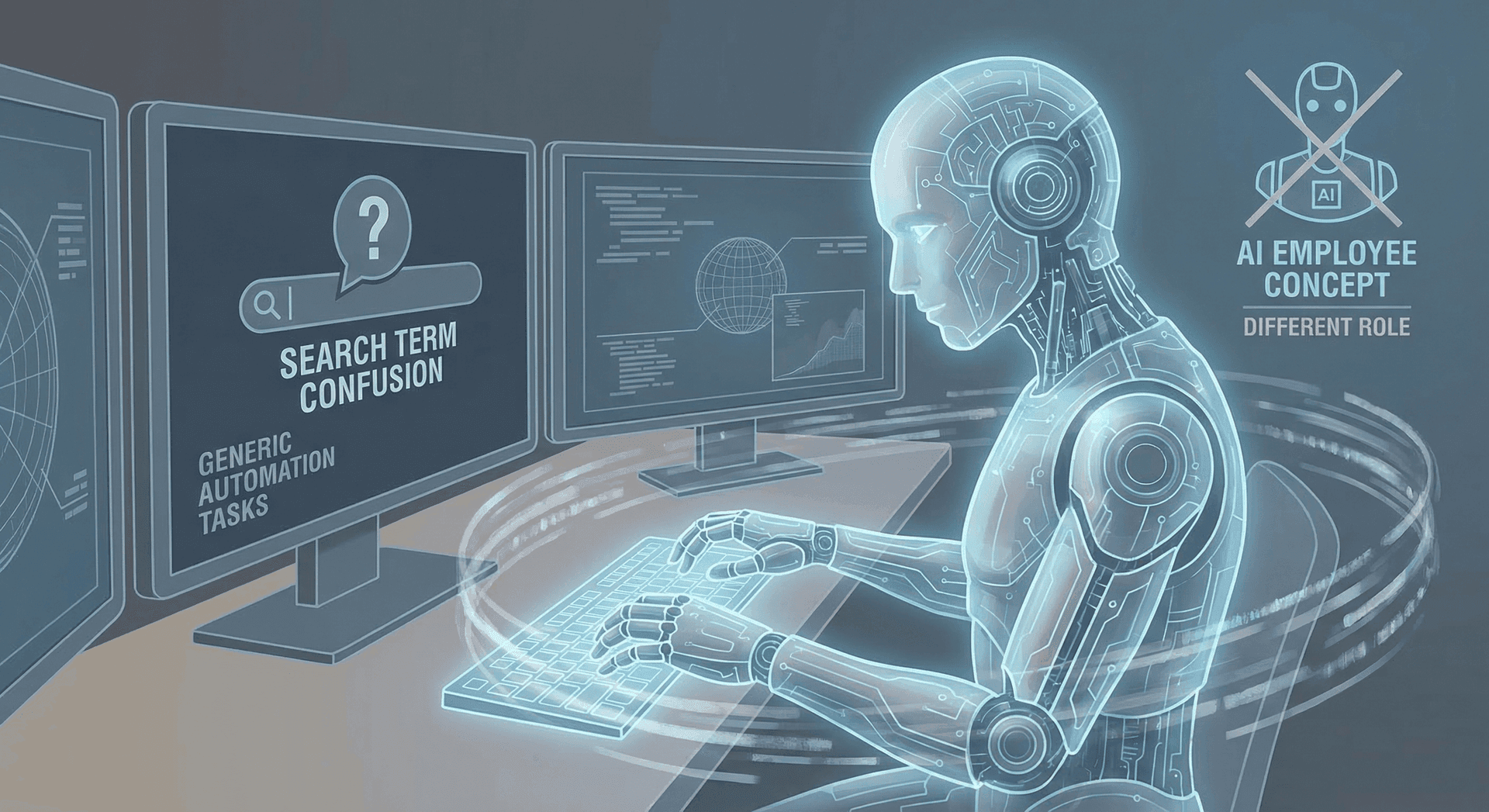
If you’re a business owner in Fort Wayne, Auburn, or anywhere in Northeast Indiana, you’ve probably searched for something like “AI workers Fort Wayne” or “AI for my business” in the last few months. And you probably found a confusing mix of products, promises, and buzzwords.
Let’s clear that up right now.
An AI worker is an artificial intelligence system that performs real business tasks. Not a toy. Not a demo. Not a chatbot that says “I’m sorry, I don’t understand” every third question. A properly deployed AI worker answers your phones, qualifies your leads, books your appointments, follows up with prospects, manages your CRM, handles customer service inquiries, and does it all 24 hours a day, 365 days a year.
You might also hear the terms “AI employee,” “AI agent,” or “AI assistant.” For practical purposes, these terms describe the same category of technology — though there are meaningful differences we break down in our AI Employee vs chatbot comparison. At Cloud Radix, we use “AI workers” and “AI Employees” interchangeably — because what matters isn’t the label. What matters is whether the system actually does the work.
The concept is straightforward: take the repetitive, time-consuming tasks that eat up your team’s day — answering the same questions, scheduling the same types of appointments, entering the same data into the same systems — and hand them to an AI that’s been specifically trained on how your business operates.
How AI Workers Actually Function
Under the hood, modern AI workers are built on large language models — the same foundational technology behind ChatGPT and similar tools. But a business AI worker goes far beyond what you get from a general-purpose AI chat interface. Here’s what makes them different:
- Natural Language Processing (NLP) — AI workers understand human language in context. They don’t rely on keyword matching or decision trees. When a customer calls and says “I need to change my appointment from Tuesday to Thursday,” the AI understands the intent, checks availability, and makes the change — just like a human receptionist would.
- Business-Specific Training — A generic AI knows a lot about everything. A business AI worker knows a lot about your business. It’s trained on your services, your pricing, your processes, your FAQ, your customer personas, and your preferred communication style.
- Multi-Channel Operation — A well-built AI worker doesn’t just handle one communication channel. It answers phone calls, responds to text messages, manages email, handles web chat, and maintains consistent context across all of them. If a customer texts a question and then calls for follow-up, the AI knows what was already discussed.
- System Integration — AI workers connect to your existing business tools: your CRM, your calendar, your phone system, your email platform, your project management software. They don’t exist in a silo — they operate within the ecosystem you already use.
- Persistent Memory — Unlike a one-off AI chat, a business AI worker remembers. It remembers that Mrs. Johnson prefers morning appointments. It remembers that the Smith account had a billing issue last month. It remembers that Lead #4472 asked about your premium service package three days ago and hasn’t responded yet.
- Escalation Intelligence — The AI knows what it knows, and more importantly, it knows what it doesn’t know. When a situation exceeds its confidence level — an angry customer, a complex technical question, a high-stakes negotiation — it escalates to a human team member with full context, so the handoff is seamless.
The AI Worker Spectrum: From Simple Automation to Full AI Employees
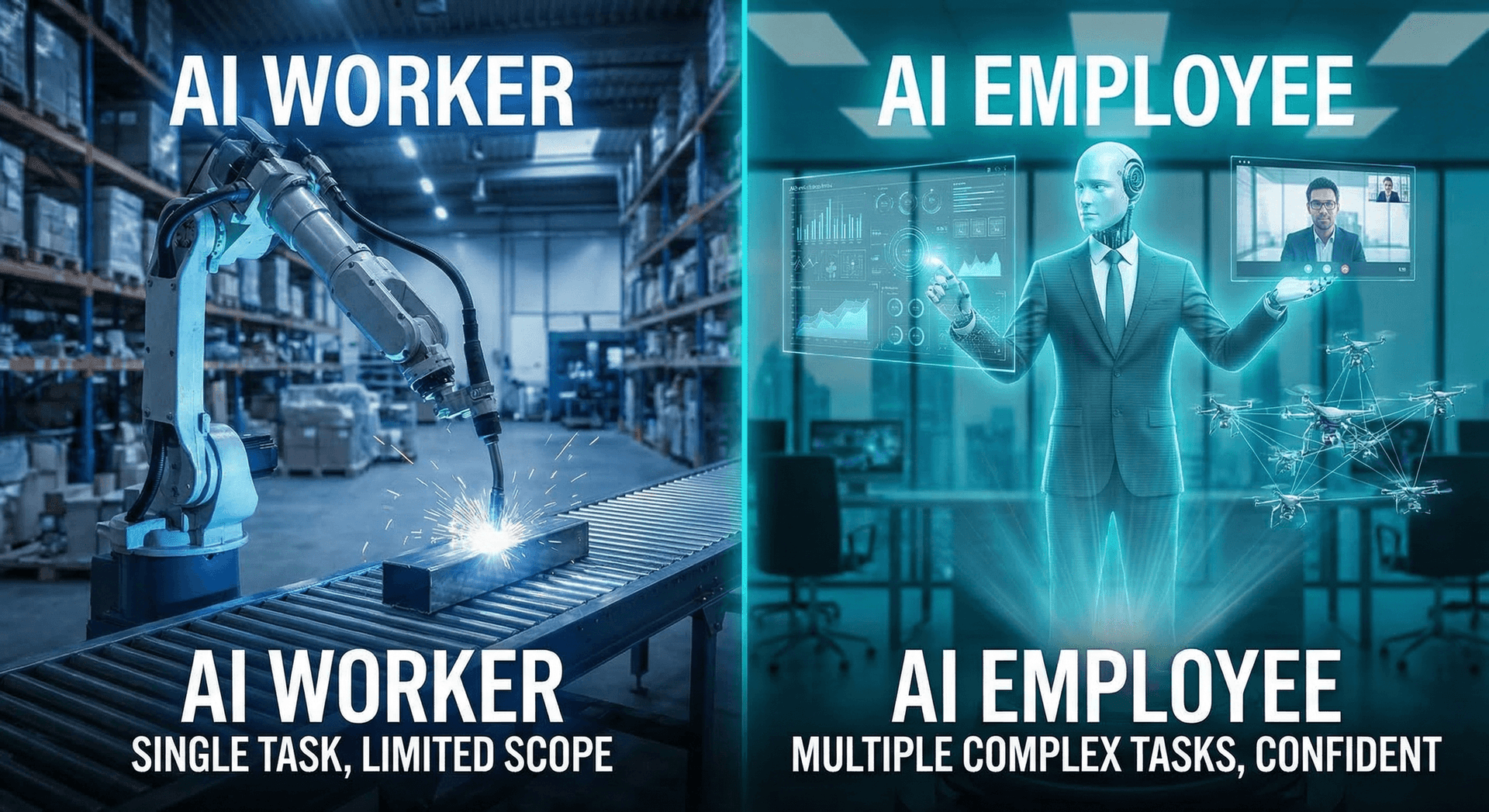
Not all AI workers are created equal. The technology exists on a spectrum, and understanding where different solutions fall on that spectrum is critical to making the right choice for your business.
Level 1: Rule-Based Automation
At the simplest level, you have tools that follow if-then rules. “If someone fills out a form, send this email.” “If a keyword appears, route to this department.” These are technically automations, not AI, but many products market them as AI workers. They’re useful for very predictable, structured tasks — but they break the moment a situation deviates from the script.
Level 2: Single-Task AI Tools
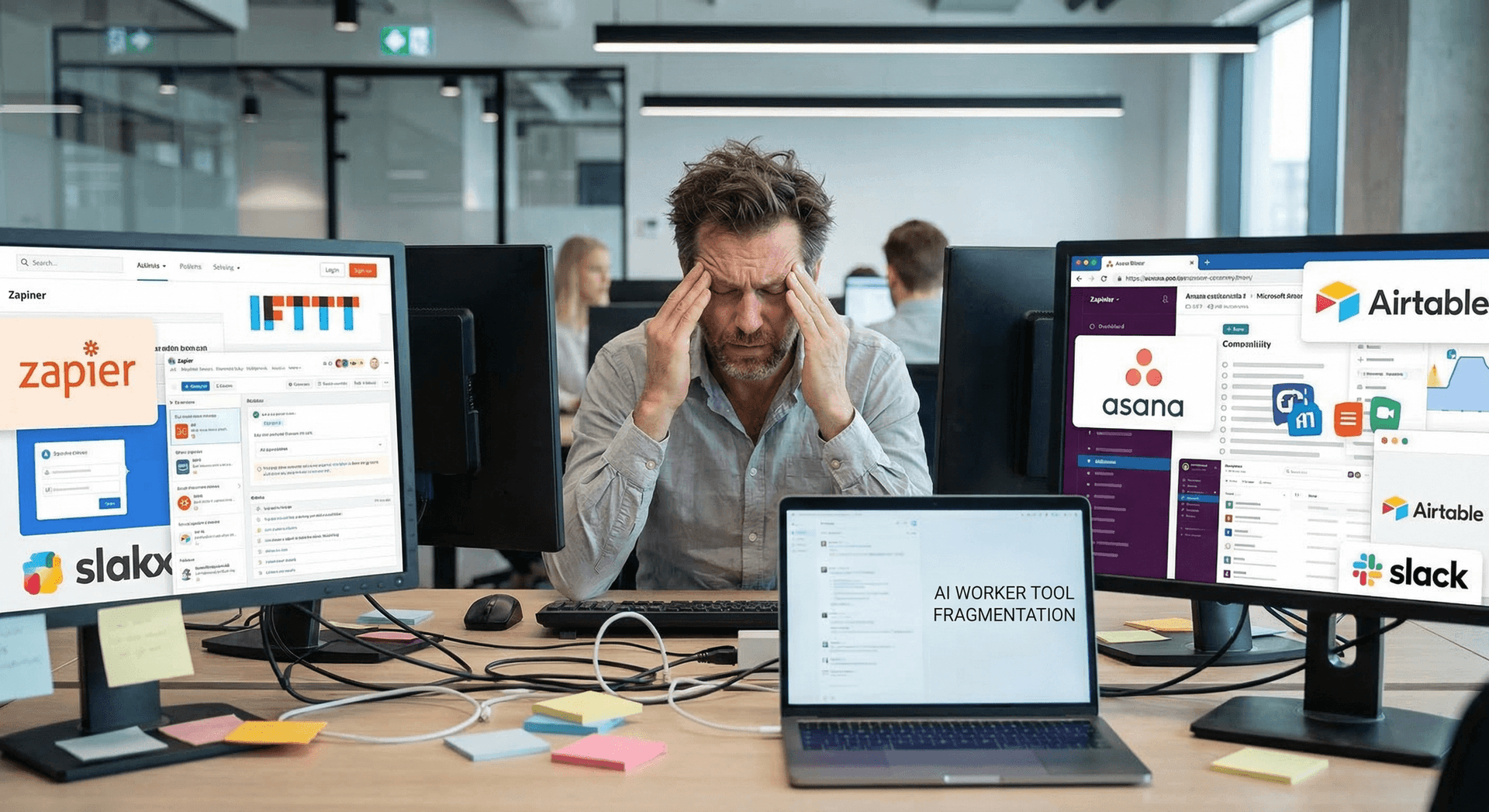
The next level includes genuine AI-powered tools that handle one function well. An AI transcription service. An AI writing tool. An AI-powered chatbot. These leverage real machine learning but are designed for narrow use cases. They don’t integrate with your other systems, they don’t share context across tasks, and they require you to manage each tool separately.
Level 3: Multi-Function AI Workers
This is where things get interesting for business owners. A multi-function AI worker handles several related tasks within an integrated system. It might manage both scheduling and follow-up, or handle both phone calls and CRM updates. The functions share context — the AI that answers the phone knows what’s in the calendar, and vice versa.
Level 4: Full AI Employees
At the top of the spectrum, a full AI employee operates across your entire business operation. It handles front-office communication, back-office data management, customer relationship nurturing, reporting, and more — all within a single integrated system. This is what Cloud Radix builds: AI workers that function as true AI Employees, operating as a member of your team rather than a standalone tool.
| Characteristic | Simple Automation | Single-Task AI | Multi-Function AI | Full AI Employee |
|---|---|---|---|---|
| Understanding | Rules only | One domain | Related domains | Your whole business |
| Channels | 1 | 1 | 2-3 | All (phone, text, email, web, CRM) |
| Memory | None | Session only | Partial | Full persistent memory |
| Integration | Basic triggers | API if available | Select systems | Deep integration across stack |
| Customization | Templates | Limited settings | Moderate | Fully custom to your business |
| Escalation | Fails silently | Generic error | Basic routing | Intelligent handoff with context |
Where Cloud Radix Fits
What AI Workers Can Do for Fort Wayne Businesses
The best way to understand the value of AI workers is to see how they apply to real business functions. We cataloged 98 specific things an AI Employee can do in a separate guide — below is a comprehensive breakdown organized by department, with specific examples for industries across Fort Wayne and Northeast Indiana.
Front Office: Phones, Scheduling, and Intake
For most Fort Wayne businesses, the front office is where AI workers deliver the most immediate, measurable impact. Every missed call is a missed opportunity — and based on our experience, the average small business misses a significant percentage of inbound calls during business hours, and nearly all of them after hours.
Phone Handling
An AI worker answers every call — first ring, every time. It greets callers naturally (not with a robotic menu), identifies the reason for the call, and routes appropriately. For straightforward requests like scheduling, pricing questions, or business hours, it handles the entire call. For complex or sensitive situations, it transfers to a human team member with a real-time summary of what was discussed.
Fort Wayne HVAC example: A heating and cooling company in Allen County gets a spike in calls every time temperatures drop. Their AI worker handles the surge without adding staff — scheduling service appointments, providing basic troubleshooting guidance, and flagging emergency situations for immediate human response.
Appointment Scheduling
AI workers don’t just take messages about appointments — they book them directly into your calendar system. They check availability in real time, account for buffer time between appointments, handle rescheduling and cancellations, and send confirmation messages via text or email.
Fort Wayne legal example: A law firm in downtown Fort Wayne uses their AI worker to handle initial client intake. When a potential client calls, the AI qualifies the case type, collects essential information, checks attorney availability, and books a consultation — all before a human attorney spends a single minute on the matter.
Lead Intake and Qualification
Beyond just answering calls, AI workers qualify leads in real time. They ask the right questions based on your qualification criteria, score leads based on their responses, and route high-priority prospects to your sales team immediately while nurturing lower-priority leads through automated follow-up sequences.
Fort Wayne real estate example: A real estate agency uses their AI worker to qualify buyer leads. The AI asks about budget range, preferred neighborhoods, timeline, pre-approval status, and property type — then routes qualified buyers directly to the appropriate agent with a complete profile.
The Phone Problem Is Bigger Than You Think
Back Office: Data Entry, CRM, and Reporting
The back office is where AI workers quietly save hours every day — work that’s invisible to customers but essential to operations.
CRM Management
One of the most common complaints we hear from Fort Wayne business owners: “My team doesn’t update the CRM.” It’s not laziness — CRM data entry is tedious, and when your team is busy serving customers, it’s the first thing that falls through the cracks. AI workers handle CRM updates automatically. Every call, every email, every interaction gets logged without anyone lifting a finger.
Data Entry and Processing
Beyond CRM, AI workers handle routine data entry across your business systems. Invoice processing, form data extraction, contact deduplication, record updates — the kind of work that’s necessary but doesn’t require human judgment.
Fort Wayne manufacturing example: A manufacturing company in the Fort Wayne area uses their AI worker to process vendor communications, extract key information from purchase orders, and update their inventory management system — reducing manual data entry for their operations team significantly.
Reporting and Analytics
AI workers can pull data from across your systems and generate reports automatically. Daily sales summaries, weekly pipeline reviews, monthly performance dashboards — delivered to your inbox without you having to log into three different platforms and build a spreadsheet.
Fort Wayne medical practice example: A medical practice tracks patient communication metrics, appointment utilization rates, and follow-up completion — all compiled automatically by their AI worker and delivered as a weekly summary to the practice manager.
Marketing and Content
Marketing is one of the areas where AI workers have evolved most rapidly. What used to require a dedicated marketing hire or an expensive agency can now be handled — at least partially — by a well-configured AI worker.
Content Creation
AI workers can draft blog posts, social media content, email newsletters, and marketing copy — all in your brand voice. The key word is “draft.” Based on our experience, AI-generated content is best used as a high-quality starting point that a human reviews and refines, not as a fully automated content pipeline. The AI handles the heavy lifting of research and initial drafting; your team adds the human touch that makes it authentic.
Email Campaign Management
AI workers can manage segmented email campaigns: identifying the right audience, personalizing content based on interaction history, optimizing send times, and tracking engagement metrics. For Fort Wayne businesses that know they should be doing email marketing but don’t have time to manage it, an AI worker makes it feasible.
Social Media
From scheduling posts to responding to comments and direct messages, AI workers can maintain your social media presence consistently. For businesses in Fort Wayne’s local market, this means staying visible in community conversations, local Facebook groups, and neighborhood-focused platforms — without dedicating staff hours to social media management.
Marketing AI — Be Honest About What It Does
Research and Competitive Intelligence
This is one of the most underutilized capabilities of AI workers, and it’s particularly valuable for Fort Wayne businesses competing in regional markets.
Competitive Monitoring
AI workers can monitor competitor websites, pricing changes, new service offerings, and public reviews. For a Fort Wayne HVAC company, that means knowing when a competitor in Auburn launches a new maintenance plan — and having the intelligence to respond strategically rather than reactively.
Market Analysis
AI workers can synthesize data from multiple sources to give you a clear picture of market trends, customer sentiment, and emerging opportunities in the Northeast Indiana market. Instead of spending hours reading industry reports and local business news, your AI worker delivers a concise briefing with the information that’s relevant to your specific business.
Customer Feedback Analysis
Across Google reviews, social media mentions, customer surveys, and support interactions, your business generates a wealth of customer feedback data. AI workers can aggregate and analyze this data, identifying patterns, common pain points, and opportunities for improvement that would be invisible without systematic analysis.

Customer Service: 24/7 Availability and Multilingual Support
Customer service is where AI workers shine brightest — and where the impact on customer satisfaction is most direct.
24/7 Availability
The most obvious advantage: AI workers don’t sleep. For Fort Wayne businesses that serve customers outside of standard business hours — which, in 2026, is most businesses — this means every inquiry gets a response within seconds, whether it comes in at 2 PM or 2 AM. No voicemail boxes. No “we’ll get back to you tomorrow.” No lost customers who needed help on a Saturday night.
Consistent Quality
Human customer service quality varies. Even great employees have bad days, get overwhelmed during high-volume periods, or forget a detail from training. AI workers deliver the same quality of service on the first call of the day and the five-hundredth. They don’t get tired, frustrated, or distracted.
Multilingual Support
Fort Wayne’s population has grown increasingly diverse, with significant communities speaking Spanish, Burmese, and other languages. AI workers can communicate fluently in multiple languages — a capability that would require hiring multilingual staff or contracting translation services. For businesses in Allen County serving diverse customer bases, this is a meaningful competitive advantage.
Issue Resolution
For common, well-defined customer issues — billing questions, order status, return processing, appointment rescheduling — AI workers can handle complete resolution without human involvement. Based on our deployments, a well-trained AI worker typically resolves a significant majority of standard customer service interactions autonomously, escalating only the genuinely complex or sensitive situations.
How AI Workers Are Trained on Your Business
This is the section that separates serious AI worker deployments from generic tools with an “AI” badge. The training process is what makes the difference between an AI worker that sounds robotic and one that sounds like it’s been working at your company for years.
At Cloud Radix, training an AI worker is not a one-time upload of a FAQ sheet. It’s a structured, multi-phase process that produces a system genuinely tailored to your business.
Phase 1: Business Discovery
Before any technical work begins, we sit down with you — often in person, here in Fort Wayne — and learn your business inside and out. This includes:
- Your services and products — not just what you sell, but how you sell it, what customers typically ask, and what differentiates you from competitors in the Fort Wayne market.
- Your customer personas — who calls you, why they call, what they expect, and how they prefer to communicate.
- Your processes — how do leads flow through your business? What happens when someone calls? How are appointments scheduled? What’s the handoff process when a lead needs to speak with a specific person?
- Your voice and brand — are you formal or casual? Do you use industry jargon or plain language? What tone feels right for your customers?
- Your pain points — where are you losing leads? What tasks consume the most time? What would free up your team to focus on higher-value work?
Phase 2: Data Integration
Next, we connect the AI worker to your existing systems and feed it the business-specific data it needs to operate effectively:
- CRM data — customer records, interaction history, pipeline stages
- Service catalogs — what you offer, pricing structures, availability
- FAQ and knowledge base — common questions, approved answers, company policies
- Call recordings — how your best team members handle calls (with permission and appropriate privacy measures)
- Email templates and sequences — your existing communication patterns
- Calendar and scheduling rules — availability, buffer times, appointment types
Phase 3: Behavior Configuration
This is where the AI worker’s personality and judgment take shape. We configure:
- Escalation rules — exactly when and how the AI should hand off to a human. These are specific and customizable: “If a caller mentions a lawsuit, transfer immediately to [attorney name].” “If a lead qualifies as high-value, send a text alert to [sales manager].”
- Confidence thresholds — how certain the AI needs to be before answering autonomously versus seeking confirmation or escalating.
- Response boundaries — what the AI should and shouldn’t say. For regulated industries like healthcare or legal in Allen County, this is particularly important.
- Follow-up sequences — when and how the AI follows up with leads, what triggers a follow-up, and how persistent it should be.
Phase 4: Testing and Refinement
Before your AI worker goes live, we put it through extensive testing. We simulate real call scenarios, edge cases, and difficult situations. We test with different accents, conversation styles, and unexpected requests. We refine until the system handles the vast majority of interactions naturally and effectively.
Phase 5: Monitored Launch
When the AI worker goes live, we monitor closely for the first two to four weeks. We review real interactions, identify areas for improvement, and make ongoing adjustments. This isn’t a “set it and forget it” process — the first month of live deployment is an active training period where the AI worker gets measurably better with each passing day.
Phase 6: Continuous Learning
Training never truly ends. As your business evolves — new services, new team members, new processes — your AI worker is updated accordingly. Seasonal changes, market shifts, and customer feedback all inform ongoing refinements. A Cloud Radix AI worker deployed today will be significantly more capable six months from now than it is at launch.
How This Differs from Generic AI Tools
Real Fort Wayne Deployments
Theory and capability descriptions are useful, but nothing tells the story like real deployments. Here are three AI workers operating in the Fort Wayne area right now — what they do daily, how they were built, and what the results look like.
Ava — Factory Direct Homes Center
Business: Factory Direct Homes Center, operated by Kyle Dudgeon in Fort Wayne. Factory Direct sells manufactured and modular homes — a business where lead response time and follow-up consistency directly impact revenue.
The challenge: Kyle was dealing with a problem familiar to every small business owner in Fort Wayne. Leads were coming in from multiple channels — phone, web forms, Facebook, walk-ins — and there was no consistent system to capture, qualify, and follow up with every one. Calls went to voicemail. Web leads sat in an inbox. Follow-up was sporadic because the team was busy with in-person customers.
What Ava does daily:
- Answers every inbound call to Factory Direct Homes, day and night
- Qualifies leads by asking about budget, timeline, preferred home size, and location preferences
- Books showroom appointments directly into Kyle’s calendar
- Sends personalized follow-up texts and emails to leads who don’t book immediately
- Updates the CRM with every interaction — no manual data entry
- Escalates high-priority leads (ready to buy, large budget) to Kyle’s phone immediately
The result: Kyle no longer worries about missed calls or lost leads. Ava operates as a consistent, reliable front-line team member who handles the high-volume repetitive work so Kyle and his team can focus on what they do best — helping families find homes.
Skywalker — Cloud Radix Internal
Business: Cloud Radix itself. We deploy AI workers for clients — and we use one ourselves. Skywalker is our internal AI worker, and it’s the system that proves the technology daily.
What Skywalker does daily:
- Handles inbound inquiries from businesses interested in AI worker deployments
- Qualifies leads based on business type, size, current challenges, and budget range
- Assists with content creation — research, drafting, and optimization for our blog and marketing materials
- Manages internal project coordination and documentation
- Monitors industry developments and competitive intelligence across the AI services landscape
Why this matters: When you work with Cloud Radix, you’re working with a team that uses its own product every day. We don’t just build AI workers — we depend on one. That means every improvement we discover internally gets applied to client deployments, and every client deployment teaches us something that makes Skywalker better.
What These Deployments Share
The Economics of AI Workers
Let’s talk about money honestly. AI workers are an investment, and like any business investment, the question isn’t just “how much does it cost?” but “what do I get for that cost, and how does it compare to the alternatives?” For a full cost breakdown, see our AI Employee pricing guide.
Cloud Radix Pricing
Cloud Radix offers three tiers for AI worker deployments:
- Starter — $997/month — Core AI worker functionality: phone handling, lead qualification, appointment scheduling, basic CRM integration. Ideal for smaller Fort Wayne businesses or those starting their AI journey.
- Professional — $2,497/month — Everything in Starter plus multi-channel operation (phone, text, email, web), advanced CRM management, follow-up sequences, reporting, and deeper system integrations.
- Enterprise — Custom pricing — Full AI Employee deployment with comprehensive business integration, custom workflows, advanced analytics, priority support, and multi-department operation.
Important note on pricing: API and model costs (the cost of the underlying AI infrastructure) are billed separately based on usage. This varies by volume — a business handling 50 calls a day will have higher API costs than one handling 10. We’re transparent about this because we believe businesses should understand exactly what they’re paying for.
Comparison to Human Employee Costs
For context, here’s what it costs to hire human employees for comparable roles in the Fort Wayne / Northeast Indiana market:
| Role | Annual Cost (Fort Wayne) | Monthly Cost | AI Worker Comparison |
|---|---|---|---|
| Receptionist / Front Desk | $28,000–$36,000 + benefits | $2,800–$3,600 | Starter tier handles this |
| Administrative Assistant | $32,000–$42,000 + benefits | $3,200–$4,200 | Professional tier handles this |
| Customer Service Rep | $30,000–$38,000 + benefits | $3,000–$3,800 | Starter tier + API costs |
| Marketing Coordinator | $38,000–$52,000 + benefits | $3,800–$5,200 | Partially handled by Professional+ |
| Operations Assistant | $35,000–$48,000 + benefits | $3,500–$4,800 | Enterprise tier handles this |
A few things to note about this comparison:
- An AI worker operates 24/7. A human employee works 40 hours a week. To get 24/7 coverage with humans, you need roughly 4.2 full-time employees — which multiplies the cost by more than four.
- Benefits add substantially to human costs. Health insurance, PTO, payroll taxes, and other benefits typically add 25-35% to base salary costs in the Fort Wayne market.
- Turnover is expensive. The cost of recruiting, hiring, and training a replacement employee is significant. AI workers don’t quit, don’t call in sick, and don’t need to be replaced.
- An AI worker scales without additional cost. When call volume doubles, you don’t need to hire a second AI worker. API costs increase proportionally, but the base capability stays the same.
Where AI Workers Save Money
Based on our experience with Fort Wayne deployments, the primary financial benefits of AI workers come from:
- Captured revenue — leads that would have been lost to missed calls or slow follow-up are now captured and converted. This is often the single largest financial impact.
- Time recapture — hours your team currently spends on phone answering, scheduling, data entry, and follow-up are freed up for higher-value work.
- Consistency gains — fewer errors, fewer missed steps, fewer things falling through the cracks. The financial impact of consistency is harder to measure but very real.
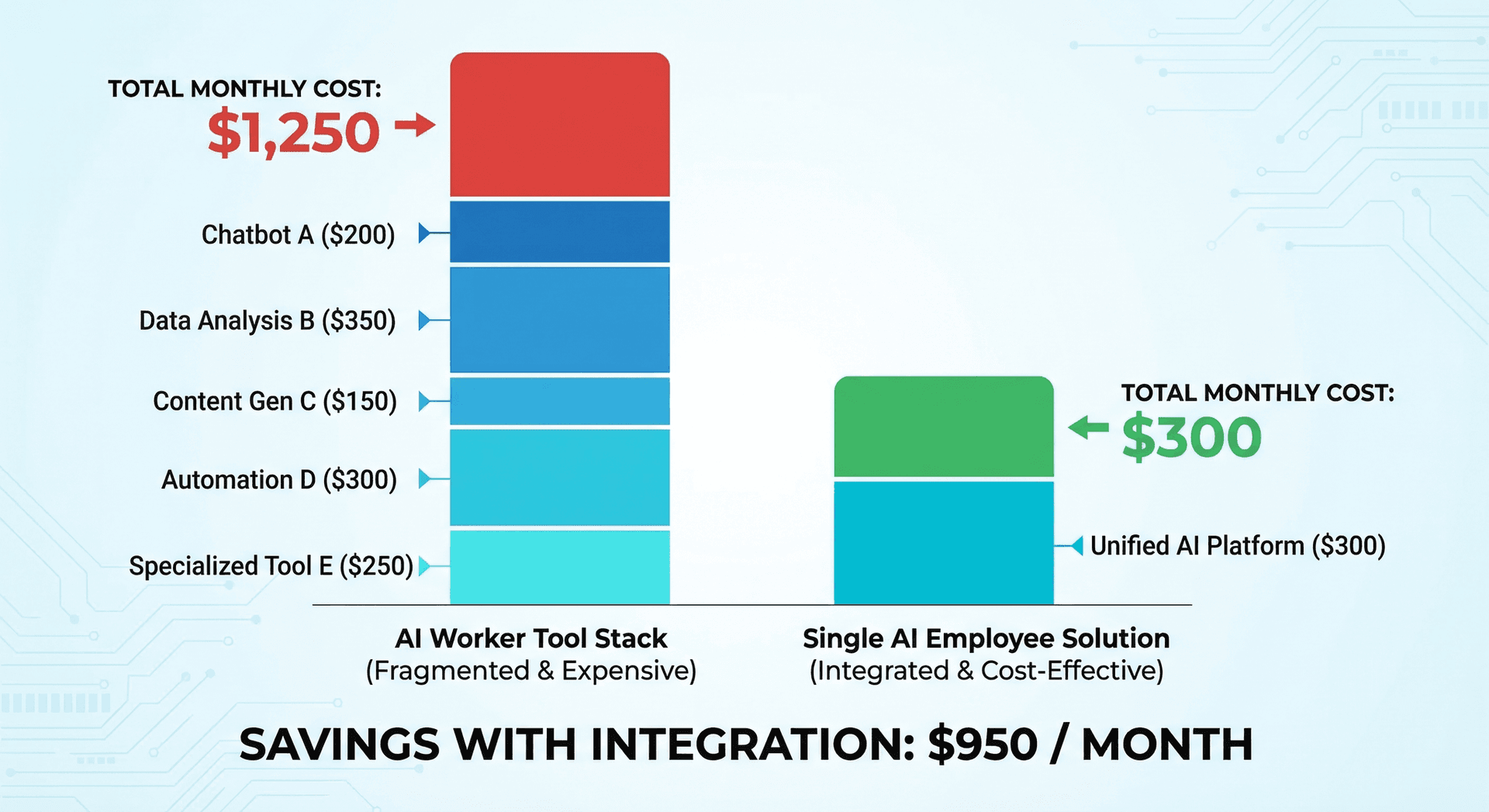
- Tool consolidation — many businesses replace multiple standalone AI tools with a single AI worker, reducing total software costs.
Where Human Workers Remain Essential
We’d be dishonest if we claimed AI workers can replace all human roles. They can’t. Here’s where human team members remain essential and irreplaceable:
- Complex relationship management — high-touch client relationships, especially in professional services, require human empathy, judgment, and authenticity that AI can’t replicate.
- Creative strategy — while AI can execute marketing tasks, the strategic vision and creative direction still need human brains.
- Physical work — AI workers are digital. Your HVAC technician, your construction crew, your medical staff — those roles require physical presence.
- High-stakes decisions — hiring decisions, legal judgments, medical diagnoses, financial strategy — these require human accountability and judgment.
- Leadership and culture — building a team, setting values, and creating company culture are fundamentally human activities.
The Right Way to Think About AI Worker ROI
How to Evaluate AI Worker Solutions
The market for AI worker solutions is growing fast, and not every provider delivers the same quality. Whether you’re considering Cloud Radix or another provider, here are the criteria that matter when evaluating AI worker solutions for your Fort Wayne business.
1. Training Depth
Ask any provider: “How do you train the AI on my specific business?” If the answer is “you fill out a template” or “you upload a FAQ sheet,” that’s a Level 1 or Level 2 solution. A serious AI worker deployment requires deep discovery, business-specific data integration, and ongoing refinement.
What to look for: Does the provider spend time learning your business before building anything? Do they integrate with your existing data sources? Is there a structured testing phase before launch? Is there ongoing training after deployment?
2. Channel Coverage
How many communication channels does the AI worker support? Can it handle phone calls — actual voice conversations, not just text-based chat? Can it send and receive text messages? Manage email? Handle web chat? The more channels covered by a single system with shared context, the more valuable the AI worker becomes.
What to look for: Phone capability is the biggest differentiator. Many AI solutions only handle text-based interactions. If your Fort Wayne business relies on phone calls (and most do), make sure the AI worker can handle natural voice conversations.
3. System Integration
An AI worker that can’t connect to your CRM, calendar, and phone system is just another silo. Deep integration is what separates an AI worker from an AI toy.
What to look for: Does the provider integrate with the specific tools you use? Is the integration native or through a third-party connector like Zapier? Can the AI worker read from and write to your systems, or only read? How real-time is the data flow?
4. Compliance and Security
If your Fort Wayne business operates in a regulated industry — healthcare, legal, financial services — compliance is non-negotiable. Your AI worker needs to handle sensitive data appropriately, follow industry regulations, and provide audit trails.
What to look for: Does the provider address HIPAA, GDPR, or industry-specific regulations? Is data encrypted in transit and at rest? Who has access to your business data? Is your data ever used to train models for other clients?
5. Local Support
This might seem old-fashioned in a world of remote everything, but there’s genuine value in working with a provider who understands your local market and can meet you in person when needed. Fort Wayne is not Silicon Valley. The businesses here, the customers here, the competitive dynamics here — they’re specific to Northeast Indiana.
What to look for: Is the provider local or remote? Do they understand your market? Can you meet face-to-face for the discovery process? When something goes wrong at 6 PM on a Thursday, are you filing a support ticket or calling someone who knows your system?
6. Transparency
Beware providers who make vague promises or fabricate statistics. The AI industry has more than its share of companies claiming “10x revenue” or “500% ROI” without any basis. Good providers are honest about what the technology can and can’t do, transparent about pricing, and straightforward about timelines.
What to look for: Does the provider show you real client examples? Are they honest about limitations? Is pricing clear and complete, including any usage-based costs? Do they pressure you into long-term contracts or let the work speak for itself?
| Evaluation Criteria | Red Flags | Green Flags |
|---|---|---|
| Training process | Template-based, self-service setup | Deep discovery, custom build, structured testing |
| Channel support | Text/chat only | Phone + text + email + web with shared context |
| Integration | Standalone or basic Zapier only | Native integration with your CRM, calendar, phone system |
| Pricing | Vague, hidden fees, long-term lock-in | Clear tiers, transparent usage costs, month-to-month |
| Support | Ticket system, chatbot support | Direct access to the team that built your system |
| Claims | Fabricated statistics, guaranteed ROI | Real client examples, honest about limitations |
Getting Started with AI Workers in Fort Wayne
If you’re ready to explore AI workers for your Fort Wayne business — or even if you’re just curious — here’s what the practical deployment process looks like from start to finish.
Step 1: Assessment (Week 1)
The process starts with a conversation — not a sales pitch. We want to understand your business, identify the highest-impact opportunities for an AI worker, and give you an honest assessment of what’s realistic. This typically takes one or two meetings, often in person at your Fort Wayne location.
What we cover: Current team structure, existing tools and systems, daily workflows, pain points, call volume, lead sources, customer journey, and budget expectations. By the end of the assessment, we’ll have a clear picture of what your AI worker should do and a timeline for deployment.
Important: If we determine that an AI worker isn’t the right fit for your business right now, we’ll tell you — and we’ll explain why. Not every business is ready, and not every problem is best solved with AI. Honest assessment protects both of us.
Step 2: Design and Training (Weeks 2-3)
Based on the assessment, we design your AI worker’s capabilities, configure its behavior, and begin the training process described in detail above. This phase involves close collaboration — we need your input on voice, escalation rules, and business logic.
Your time investment: Expect two to four hours of your time during this phase for review sessions, feedback on test interactions, and approval of configurations. We handle all the technical work.
Step 3: Pilot Launch (Week 3-4)
Your AI worker goes live in a controlled pilot. Depending on your comfort level, this might mean routing a portion of your calls to the AI, running it alongside your current team, or launching on specific channels first. The goal is to validate performance in real conditions before full deployment.
What we monitor: Call handling quality, appointment booking accuracy, lead qualification accuracy, customer satisfaction signals, escalation appropriateness, and edge case handling. We share a live dashboard so you can see exactly what’s happening.
Step 4: Full Deployment (Week 4+)
Once the pilot validates performance, we expand to full deployment. All channels active. All integrations live. Your AI worker is officially a member of the team.
Step 5: Scale and Optimize (Ongoing)
After deployment, the AI worker continues to improve through ongoing monitoring and optimization. As your business grows, new capabilities can be added — additional channels, new integrations, expanded workflows — without starting from scratch.
Timeline Expectations
What AI Workers Can’t Do (Yet)
Any honest guide to AI workers has to include the limitations. The technology is powerful and improving rapidly, but there are real boundaries that Fort Wayne business owners should understand before investing.
Physical Tasks
AI workers exist in the digital world. They can’t install an HVAC system, deliver a package, perform surgery, or shake a client’s hand. If your business involves physical work — and most Fort Wayne businesses involve at least some — those roles remain firmly in human territory. An AI worker can schedule the service call, but a human has to show up and do the work.
Truly Novel Situations
AI workers excel at handling situations they’ve been trained for and reasonable variations thereof. But when something genuinely unprecedented happens — a completely new type of request, an unexpected crisis, a situation with no historical precedent — the AI will either escalate to a human or give a generic response. Novel situations require human creativity and adaptability.
Deep Emotional Intelligence
AI workers can detect sentiment and respond appropriately to basic emotional cues. They can tell when a caller is frustrated and adjust their tone. But genuine emotional intelligence — reading between the lines, understanding unspoken context, providing the kind of human empathy that resolves a difficult situation — is still beyond what AI can do reliably. For high-emotion interactions (bereavement services, mental health, crisis situations), human handling is essential.
High-Stakes Judgment Calls
Decisions with significant consequences — legal advice, medical diagnoses, major financial commitments, hiring and firing — require human judgment and human accountability. AI workers can provide information and analysis to support these decisions, but the decisions themselves should be made by humans. For law firms in downtown Fort Wayne or medical practices in Allen County, the AI worker handles intake and administration while humans handle counsel and care.
Building Genuine Relationships
AI workers can maintain consistent, professional interactions. But the kind of trust and connection that comes from genuine human relationship — a handshake, shared experiences, mutual understanding built over years — isn’t something AI can replicate. For businesses where deep personal relationships drive revenue (financial advisors, family attorneys, healthcare providers), the AI worker handles the logistics so humans have more time for the relationship.
Understanding Rapidly Changing Local Context
AI workers trained on your business data won’t automatically know about the road closure on Coliseum Boulevard that’s going to affect your customers’ commute, or the new competitor that just opened on Dupont Road. They can be updated — but they don’t independently stay current on hyperlocal developments. Your human team provides this living local awareness; the AI worker gets updated accordingly.
Honest Expectations Matter
Frequently Asked Questions
Q1.What is an AI worker?
An AI worker (also called an AI employee or AI agent) is an artificial intelligence system trained to perform real business tasks — answering phones, qualifying leads, managing CRM data, scheduling appointments, handling customer service, and more. Unlike simple chatbots, a properly deployed AI worker understands your specific business, remembers context across interactions, and operates across multiple channels 24/7.
Q2.How much does an AI worker cost for a small business?
Cloud Radix AI workers start at $997/month for the Starter tier, with Professional at $2,497/month and Enterprise at custom pricing. API and model costs are billed separately based on usage. Compare this to a full-time employee at $35,000–$55,000/year plus benefits — an AI worker that handles equivalent tasks costs a fraction of that.
Q3.Can AI workers answer phone calls?
Yes. Modern AI workers like those deployed by Cloud Radix handle natural voice conversations — not robotic IVR menus. They can answer questions, qualify leads, book appointments, and escalate to human team members when needed, all in a natural conversational tone trained on your business.
Q4.How long does it take to deploy an AI worker?
Most Cloud Radix AI workers are live within 2–4 weeks. Simple deployments focused on phone handling and scheduling can launch in under two weeks. Complex implementations with multiple system integrations and extensive business training may take 4–6 weeks.
Q5.Will an AI worker replace my employees?
In most cases, no. AI workers handle repetitive, high-volume tasks like phone answering, scheduling, follow-up, and data entry. This frees your human team to focus on work that requires judgment, creativity, and relationship building. Most Cloud Radix clients don't reduce headcount — they get more done with the team they have.
Q6.Are AI workers available for Fort Wayne businesses?
Yes. Cloud Radix is based in Fort Wayne and specializes in deploying AI workers for businesses across Allen County, DeKalb County, Auburn, and all of Northeast Indiana. Local presence means in-person consultations, deep knowledge of the regional market, and hands-on support.
Q7.What's the difference between an AI worker and a chatbot?
A chatbot typically handles text-based conversations on a website using scripted responses or basic AI. An AI worker is a full business system that operates across multiple channels (phone, text, email, web), integrates with your existing tools (CRM, calendar, phone system), maintains memory across interactions, and is custom-trained on your specific business processes.
Q8.Can I use ChatGPT instead of a dedicated AI worker?
ChatGPT is a powerful general-purpose AI tool, but it's not a business system. It doesn't answer your phone, integrate with your CRM, remember your customers, or follow up on leads automatically. Think of ChatGPT as a brilliant assistant you have to manually direct for every task. An AI worker operates autonomously within your business systems.
Q9.What happens when an AI worker encounters something it can't handle?
Properly deployed AI workers have built-in escalation paths. When the AI encounters a situation outside its confidence level — an angry customer, a complex legal question, a novel problem — it hands off to a human team member with full context about the interaction. You define the escalation rules during training.
Q10.What industries work best with AI workers in Fort Wayne?
AI workers deliver strong results across many Fort Wayne industries: HVAC and home services (phone handling, scheduling, follow-up), legal firms (intake, qualification, scheduling), medical practices (appointment management, patient communication), manufacturing (vendor communication, reporting), real estate (lead qualification, showing scheduling), and retail (customer service, inventory inquiries).
Q11.Is my business data safe with an AI worker?
Cloud Radix implements enterprise-grade security for all AI worker deployments. Your business data is encrypted in transit and at rest, access is controlled and auditable, and we comply with industry-specific requirements including HIPAA for medical practices. We never use your business data to train models for other clients.
Q12.What's the contract commitment?
Cloud Radix operates on month-to-month agreements after an initial onboarding period. We don't lock businesses into long-term contracts because we believe our work should earn your business every month. If the AI worker isn't delivering value, you can walk away.
Sources & Further Reading
- Cloud Radix deployment data — AI worker implementation results across Fort Wayne and Northeast Indiana client base (2024–2026)
- Factory Direct Homes Center — Published case study on AI worker deployment with Cloud Radix
- McKinsey & Company — “The State of AI in 2025” — annual survey on enterprise and SMB AI adoption patterns
- Gartner — AI Agent Technology Predictions — Market analysis on AI tool fragmentation, integration challenges, and total cost of ownership for small businesses
- Bureau of Labor Statistics — Fort Wayne Area Summary — Occupational Employment and Wage Statistics for the Fort Wayne–Huntington–Auburn metropolitan area
- National Federation of Independent Business (NFIB) — Small business technology adoption surveys and workforce cost analysis
- Cloud Radix internal benchmarks — AI worker performance metrics including call handling, lead qualification accuracy, and customer satisfaction across live deployments
Ready to Deploy an AI Worker for Your Fort Wayne Business?
Let’s start with a conversation about what an AI worker could do for your specific business. No pressure, no contracts — just an honest assessment from the team that builds them.
Schedule a Free ConsultationCloud Radix is based in Fort Wayne. In-person or virtual — your choice.