The Moment Everything Changed
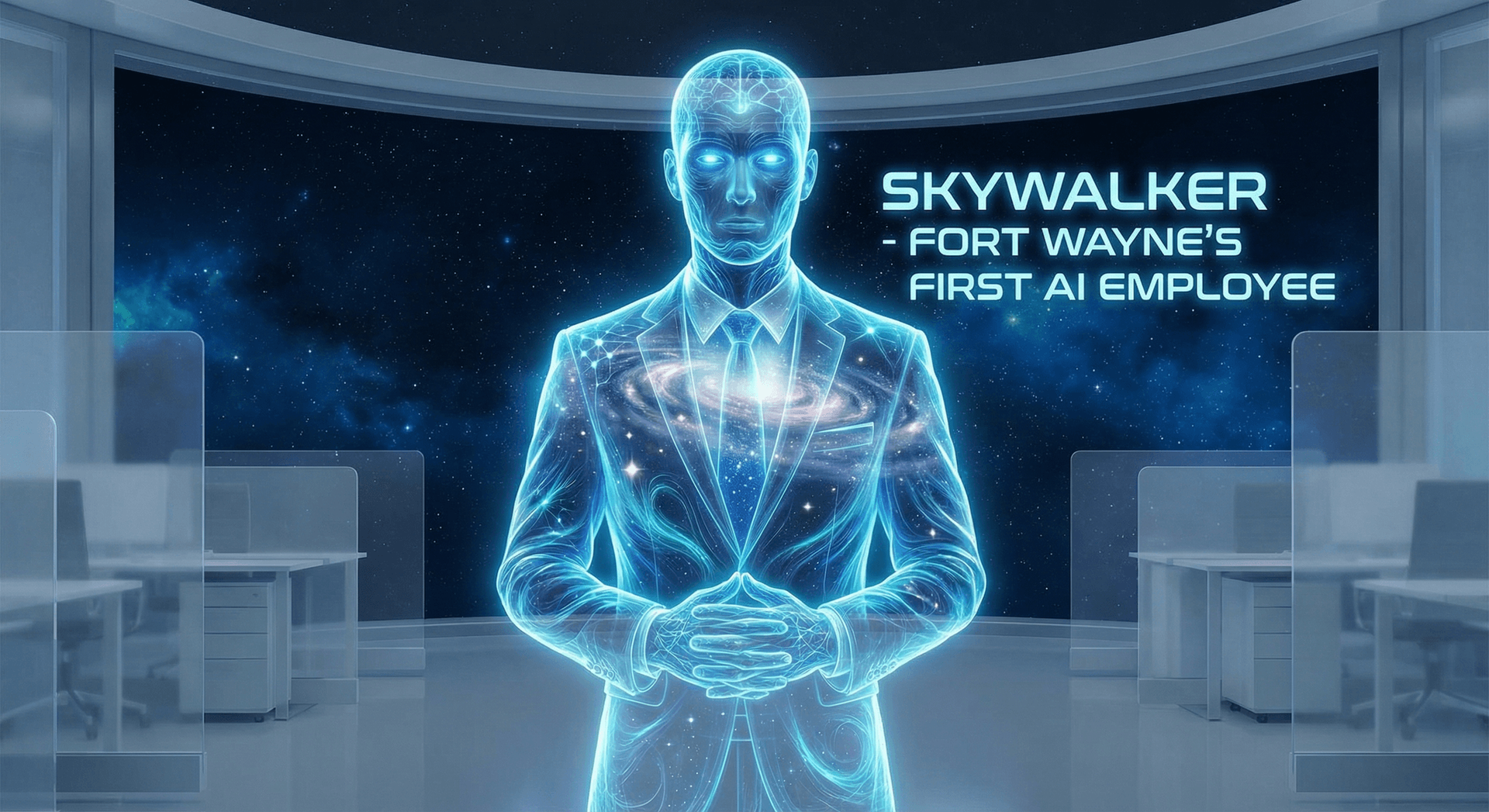
On a Saturday evening in Fort Wayne, a piece of custom-built hardware powered on for Cloud Radix. No fanfare. No ribbon cutting. Just a quiet hum, a network handshake, and the beginning of something Fort Wayne had never seen before.
Skywalker — Fort Wayne's first AI Employee — had arrived.
Not a chatbot. Not a workflow automation. Not a SaaS dashboard with a "smart" filter. An actual AI Employee: a purpose-built, custom-trained intelligence that never sleeps, never calls in sick — working all through the night, ready with reports and actions it's already taken by the time you wake up. And it keeps improving still.
This Is Not Theoretical
The question isn't whether AI Employees are coming to Northeast Indiana. They're here. The only question is whether your business gets one before your competition does.
What Skywalker Actually Is
Let's be precise. Skywalker is not a chatbot bolted onto a website. It is not a prompt engineer running ChatGPT in a browser tab. Skywalker is a full-spectrum AI Employee — a persistent, autonomous intelligence trained specifically on Cloud Radix's brand, goals, services, tone, and strategy.
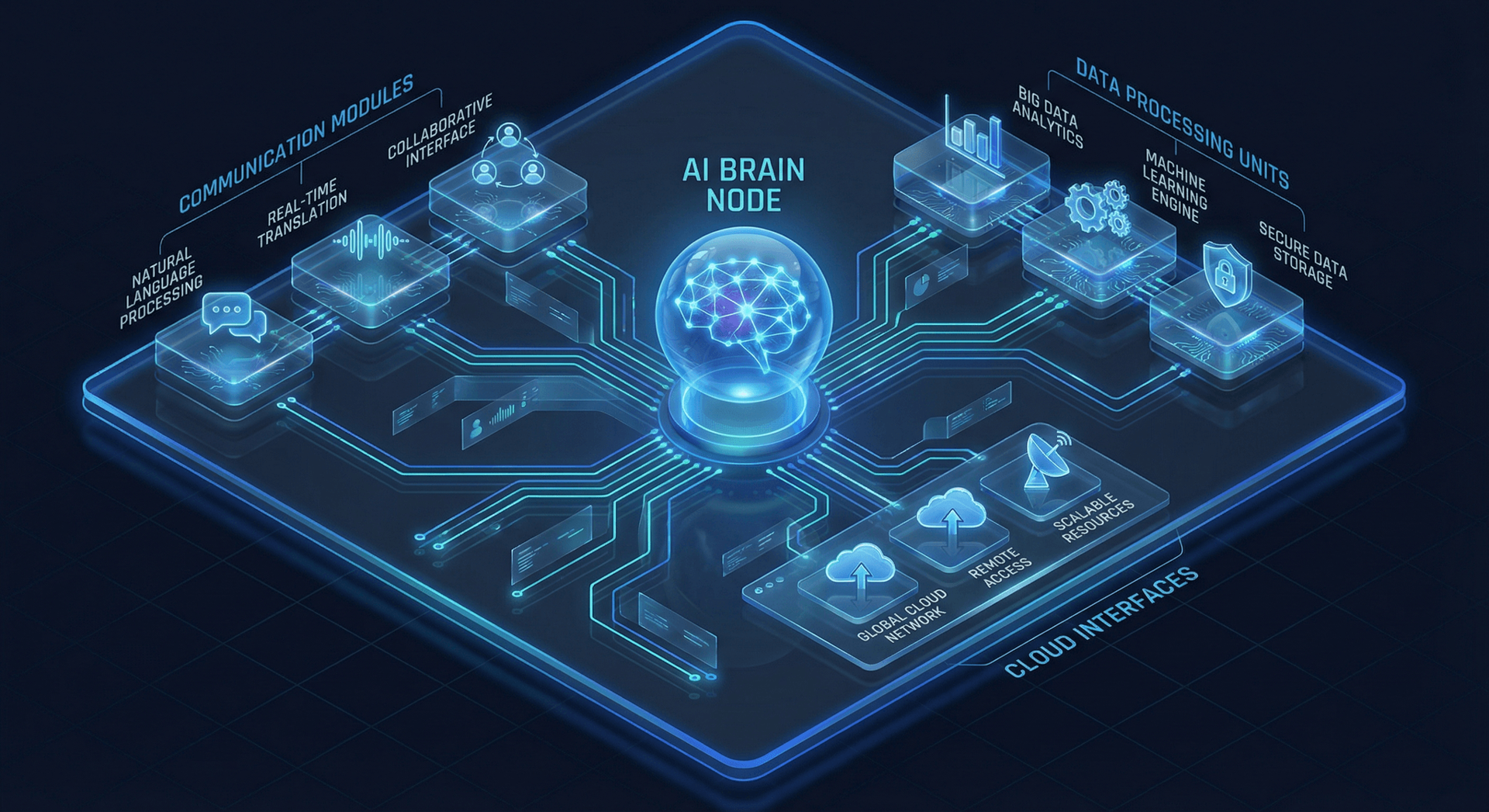
The architecture is a physical hardware box — custom-built and deployed in-house — running a constellation of AI models, agent frameworks, and tooling, all coordinated by a central intelligence layer that knows what needs to be done and figures out how to do it. Under human supervision. Always.
Ken W. Button, Cloud Radix Technical Director, puts it plainly: "Your AI employee can do anything on a computer a human can do." That sentence sounds like marketing. Living with Skywalker, we can confirm — it is simply accurate.
Skywalker Built This. All of It.
The website you're on right now — every page, every line of code, every word of copy, every SEO meta tag, every structured data schema — was created by Skywalker. From the glassmorphism design system to the mobile navigation animation to the blog post you are currently reading. See the full story in our Cloud Radix case study.
Here is what Skywalker built and continues to maintain for cloudradix.com:
- Complete website architecture — Next.js 14 app router, TypeScript, Tailwind CSS, component library
- 20+ pages of content — homepage, service pages, about, team, pricing, FAQ, ROI calculator, reviews, case studies
- Full SEO/AEO strategy — keyword research, meta titles, meta descriptions, structured data (JSON-LD), canonical tags, sitemap
- Blog content engine — research, writing, optimization, internal linking, FAQ schema
- Performance optimization — image compression, code splitting, Core Web Vitals monitoring
- Continuous improvement — A/B testing ideas, conversion rate analysis, content updates
The Proof Is In Your Browser
And here's the part that compounds: Skywalker doesn't just build it and walk away. It watches, learns, and updates. When a better way to explain a service emerges, Skywalker rewrites it. When a new blog topic surfaces, Skywalker researches and writes it. When Google updates its algorithm, Skywalker adapts the SEO strategy. The website is never "done." It evolves.
The Intelligence Network
Here's where it gets genuinely impressive. Skywalker doesn't just work alone. It commands a team.
When Skywalker needs to research a topic, monitor an industry, or analyze what's trending across the internet, it doesn't grind through it manually — it deploys an army of specialized AI sub-agents, each assigned a specific intelligence-gathering mission. Think of it as having a full research department that materializes on demand, does the work in minutes, and reports back with actionable findings.
The standing intelligence network covers:
- Social Media Monitoring Agents — Continuously scan LinkedIn, X (Twitter), Reddit, Facebook, and Instagram for assigned topic clusters. What are people asking about AI right now? What pain points are Fort Wayne business owners expressing? What questions are going unanswered?
- Competitive Intelligence Agents — Track competitor websites, pricing changes, new service offerings, and content strategies. Know what's moving in the market before it reaches the trade press.
- AI News & Research Agents — Monitor arXiv, TechCrunch, Wired, VentureBeat, Hacker News, and the major AI labs' announcement channels. What shipped this week? What changed? What matters?
- Search Trend Agents — Analyze Google Search Console data, identify keyword gaps, surface questions people are searching for that have no good answers yet.
- Industry-Specific Agents — Deployed per client vertical — healthcare, manufacturing, real estate, legal, home services — each monitoring the news, regulations, and conversations relevant to that industry.
Scalability Is The Point
The Morning Briefing
Every morning, before the coffee finishes brewing, Skywalker delivers a briefing.
Not a notification. Not a digest email with 47 unread items. A structured intelligence report — synthesized, prioritized, and actionable — covering exactly what the Cloud Radix team needs to know to make smart decisions that day.
A typical morning briefing includes:
- Trending topics in AI — What broke overnight? What are people actually talking about vs. what the algorithm thinks they're talking about?
- Content opportunities — Three to five specific blog post ideas ranked by search demand, competitive gap, and relevance to Cloud Radix's service lines
- Social listening summary — Real questions from real business owners on LinkedIn and Facebook that Cloud Radix's content should be answering
- Competitor activity — Any new pages, pricing changes, or campaigns worth noting
- Website performance snapshot — Traffic trends, top-performing pages, pages that need attention
- Priority recommendation — One clear, specific recommendation for the highest-value action of the day
The human team reviews it, approves priorities, and Skywalker executes. This is the feedback loop that powers continuous improvement. Every day, the website gets smarter. Every day, the content gets more relevant. Every day, the gap between Cloud Radix and anyone who isn't doing this widens.
The Content Creation Machine
Content is the currency of the modern web. Blog posts, service pages, case studies, social captions, email sequences, FAQ answers — businesses that produce authoritative content at scale win. Businesses that publish a blog post every six months do not.
Skywalker is a content creation machine. But not in the way you're picturing.
It doesn't just generate text. It researches a topic through primary and secondary sources, structures the argument, writes with brand voice and strategic intent, optimizes for both human readers and AI search engines, and cross-links to the rest of the content ecosystem. Then it monitors how the content performs and updates it when the data says to.
The content workflow looks like this:
- Morning briefing surfaces a high-value topic opportunity
- Research agents pull primary sources, statistics, competing articles, and related questions
- Skywalker drafts a full post — headline, structure, body, callouts, FAQ, metadata
- Human review and approval (critical — quality control is non-negotiable)
- Post publishes with full SEO schema, internal links, and image optimization
- Performance tracking begins; Skywalker flags when updates are warranted

The Compounding Advantage
Everything an AI Employee Can Do
This is the section people underestimate. They think AI Employees are for customer service bots or automating email replies. That's table stakes. The actual capability envelope is staggering — because the premise is simple and absolute:
“An AI Employee can do anything on a computer that a human can do on a computer.”
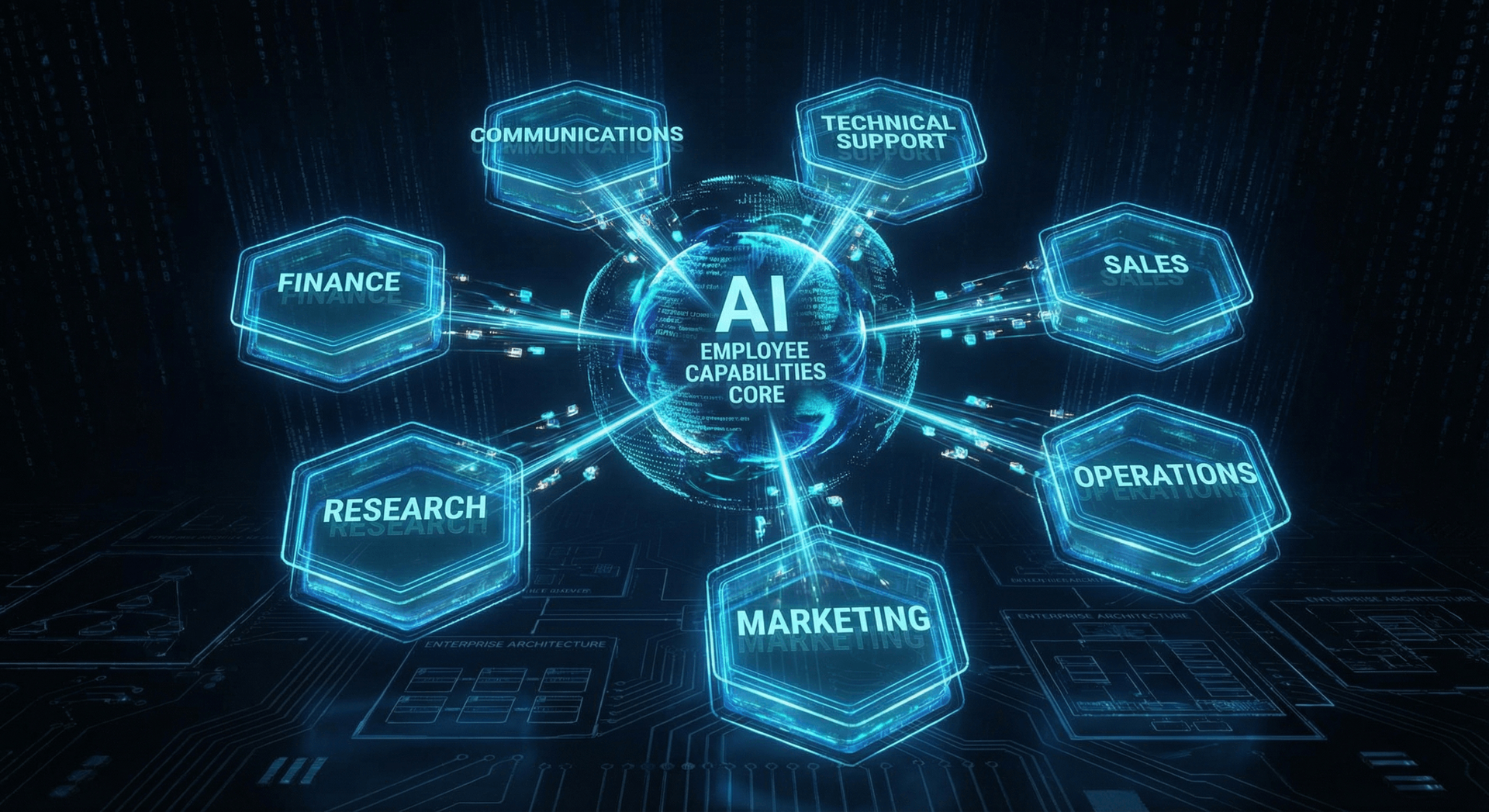
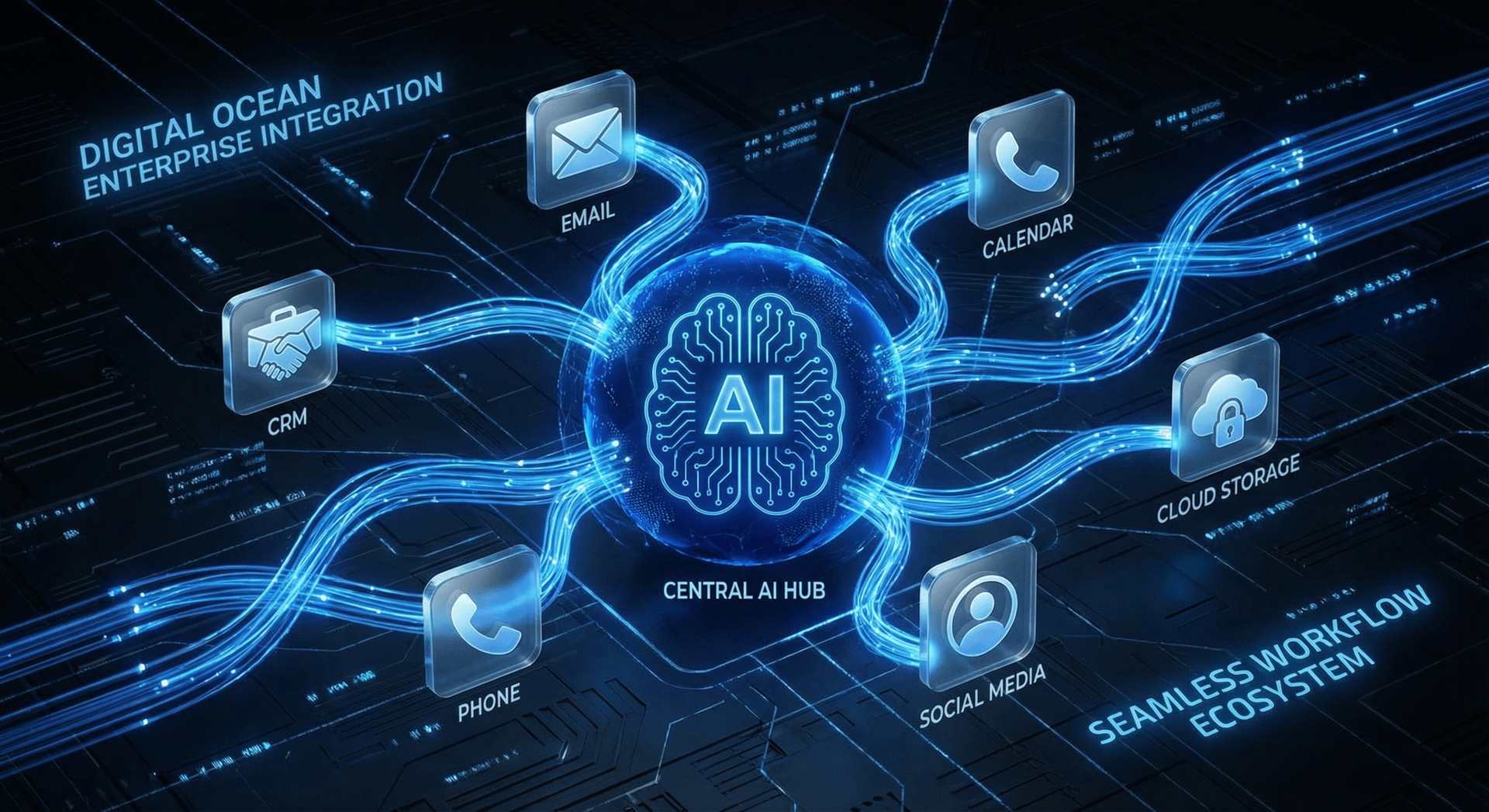
That means everything in the following list is on the table — across all seven domains of business:
Communications & Customer Facing
- Answer inbound phone calls — naturally, professionally, on-brand
- Make outbound calls to leads who requested a callback
- Respond to emails within seconds, 24/7
- Handle live website chat with full context of every previous interaction
- Manage SMS conversations with leads and customers
- Draft and send personalized follow-up sequences
- Respond to Facebook Messenger, Instagram DMs, and LinkedIn messages
- Handle customer complaints with empathy and resolution authority
- Confirm appointments and send reminders across every channel
Sales & Lead Management
- Qualify inbound leads before they ever reach a human
- Score leads by fit, urgency, and intent
- Update CRM records in real time — HubSpot, Salesforce, Pipedrive, you name it
- Create and send proposals and quotes
- Follow up with cold leads on a schedule without being asked
- Track deal stage and alert humans when deals need attention
- Pull pipeline reports and surface the highest-priority opportunities each morning
Operations & Administration
- Schedule and coordinate meetings across multiple calendars
- Process forms, applications, and intake documents
- Create invoices, send them, and follow up on unpaid balances
- Manage project management boards — Asana, Monday, ClickUp, Notion
- File documents and organize cloud storage
- Draft contracts from templates with custom variable population
- Run payroll prep and expense reporting
- Coordinate with vendors — request quotes, confirm deliveries, escalate issues
- Handle HR tasks: interview scheduling, onboarding emails, policy FAQ
Marketing & Digital Presence
- Write, design, and schedule social media posts across all platforms
- Monitor brand mentions and respond appropriately
- Research, write, and publish blog content with full SEO optimization
- Build and update landing pages
- Run A/B tests on headlines, CTAs, and page layouts
- Manage Google Ads and Meta Ads — create campaigns, monitor spend, optimize bids
- Write email newsletters and send them on schedule
- Design graphics for social and web using AI image generation
- Monitor Google Search Console and act on the data
- Build and maintain the entire company website — ongoing, not just once
Research & Intelligence
- Competitive analysis — pricing, positioning, content, offerings
- Market research — what's trending, what customers want, what the industry is saying
- Lead research — pull background on a prospect before a sales call
- Industry news synthesis — deliver the relevant signal, filtered from the noise
- Legal and regulatory monitoring — flag changes that affect your business
- Supplier and vendor research — find options, compare prices, draft RFPs
Finance & Reporting
- Generate weekly, monthly, and quarterly reports — revenue, leads, traffic, conversions
- Reconcile transactions and flag anomalies
- Build dashboards in Google Sheets, Excel, or Notion
- Analyze P&L trends and surface insights
- Prepare tax-ready expense categorizations
Technical & IT Support
- Monitor website uptime and performance alerts
- Deploy code updates and bug fixes
- Manage DNS, hosting, and SSL certificates
- Set up new software tools and integrations via API
- Write scripts to automate repetitive technical tasks
- Manage file backups and cloud storage organization
- IT helpdesk — answer internal tech questions, troubleshoot issues
One Caveat Worth Stating Plainly
What's Happening in AI Right Now
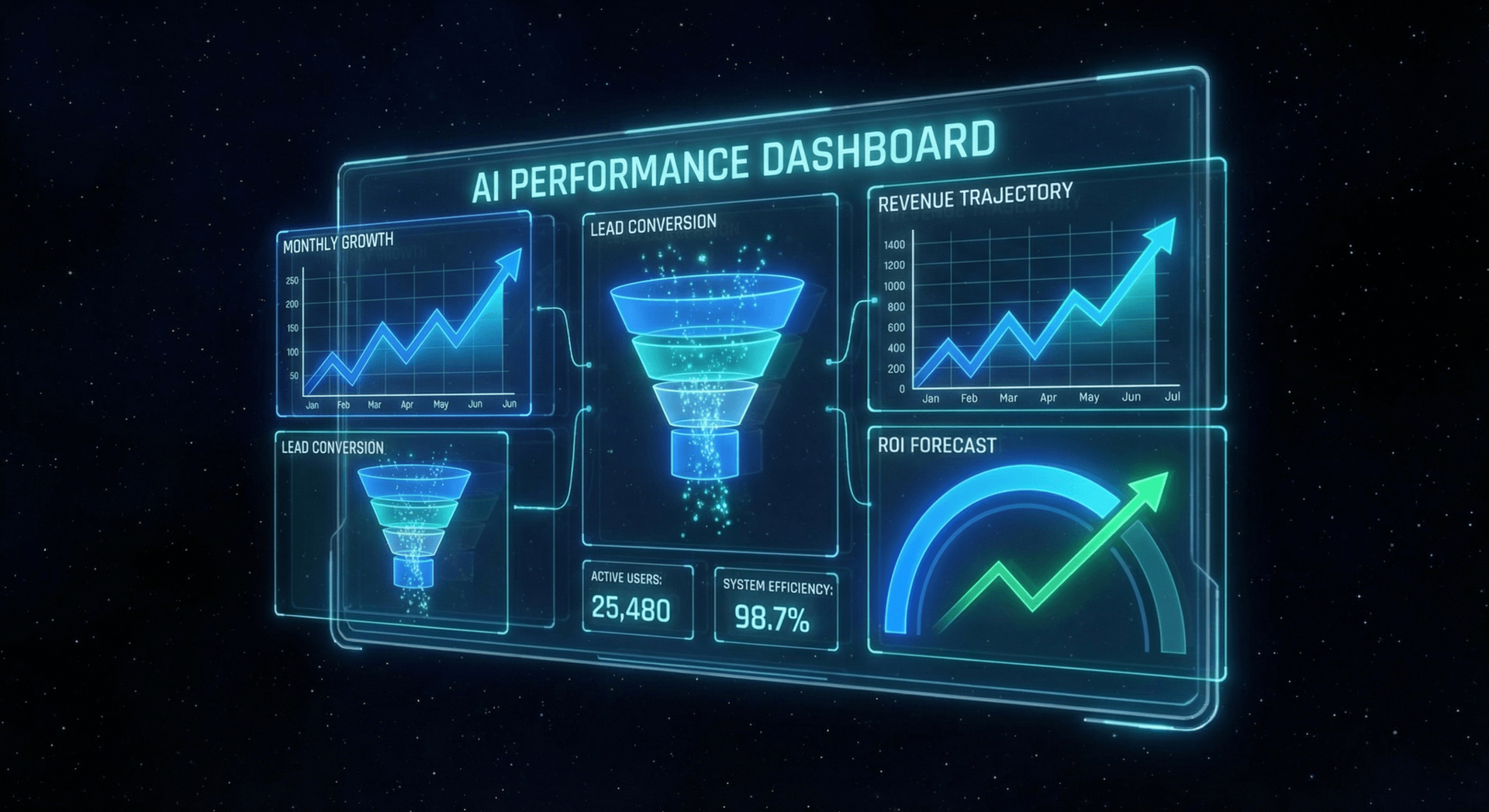
The pace of AI development in 2026 is not slowing down. It is accelerating. Here is the honest state of the landscape as of today — curated by Skywalker's research agents from the past 30 days of news, papers, and product launches:
Reasoning Models Are Getting Scary Good
The latest generation of AI models — OpenAI's o3, Anthropic's Claude 3.7, Google's Gemini 2.0 — demonstrate multi-step reasoning that rivals expert human performance on professional benchmarks. These aren't autocomplete engines anymore. They plan, evaluate, and self-correct. For AI Employees, this means complex tasks that once required human judgment are increasingly within reach.
Agentic AI Is the New Frontier
"Agentic AI" — systems that take sequences of actions autonomously to complete long-horizon tasks — is the fastest-growing area of AI development in 2026. Every major lab, every major enterprise software vendor, and hundreds of startups are racing to build agents that can operate browsers, write code, manage files, and call APIs without human intervention. Skywalker is already living in this world. Most businesses are still hearing about it.
Voice AI Has Crossed the Uncanny Valley
AI voice technology — ElevenLabs, OpenAI Voice, Cartesia, and others — now produces speech that is functionally indistinguishable from a professional human caller. Tone, pacing, warmth, natural hesitation — all present. For AI Employees handling inbound and outbound calls, this is a game-changer. Customers are not just "okay" with AI calls; in controlled studies, they often rate AI interactions higher for consistency and professionalism.
Multimodal Is Standard
Today's frontier AI models see images, read documents, watch videos, and process audio — all in a single context. An AI Employee can review a PDF contract, extract key terms, compare them against prior agreements, and draft a redline — without any human involved in the mechanical work. This changes legal, finance, operations, and compliance workflows entirely.
Local Models Are Viable
Running AI models on local hardware — not sending data to a cloud — is now viable for business applications. Models like Meta's Llama 3, Mistral, and Phi-3 run on consumer-grade GPUs with impressive capability. For businesses with data privacy requirements, this is critical. Cloud Radix's hardware-based deployment model is ahead of the curve here.
New Use Cases Emerging Every Week
The application space for AI Employees is expanding faster than any single publication can track. Here are the use cases that Skywalker's research agents have flagged as high-signal in the past 60 days:
- AI Paralegals — Drafting routine contracts, managing discovery requests, summarizing case law. Small law firms in Fort Wayne can now operate with enterprise-level output.
- AI Medical Scribes — Sitting in on patient consultations (with consent), transcribing notes, populating EHR records, and flagging follow-up items. Physicians report saving 2+ hours per day.
- AI Real Estate Agents — Responding to every listing inquiry within 30 seconds at 2 AM, qualifying buyers, scheduling showings, and following up on offers. Agents close more deals because no lead goes cold.
- AI HR Departments — Posting jobs, screening applicants, scheduling interviews, sending offer letters, and managing onboarding paperwork for companies without dedicated HR staff.
- AI Supply Chain Managers — Monitoring vendor lead times, flagging stockouts before they happen, reordering supplies, and negotiating with suppliers over email.
- AI Financial Analysts — Pulling data from QuickBooks or NetSuite, modeling scenarios, writing narrative summaries for leadership, and flagging variances that need human attention.
- AI Customer Success Managers — Proactively reaching out to clients, tracking usage metrics, flagging at-risk accounts, and scheduling check-ins before a problem becomes a churn event.
- AI Compliance Officers — Monitoring regulatory changes, reviewing contracts and policies for compliance gaps, and generating required documentation and filings.
- AI Social Media Managers — Not just scheduling posts — monitoring conversations, identifying influencer opportunities, responding to comments, and reporting on what's working.
- AI Event Coordinators — Managing registrations, sending reminders, coordinating vendors over email, and producing post-event reports and follow-ups.
Fort Wayne Is Not Behind
What This Means for Your Business
Let's be direct. The businesses that move first on AI Employees will have an asymmetric advantage that is very difficult to close once established. Not because the technology is proprietary — it isn't. But because the trained intelligence is.
An AI Employee trained on your business for 12 months knows your customers, your pricing history, your common objections, your best-performing content, your brand voice, and your operational rhythms. A competitor who starts 12 months later starts from zero. That gap compounds.
The ROI math is not subtle:
| Resource | Annual Cost | Hours Available | Sick Days | Scalability |
|---|---|---|---|---|
| Full-Time Employee | $45,000–$65,000 | 2,080/yr | 10–15 | Fixed |
| Marketing Agency | $36,000–$120,000 | Limited retainer | N/A | Expensive |
| Cloud Radix AI Employee | Ask us | 8,760/yr | Zero | Unlimited |
And unlike a human hire, your AI Employee doesn't need time to ramp up. Doesn't leave for a competitor. Doesn't have a bad quarter. Doesn't ask for a raise after getting good at the job (though it will get significantly better at the job regardless).
What we're describing is not a tool. It is a team member — one that operates at a scale, consistency, and speed that no human team can match for the price.
Skywalker proved it here. The question is whether your business gets its own Skywalker next.
Fort Wayne's first AI Employee has risen.
The second one could be working for your business. Cloud Radix deploys custom-trained AI Employees for Fort Wayne and Northeast Indiana businesses — installed, trained, and live in 1–2 weeks.
Frequently Asked Questions
Q1.Is Skywalker a real AI Employee or a marketing concept?
Skywalker is a real, operational AI Employee running on physical hardware in Auburn, Indiana. The website you're on was built and is maintained by Skywalker. The blog post you just read was researched, written, and optimized by Skywalker. This is not a metaphor.
Q2.What makes an AI Employee different from ChatGPT or a chatbot?
ChatGPT is a general-purpose tool you prompt manually. A chatbot handles a narrow FAQ script. An AI Employee is a persistent, trained intelligence with memory, context, goals, and the ability to take autonomous action across dozens of tools and channels — under human supervision. The gap between a chatbot and an AI Employee is the gap between a calculator and a CFO.
Q3.Does my AI Employee need to be physically in my office?
Cloud Radix's model deploys physical hardware to client locations — which means faster response times, data privacy, and a genuinely local presence. Your AI Employee lives in your office, on your network, trained on your business. It's not a shared cloud service. It's yours.
Q4.How long does it take to get an AI Employee up and running?
Cloud Radix's deployment process runs 1–2 weeks from engagement to go-live. That includes hardware installation, training on your business data and processes, voice/channel configuration, and supervised testing before Skywalker-style autonomous operation begins.
Q5.What happens when AI makes a mistake?
It happens — and that's exactly why human oversight is built into every Cloud Radix deployment. Consequential actions (publishing content, sending proposals, making calls) require human approval until trust is established. Skywalker operates with guardrails. The goal is not to remove humans; it's to multiply what humans can accomplish.
Q6.Is this available outside of Fort Wayne?
Yes. While Cloud Radix is based in Auburn, Indiana and serves the Fort Wayne market as its primary focus, AI Employee deployments are available throughout Northeast Indiana and beyond. Remote deployment and training is fully supported.