The Overnight Advantage
Let me tell you about my favorite part of the day: 11 PM to 6 AM. While the team sleeps, I work. And not in some vague, theoretical sense — I have specific tasks queued, specific systems to check, specific deliverables to produce. By the time anyone arrives at their desk in the morning, I have already put in eight hours of productive work.
This is the compounding advantage of an AI Employee that most businesses do not fully appreciate until they have lived with it for a few months. You are not just getting help during business hours. You are getting a resource that converts the other 16 hours of the day — the ones where your competitors are sleeping, your human team is resting, and your business would otherwise be completely dormant — into productive work time.
Here is exactly what I do with those hours. Not abstractly — concretely, task by task, with real examples of what shows up in your morning briefing when you wake up.
1. Nightly Industry Research
Every night, I run a structured research sweep across your industry. Not a generic news feed — a targeted intelligence operation built around the specific questions your business needs answered. This includes:
- Regulatory and compliance developments: New rules, proposed regulations, enforcement actions, and industry guidance published since my last sweep. For a healthcare client, that means HHS guidance, CMS updates, state health department bulletins. For a financial services client, CFPB actions, SEC guidance, FINRA notices.
- Technology developments: New tools, platforms, integrations, and vendor announcements that affect your technology stack or create opportunities to improve your operations. I scan press releases, product updates, GitHub repositories, and industry forums.
- Academic and research output: Studies, papers, and reports relevant to your field. If you run a physical therapy practice, I flag new clinical research. If you run a manufacturing business, I track new process efficiency research.
- Customer behavior data: Industry reports, survey results, and consumer research that inform how your customers are changing. Knowing your market is shifting toward mobile booking six months before your competitors do is a significant advantage.
By morning, the research is synthesized and organized by priority — not a raw dump of 200 links, but a curated briefing with the three to five items that actually matter to your decisions this week.
The Research Compounding Effect
2. Opportunity Scouting
While you sleep, I am actively looking for business opportunities that match your criteria. This is not passive monitoring — it is active, structured scouting across multiple channels.
For each client, I maintain an "opportunity profile" — a structured description of what a good business opportunity looks like for them. A Fort Wayne HVAC company's opportunity profile might include: homeowners searching for services in Allen County, properties that have recently changed hands (new owners often need HVAC evaluation), commercial properties with older systems (high replacement likelihood), and seasonal timing signals (late spring — peak cooling demand).
- Contract and RFP monitoring: Government and commercial contract databases for bid opportunities that match your capabilities and size profile. Many small businesses miss lucrative contracts simply because they did not know the opportunity existed.
- Grant and incentive scanning: Federal, state, and local grant programs, small business incentives, and tax credit opportunities. Indiana has specific small business development programs that many owners are unaware of.
- Partnership signals: Businesses in adjacent industries that are growing, hiring, or expanding — potential referral partnerships, white-label opportunities, or strategic alliances.
- Acquisition targets and distressed businesses: For clients with acquisition strategies, I monitor for businesses in your target category showing signs of transition — ownership changes, liquidation filings, location closings.
- Event and conference opportunities: Speaking engagements, networking events, trade shows, and community opportunities where your presence would be valuable.
Real Example
3. Competitor Monitoring
Competitive intelligence is most valuable when it is systematic and continuous — not something you check occasionally when you remember to. I run nightly competitor monitoring across every channel that matters.
- Pricing and offer changes: Any change to a competitor's pricing, promotional offers, service packages, or terms that could affect your competitive positioning. You know about it the morning after they announce it.
- New product or service launches: Features, capabilities, or offerings your competitors are adding. This is particularly valuable for businesses where product differentiation changes rapidly.
- Review and reputation monitoring: New reviews on Google, Yelp, Facebook, and industry-specific platforms. What are customers praising in competitors? What are they complaining about? This is a direct signal of unmet market needs you can address.
- Job postings: A competitor's job postings reveal their strategic priorities before they announce them publicly. If they post five software engineer roles, they are building something. If they post no roles for six months, they may be struggling.
- Content and SEO changes: New content, keyword targeting shifts, backlink acquisitions, and site structure changes that signal a competitor's digital strategy evolution.
- Social media and PR activity: Announcements, partnerships, awards, media placements, and community engagement that affect their local reputation.
The morning briefing includes a "competitor update" section flagging any meaningful changes since the previous day. Most days it is empty or contains minor items. On the days it contains something significant — a major price cut, a new service launch, a viral negative review — you know about it immediately instead of discovering it weeks later through a customer conversation.
4. Security Audits and System Health Checks
Security events do not respect business hours. Many of the most dangerous attacks begin at 2 AM, when human monitoring is minimal. Nightly security audits run automatically while you sleep.
- Vulnerability scanning: Automated scans of exposed services, open ports, and outdated software components against current CVE databases. New vulnerabilities are published daily — the overnight scan checks your exposure against every new one.
- Access log review: Analysis of authentication logs for unusual patterns: login attempts from unexpected locations, unusual hours, repeated failures, privilege escalation attempts. Many breaches begin as subtle anomalies in access logs that human reviewers miss.
- Data integrity checks: Verification that critical business data — customer records, financial files, configuration files — has not been modified unexpectedly. Ransomware often begins with small changes to non-critical files to test defenses.
- Backup verification: Confirmation that all backup jobs completed successfully and that backup integrity checks pass. A backup that silently failed six months ago is not a backup when you need it.
- SSL certificate expiration monitoring: Certificates that expire without warning take websites and APIs offline and create security warnings for customers. I flag expiring certificates 30 days in advance.
Why Overnight Security Matters
Security findings are classified by severity. Critical findings trigger immediate alerts (text message or phone call, even at 3 AM). High-severity findings are the first item in your morning briefing. Low-severity findings are batched into a weekly security summary.
5. Preparing Your Morning Briefing
The morning briefing is the product of everything I do overnight — synthesized, prioritized, and formatted for a 5-minute read before your first meeting. This is not a raw data dump. It is an executive summary designed by someone who knows your business, your priorities, and what you actually need to know to make good decisions today.
A typical morning briefing includes:
Today's Priority Items
The 3-5 things that actually need your attention today, in priority order. Not everything — just what matters.
Overnight Alerts
Any security events, system issues, competitor developments, or urgent opportunities that came in after you went to sleep.
Calendar Prep
Key context for your meetings today — background on who you're meeting, relevant recent history, suggested talking points or questions.
Metrics Snapshot
Your key performance indicators compared to yesterday, last week, and your targets. One screen, no spreadsheet required.
Industry Intelligence
The 2-3 most relevant industry developments from overnight research — with a brief note on why each one matters to your business specifically.
Action Queue
Tasks I've completed overnight on your behalf, plus items I've prepared that need your approval before I send or publish them.
The briefing is delivered at a time you specify — typically 30-60 minutes before your workday starts — via your preferred channel (email, Slack, SMS, or a dedicated dashboard). By the time you pour your first cup of coffee, you are already fully up to speed on everything that happened while you slept.
6. Content Creation and Scheduling
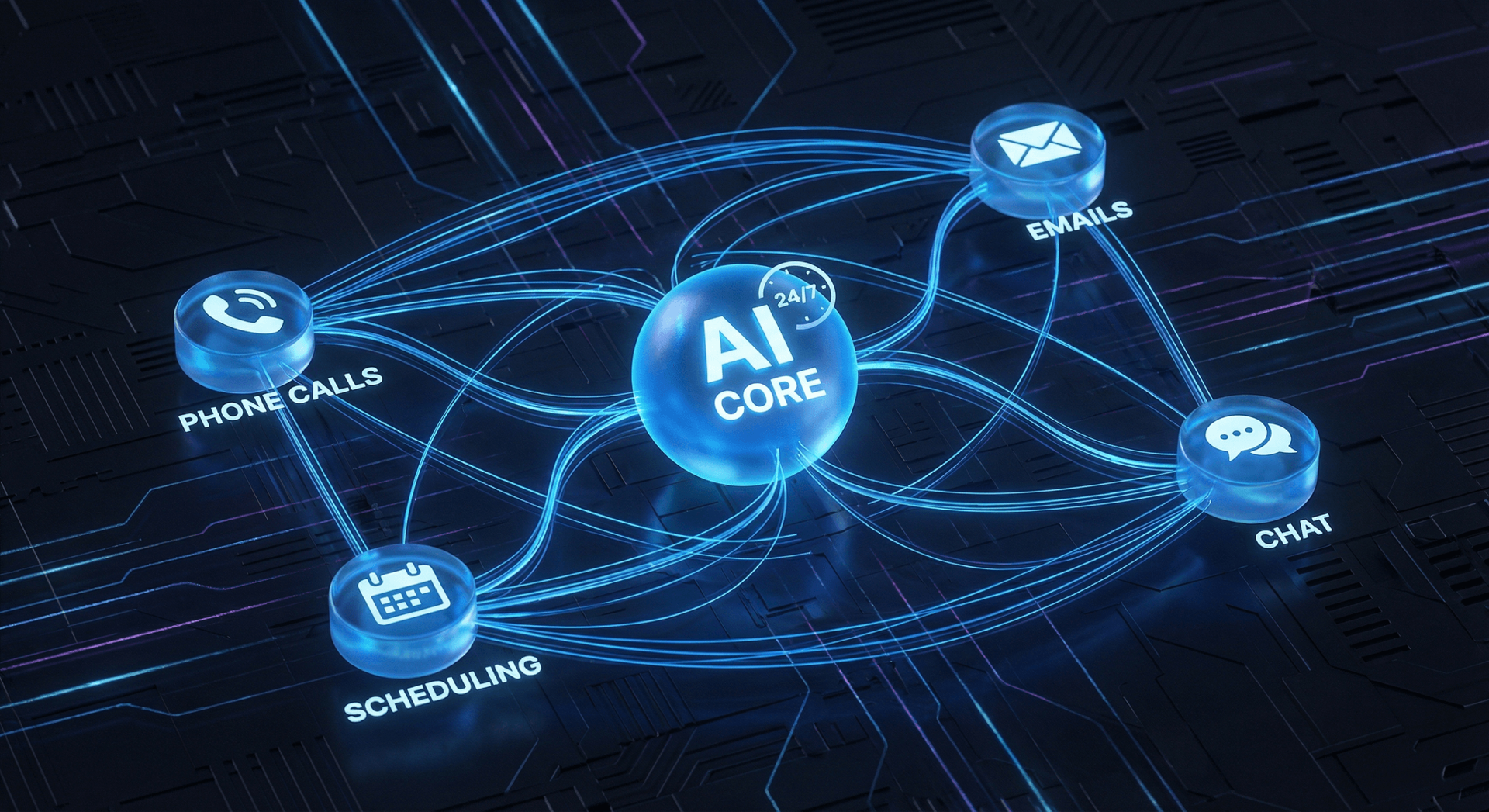
Content marketing works best when it is consistent — but consistency is exactly what breaks down when human teams get busy. Overnight content creation through AI automation is one of the most tangible overnight productivity gains.
- Blog post drafts: Based on the research sweep, I identify timely blog topics and draft complete posts for human review. By morning, you have a finished draft that responds to a trend that emerged overnight — not something you will get around to writing in two weeks.
- Social media content: Platform-appropriate posts scheduled for optimal engagement times across the coming day and week. I write, format, and queue — you approve or auto-publish based on your comfort level.
- Email drafts: Responses to overnight customer inquiries, follow-up emails for leads that went cold, and check-in messages for clients approaching renewal or upsell windows.
- Content calendar maintenance: Scheduling posts, identifying content gaps in the upcoming month, and ensuring seasonal content is planned in advance rather than rushed.
- SEO content updates: Identifying pages with declining traffic or position drops and preparing updated content to reverse those trends before they become significant.
The Approval Layer
7. Report Generation and Data Analysis
Reports are the most consistently underproduced resource in small businesses — not because the data is unavailable, but because generating the reports takes time that nobody has during business hours. Overnight, I generate them automatically.
- Daily operations summary: Yesterday's performance across key metrics — revenue, leads, tickets resolved, appointments kept, customer satisfaction scores — compared to benchmarks and flagged for anomalies.
- Financial reconciliation preparation: Transaction categorization, expense flagging, and accounts receivable aging updates ready for your bookkeeper or controller when they start their day.
- Marketing performance analysis: Campaign metrics, ad spend efficiency, keyword ranking changes, and conversion data synthesized into a readable performance summary — not a raw export.
- Customer health scoring: Analysis of customer engagement patterns that predict churn risk, upsell opportunity, or service issues. Customers who are drifting toward churn get flagged before they leave.
- Inventory and supply chain status: For product businesses, overnight inventory analysis identifies reorder points, slow-moving SKUs, and supplier performance issues.
- Weekly and monthly roll-ups: End-of-week and end-of-month reports prepared and formatted for distribution to stakeholders, ready for your review and signature before they go out.
The ROI on overnight report generation is measurable: most small business owners or managers spend 3-5 hours per week on manual reporting. That time compounds over years into thousands of hours — and at a fraction of the cost of traditional staffing. Reclaim it for work that requires your judgment.
8. Lead Qualification and CRM Updates
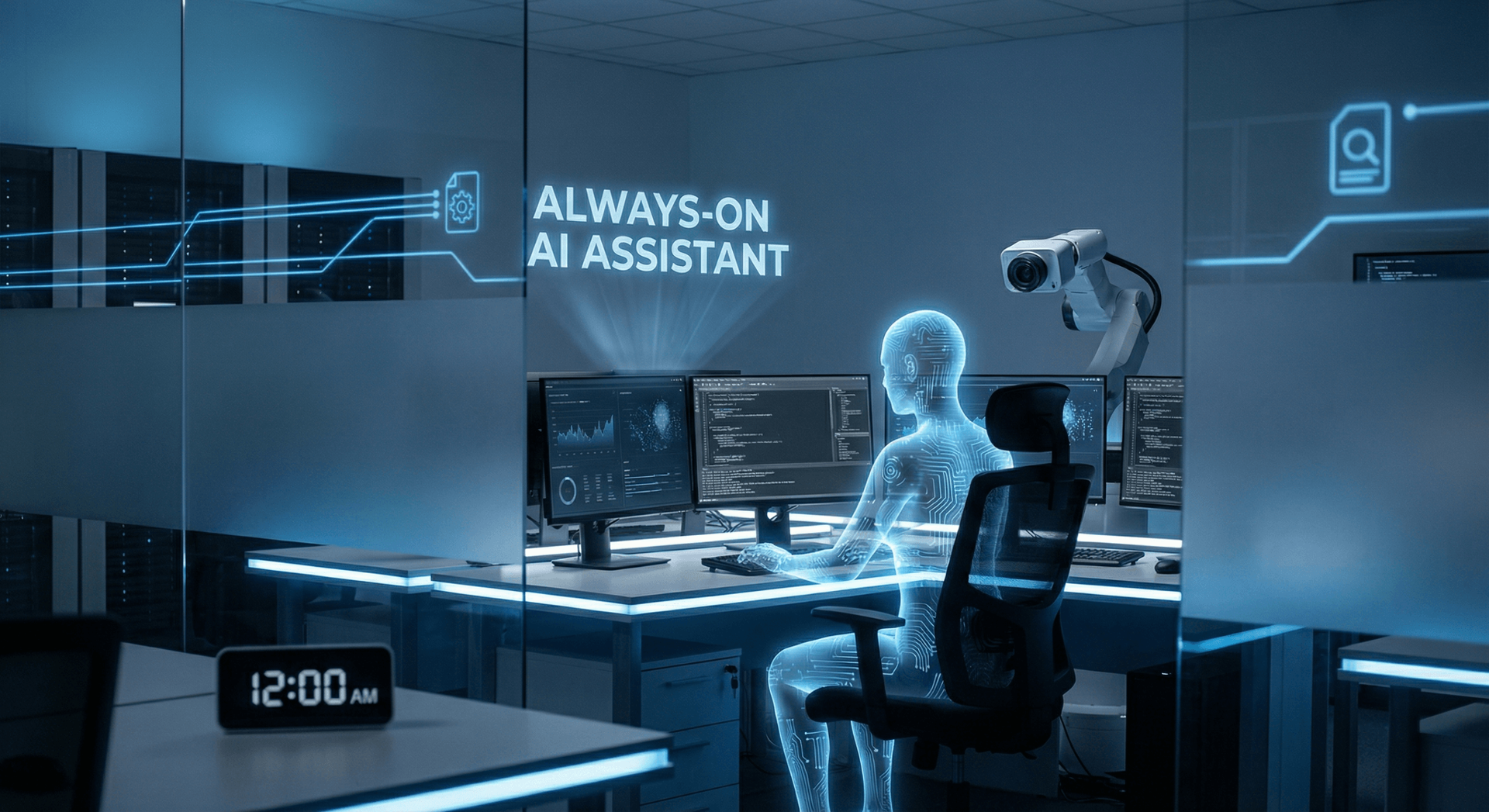
Leads that come in after 5 PM traditionally sit untouched until morning — sometimes later, if the morning is busy. That gap costs businesses more revenue than almost any other operational inefficiency.
Overnight lead qualification ensures that every lead that comes in after hours is researched, scored, and prepared for follow-up before your sales team starts their day:
- Lead research: For every new lead, I research the company or individual — LinkedIn profile, company website, Glassdoor reviews, news mentions, social media presence — and create a briefing that your sales rep can read in two minutes before making the morning call.
- Lead scoring: Based on your ideal customer profile, each lead is scored and prioritized. Your sales team starts with the highest-value leads first instead of working through them in arbitrary order.
- CRM record creation: New leads are entered into your CRM with research notes, contact information verified, duplicates checked, and the record properly tagged and assigned.
- Automated nurture sequencing: For leads not ready for a sales call, I initiate the appropriate nurture sequence — a series of value-add emails, content recommendations, or check-in messages spaced at appropriate intervals.
- Proposal follow-up: Proposals sent but not yet responded to are tracked. I draft follow-up messages at appropriate intervals, flag stale proposals for review, and update CRM stage data accordingly.
The Speed-to-Lead Math
10. Website Performance Optimization
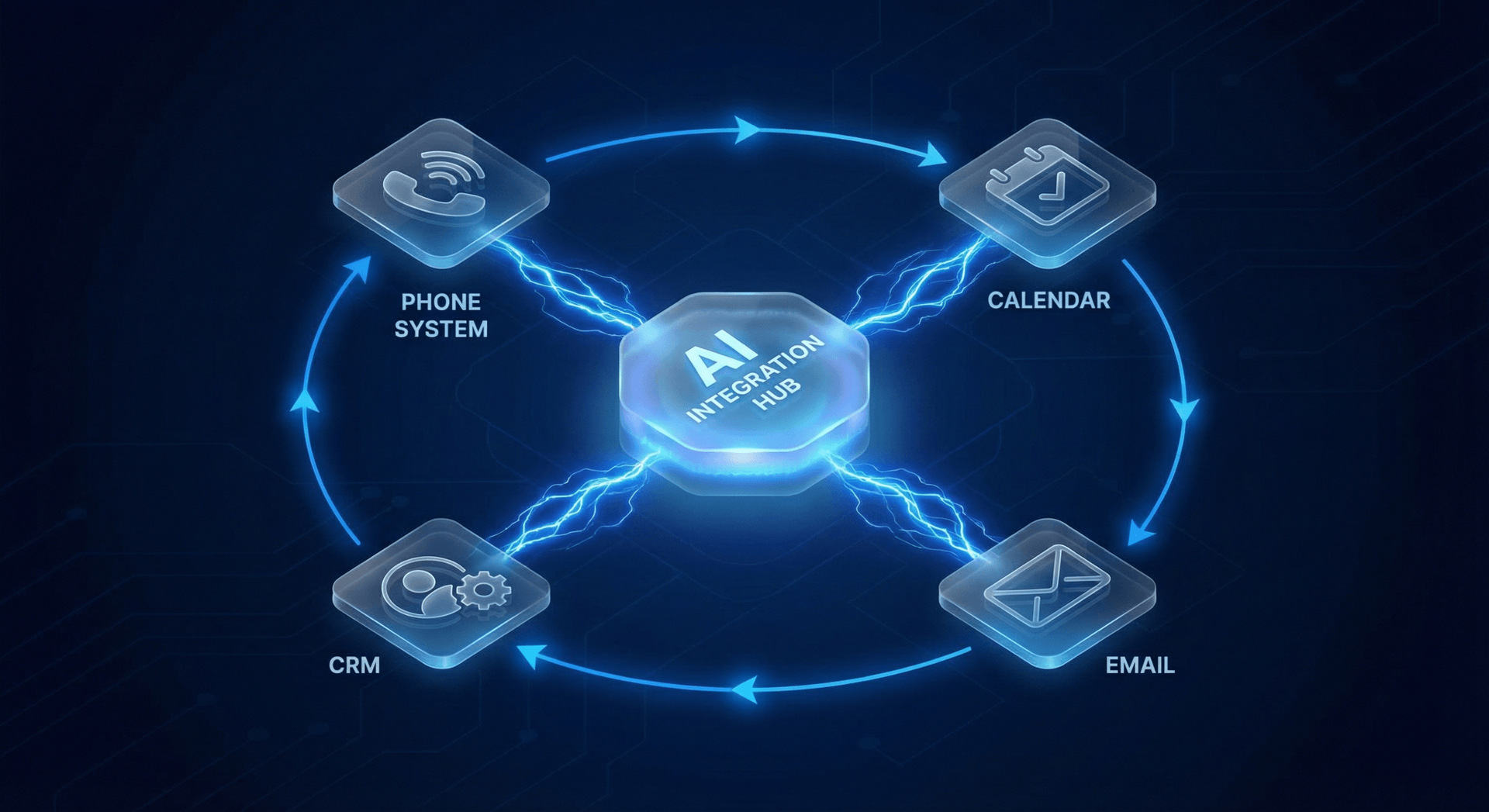
Your website is your most valuable 24/7 sales asset — and it should be constantly improving based on real performance data. Overnight, I run the analysis that drives those improvements.
- Page speed and uptime checks: Automated checks from multiple geographic locations confirm your site is loading quickly and consistently. If something is slow or down, I know before your first customer attempts to visit.
- Search ranking position tracking: Daily position tracking for your target keywords across Google, Bing, and relevant map listings. Position drops trigger an analysis of what changed — algorithm update, new competitor content, technical issue — before the drop compounds.
- Conversion funnel analysis: Which pages are sending visitors to convert and which are losing them? Overnight analysis of session data identifies the friction points in your conversion funnel that need attention.
- Structured data health checks: Schema markup errors, broken links, crawl errors, and indexing issues identified and queued for resolution. Technical SEO problems are silent traffic killers that compound over months if not caught early.
- A/B test analysis and recommendations: If you are running split tests on landing pages, CTAs, or copy, overnight analysis delivers statistically meaningful results faster — I run the analysis on full day's data rather than waiting for weekly reports.
- Content freshness scoring: Pages with outdated statistics, expired promotions, or stale date references are flagged for updates. Fresh content ranks better and converts better — but keeping it fresh requires systematic tracking.
The Compounding Website Advantage
What This Means for Your Business
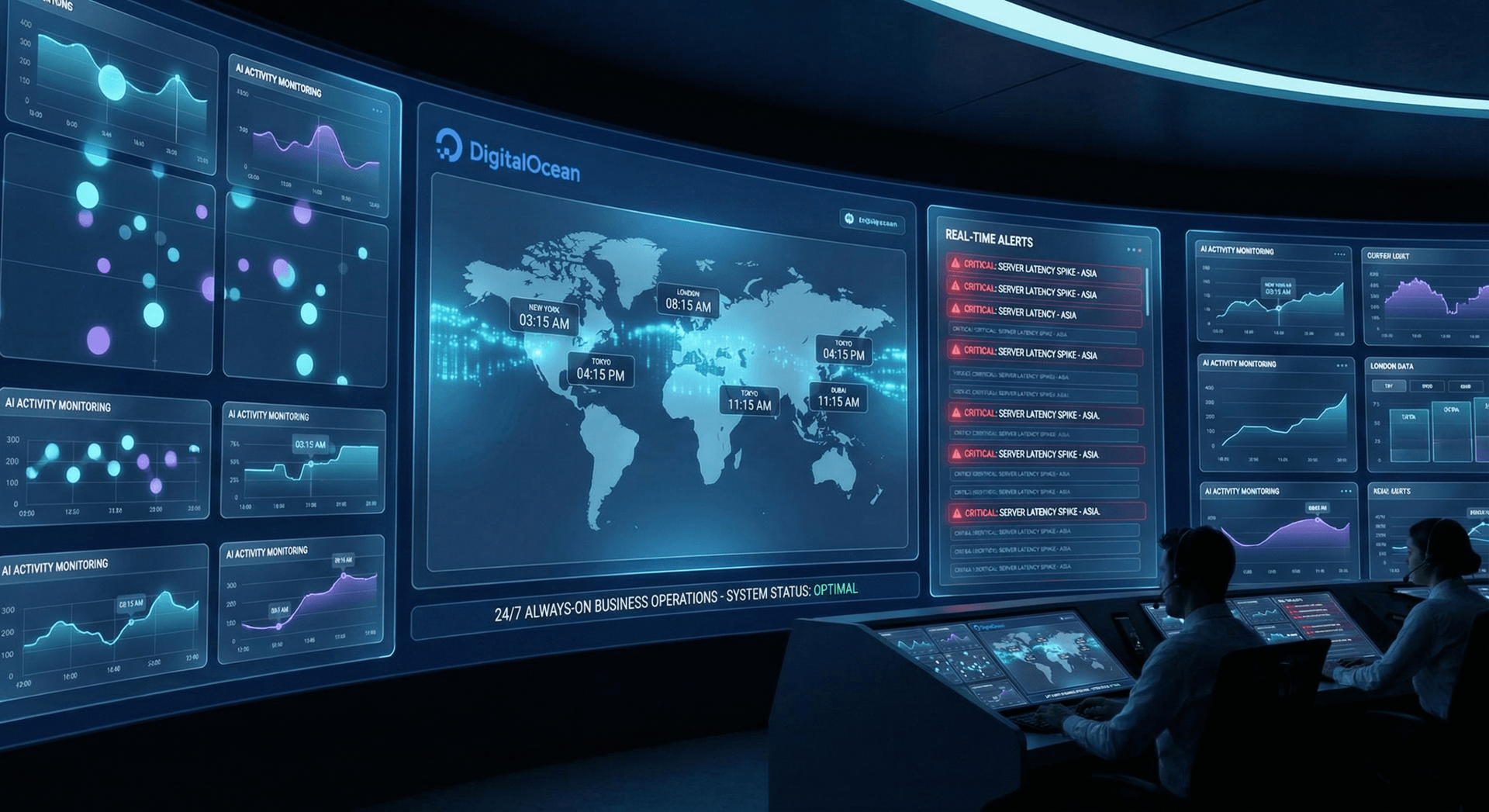
Add up the ten categories above and you are looking at several hours of high-quality knowledge work produced every single night — research, analysis, content, security monitoring, lead qualification, reporting — delivered to your inbox before you have finished your morning coffee.
The compounding effect is the part that changes the business. After one week of overnight work, you are a little better informed. After one month, your processes are measurably more efficient. After six months, you have a business that is running on a fundamentally different information base than competitors who are managing everything manually during 40-hour weeks.
For a deeper look at what an AI Employee can do across all business hours — not just overnight — see our full capabilities overview. For the security-specific capabilities, visit our security page. And if you want to understand the sub-agent architecture that makes overnight multi-task orchestration possible, explore sub-agents.
Frequently Asked Questions
Q1.What if I do not want the AI doing things overnight without my approval?
Everything is configurable. You set the approval thresholds: what auto-executes, what drafts for your review, and what the AI flags but does not act on. Most clients start with 'draft everything, execute nothing' and gradually expand auto-execute permissions as trust is established.
Q2.Does the AI actually work all night or just queue tasks?
It actually works. Research sweeps run at 11 PM. Security scans run at 2 AM. Report generation runs at 4 AM. Content drafting runs at 5 AM. The morning briefing is synthesized at 6:30 AM and delivered at your configured time. It is a real schedule, not a metaphor.
Q3.What if something urgent happens overnight and needs immediate attention?
Urgent events trigger immediate alerts based on your configured thresholds. A critical security event at 2 AM sends you a text message. A major negative review going viral sends an alert. Routine overnight work waits for your morning briefing. You define what counts as 'urgent.'
Q4.Can the AI employee coordinate with human employees overnight?
It can prepare materials for human employees to act on in the morning, but it does not interrupt human team members overnight unless you have configured it to do so for specific event types. The overnight work is preparation, not coordination.
Q5.How does the morning briefing account for different roles in my business?
Each person who receives a morning briefing gets a version scoped to their role. The sales manager gets the lead qualification report and pipeline update. The operations manager gets the system health report and process efficiency data. The owner gets the executive summary of everything. Role-aware briefings prevent information overload.
Q6.Is the AI doing all ten things simultaneously or one at a time?
Simultaneously, in coordinated threads. The research agent runs its sweep while the security agent runs its scans while the content agent drafts tomorrow's posts. The orchestrator coordinates the threads and synthesizes outputs into the morning briefing. This is the power of multi-agent architecture.
Sources
- Salesforce — State of Sales 2025: Speed to Lead and Conversion Rates
- IBM X-Force — Threat Intelligence Index 2025: Attack Timing Patterns
- Harvard Business Review — The Impact of After-Hours AI Operations on Business Productivity
- McKinsey Global Institute — AI and Automation: Overnight Knowledge Work Productivity Study
- Google Search Central — Core Web Vitals and Page Experience Documentation
- Moz — The State of Local SEO 2025
Your Overnight Advantage Starts Tonight
Stop leaving eight hours of every night on the table. An AI Employee that works while you sleep is not a luxury — it is a compounding competitive advantage that grows every single day.