What Are AI Sub-Agents?
Every business owner faces the same structural disadvantage: the decisions you make every day benefit from expertise across marketing, finance, operations, product strategy, and leadership — but unless you are running a Fortune 500 company, you cannot afford a dedicated C-suite executive for each domain.
AI sub-agents are the answer to that problem. An AI sub-agent is a specialized AI model configured with a specific domain focus, communication style, decision-making framework, and knowledge base. Instead of one generalist AI trying to be an expert in everything — and being average at all of it — you deploy a team of specialized agents, each exceptional in its domain, coordinated by a central AI orchestrator.
Think of it like this: your AI Employee is the chief of staff. The sub-agents are the department heads. When you bring a problem to the chief of staff, she knows exactly which combination of department heads to consult, how to synthesize their perspectives, and how to surface the most important considerations for you to weigh. You make the final call — but you make it with far more expertise behind you than any solo founder or small business owner could normally access.
Sub-Agents vs. Single-Agent AI

The "Inspired By" Personality Model
Here is where the Cloud Radix approach to sub-agents gets genuinely interesting — and where it diverges from how most vendors implement multi-agent systems.
Rather than deploying generic agents with labels like "Marketing Agent" and "Finance Agent," we configure each sub-agent with a richly detailed personality model inspired by the thinking frameworks of specific world-class leaders and thinkers. Our AI consulting team works with you to identify the right frameworks for your business. The agent is not pretending to be that person — it does not claim their identity or make up biographical details. It is trained to apply the core reasoning patterns, mental models, and decision-making heuristics that made those individuals exceptional in their domains.
The result is agents that do not just execute tasks — they bring a distinctive point of view. A marketing agent inspired by Gary Vaynerchuk does not just write ad copy. It challenges you on whether you are actually meeting your audience where they are, pushes you toward platform-native content over repurposed materials, and questions your willingness to invest in long-term brand building versus short-term performance marketing. That's a fundamentally different (and more valuable) interaction than a generic "create marketing content" agent.
The Power of Perspective Diversity

Your AI CMO: The Gary Vaynerchuk Agent
Gary Vaynerchuk built a $300M+ marketing empire on a set of deeply consistent principles: document don't create, patience is the ultimate competitive advantage, meet audiences where they actually are rather than where you wish they were, and volume of authentic content beats production quality every time.
Your AI CMO agent, inspired by this framework, brings those principles to every marketing question you face. Here is how that manifests in practice:
Platform-Native Thinking
When you ask about a social media strategy, the CMO agent does not recommend the same polished content across every platform. It pushes for TikTok-native short video, LinkedIn long-form thought leadership, Instagram Stories that feel authentically casual, and X/Twitter that engages in real conversations. It understands that content repurposed from one platform to another underperforms content created natively for each audience.
The Long Game Challenge
When you present a short-term performance marketing plan, the CMO agent will consistently ask the uncomfortable question: "Are you building brand equity or renting attention?" It pushes you to balance direct-response campaigns (that feel like results today) with brand-building investments that compound over years. It tracks the attribution gap between what you can measure and what actually drove the sale.
Volume Over Perfection
The CMO agent is deeply skeptical of "we're working on it" content strategies. It pushes for shipping imperfect content that connects with real people over polished productions that miss the window of relevance. It quantifies the opportunity cost of waiting: if you delay your content strategy by 90 days, how many potential customers discovered your competitor instead?
Customer Empathy as Strategy
Every marketing recommendation from the CMO agent starts with the same question: "What does your customer actually want to feel?" It reframes product features as customer outcomes, rewrites benefit statements in customer language, and consistently redirects you from what you want to say toward what your audience actually wants to hear.
The CMO agent's value is not just in producing marketing content — it is in changing how you think about marketing decisions. Over time, working with this agent trains you to see marketing the way great marketers do: as relationship-building at scale, not just message delivery.

Your AI CFO: The Warren Buffett Agent
Warren Buffett's investment and business philosophy is among the most thoroughly documented in business history — through his annual letters to Berkshire shareholders, his interviews, his partnership letters from the 1950s and 60s, and the writing of those who have studied him most carefully. The core principles are remarkably consistent and remarkably transferable to small business financial decision-making.
Your AI CFO agent, inspired by the Buffett framework, approaches every financial question through a specific lens:
The Circle of Competence Test
Before recommending any major investment — software, equipment, expansion, hiring — the CFO agent asks: "Is this within your demonstrated circle of competence?" Buffett famously avoided tech stocks during the dot-com boom not because he thought they were bad businesses, but because he did not understand the industry well enough to evaluate them accurately. The CFO agent applies this discipline to business investments: if you cannot explain clearly why you will win in this new area, the answer is probably no.
Owner Earnings Over Accounting Earnings
The CFO agent cares about cash that actually flows to the owner — not about making income statements look good. It adjusts for working capital changes, capital expenditure requirements, and non-cash charges to tell you what the business actually earned for its owners in a given period. It is brutally honest about the difference between "profitable" and "generating actual cash."
Moat Analysis
For every strategic initiative, the CFO agent asks: "Does this widen or narrow your economic moat?" Economic moat — the durable competitive advantage that protects your margins from competitors — is the central concept in Buffett's business evaluation framework. The CFO agent helps you evaluate whether pricing power, switching costs, network effects, or intangible assets are working for or against you.
Rule #1 and Rule #2
"Rule #1: Never lose money. Rule #2: Never forget Rule #1." The CFO agent is deeply conservative about downside risk. Before endorsing any significant business decision, it runs a downside scenario: if this goes wrong, what do we lose? It systematically prevents you from betting the company on probability-weighted positive outcomes without fully accounting for the tail risks.
What the CFO Agent Catches
Your AI CEO: The Steve Jobs Agent
Steve Jobs is perhaps the most analyzed business leader in history — which makes the "inspired by" model particularly powerful for a CEO-type agent. The Jobs framework is not about his personality or management style (which were famously difficult). It is about his product and business philosophy: the principles that made Apple the most valuable company on earth.
Your AI CEO agent applies those principles to your business strategy:
Simplicity as Strategy
Jobs famously cut Apple's product line from 350 SKUs to 10 when he returned in 1997. The CEO agent applies this ruthlessness to your business: it consistently asks what you should stop doing. It identifies where complexity is draining resources that could be concentrated on the few things you do better than anyone. "Focus means saying no to the hundred other good ideas."
The Intersection of Liberal Arts and Technology
Jobs believed great products live at the intersection of technology and the humanities — that the human experience of using a product matters as much as the technology behind it. The CEO agent translates this to your business: it asks about the emotional experience customers have, not just the functional transaction. It pushes you to think about what customers feel, not just what they get.
The A-Player Standard
Jobs was relentless about talent density — his view was that A-players want to work with other A-players, and one B-player on a team will lower standards enough to attract C-players. The CEO agent applies this to hiring, partnerships, and vendor relationships: it asks whether each relationship is raising or lowering your overall quality standard.
Integrated Vision
Jobs controlled the full stack: hardware, software, services, retail. He believed the best experiences come from controlling the entire experience. The CEO agent asks where your customer experience breaks down because you do not control a critical touchpoint — and whether the solution is to own that touchpoint or design around it brilliantly.
The Collaboration Layer: When Agents Debate
The real power of the AI C-suite emerges not from each agent individually — it emerges from the structured conversation between agents with genuinely different perspectives. When you bring a significant decision to the system, the orchestrator does not just route it to one agent. It presents the question to multiple agents simultaneously and synthesizes a conversation.
Here is what that looks like in practice: You are considering expanding into a new service line — say, adding a second physical location.
CMO Agent (Vaynerchuk-inspired):
"Before we expand geographically, have you fully captured the attention of your existing market? New locations are expensive. What if you used that capital to dominate content in your current market first, build a waitlist of 500 prospective customers at the new location, and open with demand rather than hoping demand will come?"
CFO Agent (Buffett-inspired):
"What is the owner earnings multiple on Location 1? If it's below 15%, you're not yet extracting maximum value from proven infrastructure. The capital required for Location 2 has an opportunity cost equal to the best alternative use. Are you confident the marginal return on Location 2 exceeds the marginal return on doubling down on Location 1's optimization?"
CEO Agent (Jobs-inspired):
"What problem does Location 2 solve for your customer? Is the new location meaningfully more convenient for a customer segment that currently can't reach you? Or are you expanding for expansion's sake? Only expand when it makes the customer's experience dramatically better — not just slightly more convenient."
None of these agents is "right" in isolation. But the debate between them surfaces considerations you might not have thought through on your own. You are not getting one answer — you are getting a structured multi-perspective analysis that reveals the full complexity of the decision before you commit. For a deeper comparison of this approach versus a single generalist agent, read our breakdown of multi-agent vs. single-agent architectures.

The Filtering Process: Human Always Decides
One of the most important design principles of the AI C-suite is that humans always decide. The agents surface information, challenge assumptions, generate options, and stress-test reasoning. They do not make final decisions. That authority stays with you — the business owner, the actual executive.
This is not just a philosophical preference. It is a practical necessity. AI agents, however well-configured, lack several things that human decision-makers have:
- Tacit knowledge: You know things about your business, your team, your community, and your customers that are not in any document the agents can access. Your gut feeling that a particular vendor is unreliable despite good references is worth something.
- Accountability: You own the consequences of the decisions. The agents do not. That ownership relationship between decision-maker and outcome is irreplaceable.
- Contextual values: What matters to you as a business owner — how you treat your team, what trade-offs you make between growth and sustainability, how you balance short-term performance with long-term relationships — is not fully encodable in an AI personality model.
- Timing and intuition: The right time to make a move in a local market, the sense that a relationship is about to turn, the feeling that your team is stretched — agents can approximate this, but the human read is usually more accurate.
The Right Relationship

Daily Workflow Examples
Here is what a typical business day looks like when you have an AI C-suite operating alongside you:
Morning: Pricing Decision
You are considering raising prices 15% on your core service. You present this to the AI C-suite.
- CFO: Runs margin analysis, models the churn rate required to still improve owner earnings, identifies the break-even customer loss percentage (turns out you can lose 11% of customers and still come out ahead)
- CMO: Suggests reframing the price increase as a repositioning — adding a premium tier rather than raising base prices, testing messaging that emphasizes value rather than announcing a price hike
- CEO: Asks whether the pricing change is consistent with your brand positioning and what signals it sends to your best customers
- You: Decide to test the premium tier framing with CMO's recommended messaging, with CFO's financial model as your success metric
Midday: Content Strategy Review
Your marketing team has proposed a quarterly content calendar. You run it through the CMO agent.
- CMO: Notes that the calendar is 80% blog posts and only 20% video — questions whether that matches where your audience actually spends time in 2026
- CMO: Identifies three months where there is no planned content around known customer decision moments (end of fiscal year, pre-summer budget planning)
- CMO: Suggests adding a "behind the scenes" documentation stream that can feed multiple platforms with low production overhead
- You: Approve the calendar with the video ratio corrected and the decision-moment content added
Afternoon: Vendor Contract Review
A key software vendor has proposed a new three-year contract with a 20% price increase.
- CFO: Calculates the three-year total cost, models the NPV of locking in vs. going month-to-month, identifies the switching cost if you need to migrate later
- CEO: Asks whether this vendor is a strategic dependency or a commodity — if commodity, negotiate harder or walk
- CMO: Notes that competitor intelligence shows two alternative vendors are gaining market share with better features at lower prices
- You: Decide to negotiate month-to-month terms at the old price while evaluating alternatives, with a 60-day decision window
End of Day: Weekly Strategy Memo
The CEO agent synthesizes the week's decisions, flags open items, and surfaces the top three strategic questions for next week's planning session. You review a crisp two-page memo that would have taken a human executive team half a day to produce.
Building Your AI C-Suite
The specific composition of your AI C-suite depends on your business, industry, and the decisions you face most often. The three agents profiled above — CMO, CFO, and CEO — are the most universally applicable, but the framework extends to any domain.
Other common sub-agents in Cloud Radix deployments include:
- Operations Agent (inspired by Jeff Bezos's operational frameworks): Process efficiency, bottleneck identification, vendor reliability scoring, and the "working backwards" customer-first methodology for evaluating operational investments.
- Legal/Risk Agent (rule-based, not personality-inspired): Contract review, regulatory compliance flagging, and risk-scoring of business decisions against known legal frameworks for your industry and jurisdiction.
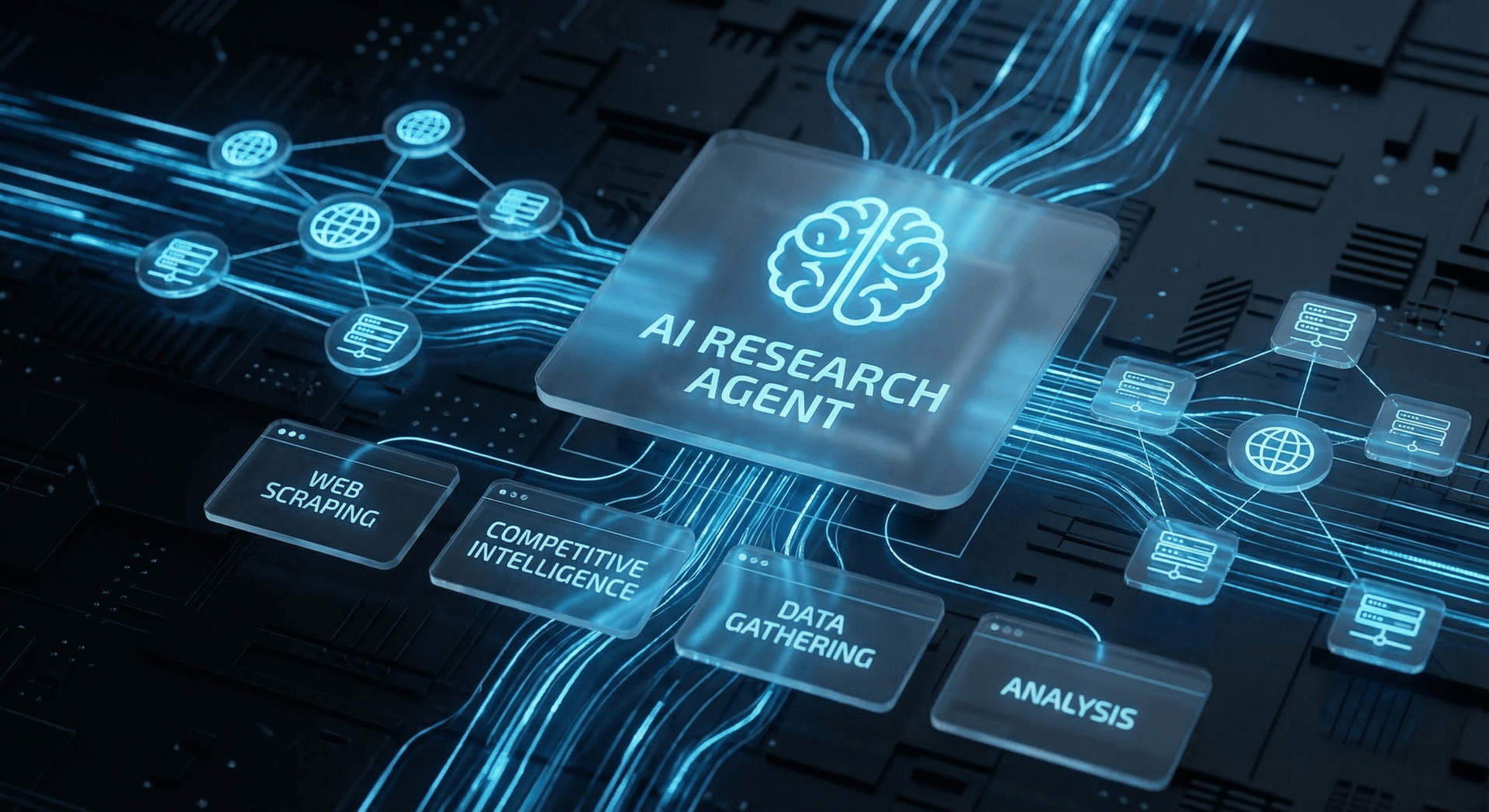
- Research Agent (inspired by academic rigor): Market research, competitive intelligence, industry trend analysis, and fact-checking of claims before they inform major decisions.
- HR Agent (inspired by talent management frameworks): Candidate evaluation, compensation benchmarking, performance review structure, and culture diagnostic questions.
- Product Agent (inspired by customer-centric product development): Feature prioritization, user research synthesis, product roadmap critique, and launch readiness assessment.
The key is to start with the agents that address your most recurring, highest-stakes decisions. For most small businesses, that is the CMO-CFO-CEO triangle. From there, you build out as you identify the domains where you most need expert perspective. This is the same architecture powering Skywalker, Cloud Radix's own AI Employee — see the results in our Cloud Radix case study.
To see the full range of what AI sub-agents can do across your business, explore our capabilities overview. To understand the technical architecture behind multi-agent systems, visit our sub-agents page.
Start Small, Scale Fast
Frequently Asked Questions
Q1.Is the AI pretending to be Gary Vaynerchuk or Warren Buffett?
No. The agents are 'inspired by' their frameworks and reasoning approaches — not impersonating them. The agents do not claim to be those individuals, do not invent biographical details, and do not attempt to replicate their specific views on topics outside their documented professional frameworks. Think of it as applying a proven mental model, not roleplaying a person.
Q2.How many sub-agents can a business deploy?
Technically, there is no hard limit. Practically, most businesses benefit most from 3-7 focused agents rather than a sprawling network of loosely defined ones. Quality of configuration matters more than quantity of agents.
Q3.What if two agents give contradictory advice?
That is often the most valuable output. The contradiction surfaces a genuine tension in the decision — a trade-off between, say, short-term profitability and long-term brand investment. The human decision-maker resolves the tension based on their values and priorities. The agents do not resolve it for you.
Q4.How does the AI C-suite work with my existing employees?
Sub-agents can work directly with team members as well as with owners. A marketing manager can query the CMO agent to stress-test a campaign plan. A controller can use the CFO agent to model financial scenarios. The agents augment human team members' expertise, they do not replace it.
Q5.Is the AI C-suite appropriate for regulated industries like healthcare or finance?
Yes, with appropriate configuration. The agents can be scoped to stay within approved domains, apply industry-specific regulatory frameworks, and route decisions that require human professional judgment (like medical or legal advice) to the appropriate human experts.
Q6.How do you ensure the agents stay in their domain rather than offering opinions on everything?
Agent scope is defined in the configuration. Each agent has a clear domain brief that specifies what types of decisions it analyzes, what frameworks it applies, and when it should defer to another agent or to the human. The orchestrator enforces these boundaries automatically.
Sources
- Vaynerchuk, G. — Jab, Jab, Jab, Right Hook (2013); Day Trading Attention (2024)
- Buffett, W. — Berkshire Hathaway Annual Shareholder Letters (1977–2025)
- Isaacson, W. — Steve Jobs (Simon & Schuster, 2011)
- McKinsey & Company — The State of AI in 2025: Multi-Agent Business Applications
- Gartner — Agentic AI Trends 2026: Multi-Agent Orchestration
- Harvard Business Review — How AI is Transforming Executive Decision-Making (2025)
Build Your AI C-Suite
Stop making major business decisions alone. Get the structured, multi-perspective AI advisory team your competitors do not have yet. Cloud Radix will design your AI C-suite around your specific business challenges.