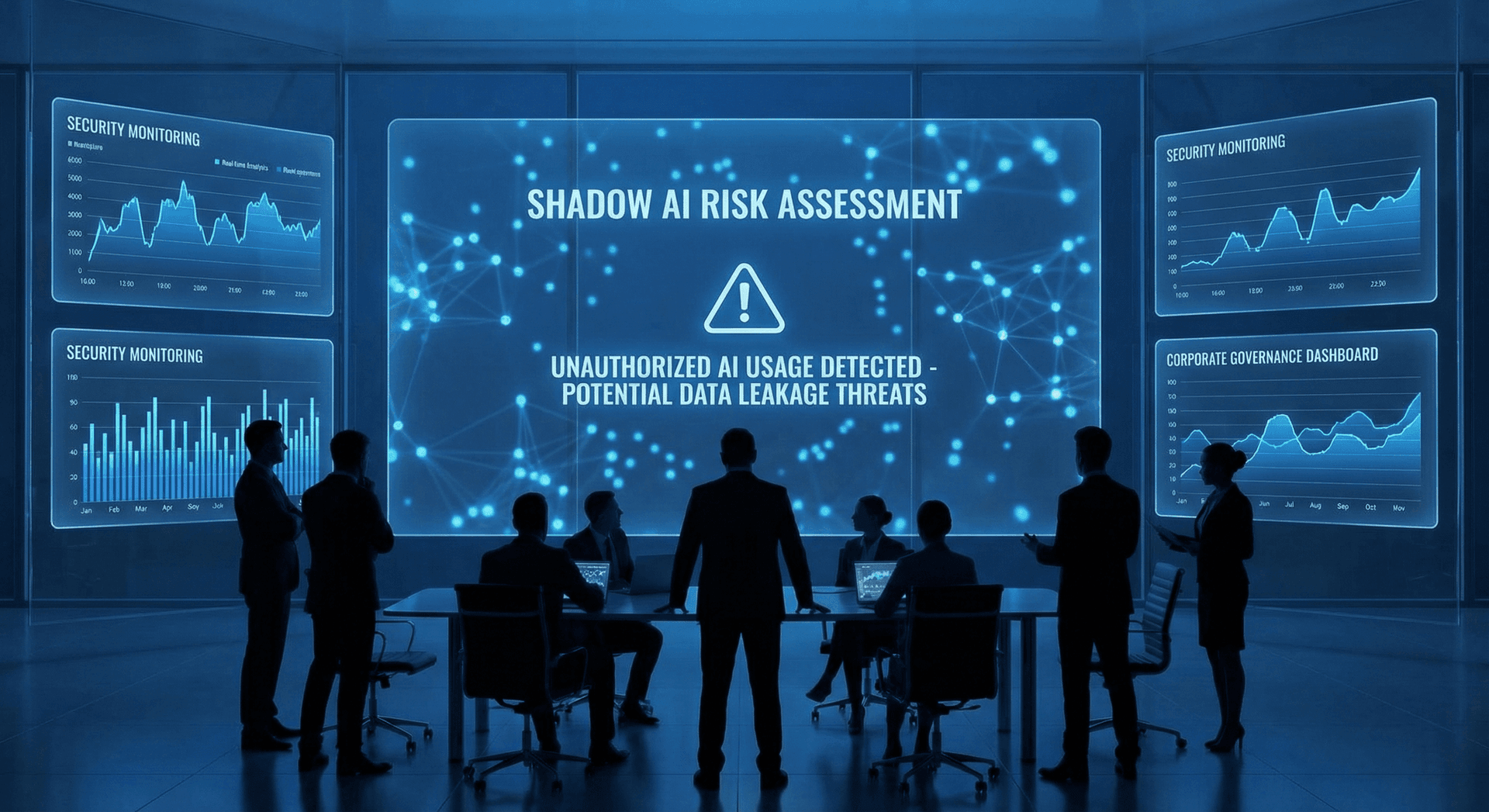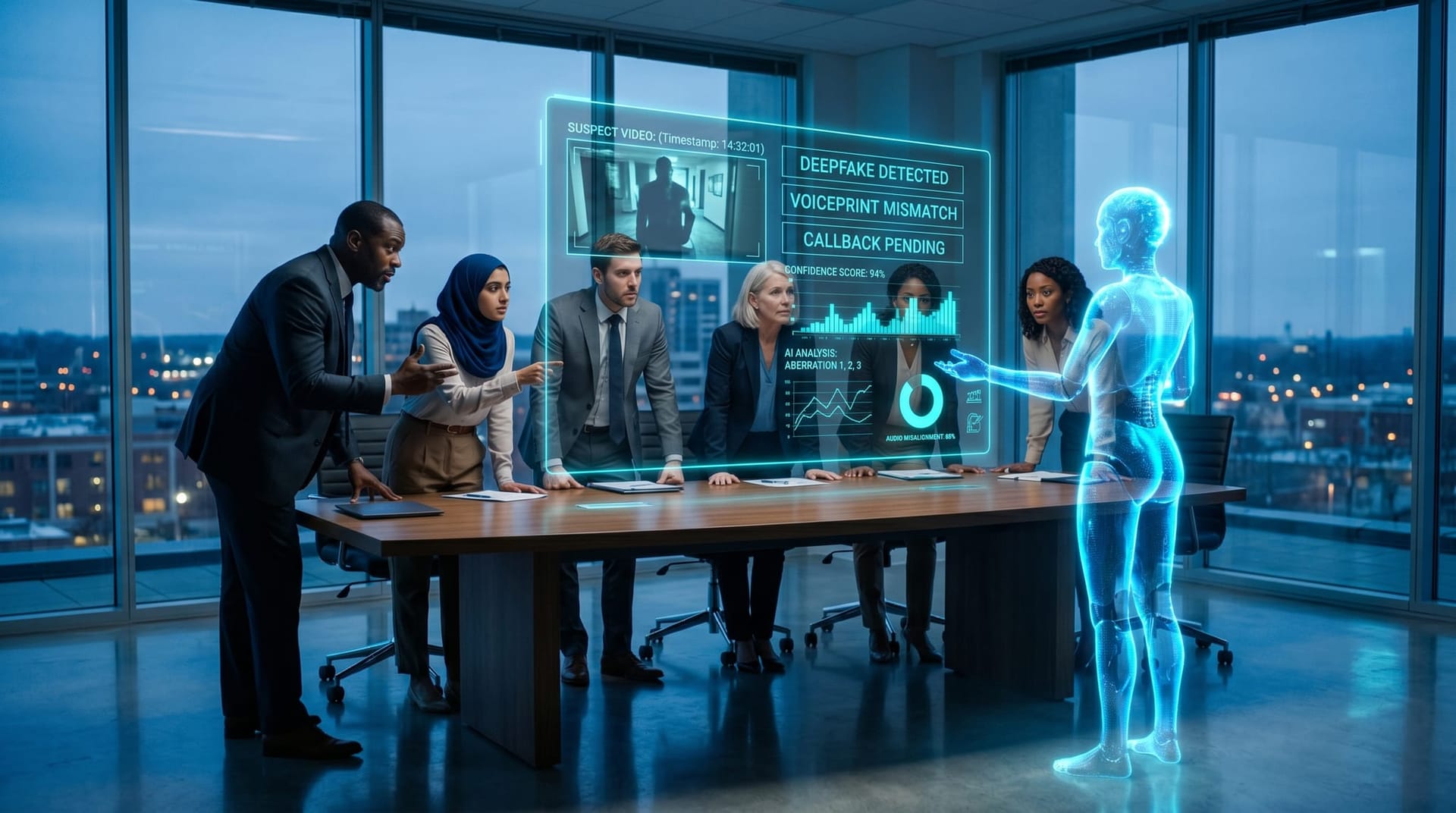
A controller at an Auburn manufacturer takes a call from her CFO. The voice is right. The cadence is right. There is a wire she is asked to release before the close of business, and the CFO apologizes for the rush. She releases it. The next morning the real CFO sits down at his desk and asks her why the operating account is short. That is the story executives in Northeast Indiana keep telling each other in quiet rooms, and per VentureBeat's security desk reporting today, the public has already lost the ability to spot the synthesis that makes it possible. This is no longer a consumer-curiosity problem about a celebrity face on the wrong video. It is a balance-sheet problem at every law firm, community bank, accounting practice, and healthcare clinic in Allen County, DeKalb County, and Whitley County.
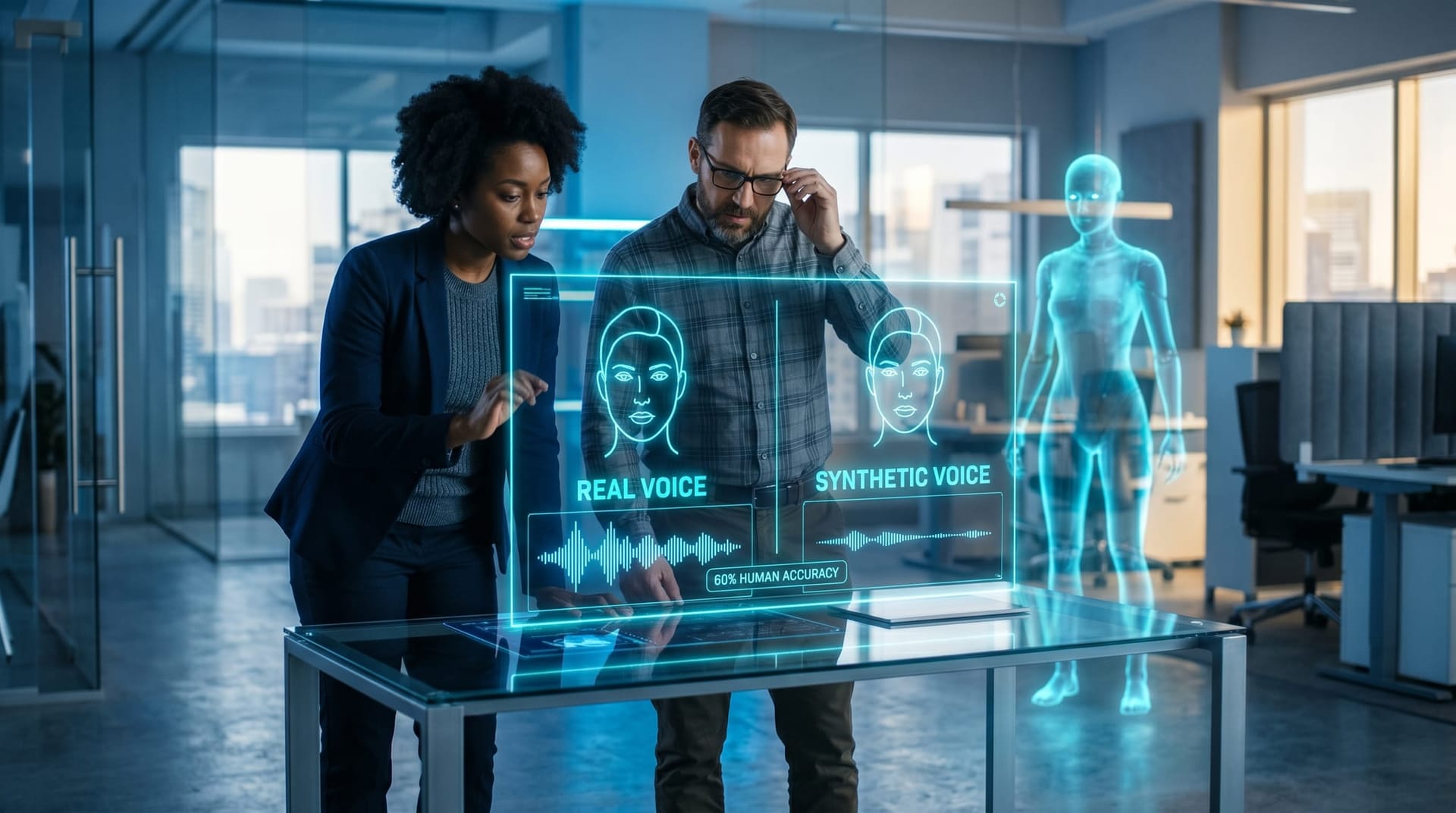
The hard numbers from independent research desks support the framing. MIT Technology Review's UC Berkeley citation in its May 14 deepfake report puts AI-generated voice identification accuracy at 60% — a coin flip slightly loaded against the human listener. MIT Technology Review's April 15 reporting on bank impersonation documents a 25× increase in virtual-camera attacks year over year and $17 billion in 2025 crypto-fraud losses tracked by Chainalysis — much of it routed through deepfake-assisted Know-Your-Customer bypass. The supply side has industrialized in parallel: MIT Technology Review's May 15 reporting on Chinese short-form AI dramas tracked 470 AI-generated short videos shipped per day in January 2026, with production costs cut 80% to 90% versus traditional shoots. The same pipeline that makes a 30-second drama in Mandarin makes a 30-second deepfake voicemail of your CFO.
Key Takeaways
- Deepfake fraud has crossed from a consumer-trust problem to a verified balance-sheet risk for NE Indiana law firms, community banks, accounting practices, and healthcare clinics.
- Independent research puts human deepfake-detection accuracy at roughly a coin flip — humans alone cannot be the verification layer for wire transfers, identity checks, or controlled-substance refill requests.
- Virtual-camera attacks against bank KYC verification grew 25× year over year per iProov data cited in MIT Technology Review, and the AI content supply chain has industrialized — the same pipeline that ships hundreds of short-form videos a day also ships voice-cloned impersonation calls.
- A defensible verification posture is built from challenge-response codes, voiceprint enrollment for repeat callers, multi-channel callback routines, and an AI Employee that runs the routine the same way every time — not from staff training videos alone.
- Indiana Code 35-43-5 (forgery and deception) already covers deepfake-assisted fraud; the standard of care for “reasonable verification” is now what determines whether your firm is the victim of the crime or the defendant in the negligence claim that follows.
- Cloud Radix's Secure AI Gateway and AI Employee verification routines give NE Indiana businesses a deterministic verification layer that runs 24/7 without depending on a human ear or eye to catch what is increasingly undetectable.
Why is deepfake fraud suddenly a Fort Wayne business problem?
Two trend lines crossed in early 2026. The first is detection accuracy by humans, which has collapsed as generation quality has improved. MIT Technology Review's reporting on the deepfake takedown ecosystem cites UC Berkeley research finding participants correctly identified AI-generated voices only 60% of the time — and the experiments likely overstate real-world accuracy because participants were primed to look for fakes. A controller answering an unscheduled call is not primed. A receptionist taking a refill request at 4:30 p.m. is not primed.
The second is the cost curve of producing the fake. MIT Technology Review's reporting on China's short-form AI drama market documents AI tools cutting traditional production cost 80% to 90% and compressing timelines from months to weeks — 470 short dramas per day in January 2026 across the China market, per DataEye data cited in the article. The implication for fraud is direct: the marginal cost of producing one convincing thirty-second deepfake voicemail of your CFO has fallen below the marginal benefit of trying. Every $5 million firm is now a viable target for a hundred-dollar production cost.
The damage is not theoretical for nearby industries. MIT Technology Review's April reporting on bank impersonation details 22 active Telegram channels selling bypass kits and deepfake-assisted KYC defeats at Tier-1 institutions. None of those are Fort Wayne community banks, but the technique is portable. A bypass that works against a Tier-1 KYC will, within a quarter, be deployed against an Allen County community bank that has not enrolled deepfake-aware verification controls.
The categorical shift — a high-trust signal (a recognizable voice, a familiar face) that no longer carries trust — is the same shift we argued in shadow AI is your biggest data risk in 2026: consumer-grade AI tools are leaking enterprise data through staff laptops, and now consumer-grade synthesis is leaking trust through your staff's ears and eyes. Both problems share the same structural fix: a deterministic verification layer between the human and the high-stakes decision.
What does deepfake exposure actually look like for an Allen County law firm, bank, or clinic?
The exposure surface is industry-specific. The control surface is not. Below is the exposure scorecard we walk Fort Wayne professional-services clients through during a Secure AI Gateway assessment.
| Vertical | High-exposure scenario | Likely first-mover attack vector |
|---|---|---|
| Community bank or credit union | Wire authorization based on a single phone confirmation; remote account-opening KYC | VCam-based KYC bypass during onboarding; voice-cloned authorization call to operations staff |
| Law firm (litigation, estate, IP) | Client identity confirmation by phone; trust-distribution disbursements | Voice-cloned client request to redirect trust funds; deepfake client Zoom for new-matter intake |
| Healthcare practice or clinic | Controlled-substance refill, after-hours triage, records-release requests | Voice-cloned patient or prescribing-physician request to receptionist; deepfake patient telehealth call |
| Manufacturing CFO/AP | Vendor account-change requests; wire releases for inbound parts orders | Voice-cloned CFO authorizing release; deepfake vendor controller requesting routing-number change |
| Insurance agency | First-notice-of-loss (FNOL) intake; beneficiary changes by phone | Deepfake claimant; voice-cloned policyholder beneficiary-change request |
| Real-estate closing / title agent | Wire-routing instruction confirmations | Voice-cloned buyer or seller, deepfake closing-agent email with spoofed video confirmation |
A self-scoring exercise: for each row that applies to your firm, score whether your current routine relies on (a) a human ear or eye alone, (b) a single confirmation channel, or (c) a multi-channel deterministic routine. Any (a) or (b) is now a defensible-negligence question rather than an operational one. The standard of care has moved.
The same logic shapes how we frame engagements with attorneys and accountants in the Fort Wayne law firms 2026 AI hallucination liability playbook — once the underlying technology produces output that a reasonable professional cannot independently verify, the duty of competence under Rule 1.1 of the Indiana Rules of Professional Conduct shifts from “did you read the output?” to “did you run a verification routine the regulator would recognize?” Deepfake exposure follows the same shape. Reading the call or watching the video is no longer the verification — it is the input the verification operates on.
What does a defensible verification routine look like in 2026?
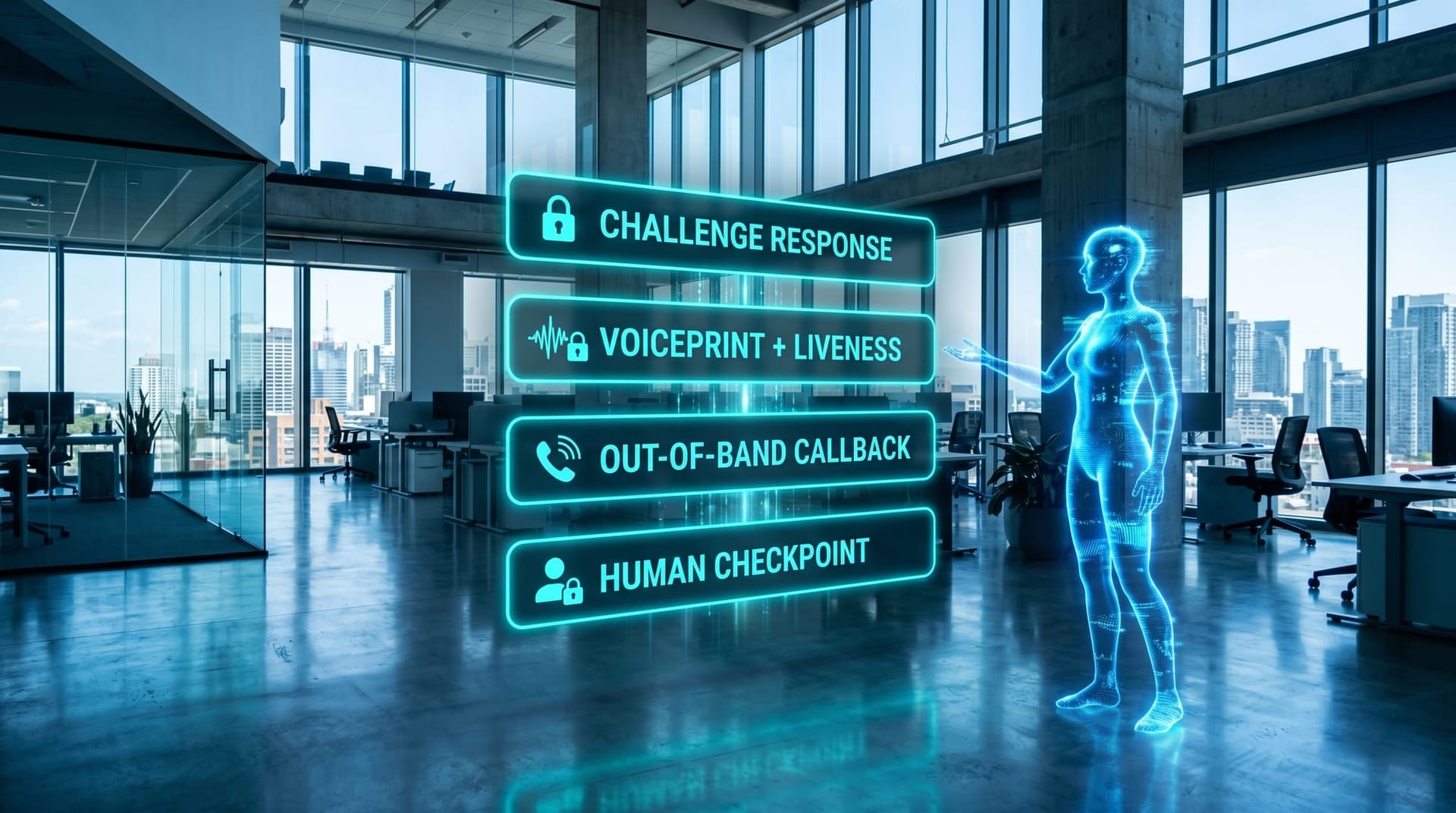
A defensible verification routine has four layers. None of them are new in concept — they are all derived from established financial-controls practice — but the threshold of when each layer becomes mandatory has moved down sharply.
Layer 1: Challenge-response codes. Every authorized caller (CFO, partners, prescribing physicians, vendor controllers, repeat clients above a defined exposure threshold) is enrolled with a non-derived challenge phrase or numeric code. The code is not a password — it is a secret that a deepfake of the caller does not have access to, and that the caller cannot be socially engineered into revealing because the operator's script never asks for it on an unsolicited call. The challenge is initiated by the recipient, not the caller. If the caller cannot complete the challenge, the call ends and the routine escalates.
Layer 2: Voiceprint enrollment plus liveness. For inbound calls from enrolled high-trust callers, a voiceprint match is computed against the enrollment recording. Liveness probes — a prompted phrase the caller did not see in advance — defeat the playback-of-clip variant of the attack. Voiceprint is not a complete defense on its own; it is one input. Generative voice systems have closed the gap on cloned-voice fundamentals, but real-time prompted liveness still adds friction.
Layer 3: Multi-channel callback. For any irreversible authorization above a documented threshold — wire releases, beneficiary changes, vendor account-routing changes, controlled-substance approvals, trust disbursements — the routine requires a callback through an out-of-band channel (the enrolled office number from your CRM, not the inbound caller-ID), confirmed against the recipient's recorded number, on a different timing schedule than the inbound request. Same-call confirmations no longer count.
Layer 4: AI Employee execution of the routine, every time, identically. This is structurally new in 2026, and the consumer literature typically misses it. Staff under workload pressure shortcut verification routines. Staff are pleasant — they want to help. The routine has to be executed by an actor whose performance does not degrade under pressure and whose adherence is logged for every call. The AI Employee answers the call, runs the routine, executes the callback, logs the trail, and only routes to a human once verification passes. The receptionist cousin is documented in the Fort Wayne customer-service AI signal — the routine is the product, not the conversation. The deepfake-defense version hardens the routine for high-stakes verticals.
What does the wire-transfer verification routine actually look like, step by step?
Below is the wire-transfer verification routine Cloud Radix configures for community bank, credit union, and CFO clients. It is intentionally tedious. That is the point.
- Inbound classification. The AI Employee classifies the call as a wire-related request as soon as the keyword pattern is detected (wire, ACH, vendor change, payment release). The call is silently escalated to the high-friction routine without telling the caller; the routine is invisible until the caller asks for something the routine guards.
- Enrollment lookup. The AI Employee retrieves the enrollment record for the claimed caller — challenge phrase, voiceprint, enrolled callback number, authorized exposure threshold. If the caller is unrecognized, the routine routes to a separate new-caller workflow.
- Challenge initiation. The AI Employee asks the caller a non-derived challenge question and verifies the response against the enrollment record. The challenge is randomly selected from the caller's enrollment set; it is not the same on every call.
- Voiceprint and liveness check. While the caller is responding, the AI Employee computes a voiceprint match score and prompts the caller to repeat a freshly generated phrase. Both inputs are logged.
- Out-of-band callback. The AI Employee disconnects the inbound call after stating that the wire request has been “logged and queued” and immediately initiates an outbound callback to the enrolled office number. The callback verifies the request against the same enrollment record.
- Human checkpoint for irreversible operations. If and only if all checks pass, the AI Employee routes the request to the named human approver — never the same person who took the inbound call — for the final release. We documented the principle in the AI employee human-approval gate post: irreversible operations require a human checkpoint, full stop.
- Audit log. Every step — challenge result, voiceprint score, callback verification outcome, human approver identity, timestamp — is logged in an immutable audit trail. If the routine fails and the wire still releases, the routine is now defensible evidence that the firm met a documented standard of care.
The routine takes roughly four to seven minutes per wire above the threshold. The friction is initially unpopular with senior staff who liked the speed of the prior single-confirmation workflow. It becomes popular the first quarter after the routine catches an attempt — which it will, because fraud attempts against NE Indiana firms with even modest balance-sheet exposure have multiplied sharply since 2024 across the verticals we serve.
How does the same logic apply to NE Indiana law firms, clinics, and accounting practices?
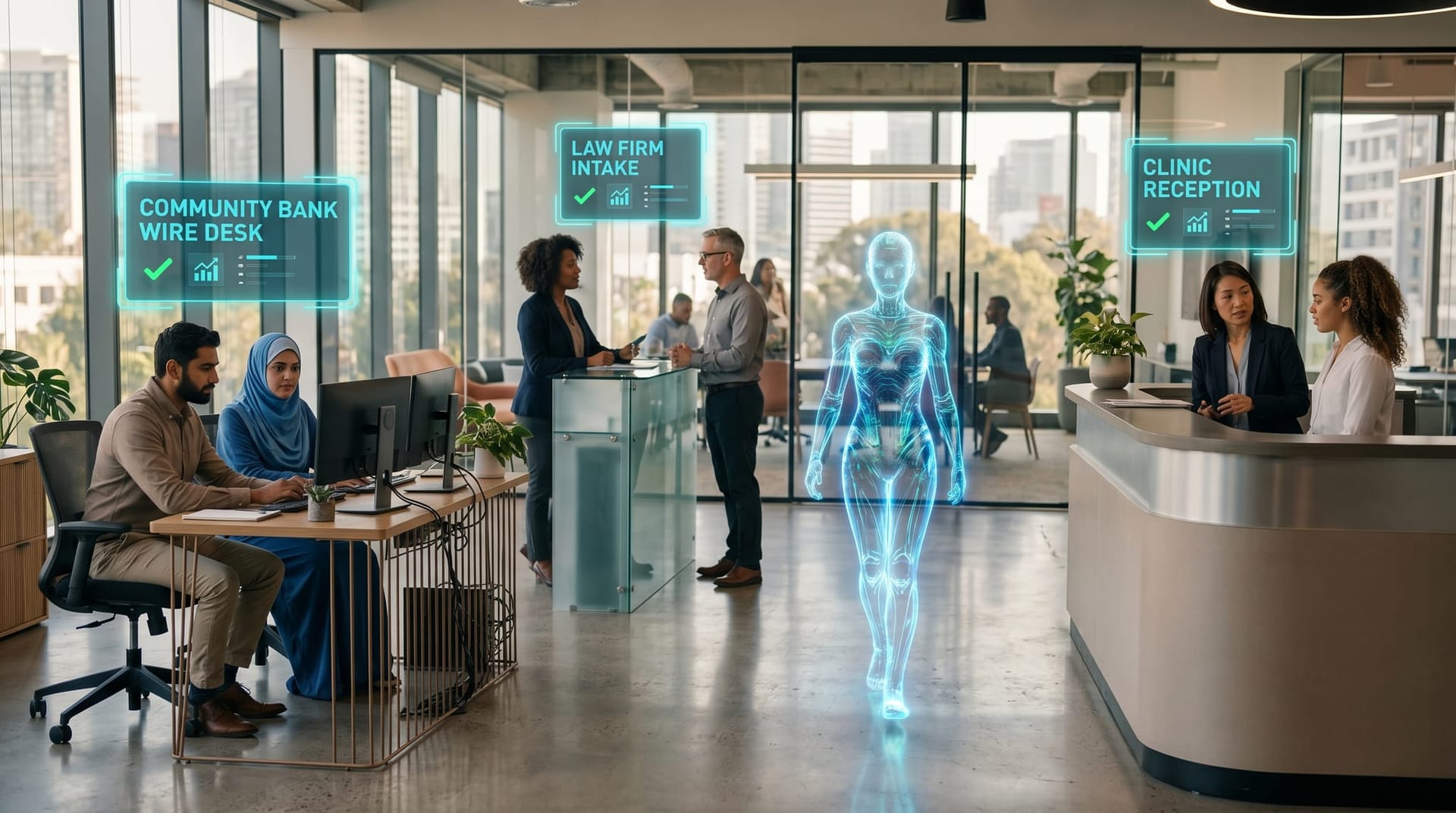
The wire routine is the most-cited application because it has the cleanest financial loss signal. The same four-layer routine generalizes to law firms, healthcare practices, and accountants with vertical-specific adaptations.
Law firms. The high-exposure surface is client identity confirmation for trust disbursements, new-matter intake from “referred” clients, and settlement-fund routing changes. The challenge-response layer becomes the enrollment of every client above a documented exposure threshold (we use $50,000 in trust as a default floor) with a non-derived challenge. The voiceprint layer enrolls every client at intake. The callback layer requires a same-day callback through the client's enrolled phone before any routing-change instruction executes. The Indiana Rules of Professional Conduct under Rule 1.6 (confidentiality) and Rule 1.15 (safekeeping of property) frame this not as optional but as the modern equivalent of the standard of care.
Healthcare practices and clinics. The high-exposure surface is controlled-substance refills, after-hours triage involving prescribing instructions, records-release requests, and telehealth identity verification. The challenge layer applies to prescribing physicians calling for emergency refill authorizations and to patients with controlled-substance prescriptions calling for refill orders. The voiceprint layer is enrolled at the patient's first in-person visit. The callback layer goes to the enrolled patient phone (HIPAA-aware) or to the prescribing physician's office through the enrolled office line. HIPAA's existing “reasonable safeguards” language under 45 CFR § 164.530 reads naturally as covering deepfake-aware verification once the threat is known to the practice — and it is now known. We covered the broader HIPAA verification surface in our consent-based AI calling and TCPA writeup; the deepfake-defense overlay sits on the same compliance substrate.
Accountants and CPA firms. The high-exposure surface is client-tax-document intake from impostor clients, vendor account-change confirmation, and payroll-direct-deposit routing changes during PCAOB-relevant engagements. The same four layers apply. The notable wrinkle in 2026 is that examiners are beginning to cite reasonable-verification posture in penalty-mitigation determinations for engagements where the CPA was deceived by deepfake identity material; firms that can produce an audit log of the verification routine recover abatements more reliably than firms that cannot.
In all three verticals, the structural failure mode is identical: a high-trust signal (recognized voice, familiar face, expected sender) is treated as the verification itself rather than as the input that the verification runs on. The defensive posture is identical: deterministic routines, executed by an actor whose adherence does not degrade under workload, logged in a way that survives the loss event.
How does Indiana law treat deepfake-assisted fraud in 2026?
Two clarifications matter. First, deepfake-assisted fraud is already prosecutable under existing Indiana statutes; the General Assembly has not had to invent a new crime. Indiana Code Title 35, Article 43, Chapter 5 — Forgery, Fraud, and Other Deceptions — covers the conduct directly. Forgery (IC 35-43-5-2) reaches the creation or modification of a written instrument with intent to defraud. Identity deception (IC 35-43-5-3.5) reaches the use of identifying information of another person with fraudulent intent. Fraud (IC 35-43-5-4) reaches the broader pattern. None of these statutes were written with deepfakes in mind, but all three apply on their face.
Second, the Indiana Attorney General's Consumer Protection Division has begun publishing deepfake-related consumer advisories and is increasingly the appropriate first point of contact for impersonation losses that do not rise to a federal threshold. For losses involving federally insured deposits, the FBI's IC3 reporting system remains the federally designated channel. The two are not substitutes; report both for losses above a meaningful threshold.
The civil-liability angle is the part most NE Indiana firms underweight. Under Indiana negligence doctrine, the question after a deepfake-assisted loss is not whether the firm was deceived — that part is conceded — but whether the firm met the standard of care a similarly situated firm would have met under the same circumstances. As the threat is now publicly known and the defensive technology is publicly available, the “similarly situated firm” benchmark is moving in real time. A firm that did not deploy any deepfake-aware verification in 2026 will, by 2027, look exposed in the comparison. This is the same dynamic we expect to play out in AI-hallucination liability cases — and the deepfake version arrives sooner because the loss event is faster and more visible.
The NE Indiana defensive layer: how Cloud Radix configures verification for local firms
Cloud Radix's posture on deepfake defense for Auburn, Fort Wayne, DeKalb County, and Allen County clients combines two architectural pieces. The first is the Cloud Radix Secure AI Gateway — the policy layer that brokers every external AI call our deployments make, including the voiceprint, liveness, and identity-verification model calls inside the verification routine. The Gateway gives the client a single audit trail, a single rotation point for credentials, and a single place to enforce challenge-response and callback policy across the AI Employee workforce. We documented the architectural case for routing all AI workloads through a single broker in ChatGPT vs your AI Employee: consumer AI as business liability; the deepfake-verification application is the highest-stakes instance of the same architecture.
The second is the AI Employee that runs the verification routine itself. The routine is not a configuration file in a SaaS product — it is an AI Employee with a documented job description, an enrolled identity, an audit log, and a manager-agent supervisor checking that the routine executed correctly on every call. For a Fort Wayne community bank, this might be a “front-line verification AI Employee” answering the wire desk and a “controls AI Employee” running the after-hours review of the day's verification logs. For a Northeast Indiana law firm, the same architecture answers the new-matter intake line and routes verified callers to a paralegal. The routine is what creates the defense. The AI Employee is what guarantees the routine runs the same way at 8:15 a.m. and at 4:55 p.m. on a Friday before a holiday.
A typical NE Indiana deployment runs four to eight weeks from kickoff to a hardened verification routine in production. Week one is the exposure scorecard and challenge-question library. Week two is enrollment of the top fifty high-exposure callers and voiceprint capture. Weeks three through five are the AI Employee buildout — script, escalation rules, audit-log integration with the firm's case-management or core-banking system. Weeks six through eight are tabletop exercises with simulated deepfake calls and refinement. The output is not a slide deck — it is a running routine that catches the next attempt and produces an audit trail that defends the firm in the post-incident review.

Pricing the defense against the loss
A wire-fraud loss against an Allen County community bank averages in the six figures. A CFO-impersonation wire against an NE Indiana manufacturer averages in the low six figures and routinely runs into the low seven for larger operations. A trust-fund redirect against a Fort Wayne law firm in the $50,000 to $250,000 range is plausible based on case law from peer states.
A Cloud Radix deepfake-defense AI Employee deployment for a single-vertical mid-market firm typically prices well below the cost of a single avoided incident in year one. The math is not the case for adopting the routine — it is the case for adopting it before the first incident rather than after.
If you are running an NE Indiana law firm, community bank, healthcare practice, or accounting firm and have not run a deepfake-exposure scorecard against your high-stakes verification surfaces in the past quarter, contact Cloud Radix for a sixty-minute Secure AI Gateway exposure assessment. We will run the scorecard against your current routines, identify the two or three highest-leverage verification surfaces, and quote a deployment scoped to your vertical and your existing systems.
Frequently Asked Questions
Q1.Can a human actually tell a deepfake voice from a real one?
Less reliably than most people assume. MIT Technology Review's reporting on the deepfake takedown ecosystem cites UC Berkeley research finding correct identification of AI-generated voices at roughly 60% — only marginally better than a coin flip, and that figure likely overstates real-world accuracy because the study participants were primed. Treating staff training as the primary defense is therefore inadequate; the verification has to run on a deterministic routine that does not depend on the listener's ear.
Q2.What does a challenge-response code look like in practice?
It is a non-derived secret enrolled in advance for each authorized caller — typically a randomly assigned phrase, a numeric code, or a callback-only verification flow. The recipient asks for it; the caller answers; the answer is checked against the enrollment record. A deepfake of the caller's voice does not know the secret because the secret was never spoken on a recorded channel. The challenge is initiated by the recipient on inbound calls, not given to the caller proactively, which keeps the secret out of the attacker's training set.
Q3.Does Indiana have a deepfake-specific criminal statute?
Indiana has not enacted a deepfake-named criminal statute as of 2026. Deepfake-assisted fraud is already prosecutable under existing forgery and fraud statutes in Indiana Code Title 35, Article 43, Chapter 5 — forgery (IC 35-43-5-2), identity deception (IC 35-43-5-3.5), and fraud (IC 35-43-5-4) all apply on their face. The civil-liability question — whether the deceived firm met the standard of care — is the area where Indiana case law is moving fastest in 2026.
Q4.Will deepfake-defense controls trigger HIPAA, TCPA, or GLBA compliance questions?
Yes, and the alignment is favorable. HIPAA's reasonable safeguards language at 45 CFR § 164.530 reads naturally as covering deepfake-aware verification once the threat is known. TCPA's restrictions on outbound calling shape the callback channel design; consent-based architectures accommodate the routine. GLBA's information-safeguarding requirements at 16 CFR Part 314 apply to community banks and credit unions and are increasingly being read by examiners as including deepfake-aware identity verification. Deploying the routine improves compliance posture; it does not strain it.
Q5.Why an AI Employee and not a software product?
A software product runs a routine when called. An AI Employee owns the routine — answers the call, runs the verification end-to-end, executes the callback, logs the trail, and routes the cleared conversation to a human only after the verification passes. The structural problem with deepfake defense is staff workload pressure and routine drift; a software product depends on the staff invoking it, while an AI Employee removes that dependency. Per the OWASP GenAI LLM Top 10, the highest-impact mitigations for AI-assisted social engineering are deterministic verification routines executed without human reliance — which is the AI Employee pattern by definition.
Q6.How fast can a Fort Wayne mid-market firm get a verification routine in production?
A typical Cloud Radix deployment runs four to eight weeks from kickoff to a hardened verification routine in production — exposure scorecard, challenge library, enrollment of the top fifty high-exposure callers, AI Employee buildout, audit-log integration, and a final tabletop with simulated deepfake calls. The bottleneck is rarely the technology; it is enrollment time with the firm's high-stakes callers. Most firms can complete enrollment for the top twenty callers within a week if leadership prioritizes it.
Q7.What is the single highest-leverage thing a firm should do this month?
Run an exposure scorecard against your three highest-stakes verification surfaces — typically wire authorization, identity-confirmation for trust or beneficiary changes, and after-hours emergency authorizations — and document which of them currently rely on a human ear or eye alone. Any that do are now the top priority for routine hardening, regardless of which vendor or architecture you select. The scorecard takes an afternoon; the result is a defensible record that the firm took the threat seriously the month it crossed the public-awareness threshold.
Sources & Further Reading
- VentureBeat: venturebeat.com/security/americans-cant-spot-a-deepfake-and-thats-a-business-crisis-not-just-a-consumer-problem — Americans can't spot a deepfake — and that's a business crisis, not just a consumer problem.
- MIT Technology Review: technologyreview.com/2026/05/14/1137161/ai-porn-nonconsensual-deepfakes-takedown-piracy-copyright — The shock of seeing your body used in deepfake porn.
- MIT Technology Review: technologyreview.com/2026/04/15/1135898/cyberscammers-bypassing-bank-telegram — How cyberscammers are using illicit tools to impersonate banks on Telegram.
- MIT Technology Review: technologyreview.com/2026/05/15/1137326/chinese-short-dramas-ai — How Chinese short dramas are being rebuilt with AI at industrial scale.
- NIST: nist.gov/itl/ai-risk-management-framework — AI Risk Management Framework.
- OWASP: genai.owasp.org/llm-top-10 — OWASP GenAI Security Project: Top 10 for LLM Applications.
- Indiana General Assembly: iga.in.gov/laws/2024/ic/titles/35/articles/43/chapters/5 — Indiana Code Title 35, Article 43, Chapter 5: Forgery, Fraud, and Other Deceptions.
- Indiana Attorney General: in.gov/attorneygeneral/consumer-protection-division — Indiana Attorney General Consumer Protection Division.
Book a Deepfake-Exposure Scorecard
A sixty-minute Cloud Radix Secure AI Gateway assessment runs the exposure scorecard against your current routines and identifies the highest-leverage verification surface to harden first — before the next call lands.