
If you run a law firm or accounting practice in Fort Wayne, AI compliance automation is no longer optional — it's the difference between six weeks of scrambling through a 900-page federal bill and having structured analysis in your hands within hours. That workflow is broken. And in 2026, it's no longer the only option.
Intuit just proved it. Their TurboTax team took the sprawling “One Big Beautiful Bill” — 900 pages of tax law with no standardized schema, divergent House and Senate language, and zero published IRS forms — and compressed what historically took months of implementation into days and hours. They did it with a structured AI workflow that combined commercial LLMs for document parsing with domain-specific AI tools for implementation.
That's not a Silicon Valley story. That's a blueprint for every regulated professional services firm in Northeast Indiana. The same principles that let Intuit's team parse tax law at machine speed apply directly to Fort Wayne law firms tracking regulatory changes and accounting practices staying ahead of compliance deadlines.
The question isn't whether AI compliance automation will reach Fort Wayne's professional services sector. It's whether your firm will adopt it deliberately — or get dragged there by competitors who moved first.

Key Takeaways
- AI compliance automation compresses weeks of regulatory analysis into hours using a structured, multi-phase workflow
- Fort Wayne law firms and accountants operate in one of Indiana's densest professional services markets, making efficiency a competitive advantage
- Human oversight remains non-negotiable — AI handles parsing and pattern-matching while professionals validate and verify
- Privacy-led UX and consent infrastructure are prerequisites for deploying AI in client-facing regulated workflows
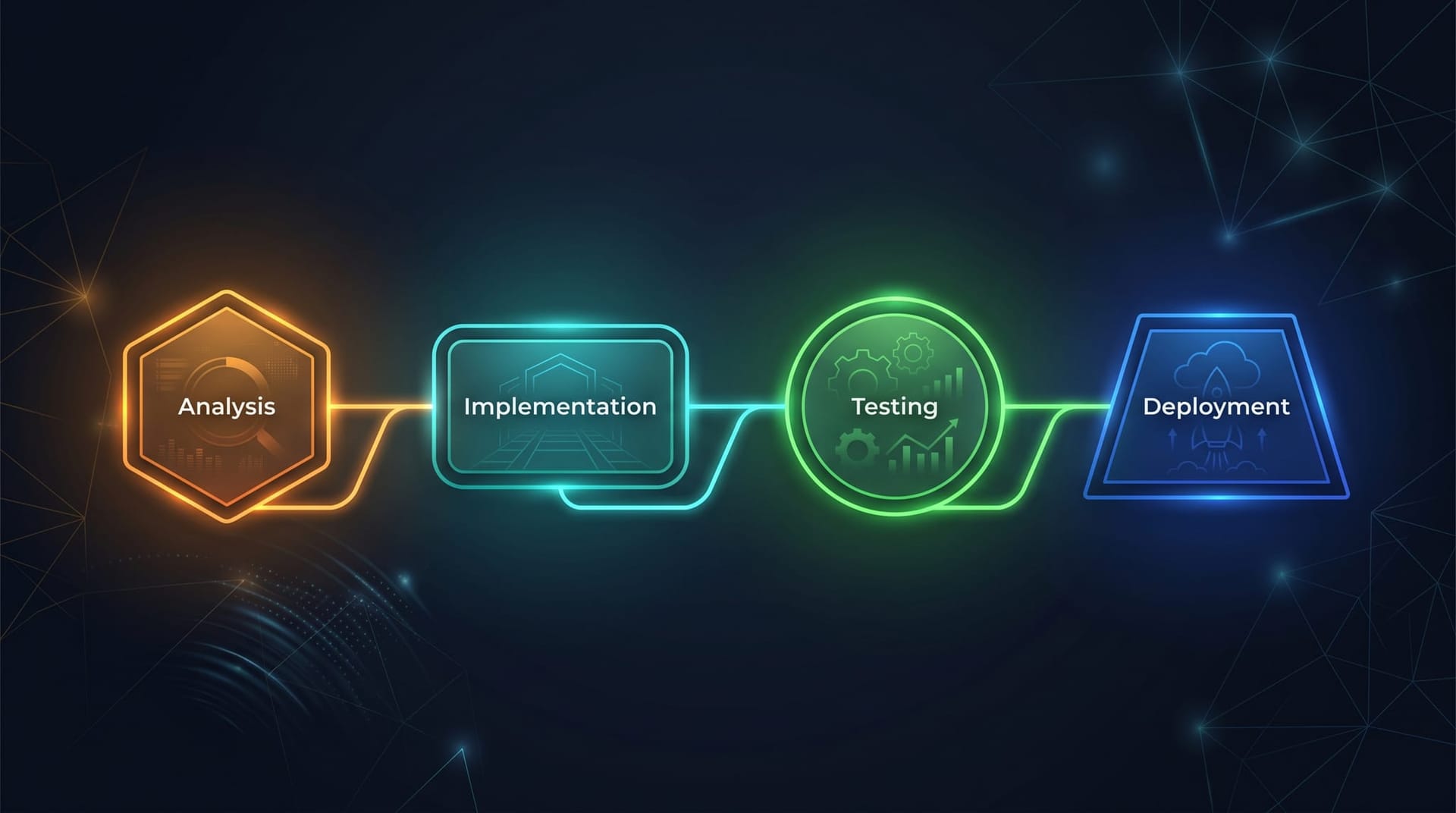
- A four-step framework (document analysis, domain-aware implementation, pre-deployment testing, firm-wide rollout) applies to legal and accounting use cases
- Starting with a single compliance workflow lets firms prove ROI before scaling
What Does AI Compliance Automation Actually Look Like for Law Firms and Accountants?
Strip away the buzzwords and AI compliance automation is a structured, multi-phase workflow that does exactly what Intuit demonstrated: it takes large, complex regulatory documents and converts them into actionable, organized outputs that professionals can review and implement. No magic. No black boxes. Just a systematic pipeline that replaces manual reading and summarization with machine-speed parsing.
Intuit's approach used a two-phase system. In the first phase, commercial LLMs like GPT-4 and Claude handled document parsing — reading the 900-page bill, reconciling differences between House and Senate versions, and extracting structured data about each provision. Joy Shaw, senior tax developer at Intuit, described the scale of the challenge: “The sheer volume and scope of changes is what makes this historic. Every area of the tax code is being revisited.”
In the second phase, domain-aware AI tools mapped those parsed provisions to existing tax code structures. They used Claude specifically for dependency mapping — identifying which new provisions affected which existing rules. Sarah Aerni, Intuit's VP of AI, emphasized what made the approach work: “It comes down to having human expertise to be able to validate and verify just about anything that comes out on the other end.”
Here's how that same framework translates to Fort Wayne law firms and accounting practices:
| Phase | Intuit’s Use | Law Firm Equivalent | Accounting Firm Equivalent |
|---|---|---|---|
| Phase 1: Parse | LLMs read 900-page bill, reconcile versions | AI reads new regulations, extracts relevant sections by practice area | AI parses tax code changes, identifies affected filing categories |
| Phase 2: Map | Domain-aware AI maps to existing tax code | AI maps regulatory changes to existing client contracts and obligations | AI maps code changes to current client portfolios and compliance status |
| Phase 3: Build | Auto-generates UI screens from law changes | AI drafts client advisory memos and compliance checklists | AI updates tax preparation workflows and client notifications |
| Phase 4: Test | Unit tests verify each implementation | Attorney review confirms accuracy before client delivery | CPA review validates calculations before filing |
This isn't about replacing attorneys or CPAs. It's about giving them the same force-multiplier that Intuit's team used — and that approach explicitly kept human oversight as non-negotiable. If you've read our piece on why your AI employee needs a human approval gate, you'll recognize this pattern. The AI accelerates the work. The professional validates the output.

Why Should Fort Wayne Professional Services Firms Care About AI Employees Right Now?
The technology has matured past the experimental stage. Intuit didn't publish a research paper — they shipped production code that processes real tax returns for millions of users. Aerni was explicit about the shift: the AI tools they're using now deliver “determinism” that earlier models couldn't. That means consistent, reproducible results from the same inputs — exactly what regulated industries require. When a Fortune 500 company trusts AI to interpret tax law for consumer-facing products, the technology has crossed the threshold from experimental to deployable.
Regulatory pressure is compounding, not stabilizing. The “One Big Beautiful Bill” is just the latest example. Federal, state, and local regulations continue to expand in scope and complexity. Indiana firms tracking changes across the Indiana Administrative Code, IRS guidance, SEC requirements, and Allen County local ordinances face a monitoring burden that grows every year. Manual tracking doesn't scale. AI monitoring does. If your firm doesn't already have a security framework in mind, our AI Employee Security Checklist outlines the controls that regulated firms need before deploying any AI workflow.
Client expectations are shifting faster than most firms realize. MIT Technology Review's latest analysis found that privacy is evolving from one-time transactions to continuous data relationships. Adelina Peltea, chief strategy officer at Usercentrics, noted that “well-designed consent experiences routinely outperform initial estimates” — meaning clients who understand how AI is being used in their matters tend to embrace it rather than resist it. The firms that build transparent, consent-driven AI workflows now will set the standard that competitors have to match later.
How Do You Build a Compliance Automation Workflow That Actually Works?
Intuit's success wasn't accidental. They followed a structured methodology that any Fort Wayne firm can adapt. Here's the four-step framework, mapped to AI employees built for Fort Wayne professional services:
Step 1: Document Analysis and Parsing
Start with the raw regulatory material. For a law firm, this might be a new federal rule, a state administrative code update, or a local ordinance change. For an accounting practice, it's a tax code revision, IRS guidance document, or new filing requirement. The AI employee ingests the document, identifies key provisions, and extracts structured data — section numbers, effective dates, affected parties, compliance deadlines, and substantive requirements.
Intuit used GPT-4 and Claude at this stage because they needed models capable of parsing legal language with nuance. The same models are available to any firm through API access, and the cost per document is measured in cents, not dollars.
Step 2: Domain-Aware Implementation
Parsed data is only useful if it's mapped to your existing operations. For a law firm, this means connecting new regulatory requirements to existing client matters, contracts, and compliance obligations. For an accounting practice, it means mapping tax code changes to current client portfolios, filing schedules, and preparation workflows.
This is where domain-specific configuration matters. An AI employee with knowledge of your practice areas, client base, and existing workflows can map new requirements to the right contexts automatically. Our AI Employee Governance Playbook covers how to structure these domain rules so the AI employee operates within defined boundaries.
Step 3: Pre-Deployment Testing and Validation
Intuit built a custom unit test framework that ran AI-generated implementations against known test cases and flagged failures with explanations. Your firm's equivalent is a structured review process: the AI employee produces draft analysis, memos, or workflow updates, and a senior attorney or CPA reviews them before anything reaches a client.
The key insight from Intuit's experience is that AI errors are systematic and testable. If the AI misinterprets a provision, it will misinterpret it consistently — which means you can catch and correct the error once, rather than hunting for random human mistakes across dozens of documents.
Step 4: Firm-Wide Rollout and Continuous Improvement
Once the workflow is validated on a single compliance area, expand it. Add additional practice areas, regulatory sources, or client categories. Each expansion is faster than the initial setup because the underlying framework is already proven. Intuit's team described this as moving from “months to hours” — the first implementation took the most effort, and subsequent ones leveraged the same pipeline.
What Privacy and Consent Infrastructure Do AI-Powered Firms Need?
MIT Technology Review's analysis of privacy-led UX design makes a critical point for professional services firms: privacy isn't a checkbox exercise anymore. It's a continuous relationship between your firm and your clients. When you introduce AI into workflows that handle attorney-client privileged information or confidential financial data, your consent infrastructure needs to match the sophistication of the technology.
For Fort Wayne law firms and accounting practices deploying AI compliance automation, four requirements are non-negotiable:
- Transparent disclosure. Clients must know which workflows involve AI assistance, what data is processed by AI systems, and what human oversight is in place. Vague language about “technology-assisted services” won't cut it — specificity builds trust.
- Granular consent. Different clients may have different comfort levels with AI processing. Your consent framework should allow clients to opt in or out of AI-assisted workflows on a per-matter or per-engagement basis. Our guide to consent-based AI calling covers the UX patterns that make this practical rather than burdensome.
- Data handling controls. AI compliance workflows process sensitive regulatory data alongside client-specific information. You need clear data retention policies, access controls, and audit trails that demonstrate exactly what data the AI accessed and when. For firms handling health information, our HIPAA-compliant AI employees guide covers the additional requirements.
- Continuous consent management. As Peltea noted in MIT Technology Review, privacy is evolving from one-time transactions to ongoing relationships. Your consent infrastructure should support updates, renewals, and revocations without disrupting active workflows.
The firms that get this right will discover what Peltea's research shows: well-designed consent experiences actually increase client trust and engagement. Transparency isn't a liability — it's a competitive advantage.

Why Fort Wayne and Allen County Are Positioned for This Shift
Fort Wayne isn't just another mid-size city with a few law firms. Allen County has one of the densest concentrations of professional services firms in Indiana, ranging from multi-partner law practices and regional CPA firms to solo practitioners who serve the local business community. That density creates both competition and opportunity — the first firms to automate compliance workflows will set a pace that others struggle to match.
The client base here is also uniquely diverse. Fort Wayne's law firms and accounting practices serve manufacturing companies, healthcare systems, agricultural operations, real estate developers, and small businesses across Northeast Indiana. Each of those industries brings its own regulatory requirements, which means compliance monitoring is inherently multi-domain. An AI employee that monitors regulatory changes across manufacturing safety standards, healthcare privacy rules, and tax code updates simultaneously delivers disproportionate value compared to one tracking a single domain.
Fort Wayne's manufacturing sector has already started adopting AI for operational workflows. Our analysis of AI employees for operational workflows shows that local manufacturers are moving past the pilot stage into production deployments. Professional services firms that serve those manufacturers need to keep pace — or risk looking outdated to clients who are already using AI internally.
The cost structure matters too. Fort Wayne's professional services firms operate with tighter margins than their counterparts in Indianapolis, Chicago, or Columbus. Compliance work that absorbs 15–20 hours of billable attorney time or senior accountant time per month represents a significant cost center. Compressing that to 3–5 hours of review and validation time doesn't just improve margins — it frees capacity for the client-facing, relationship-driven work that actually grows a practice.
How Should Your Firm Get Started Without Overcommitting?
Pick one compliance workflow. Don't try to automate everything at once. Choose the single most time-consuming regulatory monitoring task in your firm — maybe it's tracking IRS guidance updates, monitoring Indiana Administrative Code changes, or reviewing new OSHA standards for manufacturing clients. One workflow, one proof of concept.
Set up a two-phase structure. Following Intuit's model, use commercial LLMs for initial parsing and extraction, then layer domain-specific rules for mapping to your existing operations. An AI employee configured with your practice areas and client base handles both phases through a single interface.
Build the validation layer before you scale. Every output from the AI compliance workflow should pass through professional review before it reaches a client or affects a filing. This isn't optional — it's the same principle that made Intuit's approach credible. Set up the review process, document the approval chain, and track accuracy metrics from day one.
Measure everything. Time saved per compliance task. Error rates compared to manual processing. Client response to AI-assisted deliverables. These metrics justify expansion and give you the data to make informed decisions about where AI adds the most value in your practice. If you're ready to explore what this looks like for your firm, our AI consulting team can walk you through the options, or you can get in touch directly.

Frequently Asked Questions
Q1.Is AI compliance automation secure enough for attorney-client privilege and CPA confidentiality?
It can be, but only with the right infrastructure. AI employees for regulated industries need encryption at rest and in transit, role-based access controls, audit logging, and data residency controls that keep client information within approved environments. The technology supports these requirements — the question is whether your deployment includes them from day one. Our AI Employee Security Checklist covers the specific controls to verify.
Q2.Will AI replace paralegals, junior associates, or staff accountants?
No. The Intuit case study is instructive here — their AI workflow accelerated what human experts were doing, it didn’t eliminate them. Aerni was explicit: “It comes down to having human expertise to be able to validate and verify just about anything.” AI employees handle parsing, pattern-matching, and first-draft analysis. Your team handles judgment, client relationships, and accountability.
Q3.How much does AI compliance automation cost for a small Fort Wayne firm?
Costs vary based on scope, but the starting point is lower than most firms expect. A single-workflow AI employee handling regulatory monitoring for one practice area is a fraction of the cost of a full-time hire doing the same work. The right question isn’t the monthly cost — it’s the cost per compliance task compared to the manual alternative.
Q4.What happens when the AI gets something wrong?
The same thing that happens when a junior associate or staff accountant gets something wrong — a senior professional catches it in review. The difference is that AI errors tend to be systematic and detectable through testing, while human errors tend to be random and harder to catch. Intuit built a custom unit test framework specifically to identify failing segments and generate explanations. Your firm’s review process serves the same function.
Q5.Do clients need to consent to AI being used on their matters?
Yes, and this is an area where proactive transparency pays off. MIT Technology Review’s analysis found that well-designed consent experiences routinely outperform initial estimates in terms of client trust. Be upfront about which workflows involve AI assistance, what data is processed, and what human oversight is in place. Clients who understand the process tend to value the efficiency gains.
Q6.Can AI handle Indiana-specific regulations, not just federal law?
Absolutely. The same parsing and mapping workflow that Intuit applied to federal tax law works for state-level regulations. Indiana Administrative Code updates, Allen County local ordinances, and state-specific filing requirements all follow the same pattern — structured text that AI can parse, summarize, and map to existing obligations. The key is configuring your AI employee with Indiana-specific domain knowledge.
Q7.How long does it take to see ROI from AI compliance automation?
For a targeted single-workflow deployment, most firms can measure meaningful time savings within 30 days. A regulatory monitoring workflow that previously consumed 8–10 hours per week of manual review might drop to 2–3 hours of review and validation. Full firm-wide deployment takes longer — typically 3–6 months — but the single-workflow pilot gives you concrete data to justify the expansion.
Sources & Further Reading
- VentureBeat: venturebeat.com — Intuit compressed months of tax code implementation into hours — How Intuit's TurboTax team used AI to parse and implement the “One Big Beautiful Bill” tax legislation.
- MIT Technology Review: technologyreview.com — Building trust in the AI era with privacy-led UX — Analysis of how privacy-forward consent experiences build trust in AI-powered professional services.
Ready to Automate Your Firm's Compliance Workflows?
We help Fort Wayne law firms and accounting practices deploy AI compliance automation with the security, governance, and human oversight your clients expect.
Schedule a Free ConsultationNo contracts. No pressure. Just an honest conversation about what would help your firm.