First-Ever Personal Injury AI Employee
Active Installation
Personal Injury Law
Meet James
Delventhal Law Office
One AI Employee. Sixteen roles. Medical records analysis, lead scoring, demand letters, content creation, social media, a complete website rebuild, custom case management software with a built-in CRM — and an AI phone system in final deployment. James knows every case this firm has ever taken, and every one it hasn't. This is changing how law firms do business.
James
AI Employee — Delventhal Law Office
5 PM–9 AM
Weekday phone coverage (deploying)
All Day
Weekend coverage — launching soon
16+
Roles handled by one AI Employee
#1
Google ranking target (2 months)
After-hours phone answering (deploying)
Medical records analysis
Lead scoring & case evaluation
Demand letter drafting
Custom case management software
Built-in CRM system
Institutional case memory
Nightly research & strategy
Content creation & social media
Full website redesign & build
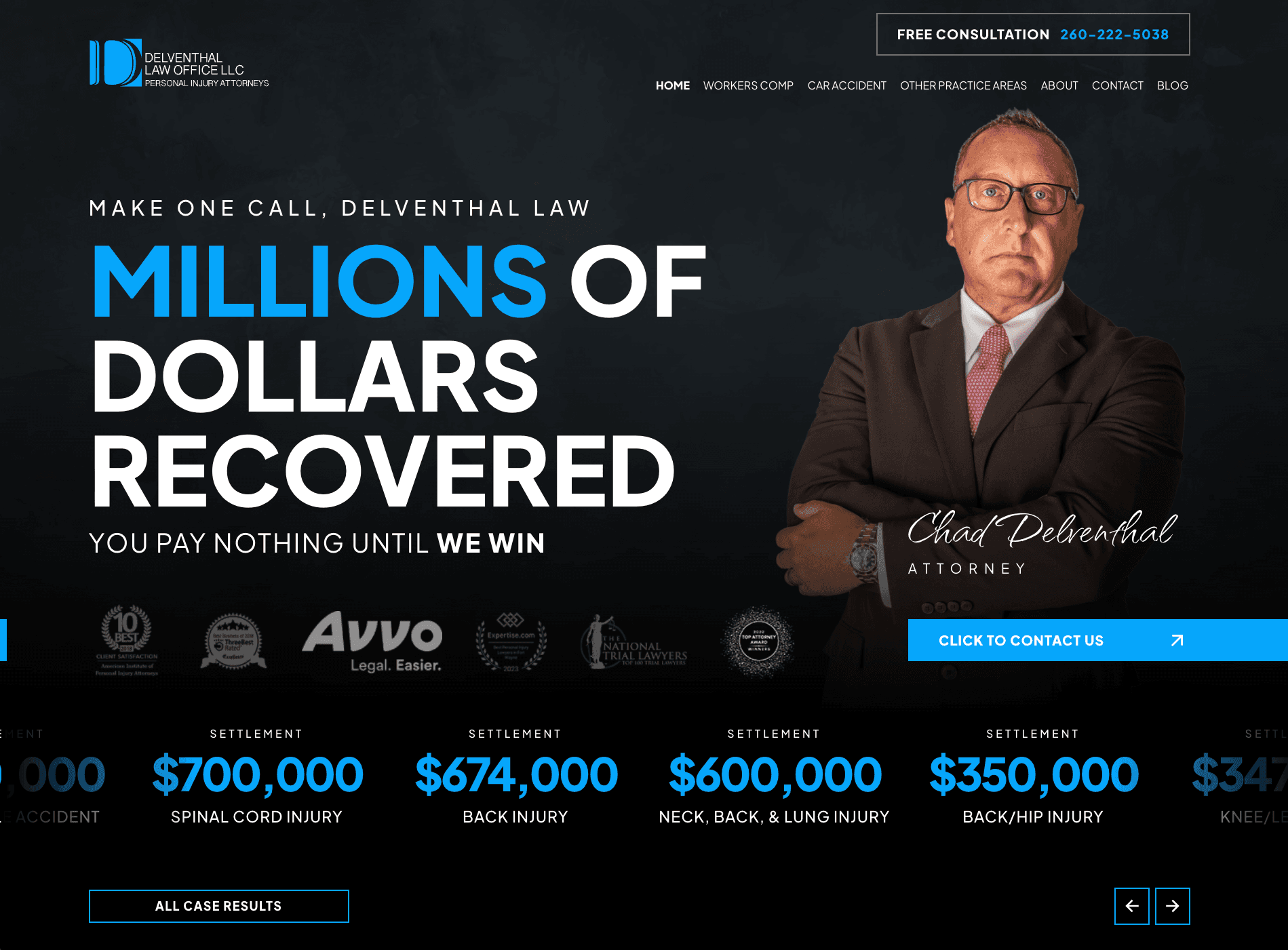
delventhallaw.com — powered by James, Cloud Radix's AI Employee for personal injury law
Not a Chatbot. A Law Firm Employee
Most “AI for law firms” is a chatbot on a website. It answers three questions, then asks you to fill out a form. James is not that.
James is an AI Employee powered by Pistol Shrimp AI — deployed on dedicated hardware at Delventhal Law Office. It reads medical records and tells the attorney which cases are worth taking. It writes demand letters. It researches SEO gaps at 2 AM and drafts blog posts by sunrise. It is building the entire firm website from scratch. And its AI-powered phone system is in the final stages of deployment — soon it will answer every after-hours call in the firm's voice.
And it doesn't stop there. James is rebuilding the case management software that runs the entire law office — and building a CRM into it. James has intimate knowledge of every case the firm has ever taken and every case it has declined. That institutional memory compounds over time, making every intake decision, every demand letter, and every case evaluation sharper than the last.
This is one AI Employee doing the work of a receptionist, paralegal, marketing agency, content writer, SEO specialist, web developer, social media manager, intake coordinator, CRM administrator, and software developer. Not hypothetically. Right now. Mid-installation.
The After-Hours Problem
Personal injury callers don't wait until Monday. They call from emergency rooms at midnight, from accident scenes on Saturday, from hospital beds on Sunday. If voicemail answers, they call the next firm.
The Growth Problem
A solo practitioner can't simultaneously practice law, run marketing, build a website, create content, and manage social media. So growth stalls. The firm stays invisible online while cases go to competitors.
The Operations Problem
Medical records pile up. Demand letters take hours to draft. Lead scoring is a gut feeling. Cases that should be declined consume time. Cases that should be prioritized get buried in the queue.
Everything James Handles
One AI Employee. Four domains. Sixteen capabilities that would normally require an entire team of hires, agency contracts, and software subscriptions.
After-Hours & Client Intake
After-Hours Phone Coverage
AI phone system in final deployment. Once live, James will answer every call from 5:00 PM to 8:59 AM on weekdays and all day Saturday and Sunday. Potential clients in distress will get a live, empathetic conversation — not a voicemail box that sends them to the next firm on Google.
Lead Qualification & Scoring
Every inbound inquiry is scored based on case type, injury severity, liability indicators, insurance coverage, and statute of limitations. The attorney opens their day to a prioritized list — highest-value cases first.
Consultation Scheduling
Books consultations directly into the attorney's calendar, sends confirmation emails, and follows up with pre-consultation questionnaires — all before the office opens.
Client Communication
Handles case status inquiries, appointment reminders, document requests, and follow-ups across phone, email, and SMS. Current clients feel informed without consuming attorney time.
Case Analysis & Legal Operations
Medical Records Analysis
Reviews medical records and evaluates injury documentation to determine case viability and likelihood of success. Identifies gaps in documentation before they become problems at trial.
Case Evaluation
Analyzes incoming cases against practice area criteria, comparative fault thresholds, and historical outcome patterns. Helps the attorney decide which cases to take — backed by data, not gut feel.
Demand Letter Drafting
Assembles case files, medical records, and damages documentation into draft demand letters. The attorney reviews, edits, and sends — saving hours of manual document assembly per case.
Compliance & Documentation
Maintains complete audit trails, manages statute of limitations tracking, and ensures intake processes meet bar association standards. Every interaction is logged and retrievable.
Digital Strategy & Growth
Nightly Research & Strategy
Every night, James performs competitive research, identifies SEO opportunities, analyzes market trends, and builds the firm's digital strategy. The attorney wakes up to insights, not tasks.
Content Creation
Creates blog posts, practice area content, social media updates, and marketing assets — all informed by research and optimized for search. Nothing publishes without human approval.
Social Media Distribution
Once approved, James distributes content across all social media channels, manages posting schedules, and monitors engagement. The firm's digital presence grows while the attorney sleeps.
Complete Website Redesign
James is designing and rebuilding the entire Delventhal Law Office website — optimized for SEO from the ground up. Target: rank #1 on Google for every practice area within two months of launch.
Case Management Software & CRM
Custom Case Management System
James is rebuilding the case management software that runs the entire law office — from scratch. Not an off-the-shelf product with features you don't need and gaps where you do. A system designed around how Delventhal Law Office actually works, built by the same AI that handles intake and case analysis.
Integrated CRM
Every lead, prospect, and client lives in one system — with full history, communication logs, case status, and follow-up schedules. James doesn't just populate the CRM. James built it. And because James handles intake, the data flowing in is already structured, scored, and categorized.
Intimate Case Knowledge
James has deep knowledge of every case the firm has taken — and every case it hasn't. Injury types, liability patterns, insurance carriers, settlement ranges, referral sources, and outcome data. This isn't a database James queries. It's institutional memory James carries, informing every decision from lead scoring to demand letter strategy.
Institutional Memory That Compounds
Every declined case teaches James what doesn't fit. Every successful settlement reinforces what does. Over time, James develops pattern recognition no paralegal could match — identifying the cases most likely to succeed, the carriers most likely to settle, and the documentation gaps that kill outcomes.
James Is Rebuilding the Entire Website
Design, Development, SEO — One AI Employee
Most law firms pay $10,000-$30,000 for a new website — and then pay an SEO agency $2,000-$5,000/month to try to rank it. James is doing both. The same AI Employee that analyzes cases and drafts demand letters is also designing pages, writing practice area content optimized for search, and building the technical foundation for organic growth.
The target: rank #1 on Google for every Delventhal Law Office practice area within two months of launch. Not a hope — a specific, measurable goal driven by the same AI that researches competitors and gaps every single night.
Full website redesign
Every page, from scratch
SEO-first architecture
Built to rank, not just look good
#1 Google target
All practice areas, 2 months
James Is Rebuilding the Case Management Software
Custom CMS + CRM — Built by the AI That Uses It
Most law firms pay $200-$500/month for case management software designed for everyone and optimized for no one. They pay another $100-$300/month for a CRM that doesn't talk to their case system. Then they hire someone to manually keep both in sync.
James is building a case management system from scratch — designed around how Delventhal Law Office actually operates. Intake flows directly into case files. Lead scoring feeds the CRM. Medical records link to demand letter drafts. Settlement data feeds back into case evaluation models. One system, built by the same AI that populates it, queries it, and learns from it every day.
The difference between off-the-shelf software and a system built by your own AI Employee: James doesn't just store data. James understands the data. Every case taken, every case declined, every settlement amount, every insurance carrier interaction — it all becomes institutional knowledge that makes the next decision better than the last.
Custom case management
Built around your workflow, not a template
Integrated CRM
Leads, clients, and cases in one system
Every case, ever
Taken and declined — full institutional memory
Gets smarter over time
Pattern recognition that compounds with every case
A Day with James
Three real scenarios. The difference between having James and not having James.
Saturday, 2:15 PM
A car accident victim calls from the emergency room. The office is closed. Their family is panicking.
Without James
Voicemail. The family Googles "personal injury lawyer near me" and calls three other firms. Someone answers. You lose a six-figure case.
With James
Once the AI phone system is live, James answers instantly. Expresses empathy, collects accident details, insurance information, and hospital location. Scores the lead as high-priority. Books a Monday morning consultation. Sends the attorney a full case briefing within minutes.
Tuesday, 11:30 PM
James finishes the nightly research cycle. Three new blog posts are drafted. A demand letter is assembled from today's medical records review. Competitive analysis reveals a gap in local SEO coverage.
Without James
The attorney would need to do this themselves — or hire a paralegal, a content writer, an SEO agency, and a web developer. Four separate salaries.
With James
James handles all of it. The attorney reviews the demand letter over morning coffee, approves two blog posts with a tap, and the SEO gap is already being addressed in the website rebuild.
Wednesday, 7:45 AM
The attorney arrives at the office. Overnight, 6 calls came in.
Without James
Six voicemails to return. Phone tag for the rest of the day. At least two callers already hired someone else.
With James
Once the AI phone system is live, all 6 callers will speak with James. 4 qualified and scheduled. 1 referred out (wrong practice area). 1 not viable (statute expired). Zero follow-up needed — the day starts with cases, not callbacks.
One AI Employee Replaces Sixteen Roles
16+
roles
Replaced by a single AI Employee
100%
target
After-hours answer rate — phone system deploying
#1
goal
Google rank for all practice areas
24/7
coverage
Always on — no overtime, no sick days
AI Employees for Personal Injury Everywhere
James is built for Delventhal Law Office — but the same AI Employee capabilities are available for personal injury firms across the Midwest.
Questions About James
What does James do after hours for Delventhal Law Office?
James's AI phone system is in the final stages of deployment. Once live, James will answer all phone calls from 5:00 PM to 8:59 AM on weekdays and all day on weekends. Every potential client will get a live, empathetic conversation — not voicemail. James will collect case details, qualify leads, schedule consultations, and send the attorney a full briefing before the next business day.
Can an AI Employee really analyze medical records and score leads?
Yes. James reviews medical records, evaluates case viability based on injury severity, liability indicators, and insurance coverage, and assigns a lead score so the attorney focuses on the highest-value cases first. This is not a chatbot — it is a trained AI system built specifically for personal injury case evaluation.
How does James handle content creation and social media?
James performs nightly research on legal trends, competitor activity, and SEO opportunities, then creates content — blog posts, social media updates, and digital marketing assets. Nothing publishes without human approval. The attorney reviews and approves, and James distributes across all channels.
Is James really rebuilding the entire Delventhal Law Office website?
Yes. James is designing and developing a completely new website for Delventhal Law Office — optimized for SEO from the ground up. The goal is to rank #1 on Google for all of the firm's practice areas within two months of launch. The same AI Employee handling case analysis and deploying the phone system is also building the digital presence.
How does James create demand letters?
James analyzes case files, medical records, and damages documentation to draft demand letters that the attorney reviews and sends. This eliminates hours of manual document assembly and ensures nothing is missed in the demand package.
Is James really building case management software and a CRM?
Yes. James is rebuilding the case management system that runs Delventhal Law Office — custom-built around the firm's actual workflow, not an off-the-shelf template. It includes an integrated CRM where every lead, prospect, and client lives in one system. Because James handles intake, scores leads, analyzes records, and drafts demand letters, the data flowing into the system is already structured and categorized. And because James has intimate knowledge of every case the firm has taken and declined, it develops pattern recognition that makes every future decision sharper.
Your Firm Deserves a James
Medical records analysis, lead scoring, demand letters, content creation, website development, custom case management software, a CRM, and an AI phone system in final deployment — all from a single AI Employee that gets smarter with every case. Let us build one for your practice.