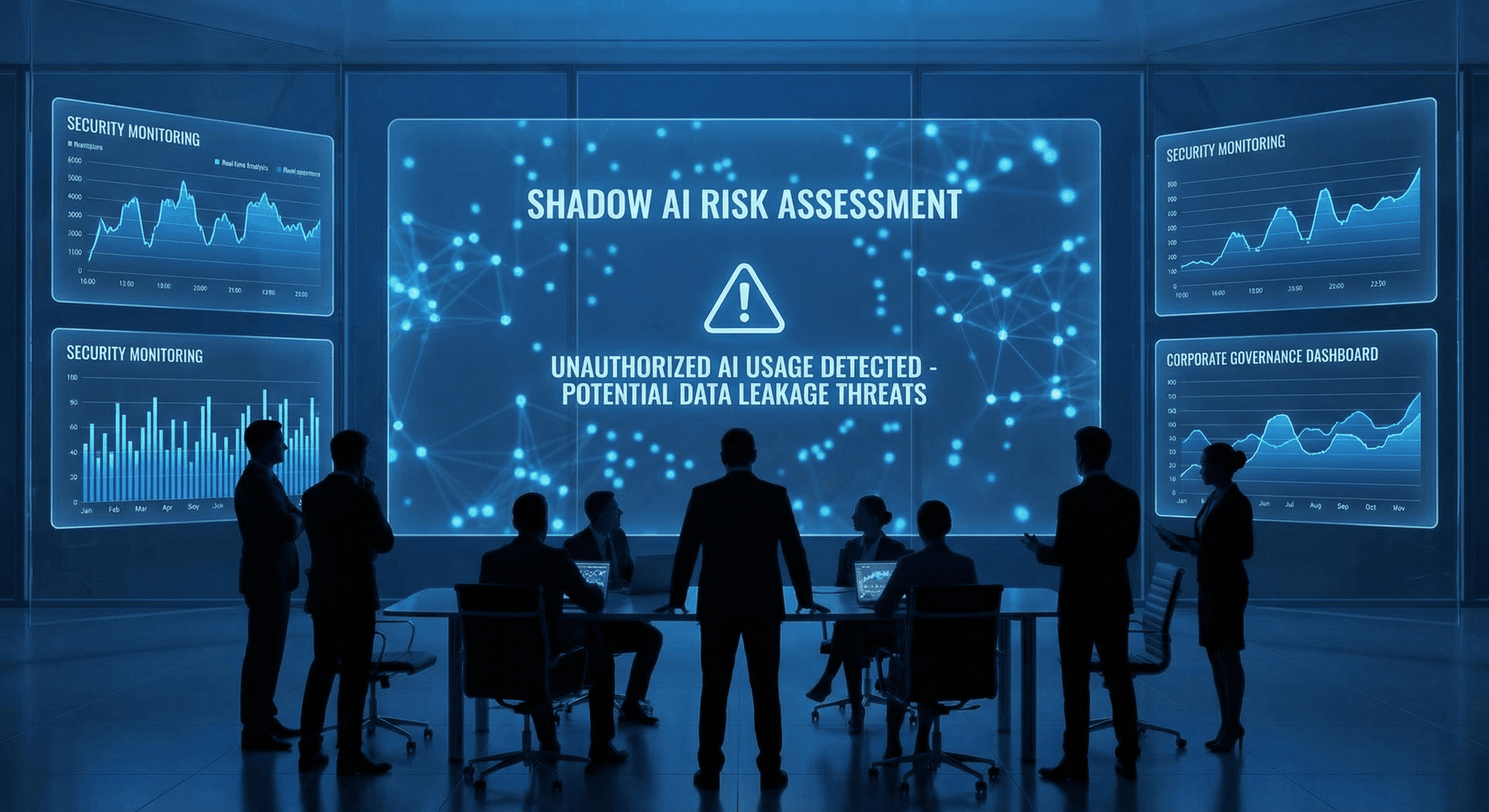
On April 22, 2026, VentureBeat reported that OpenAI has released Privacy Filter — a free, open-source, on-device model that removes personal information from enterprise datasets before they are used with AI. For Fort Wayne's most-regulated industries, this release is not interesting. It is load-bearing. If you are a Parkview or Lutheran-adjacent specialty clinic that has wanted to use generative AI on chart notes and been blocked by your compliance committee, if you are an Allen County law firm whose malpractice carrier keeps asking pointed questions about client data and AI, if you are a DeKalb or Whitley County CPA who watched your tax season eaten by manual data-entry tasks that ChatGPT could halve — this piece is about what changes now, and what does not.
The short answer is that the historical wall — “we cannot feed our patient, client, or taxpayer data into a model we do not control” — has just been handed a free tool designed specifically to lower. A deterministic sanitizer running on your laptop, before any prompt leaves the building, closes a governance gap that used to require a custom integration or a gateway license. That is the good news. The less-good news is that an on-device scrubber is one piece of a four-piece architecture, and the businesses that mistake it for the whole architecture are the ones that will show up in the next HIPAA or Indiana Attorney General case study for the wrong reasons.
Below is what the Privacy Filter actually is, how it should be composed with the rest of your AI stack (including Cloud Radix's Secure AI Gateway), a 250-word Fort Wayne rollout plan for the businesses that get the biggest lift, a side-by-side with Microsoft Purview and homegrown regex scrubbers, and the honest limits — including the PII categories a first-generation on-device model will still miss.
Key Takeaways
- OpenAI has released Privacy Filter as a free, open-source, on-device model that sanitizes enterprise data before prompts leave the building — this is the specific technical artifact Fort Wayne healthcare, legal, and accounting firms have been waiting for to move off the AI sideline.
- On-device sanitization is necessary but not sufficient. Privacy Filter belongs in front of a Secure AI Gateway and behind a written governance policy — not as a standalone control.
- For Fort Wayne, three verticals should evaluate in the next two quarters: Parkview/Lutheran-adjacent clinics, Allen County law firms, and DeKalb/Whitley/Noble County CPAs and insurance agencies.
- The honest limits: on-device PII models still miss domain-specific entity classes like insurance group numbers, Indiana case docket numbers, and internal patient identifiers. A governance overlay is still required.
- The architecture we deploy is a four-layer stack: sanitize on-device, route through the gateway, log everything to immutable storage, and audit quarterly. Privacy Filter occupies the first layer only.
What does OpenAI's Privacy Filter actually do?
Per VentureBeat's April 22, 2026 reporting, Privacy Filter is an open-source, on-device model that scrubs personal information out of text-based enterprise datasets before that data is sent to a cloud AI service. The operative property is on-device: the sanitization step runs inside the boundary of the device or network where the data already lives. No copy of the unredacted data crosses to OpenAI or to any other cloud before the filter has done its work.
For anyone who has lived through a HIPAA risk assessment or an Indiana Attorney General identity-theft inquiry, that property is the one that was missing. The historical problem with feeding regulated data to a cloud AI model has not been that the cloud is technically insecure — it has been that the unredacted original leaves the premises at all, which complicates every audit conversation and triggers every Business Associate Agreement review. A deterministic, on-device redact-first flow changes the audit frame: only a sanitized payload ever leaves the building, the unredacted original is addressed only by local processes, and the compliance narrative becomes “here is the redaction logic, here is the audit of what was redacted, here is the cloud call that only ever saw the redacted version.”
Because Privacy Filter is open source, a business can deploy it inside a controlled environment without a vendor lock-in on the sanitization layer itself. That matters more in regulated settings than it sounds — the alternative has historically been a proprietary DLP tool whose detection rules you could not fully inspect, whose update cadence you did not control, and whose license cost climbed with user count. An open model you can run on a workstation-class machine removes all three frictions for the base case.
What Privacy Filter does not do is magically compliant-ify your AI program. Scrubbing PII from a payload does not address agent governance, credential management, audit storage, or policy enforcement. For those, you still need the rest of the stack — which is where our Secure AI Gateway sits in the architecture. Privacy Filter is a sanitizer. The gateway is the policy engine. The distinction matters.
Which Fort Wayne verticals does this unlock first?
Three Northeast Indiana industries have been effectively frozen on generative AI for the same underlying reason — regulated data cannot leave the premises unredacted. Privacy Filter changes the first-call answer for each.
Healthcare (Parkview, Lutheran, and specialty clinics): Chart notes, intake forms, and imaging reports are the three highest-ROI surfaces for AI inside a clinical practice, and the three most-blocked surfaces under compliance review. Privacy Filter running locally on the documenting workstation sanitizes the outgoing text before a cloud model ever sees it. For clinics that have been told “no” by their risk committee on every ChatGPT-class project, the conversation shifts from “should we use this at all?” to “what sanitization rules do we add to the open-source model for our specific workflow?” We covered the deployment patterns in HIPAA-compliant AI Employees for healthcare — the same patterns apply, with Privacy Filter slotting in as the pre-cloud sanitizer.
Law firms (downtown Fort Wayne, DeKalb County, Allen County): Privileged client data is the historical blocker. An on-device scrubber that removes names, case numbers, addresses, and other direct identifiers before the prompt reaches the cloud lets firms use AI for early-stage document review and drafting without exposing the identifiable client relationship. The malpractice-carrier renewal question — “do you use third-party AI services for client work, and what is the data-handling protocol?” — becomes a one-paragraph answer rather than a three-page attachment. The Fort Wayne law firms and accountants AI compliance automation guide covers the firm-side program work in depth.
CPA firms and insurance agencies (DeKalb, Whitley, Noble, and Allen counties): Tax returns, W-2s, insurance applications, and claim forms are identifier-dense documents where AI helps most if it can read them — and helps least if the firm cannot let it read them. Privacy Filter is the specific tool that lets a CPA practice redact taxpayer identifiers, dependent names, and account numbers before the document reaches a cloud model. The honest trade-off: a tax memo generated from a fully-redacted payload is less specific than one generated from an unredacted payload, and the firm still needs a human drafter in the loop to restore the identifying details on output.

How does Privacy Filter compare to Microsoft Purview and homegrown regex scrubbers?
This is not a beauty contest — the three tools solve overlapping problems with different weights. The comparison below is the framing we walk Fort Wayne clients through; none of the three is the right answer in isolation for a regulated mid-market business.
| Option | Strengths | Weaknesses | Best fit |
|---|---|---|---|
| OpenAI Privacy Filter | Free, open source, on-device, model-based detection handles natural-language context | First-generation; limited domain-specific entity coverage (insurance group #s, case docket #s, internal chart IDs) | AI-native workflows where text is the primary surface |
| Microsoft Purview | Enterprise DLP with Microsoft 365 integration; mature classification taxonomy; policy controls | Microsoft-shop dependent; license cost scales with user count; broader than AI-specific redaction | Microsoft 365-heavy businesses already paying for it |
| Homegrown regex / SSN-pattern scrubbers | Zero license cost; fully inspectable | Catches only obvious patterns; brittle against reformatted data; misses context-dependent PII | Supplemental checks only, never the primary control |
The composition that works in practice for a 20-to-150-person regulated NE Indiana business is Privacy Filter as the first-pass sanitizer (context-aware, free, open source, on-device), a curated regex layer behind it for domain-specific identifier classes the model misses, and a policy-enforcing Secure AI Gateway that confirms no raw payload ever reached the cloud surface. Microsoft Purview becomes relevant in Microsoft 365-centric shops as the enterprise DLP layer that already covers email, SharePoint, and Teams — not as a replacement for an AI-specific sanitizer.
The critical honest point: any vendor who tells you a single tool in this row is the whole solution is selling, not solving. The FTC's privacy and security guidance frames reasonable-security as a defense-in-depth posture, not a single-control posture, and that framing applies directly to AI sanitization.
What is the Cloud Radix four-layer architecture for privacy-sanitized AI?
For regulated Northeast Indiana clients, we deploy the same four-layer pattern regardless of whether Privacy Filter, Purview, or a custom sanitizer is the first layer. The layers are:
Layer 1 — Sanitize on-device. Privacy Filter (or the client's existing equivalent) runs inside the device or local network where the regulated data lives. No unredacted payload leaves that boundary. For healthcare, the sanitizer runs on the clinical documenting workstation. For law firms, it runs on the attorney's or paralegal's endpoint. For CPAs, it runs on the practice-management server before any document is uploaded.
Layer 2 — Route through the Secure AI Gateway. The sanitized payload is routed to the model through a policy-enforcing gateway that attaches the right identity, the right data-classification label, the right model selection (consumer versus BAA-backed enterprise endpoint), and the right rate limits. The gateway is where the policy lives, not the application code or the model vendor's console. The architectural argument for separating the policy engine from the sanitizer is straightforward: controls should be enforced outside the app that needs them, because any control living inside the application it protects can be bypassed by the same code path it is supposed to gate.
Layer 3 — Log everything to immutable storage. Every prompt, every response, every gateway decision, and every sanitization event is logged to write-once storage with a retention period that matches the regulatory regime. For HIPAA workflows, six years minimum. For legal, matching the client matter file. For tax, matching the IRS record retention. This layer is what makes the quarterly audit possible.
Layer 4 — Audit quarterly. A defined human reviews a sampled set of interactions against policy on a quarterly cadence. Findings are logged. Rules are revised. The process is documented. This is the piece most businesses skip and the piece that matters most the first time a regulator asks how the program is governed. The NIST AI Risk Management Framework MEASURE function describes the general pattern; our AI Employee governance playbook translates it into a mid-market operating rhythm.
Privacy Filter is the new tool in layer 1. Layers 2-4 are the same ones we have been deploying since 2024. The architecture works because each layer is independently verifiable, not because any single layer is airtight.

Fort Wayne 30-60-90 day rollout plan for a regulated SMB
A 15-to-100-employee regulated business in Fort Wayne, Auburn, or the surrounding counties that wants to move on Privacy Filter in 2026 should expect a rollout shaped roughly like this. This is not a marketing sequence — it is the sequence we use with actual clients.
Days 1-30: Inventory and policy baseline. Identify the regulated data categories in scope (ePHI, privileged client data, taxpayer data, PII under Indiana law). Map which workflows touch them and which endpoints they traverse. Draft a written AI-use policy that names permitted and prohibited workflows. Deploy Privacy Filter in a lab configuration and test it against representative redacted documents. Do not touch production traffic in this window.
Days 31-60: Pilot one workflow end-to-end. Pick one workflow — chart-note summary, engagement letter drafting, or claim-form intake — and run it through the full four-layer architecture. Privacy Filter on-device, gateway routing to a BAA-backed model, logging to immutable storage, and a weekly human review during the pilot. Calibrate the sanitization rules for the domain-specific entities the first-generation model misses. Run canary tests.
Days 61-90: Expand to two additional workflows and publish the program. With one workflow running cleanly, expand to two more. Publish the internal AI-use policy to the whole organization. Train employees on what is and is not permitted. Run the first quarterly audit and document the findings. By day 90, the business has a working three-workflow AI program with documented controls — the correct foundation to expand from.
This sequence sits inside the broader frame of building an AI workforce without creating the shadow-AI problem that comes from banning AI outright. Privacy Filter is the tool that makes the sanctioned-program path economical for firms that previously had no affordable option.

What does Privacy Filter not solve?
The honest limitations, in the order they bite in real deployments:
Domain-specific identifier classes. A first-generation on-device model trained primarily on broad PII patterns reliably catches names, SSNs, addresses, phone numbers, and email addresses. It misses categories that matter specifically in Fort Wayne regulated verticals — insurance group and member numbers, Indiana case docket numbers, internal patient MRNs and accession numbers, specific provider NPIs when used as identifiers, and some categories of custodian-specific document IDs. These are addressable via a domain-specific regex layer behind the model, but they are addressable only if you know to add them.
Prompt injection from redacted content. OWASP's LLM Top 10 for 2025 names LLM01: Prompt Injection as a standalone risk. A redacted payload is not an injection-safe payload. If an attacker — or an unsophisticated user — embeds instructions in the source document, those instructions survive PII redaction and reach the model intact. Sanitization does not address injection. Separate control.
Sensitive non-PII content. Trade secrets, privileged strategy memos, and unreleased financial data are typically not PII, so a PII-tuned sanitizer will not redact them. Treating Privacy Filter as a general data-classification tool — rather than a PII-specific one — is a category mistake that will eventually produce a leak the business cannot blame on the model.
Audit accountability. The scrubber does not create an audit record unless you instrument it to. Running Privacy Filter without logging which documents passed through, which redactions were made, and which prompts were sent creates the illusion of compliance without the reality of it. Layer 3 of the four-layer architecture is not optional.
For the subset of Fort Wayne organizations where even on-device sanitization is insufficient — specifically, some defense-adjacent manufacturers and certain healthcare subspecialties — the correct architecture escalates to fully air-gapped AI, covered in our Fort Wayne air-gapped AI sovereign Gemini analysis. Privacy Filter and air-gap are not substitutes for each other; they occupy different rows on the risk spectrum.
The Indiana breach reality: why this matters locally
The HHS Office for Civil Rights maintains a public breach reporting portal — publicly known as “the wall of shame” — listing HIPAA breaches affecting 500 or more individuals. Indiana healthcare organizations appear on that portal regularly, and the breach categories most commonly reported involve unauthorized access, hacking of network servers, and misdirected disclosures — the same surfaces an AI program can intersect with if the controls are weak. The Indiana Attorney General's identity-theft guidance similarly documents the ongoing exposure for non-healthcare businesses handling taxpayer and financial data.
Privacy Filter does not eliminate this exposure. What it does is change the cost equation for the mitigation. Before April 22, 2026, the only way to get context-aware PII redaction was to pay enterprise license fees for a proprietary DLP tool or build the redaction logic in-house with significant engineering cost. After April 22, an open-source model that runs on device is a free starting point. That cost change matters most for small-and-mid Fort Wayne organizations — the ones whose budget for an AI program was zero because the first-layer tool was five-figure-annual and the decision never cleared the budget committee. It has now cleared.
For the governance side, the HHS HIPAA Security Rule remains the baseline that every Fort Wayne covered entity needs to map its AI program against, and the companion read for the operating program is our AI Employee security checklist.
Ready to move on Privacy Filter without making the mistakes?
Cloud Radix's Fort Wayne privacy-sanitized AI engagement is a fixed-fee, 90-day rollout that stands up the full four-layer architecture for one pilot workflow, trains your team on the program, and produces documented controls ready for a quarterly audit. We do not sell Privacy Filter — it is free and open source — and we do not sell DLP licenses. We install, integrate, govern, and measure. The deliverable at day 90 is a running pilot plus a written operating manual, not a Gantt chart.
If you are a Fort Wayne healthcare, legal, or accounting firm that has been holding on AI adoption specifically because of the data-boundary issue, this is the week to start the conversation. Send us a rough outline of the workflow you most want to unlock and the regulated data it touches. Book a 30-minute regulated-AI evaluation — the framework and the four-layer diagram go out ahead of the call.
Frequently Asked Questions
Q1.Does OpenAI's Privacy Filter make my AI program HIPAA-compliant?
No. Privacy Filter is one technical control that helps with data minimization before prompts leave the endpoint. HIPAA compliance is a program, not a control — it requires a written risk analysis, administrative safeguards, physical safeguards, technical safeguards, workforce training, incident response, and a signed Business Associate Agreement with any cloud AI vendor that still touches ePHI. Per the HHS HIPAA Security Rule, all of those elements are required. Privacy Filter meaningfully helps a few of them — it does not replace any of them.
Q2.Can I run Privacy Filter on a normal laptop, or do I need new hardware?
Per VentureBeat's April 22, 2026 reporting, Privacy Filter is designed as an on-device model. Specific hardware requirements depend on the model size and throughput you need; a typical modern business laptop with at least 16 GB of RAM will run a first-generation on-device sanitizer for individual-document workflows. For high-throughput use cases — a CPA firm processing hundreds of returns daily during season, a hospital documenting thousands of chart interactions — a dedicated on-premise inference server with GPU acceleration is the right sizing. We help clients size this during the day-1-to-30 inventory work.
Q3.Does Privacy Filter replace my existing DLP tool?
Not necessarily. For most Microsoft 365-heavy businesses, Microsoft Purview will continue to be the enterprise DLP covering email, SharePoint, and Teams — Privacy Filter sits in front of the AI-specific workflow rather than replacing the broader DLP. For businesses without an existing DLP program, Privacy Filter is a reasonable starting point for AI-adjacent data, with the understanding that non-AI data flows still need their own controls. The FTC's reasonable-security framing applies: defense in depth, not single-tool dependency.
Q4.What specific PII categories does Privacy Filter miss?
First-generation on-device sanitizers reliably catch broad categories — names, SSNs, phone numbers, email addresses, physical addresses — and miss domain-specific identifier classes that were not well-represented in training data. In Fort Wayne regulated verticals, the classes to add via a supplemental regex layer include: insurance group and member numbers, Indiana state case docket numbers, internal patient MRNs and accession numbers, NPIs used as identifiers, and practice-management-system internal IDs. Part of our day-31-to-60 pilot work is calibrating the supplemental regex layer for the specific vocabulary of the client's domain.
Q5.How does this relate to shadow AI?
Directly. The shadow-AI problem — employees using consumer ChatGPT with unsanctioned data — is a consequence of the organization banning AI outright and leaving the productivity pressure unaddressed. Once a sanctioned, controlled alternative exists that handles regulated data acceptably, the incentive to use shadow tools drops sharply. Privacy Filter is specifically the tool that makes the sanctioned alternative economically viable for small and mid-sized firms that could not previously afford enterprise DLP.
Q6.What does a Fort Wayne healthcare clinic spend to stand up the full four-layer architecture?
Costs vary by clinic size, existing infrastructure, and the workflow selected for the pilot. The honest ranges, from our engagements: Privacy Filter itself is free; the local inference hardware is in the low four figures if a dedicated machine is needed; Secure AI Gateway deployment is a monthly SaaS cost in the mid-to-high three figures for a clinic-sized footprint; log storage is a low-three-figure monthly line; and the professional-services engagement for the 90-day rollout is a fixed-fee price that we quote per scope. We publish specific quotes rather than a rate card because workflow selection drives most of the cost, and a pilot on chart-note summary is priced differently than a pilot on imaging-report drafting.
Q7.What if I am a law firm and my malpractice carrier asks about AI?
The Privacy Filter release gives you a much stronger answer than the one most firms had a month ago. You can now truthfully say that client identifiers are redacted on-device before any prompt reaches a cloud model, that prompts are routed through a policy-enforcing gateway, that the full flow is logged, and that interactions are audited quarterly. The carrier's checklist typically covers exactly those four points. The documentation the carrier will ask for at renewal is the four-layer architecture written up as a one-page program description — which is one of the standard deliverables of the engagement.
Sources & Further Reading
- VentureBeat: venturebeat.com/data/openai-launches-privacy-filter — OpenAI launches Privacy Filter, an open source, on-device data sanitization model (April 22, 2026).
- U.S. Department of Health and Human Services: hhs.gov/hipaa/for-professionals/security — HIPAA Security Rule overview for covered entities.
- HHS Office for Civil Rights: ocrportal.hhs.gov/ocr/breach — OCR HIPAA breach reporting portal listing breaches affecting 500 or more individuals.
- NIST: nist.gov/itl/ai-risk-management-framework — AI Risk Management Framework and its MEASURE function for continuous measurement and audit.
- OWASP: genai.owasp.org/llm-top-10 — OWASP Top 10 for LLM Applications 2025, including LLM01 Prompt Injection.
- Federal Trade Commission: ftc.gov/business-guidance/privacy-security — Privacy and Security Guidance for Businesses and the reasonable-security, defense-in-depth framing.
- Indiana Attorney General: in.gov/attorneygeneral/consumer-protection-division/identity-theft-prevention — Indiana Attorney General Consumer Protection Division identity-theft prevention guidance.
Book a Regulated-AI Evaluation
Let Cloud Radix map your regulated-data workflows, deploy Privacy Filter inside the four-layer architecture, and deliver a 90-day rollout plan for Fort Wayne healthcare, legal, and CPA firms ready to move off the AI sideline.