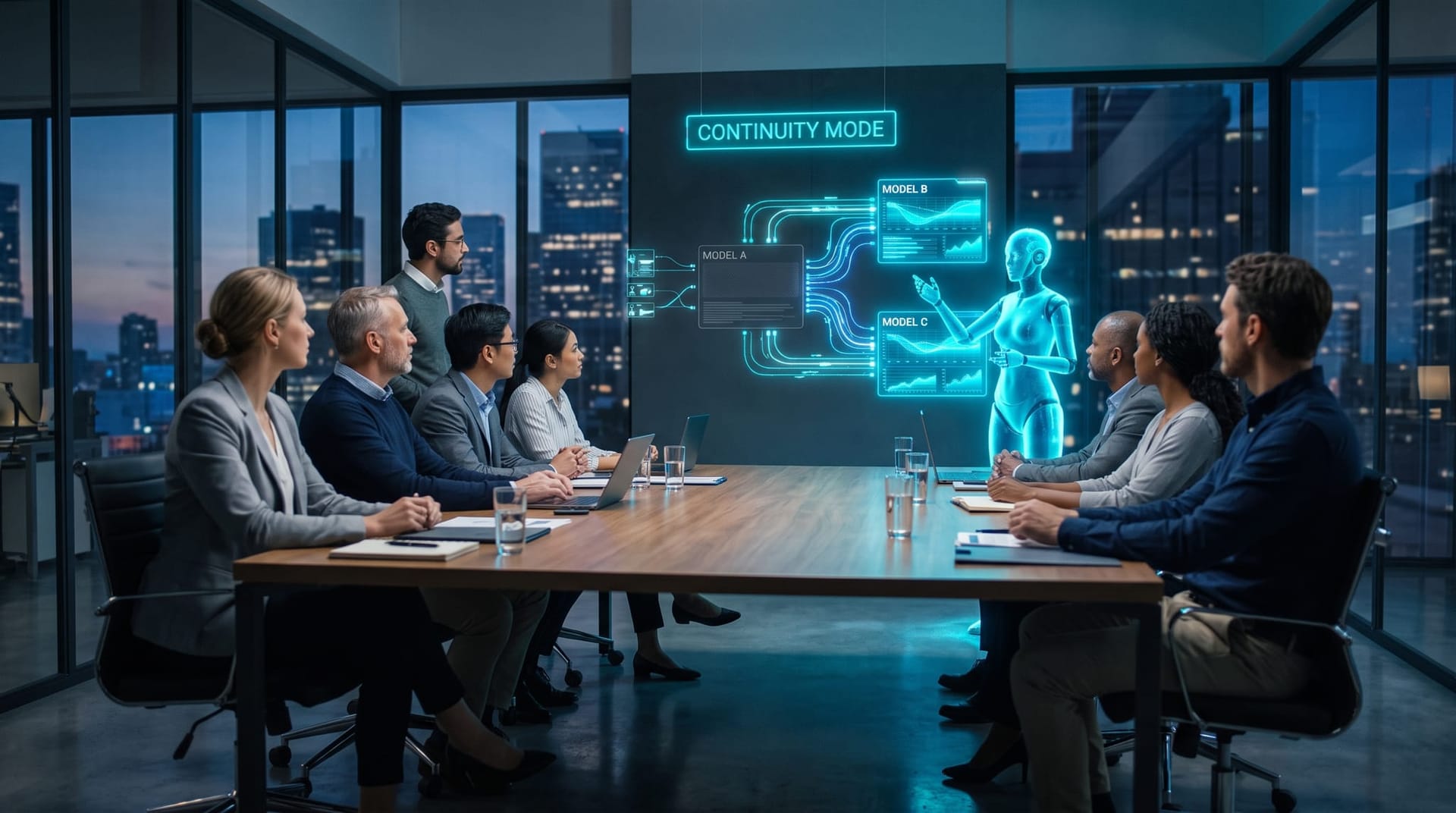
On June 12, 2026, at 5:21 PM ET, the most capable AI model on the market disappeared. Not degraded. Not rate-limited. Gone — for every customer on Earth, with no warning and no timeline. A U.S. export-control order barred foreign nationals from accessing Anthropic's Claude Fable 5, and because Anthropic had no way to verify nationality in real time at the API layer, it suspended the model for everyone rather than risk non-compliance.
The nineteen-day outage gave every business that had wired Fable 5 into a workflow a live lesson in a risk category most continuity plans didn't have a page for: the model your operations depend on can vanish overnight, by government order, through no decision of yours or your vendor's.
Then on July 1, Anthropic restored Fable 5 globally after the Commerce Department withdrew the order, and the whole episode snapped into focus as something more useful than a crisis: the first industry-wide fire drill of the AI era. Everyone ran the same drill at the same time. Some companies scrambled. Some shrugged. The difference between them is now the most practical continuity lesson available to any business running AI in production — including yours.
This is the postmortem, and the playbook.
Key Takeaways
- Claude Fable 5 was suspended for all users worldwide from June 12 to July 1, 2026 under a U.S. export-control order — the first time a frontier model vanished from the market overnight.
- Two-thirds of enterprises surveyed during the blackout had already hedged their model strategy before it hit; the other third was all-in on closed ecosystems when the lights went out.
- Liberty Mutual treated the outage as a non-event because it had spent 18 months building a swappable “AI backbone” — roughly 50 components, each independently replaceable.
- Multi-model is not automatic insurance: new research shows enterprises underestimate simultaneous multi-model failure rates by roughly 2.25x.
- A model-outage runbook has four load-bearing parts: an abstraction layer, a tested fallback model, evaluation parity, and exit-tested prompts — and a mid-market business can buy that architecture instead of building it.
What Actually Happened During the Claude Fable 5 Outage?
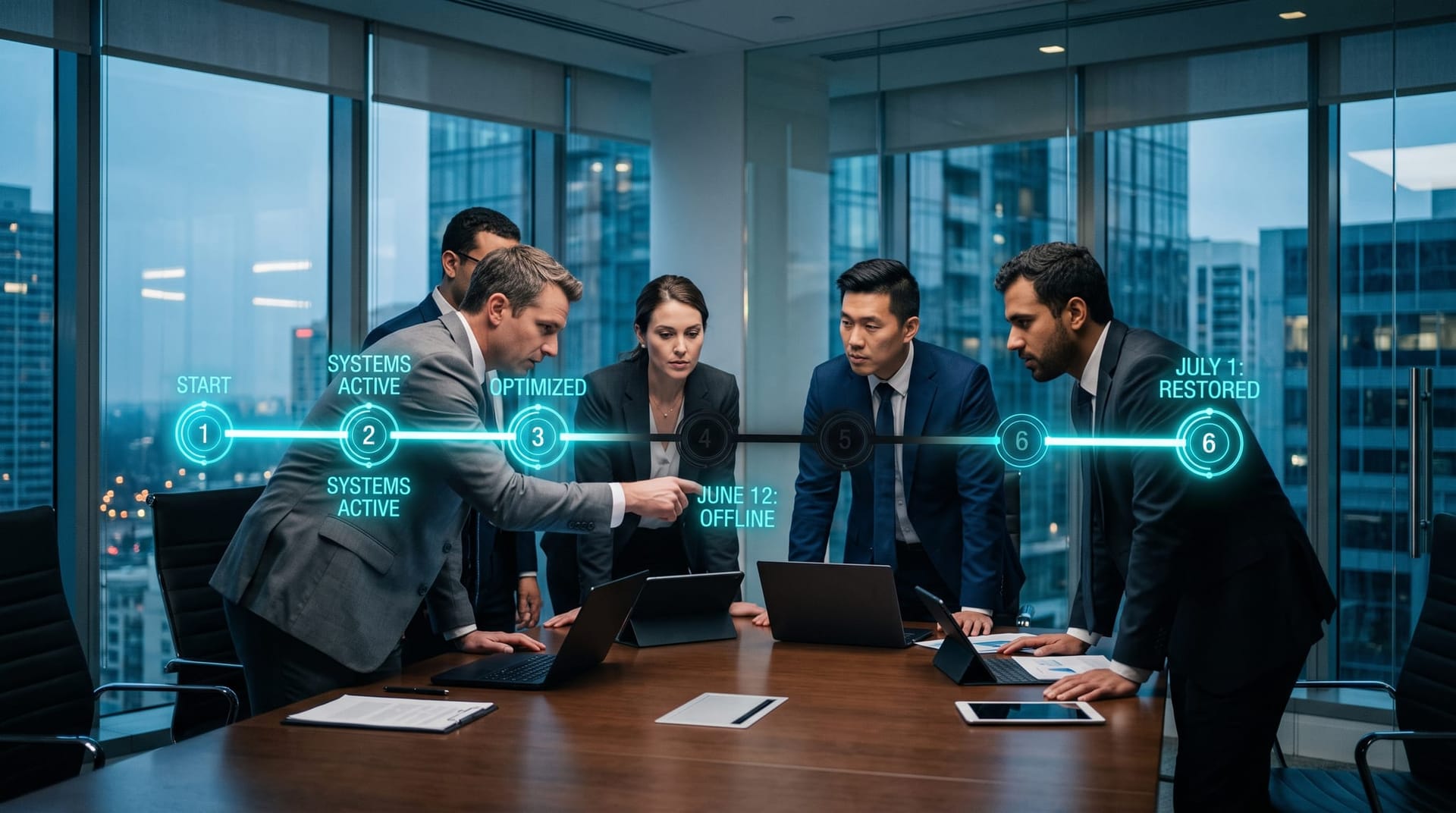
The chronology matters, because the speed is the lesson. According to VentureBeat's reporting on the restoration and Anthropic's own announcement, the entire arc — launch, acclaim, lockout, and return — ran in barely three weeks:
| Date (2026) | Event |
|---|---|
| June 9 | Anthropic launches Claude Fable 5 and Claude Mythos 5 at $10 per million input tokens and $50 per million output tokens — the most expensive frontier pricing on the market. Stripe reports Fable 5 compressed a 50-million-line codebase migration into a single day. |
| June 12 | At 5:21 PM ET, the U.S. government issues an emergency export-control directive barring access by foreign nationals. Unable to verify nationality in real time, Anthropic suspends both models for all users globally. |
| June 13–25 | Workflows built on Fable 5 fall back to older models such as Claude Opus 4.8. China's Z.ai releases its open-weights GLM-5.2 model into the vacuum. |
| June 26 | The government approves restoring Mythos 5 for a set of trusted U.S. organizations. |
| June 30 | Commerce Secretary Howard Lutnick withdraws the export-control license requirement for both models. |
| July 1 | Fable 5 returns globally across the Claude Platform, Claude.ai, Claude Code, and Claude Cowork, wrapped in a new safety classifier. |
The trigger was a report from Amazon researchers describing a technique that bypassed Fable 5's safeguards and prompted the model to identify software vulnerabilities — in one case producing demonstration exploit code. Anthropic countered that its own testing found the same vulnerabilities were identifiable by other models, including Claude Opus 4.8, OpenAI's GPT-5.5, and Moonshot's Kimi K2.7. As MarkTechPost's coverage of the redeployment details, the fix that broke the logjam was a new automated safety classifier that blocks the reported technique in over 99% of cases in testing by the Commerce Department's Center for AI Standards and Innovation — with the honest trade-off that more benign coding requests get flagged, and blocked requests now route to Opus 4.8 instead of being refused outright.
Here's what should keep a business owner up at night: none of that was about your business. Not your contract, not your payment history, not your vendor relationship. A dispute between a research lab, a hyperscaler, and a federal agency switched off a production dependency for the entire global market at once. That's not a vendor-management problem. That's a business-continuity problem.
Who Kept Running When the Model Went Dark?
Mostly: the companies that had planned for exactly this, before it had ever happened.
VentureBeat's Pulse Research, which surveyed 145 enterprises with fielding that spanned the blackout, found that two-thirds had already hedged their model strategy before the order came down. The breakdown of postures:
| Model posture | Share of enterprises | What it means in an outage |
|---|---|---|
| Hybrid: closed frontier models + open-weight models on own infrastructure | 51% | Reroute affected workloads to models nobody can switch off |
| Moving core workflows off closed APIs entirely | 16% | Largely insulated from any single vendor event |
| All-in on closed ecosystems | 32% | Exposed — continuity depends entirely on the vendor's uptime and legal standing |
The same survey exposed the uncomfortable flip side, which VentureBeat calls the “Control Gap.” Just 1 in 10 enterprises — 14 of the 145 surveyed — has automated monitoring that would catch an AI system drifting, misbehaving, or failing in production. Roughly a quarter would learn about a production AI failure from end users, or not at all. And 79% reported having already taken a real financial or operational hit from autonomous agents, most often from shadow AI — unauthorized agentic workloads run by their own employees on corporate credit cards.
Read those numbers together and the picture is blunt: enterprises adapted to the most visible risk (model dependency) while leaving the quieter ones — monitoring, ownership, spend control — largely unaddressed. The survey's most-cited governance barrier wasn't technology or talent. It was the absence of a single accountable owner for AI, named by 32% of respondents, while 17% said no role at their company holds formal accountability for AI at all.
The fire drill graded everyone on the same curve, and the grade hinged on decisions made months earlier. We've written before about the zero-lock-in AI playbook — the procurement strategy that keeps you swappable — so we won't re-argue the economics here. What June proved is that the hedge isn't just a negotiating posture. It's disaster recovery.

What Does an Outage-Proof AI Architecture Look Like?
The best answer on record belongs to Liberty Mutual, one of the world's largest insurers — because when Fable 5 went dark, Liberty Mutual pivoted to other platforms without drama, as VentureBeat reported in its postmortem. The company had built its defense 18 months before the event.
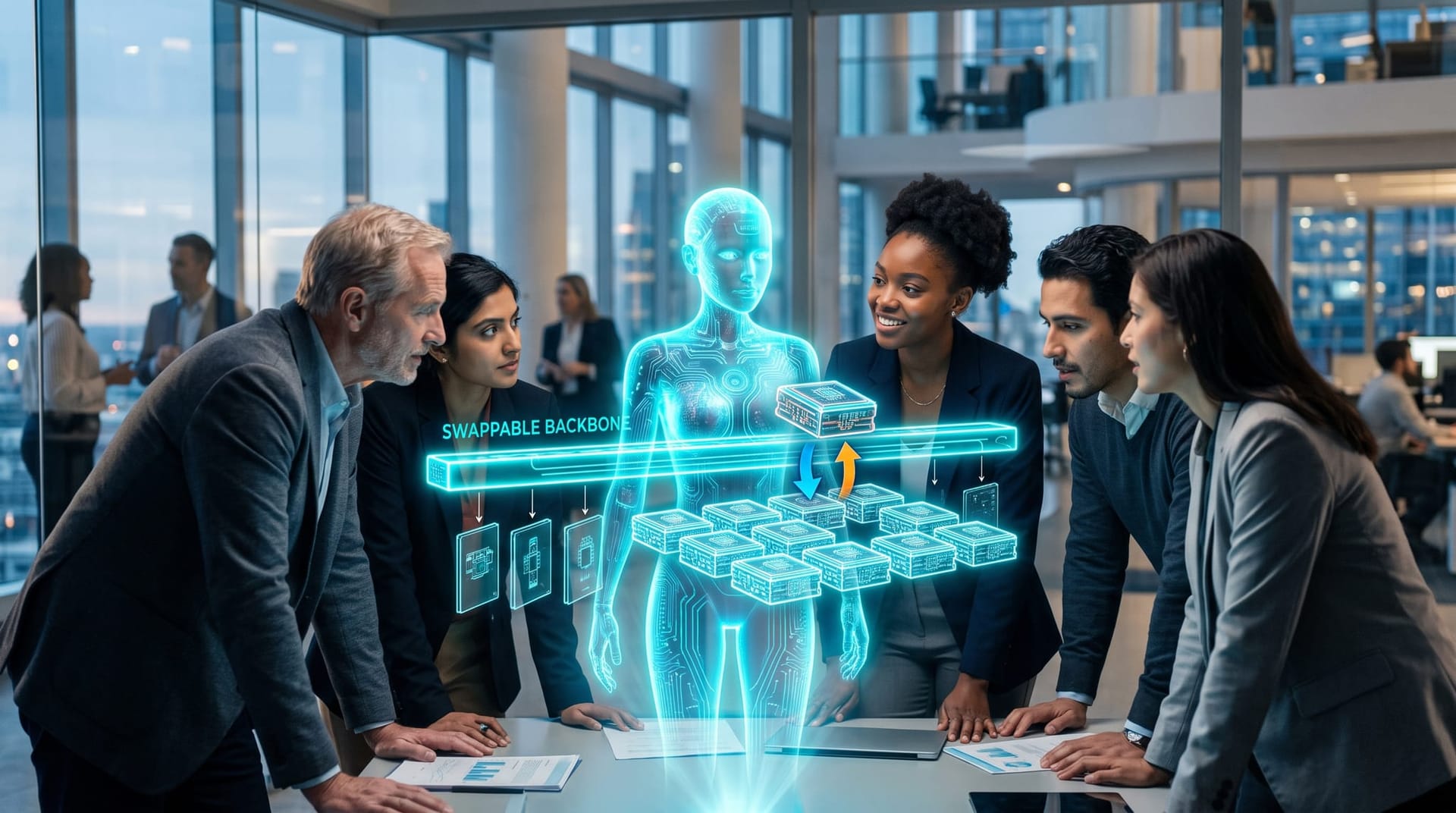
Liberty's engineering arm runs what it calls an “AI backbone”: roughly 50 components spanning security, identity, orchestration, observability, tool restriction, and agent-behavior policy. The design rule is that every component is independently and immediately replaceable. The backbone — the control plane — is Liberty's own. Everything underneath it, including the agent runtime and the models themselves, is deliberately swappable.
“You can't lock in right now on one vendor or even one framework,” Brian Craig, Liberty Mutual's senior director of architecture, said of the approach. His planning horizon is telling: pick what you can feel confident about for the next six months — not the flavor of the day, and not a five-year bet. Liberty backed the architecture with a contract posture to match, deliberately shifting from five-year enterprise deals to one-year agreements so it can swap vendors at the speed the market actually changes.
Craig had a uniquely personal view of the outage: he's Irish, so the foreign-national export order hit him directly as a user. His verdict on losing the most capable model on the market: “Luckily enough, we didn't get to use it enough to get to fall in love with it.” That is what a working continuity plan sounds like — the loss of the market's most capable model registering as a shrug.
Four practices from Liberty's architecture translate directly to businesses a fraction of its size:
- Own the control plane; rent everything else. The layer that routes work, enforces policy, and holds identity should be yours. Models and runtimes below it are interchangeable parts.
- Test with golden datasets. Liberty runs evaluations against fixed benchmark datasets whenever prompts or models change, so a model swap comes with immediate, measurable evidence of improvement or regression — the same discipline behind a neutral evaluation layer you own rather than borrowing the vendor's scorecard.
- Write everything down. Liberty maintains a context repository because agents obey written standards more reliably than people do. If a new hire couldn't find the guiding document, neither can an agent.
- Keep humans on the gate. Nothing ships at Liberty without human sign-off. Autonomy at the task level; accountability at the human level.
Is Multi-Model Always the Answer? The Math Says Be Careful
Here's where honesty beats a sales pitch: adding a second model is not automatic insurance, and new research shows exactly where the naive version of the hedge fails.
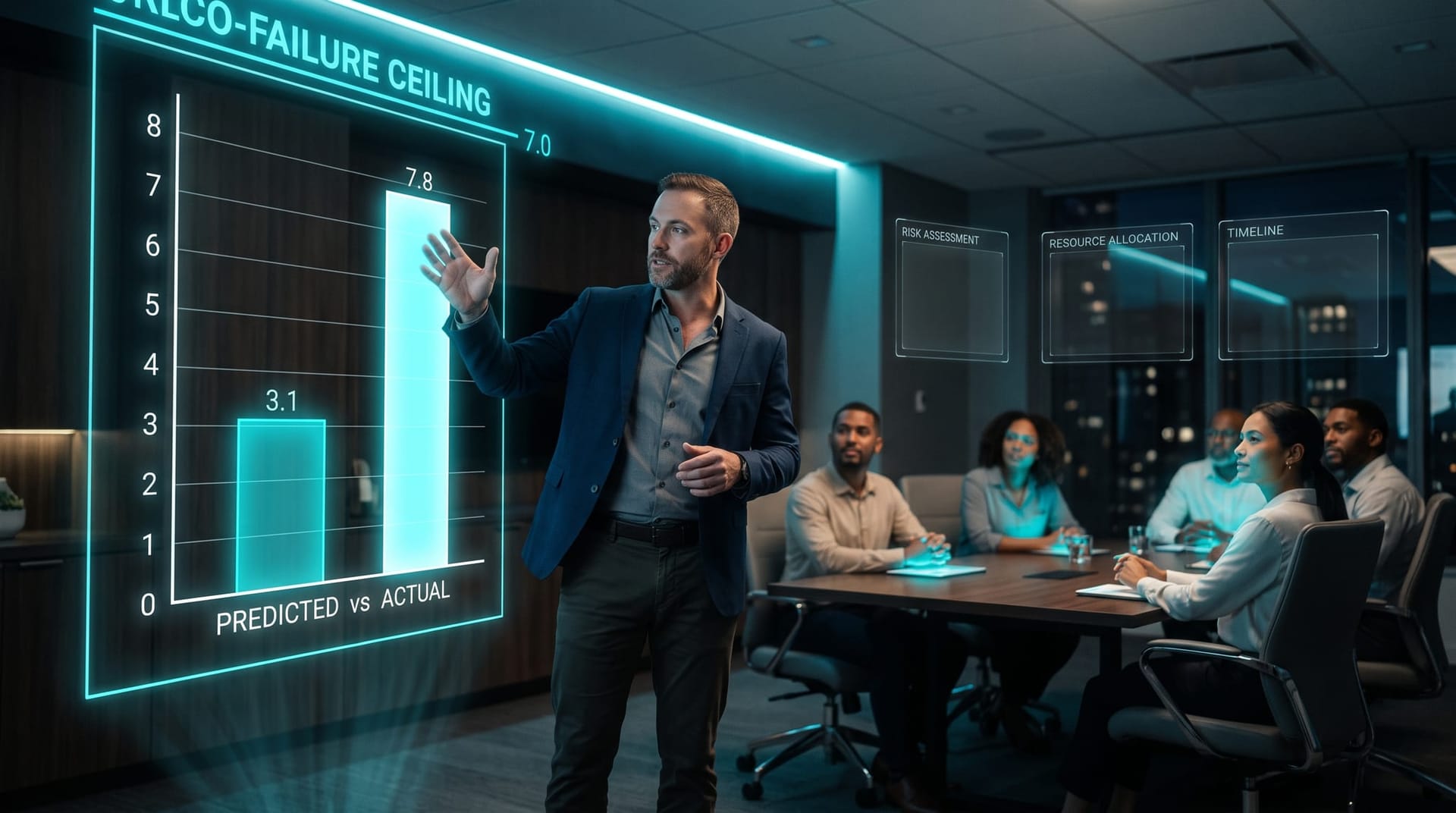
A study of 67 frontier models from 21 providers, covered by VentureBeat's analysis of multi-model failure rates, identified what its author calls the co-failure ceiling: the percentage of tasks where every model in your pool gives the wrong answer at the same time. No router, cascade, or voting scheme can perform better than that ceiling — and the standard statistics teams use to build model pools systematically miss it. On one open-ended math benchmark, pairwise correlation metrics predicted the whole pool would fail together on 2.3% of questions; the real co-failure rate was 5.2%. That's an underestimate of roughly 2.25x. On open-ended formats, the all-wrong tail expanded to 12.7%.
The study's practical warnings map cleanly onto continuity planning:
- Diversity without quality parity backfires. Naive majority voting across unequal models produced a negative mean gain in the study's experiments — the weaker models outvote the strong one. The author's advice: combine only models within a matched quality band.
- The frontier fails together. Today's best models tend to fail on the same hard queries. A shared blind spot — what the researcher calls a “common-mode atom” — doesn't shrink when you add a twentieth model.
- Verification reopens the ceiling. Anywhere you can convert open-ended generation into something checkable — structured outputs, execution tests, constrained selection — multi-model setups regain their value.
For continuity purposes, the distinction to internalize is failover versus ensemble. The June outage was an availability failure, and against availability failures a second model is genuinely protective: a model that has been switched off fails on 100% of your queries, and any working alternative beats it. The co-failure ceiling governs the subtler claim — that routing across models buys you accuracy insurance on hard tasks. It mostly doesn't, unless your models are quality-matched and your outputs are verifiable. Build the hedge for availability first, capability second, and measure both. This is also why routing decisions belong in a layer with actual evaluation data behind it — the approach behind smart multi-model routing that cuts AI costs — rather than in optimistic architecture diagrams.
What Belongs in Your AI Model-Outage Runbook?
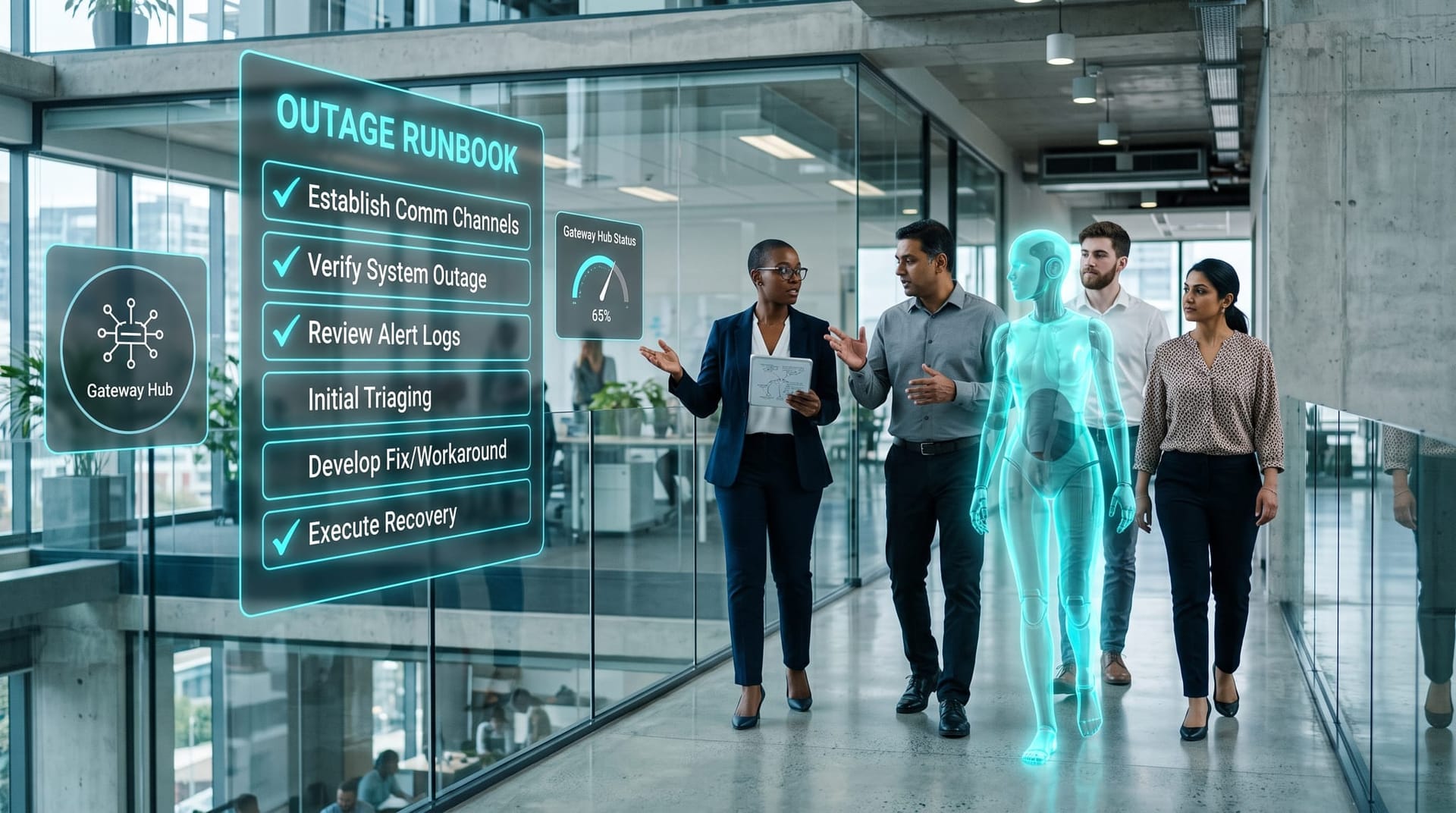
Distilled from who survived June and why, a model-outage runbook has six parts. If your business runs AI in production — an AI Employee, a support workflow, an agentic pipeline — this is the checklist worth pressure-testing this quarter.
- An abstraction layer between your workflows and any single model. Your prompts, tools, and business logic should address a gateway you control, not a vendor's API directly. When the model behind the gateway changes, your workflows shouldn't have to. This is the core function of a secure AI gateway: one control point that makes the engine swappable.
- A designated, tested fallback model. Not “we could probably use something else” — a named second model that your critical workloads have actually run on. Anthropic itself modeled this pattern inside the outage: when Fable 5's new safety classifier blocks a request, the session automatically downgrades to Opus 4.8 rather than failing.
- Evaluation parity. A golden dataset of your real tasks, scored against both your primary and fallback models, refreshed when either changes. You cannot claim a fallback works if you've never measured it. It's also your evidence when you need to hold your AI vendor accountable when the model changes underneath you.
- Exit-tested prompts. Prompts tuned for one model's quirks degrade on another. Keep your prompt library portable — plain-language instructions, documented context, minimal model-specific tricks — and actually run it against the fallback before you need to.
- Spend and loop guards at the infrastructure layer. In the VentureBeat survey, 25% of enterprises had been hit by an uncaught recursive workflow racking up thousands in token costs in a single incident. Hard token throttles and budget caps belong below the agent, where the agent can't argue with them.
- One accountable owner. The single most-cited governance barrier costs nothing to fix. Somebody at your company owns AI continuity, by name, or nobody does.
The through-line: every item exists before the outage. A fire drill you design during the fire is just a fire.
What Should a Fort Wayne Business Do Without an Enterprise Engineering Bench?
Liberty Mutual spent 18 months and a deep engineering bench building its backbone. A 15-person law firm in Fort Wayne, a manufacturer in DeKalb County, or a home-services company in Allen County is not going to staff that project — and shouldn't have to. The mid-market answer to the fire drill is to buy the hedge instead of building it.
That's the architecture decision we made long before June: every Cloud Radix AI Employee runs on Pistol Shrimp AI, our platform layer that routes work across multiple models behind a gateway we control. When one vendor's model becomes unavailable — for pricing reasons, quality reasons, or a federal export order nobody saw coming — the AI Employee's workflows keep addressing the same gateway, and the routing layer sends the work to the models that are still standing. Our clients' AI Employees don't have a single-model dependency to lose, because the abstraction layer, fallback routing, and evaluation discipline from the runbook above are built into the product rather than left as a project on your IT backlog.
In our experience, that's the honest division of labor for Northeast Indiana businesses: the six-part runbook is your responsibility to demand, and your vendor's responsibility to have already built. June 12 was the first model blackout. Nothing about the regulatory environment, the vendor landscape, or the pace of the market suggests it was the last.
Don't Wait for the Second Fire Drill
The first model outage of the AI era is over. The window it opened — where every business gets to fix its continuity posture before the next one — is still open, and it won't stay that way indefinitely.
If your business depends on AI today and you can't name your fallback model, your abstraction layer, or your accountable owner, that's the gap to close this quarter. Cloud Radix deploys AI Employees on multi-model infrastructure with the continuity runbook built in — so the next time a frontier model disappears overnight, your operations get to shrug like Liberty Mutual did. Talk to us about a continuity review of your current AI stack, or start with the runbook above and pressure-test it yourself. Either way: run the drill before the fire runs it for you.
Frequently Asked Questions
Q1.What caused the Claude Fable 5 outage in June 2026?
A U.S. government export-control directive issued June 12, 2026 barred foreign nationals from accessing Claude Fable 5 and Claude Mythos 5, following a report by Amazon researchers describing a technique that bypassed Fable 5's cybersecurity safeguards. Because Anthropic had no way to verify user nationality in real time, it suspended both models for all customers worldwide. The order was withdrawn June 30, and Fable 5 returned globally July 1 with a new safety classifier.
Q2.What is a multi-model hedge in AI strategy?
A multi-model hedge means architecting your AI workflows so they can run on more than one model — typically by routing through an abstraction layer you control, keeping prompts portable, and maintaining evaluation data on at least one tested fallback. Per VentureBeat's June 2026 survey of 145 enterprises, two-thirds had adopted some form of hedge before the Fable 5 outage: 51% blend closed frontier models with open-weight models on their own infrastructure, and 16% are moving core workflows off closed APIs entirely.
Q3.Does running multiple AI models guarantee reliability?
No — and recent research quantifies the gap. A study of 67 frontier models found that enterprises underestimate the rate at which all models in a pool fail simultaneously by roughly 2.25x, because today's top models tend to fail on the same hard queries. Multi-model architectures are genuinely protective against availability failures like an outage, but they only improve accuracy when the models are quality-matched and the outputs are verifiable.
Q4.What should a small business include in an AI business continuity plan?
Six things: an abstraction layer (gateway) between workflows and any single model, a named and tested fallback model, evaluation parity so you can measure the fallback against your real tasks, portable exit-tested prompts, hard spend and loop guards at the infrastructure layer, and one named owner accountable for AI continuity. Every item must exist before an outage — none of them can be improvised during one.
Q5.Should a mid-market company build its own AI abstraction layer?
Usually not from scratch. Liberty Mutual's swappable "AI backbone" took roughly 18 months and a large engineering organization to build. For most mid-market businesses, the practical path is buying the same architecture as a product — a secure AI gateway or multi-model platform where routing, fallback, and observability are already built — and reserving internal effort for the parts only you can do: golden datasets of your real tasks and clear ownership.
Q6.How do Cloud Radix AI Employees handle a model outage?
Cloud Radix AI Employees run on Pistol Shrimp AI, a platform layer that routes work across multiple models behind a gateway we control. Workflows address the gateway rather than any single vendor's API, so when one model becomes unavailable, routing shifts to the models that are still up without rewriting the AI Employee's workflows. That's the "buy the hedge" pattern: the continuity runbook is built into the platform rather than left as a client-side project.
Q7.Where can a Fort Wayne business get help with AI business continuity?
Cloud Radix, based in Auburn and serving Fort Wayne, Allen County, DeKalb County, and the rest of Northeast Indiana, deploys AI Employees on multi-model infrastructure and offers continuity reviews of existing AI stacks. For businesses that built their own AI workflows, the six-part runbook in this article is the place to start: pressure-test your abstraction layer, fallback model, evaluation data, prompt portability, spend guards, and ownership before the next outage — not during it.
Sources & Further Reading
The reporting and research behind this postmortem, in order of relevance:
- VentureBeat: venturebeat.com/orchestration/enterprises-lost-claude-fable-5-for-a-few-weeks — Enterprises lost Claude Fable 5 for a few weeks. New data shows two-thirds had already built their hedge (July 2, 2026).
- VentureBeat: venturebeat.com/orchestration/the-ai-architecture-that-let-liberty-mutual-shrug-off-the-fable-5-outage — The AI architecture that let Liberty Mutual shrug off the Fable 5 outage (July 7, 2026).
- VentureBeat: venturebeat.com/technology/anthropic-is-bringing-back-claude-fable-5-globally — Anthropic is bringing back Claude Fable 5 globally after US lifts export control order (July 1, 2026).
- MarkTechPost: marktechpost.com/2026/07/01/anthropic-redeploys-claude-fable-5-on-july-1 — Anthropic Redeploys Claude Fable 5 on July 1 After US Export Controls Lift, Adds New Cybersecurity Classifier (July 1, 2026).
- VentureBeat: venturebeat.com/orchestration/enterprises-using-multiple-ai-models-are-underestimating-failure-rates-by-2-25x — Enterprises using multiple AI models are underestimating failure rates by 2.25x (July 9, 2026).
- Anthropic: anthropic.com/news/claude-fable-5-mythos-5 — Introducing Claude Fable 5 and Claude Mythos 5 (June 9, 2026).
Run the Drill Before the Fire Does
We will review your current AI stack against the six-part continuity runbook — abstraction layer, fallback model, evaluation parity, prompt portability, spend guards, and ownership — and show you exactly where the gaps are before the next model outage finds them for you.
Schedule a Free Continuity ReviewNo contracts. No pressure. Just an honest conversation about what would help your business.