This week, MIT Technology Review published a framework piece on making AI operational in constrained public-sector environments — the kind of environments where the cloud isn't always reachable, the data can't leave the building, and the procurement officer wants the auditor's questions answered before signing anything. The frame is government IT, but read the constraints on the page and ask yourself whether they describe the City of Fort Wayne, the Allen County departments, the DeKalb County Sheriff's Office — or the regional credit union, the orthopedic group, and the law firm down the street. The answer is “all of the above.”
Public-sector constraints are not exotic. They are simply more visible versions of the same constraints that govern any Northeast Indiana mid-market business in a regulated vertical. The good news, and the argument of this piece: the public-sector playbook for AI Employees — local-first deployment, human approval gates for high-blast-radius actions, audit logging by default, and a strict separation between the model and the data — is the right small-business playbook too. If you're a Fort Wayne IT director at any kind of organization that handles sensitive information, this piece is for you.
Key Takeaways
- MIT Tech Review's public-sector AI framework maps directly to Fort Wayne and Allen County government IT — and to any regulated NE Indiana business.
- The unifying constraint is auditability: every agent action must be inspectable, with human approval required for high-blast-radius operations.
- Smaller, locally deployed models with retrieval-based grounding are emerging as the dominant pattern for constrained environments, ahead of monolithic cloud LLMs.
- Concrete public-sector use cases include permit intake triage, FOIA request routing, constituent services phone overflow, and inspection scheduling — all bounded, audit-friendly, and high-volume.
- The Cloud Radix secure AI gateway pattern — isolated credentials, mandatory approval gates for write actions, and full audit logging — was built for exactly these environments.
What constraints actually shape public-sector AI deployments?
The MIT Tech Review piece anchors on a handful of constraints that any government IT shop will recognize immediately: data security concerns, limited or unreliable connectivity in some sites, infrastructure gaps for managing GPU-class hardware, requirements to keep sensitive data under the agency's direct control, and pressure to make decisions auditable in real time. The piece cites specific public-sector survey data — including that 79% of public sector executives worry about AI data security and 65% struggle to use data continuously in real time at scale — and recommends a shift toward smaller, locally deployed models with retrieval-based grounding rather than a monolithic dependency on cloud LLMs. The framing quote it cites from an industry executive: don't start with a chatbot — start with search.
Now translate that to a Fort Wayne or Allen County context. A county clerk's office handling probate filings has the same auditability concern as a federal agency — every record touched, every notification sent, every search query against citizen data has to be reconstructable for an inspector general or a public records request. A municipal utility's call center handling outage reports has the same continuity requirement: the system has to work when the storm has knocked out the cellular network. A sheriff's office processing FOIA requests has the same vendor-lock concern — the worst-case scenario is being cornered into a single AI vendor that can change pricing or policy with 30 days' notice.
The same constraints, with different names, apply to:
| Public-sector entity | Equivalent NE Indiana private-sector entity | Shared constraint |
|---|---|---|
| County health department | Fort Wayne orthopedic group | PHI cannot leave audit boundary |
| Municipal court clerk | Allen County personal injury law firm | Privileged record access requires audit trail |
| Township assessor | Local credit union | Data residency under examiner scrutiny |
| Public utility call center | Regional HVAC service company | Must keep operating during connectivity outages |
| Sheriff's records division | Private investigator firm | Chain of custody for every system action |
The implication: if you can architect AI Employees that meet government IT's constraints, you've simultaneously solved the architecture for the rest of the regulated mid-market. That's not a coincidence. It's the same problem in different clothes.
Why the operating-layer model is the right pattern for constrained environments
The MIT Tech Review framework points away from “let's send everything to the cloud LLM” and toward something more disciplined: keep the model close to the data, bound what the model can do, and treat retrieval and search as the primary interaction pattern rather than open-ended generation. This is also broadly aligned with VentureBeat's recent piece on multi-agent coordination, which argues that the next bottleneck in AI isn't model intelligence but whether agents can coordinate within a defined operating layer.
Here's why that pattern fits constrained environments so well:
- Local execution preserves data residency. When the model runs on hardware the agency owns, citizen data doesn't traverse a third-party cloud boundary. The conversation about FedRAMP equivalence, HIPAA Business Associate Agreements, and state-level data residency laws gets dramatically simpler. Our zero-trust AI Agents and credential isolation piece walks through how to architect this with isolated credential vaults so even a compromised model can't exfiltrate data outside its scope.
- Retrieval grounds responses to verifiable sources. A retrieval-augmented system answers from a known corpus and cites the source document. That gives auditors something concrete to inspect: not just “the AI said X,” but “the AI said X because it retrieved record Y from source system Z.” This is the same architectural pattern we use for our HIPAA-compliant AI Employees deployments in healthcare — and it's why those deployments survive insurance carrier review.
- Smaller models are easier to govern. A 7B-parameter or 13B-parameter model fine-tuned for a specific public-sector workflow is easier to evaluate, easier to red-team, and easier to keep within a known behavioral envelope than a frontier general-purpose model that can do anything. For constrained environments, “less capable, more predictable” is a feature, not a bug.
- Approval gates make every consequential action reversible. This is the public-sector translation of a pattern we've made central to every Cloud Radix deployment: any action with real-world blast radius — sending a notice to a citizen, changing a record, scheduling an inspection — requires a human approver in the loop. We wrote about why in the inbox-deletion-incident piece on human approval gates, and the principle applies tenfold in government settings.
The combined pattern — local model, retrieval-grounded, narrowly scoped, approval-gated, fully audit-logged — is the public-sector AI Employee architecture. It is also, deliberately, the architecture we recommend to any regulated business in Fort Wayne and Allen County that is serious about deploying AI without inheriting reputation, regulatory, and litigation risk.

What public-sector use cases are obviously ready for AI Employees today?
If you're a Fort Wayne or Allen County IT director reading this and asking “where would I actually start?”, here are use cases that are bounded enough, high-volume enough, and audit-friendly enough that an AI Employee with a human approval wrapper is a defensible first pilot:
- Permit intake triage. Building permits, food-service permits, special-event permits — all involve a high volume of structured submissions with predictable error patterns (missing attachments, wrong forms, fields completed incorrectly). An AI Employee can triage submissions, flag specific issues to the applicant, and route clean submissions to the human reviewer's queue. Every action is logged. Every applicant communication uses an approved template. Median time to first applicant response drops from days to minutes.
- FOIA and public records request routing. Every public records request has to be acknowledged, classified, and routed to the right department holder. An AI Employee can read incoming requests, propose a classification and routing, and surface complex or borderline cases (anything touching active investigations, sealed records, or attorney-client privileged content) to a human attorney before any action is taken.
- Constituent services phone overflow. When the call center is at capacity — most counties have a handful of high-volume days a year that bury the existing staff — an AI Employee can handle straightforward calls (where do I pay my property tax bill, what's the status of my permit, what are the township office hours), with a hard escalation path to a human anytime the caller asks for one or the conversation crosses defined topic boundaries.
- Inspection scheduling and reminders. Health inspections, code enforcement, fire marshal — every routine inspection cycle involves scheduling, rescheduling, and reminder communications. An AI Employee can manage the full schedule, send reminders, handle reschedule requests within a defined window, and only surface conflicts or unusual cases to the human inspector.
- Internal IT helpdesk for non-sensitive issues. Password resets (where the agency policy permits self-service), printer issues, “how do I do X in our case management system” — these queries are high-volume, low-stakes, and have answers in the existing IT documentation. An AI Employee that searches the agency knowledge base and returns sourced answers is a textbook fit.
What's notably not on this list: anything where the AI Employee is making a final decision that affects a citizen's rights, eligibility, or legal status. Those workflows can absolutely use AI assistance, but the human in the loop is non-negotiable. That's the same principle that we apply across all our AI Employee security checklist deployments in regulated verticals.

How does the secure AI gateway pattern map to government IT requirements?
The Cloud Radix secure AI gateway architecture was originally built for our regulated mid-market clients, but the design choices map cleanly onto public-sector requirements because the underlying threat model is the same. Three components do the heavy lifting:
- Credential isolation. No agent ever holds a citizen-facing credential directly. Credentials live in the gateway. The agent makes a request; the gateway validates it against scoped policy; the gateway makes the actual API call. This means a misbehaving or compromised agent cannot escalate beyond its policy scope, even if it's been jailbroken by a prompt-injection attack. The architectural arguments here are the same ones we made in our zero-trust AI Agents writeup — written for enterprise but doubly important for government.
- Approval gates. Every action with real-world blast radius — sending a notification to a citizen, modifying a record, scheduling something on a calendar that is not the AI Employee's own — pauses for human approval. The approval queue is itself audit-logged: who approved what, when, and based on which evidence. For public-sector deployments, the approval queue can be integrated with whatever existing supervisor workflow already exists.
- Audit log of every agent action. Every prompt, every retrieval, every API call, every approval, every output is logged with full context. This is the difference between “the AI did something” and “the AI retrieved record A, applied policy B, drafted output C, escalated for human approval D, executed action E at timestamp F under credential G.” That second version is the version that survives a public records request, an inspector general inquiry, or a state attorney general's records subpoena.
These design choices align with the NIST AI Risk Management Framework and the international ISO/IEC 42001:2023 AI management standard — the two published baselines that government IT shops point to when evaluating AI procurement. Aligning with NIST AI RMF is increasingly table-stakes for any vendor selling AI into public-sector settings — and increasingly a useful signal for private-sector buyers too.

What does this look like for Fort Wayne specifically?
Let's get specific about Fort Wayne, Allen County, and DeKalb County.
The City of Fort Wayne, Allen County, and DeKalb County all run modern government IT shops with the kind of constraints the MIT Tech Review piece is talking about: budget discipline, real auditability requirements, and a healthy skepticism about handing citizen data to a multinational cloud vendor. The Indiana Office of Technology has its own statewide AI policy guidance that local IT shops increasingly reference. None of this is a barrier to deploying AI Employees — it's a specification.
A reasonable rollout sequence for a local government IT shop in 2026:
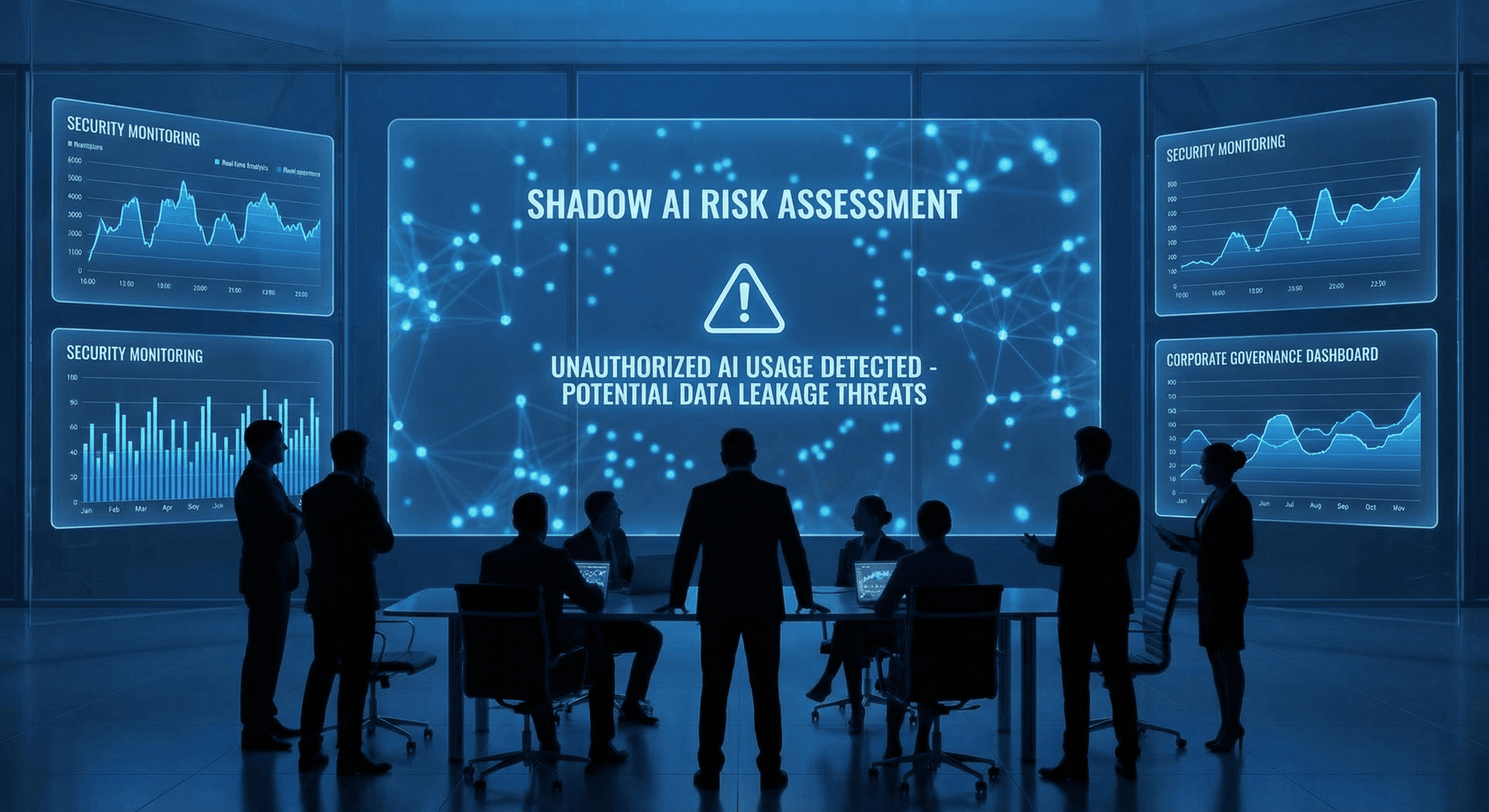
- Quarter 1 (now): Inventory current AI usage. There is shadow AI happening in your agency right now — staff using personal ChatGPT accounts, free Microsoft Copilot trials, browser extensions. Get a clear picture before you architect anything.
- Quarter 2: Pilot one bounded, high-volume, low-stakes workflow with full audit logging and human approval gates. Permit intake triage and FOIA routing are the most defensible starts.
- Quarter 3: Add a second workflow, integrate with existing case management or 311 systems via the secure gateway, and start measuring cycle time and citizen-satisfaction outcomes.
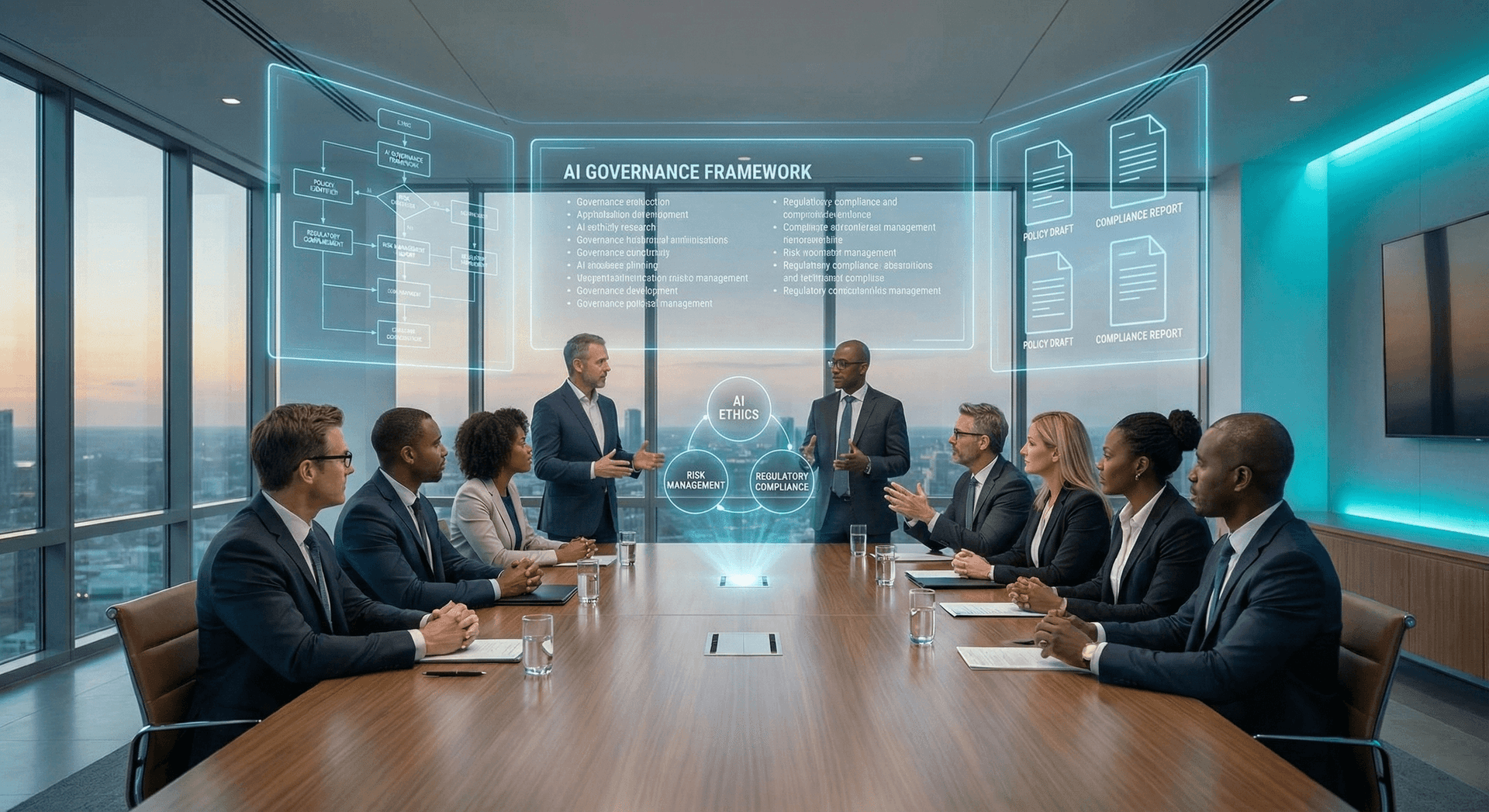
- Quarter 4: Codify the operating model — who can deploy an AI Employee, against which systems, with which approval gates, under what audit policy. This is the AI Employee Governance Playbook in action.
The same sequence works for the credit union in Auburn, the orthopedic group in Fort Wayne, the personal injury practice on Calhoun Street, or the regional HVAC company that serves DeKalb and Allen counties. The constraints are the same. The architecture is the same. The legal exposure for getting it wrong is the same.
What makes Northeast Indiana an unusually good place to deploy this pattern is the local culture. Conservative IT decision-making, smaller systems, smaller stacks, and a real preference for vendors who answer the phone. Cloud Radix is local. The team is in Auburn and Fort Wayne. We have worked with the DeKalb County Sheriff's Office and other local organizations who needed AI deployed with the same constraints we're describing here.

Talk to a local team about constrained-deployment AI Employees
If you're inside a Fort Wayne, Allen County, or DeKalb County government IT shop — or running a regulated business in Northeast Indiana that has the same constraints — Cloud Radix can architect an AI Employee deployment that satisfies your audit, residency, and approval requirements from day one. The secure AI gateway, the human approval gates, the credential isolation, and the audit logging are not bolt-ons. They are how we build, because the alternative is the kind of incident that ends careers and breaks public trust. Book a working session with our team to walk through your specific constraints and pilot scope.
Frequently Asked Questions
Q1.Can AI Employees actually be deployed in a government IT environment with strict data residency requirements?
Yes, when the architecture is right. The pattern is local model deployment (the model runs on hardware your agency or a vetted local partner controls), retrieval-augmented grounding so the model only operates on documents you've explicitly authorized, isolated credentials in a secure gateway, mandatory human approval for any high-blast-radius action, and full audit logging. That combination keeps citizen data inside your audit boundary while still giving you the productivity gain of an AI Employee.
Q2.What public-sector use cases are realistic to pilot first in Fort Wayne or Allen County?
The strongest first-pilot candidates are bounded, high-volume, low-stakes workflows: permit intake triage, FOIA and public records request routing, constituent services phone overflow during peak periods, inspection scheduling and reminders, and internal IT helpdesk queries that have documented answers. These have clear escalation paths to humans, are easy to audit, and produce measurable improvements in citizen-facing cycle time within a quarter.
Q3.How does an AI Employee differ from an AI chatbot for a government use case?
An AI chatbot is a single-channel conversational interface. An AI Employee is a software worker with persistent memory, defined credentials and permissions, the ability to call multiple internal systems, and a defined approval gate for consequential actions. For government workflows that require touching case management systems, sending citizen communications, and producing audit-ready records, only the AI Employee model fits.
Q4.What is the difference between using cloud-based ChatGPT and a Cloud Radix AI Employee for a government office?
Cloud-based consumer ChatGPT sends queries — and any data pasted into them — to a third-party cloud, has no per-agency audit log, no isolated credentials, and no approval gates. A Cloud Radix AI Employee for a government deployment runs against a controlled model, integrates with the secure AI gateway for credential isolation and audit logging, and enforces approval workflows your supervisors define. The difference is the difference between a personal productivity tool and a governed software worker.
Q5.How should a Northeast Indiana mid-market business interpret this public-sector framework?
If you're in healthcare, legal, financial services, or any vertical with audit obligations, the constraints described in the MIT framework apply to you in slightly different language. Treat the public-sector pattern — local-first, retrieval-grounded, approval-gated, audit-logged — as the baseline for your AI Employee deployment. The architecture that survives an inspector general also survives an HHS audit, a state bar review, a banking regulator's exam, and your insurance carrier's underwriting questions.
Q6.Is there a risk of vendor lock-in when deploying AI Employees for a government agency?
Yes, and it's a serious one. Recent industry events around third-party agent access being cut off overnight have shown how fragile single-vendor AI dependencies can be. The mitigation is to deploy AI Employees on a vendor-agnostic infrastructure layer — the secure AI gateway pattern — so that the underlying model can be swapped (cloud frontier model to local open-source model and back) without rewriting your workflows. That's the design choice we make by default at Cloud Radix.
Sources & Further Reading
- MIT Technology Review: technologyreview.com/2026/04/16/1135216 — Making AI operational in constrained public-sector environments.
- VentureBeat: venturebeat.com/orchestration/ais-next-bottleneck — AI's next bottleneck isn't the models — it's whether agents can think together.
- National Institute of Standards and Technology: nist.gov/itl/ai-risk-management-framework — NIST AI Risk Management Framework.
- International Organization for Standardization: iso.org/standard/81230.html — ISO/IEC 42001:2023 Artificial Intelligence Management System.
Architect a Public-Sector-Grade AI Employee Deployment
Cloud Radix builds AI Employees for Fort Wayne, Allen County, and DeKalb County organizations — with audit logging, approval gates, and credential isolation baked in from day one.