The Architecture Shift
Something fundamental is changing in how businesses deploy AI. For the past three years, the default approach was simple: plug in one AI model and ask it to do everything. Schedule appointments. Answer customer emails. Write blog posts. Analyze competitors. One model, infinite responsibilities.
That approach worked when AI was a novelty. It doesn't work when AI is a competitive weapon. The businesses winning with AI in 2026 aren't using a single Swiss Army knife—they're deploying a team of specialists, each purpose-built for one job and exceptional at it.
The Shift in One Sentence
This isn't theoretical. At Cloud Radix, we rebuilt our entire AI Employee architecture around multi-agent coordination—and the results have been staggering. Accuracy jumped. Costs dropped. Output quality reached levels that single-agent systems can't touch.
The shift mirrors what happens in every growing company. A startup founder does everything: sales, marketing, accounting, customer service. But at some point, the company hires specialists. Not because the founder couldn't do those tasks, but because specialists do them better. The same principle applies to AI.
If you're a Fort Wayne business owner evaluating AI, this is the most important architectural decision you'll make in 2026. Our AI consulting team can help you navigate it. Choose wrong, and you'll spend months wondering why your AI keeps hallucinating, missing context, and producing mediocre work. Choose right, and you'll have an unfair advantage your competitors can't replicate without starting over.
The stakes are real. A Fort Wayne medical practice using single-agent AI for patient communications recently discovered their system was providing inconsistent medication information—accurate 70% of the time, dangerously vague the other 30%. The problem wasn't the AI model itself. It was the architecture: one model juggling clinical knowledge, scheduling logic, insurance verification, and bedside manner simultaneously. Multi-agent architecture solves this by design.
This guide covers every dimension of the single-agent vs. multi-agent decision: the technical architectures, head-to-head performance data, cost comparisons, Fort Wayne industry examples across healthcare, restaurants, real estate, law, and manufacturing, and a practical decision framework to help you choose the right approach for your business today.
Let's break down exactly what each approach means, when each one wins, and why Fort Wayne businesses have a narrow window to act first.
Single-Agent AI Explained
A single-agent AI system is exactly what it sounds like: one AI model handles every task your business throws at it. One model schedules appointments. The same model writes marketing copy. That same model answers customer service inquiries, generates reports, analyzes data, and manages your social media presence.
Think of it like hiring one employee and making them your receptionist, copywriter, data analyst, social media manager, and customer service representative—all at the same time. They might be competent at each task individually, but asking them to context-switch between all six simultaneously? Quality drops. Details slip. The work is adequate but never exceptional.
Single-agent systems have real strengths. They're simpler to deploy, require less orchestration infrastructure, and cost less upfront. For straightforward tasks—a basic FAQ chatbot, a simple appointment scheduler, a form processor—a single agent is perfectly adequate.
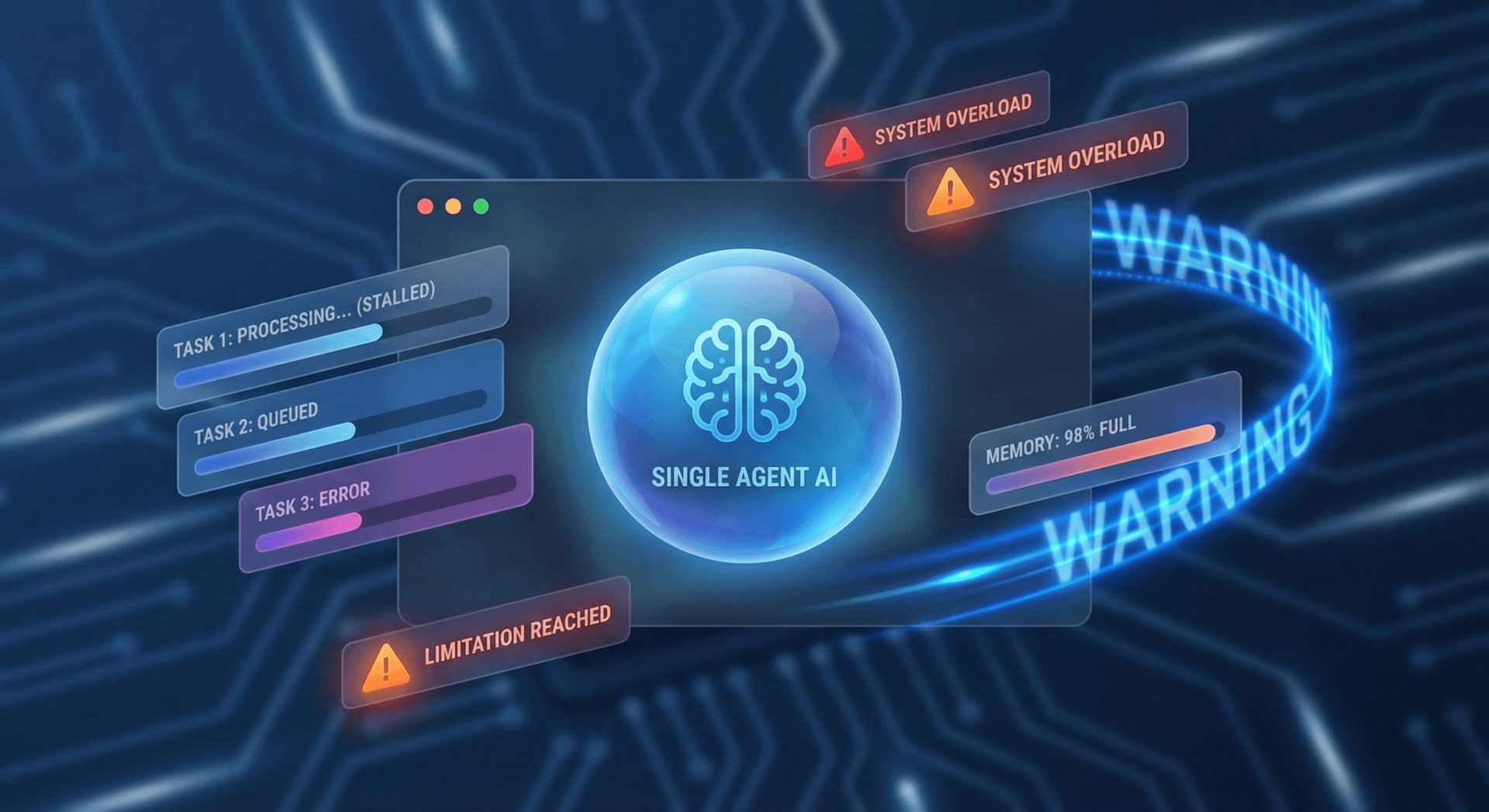
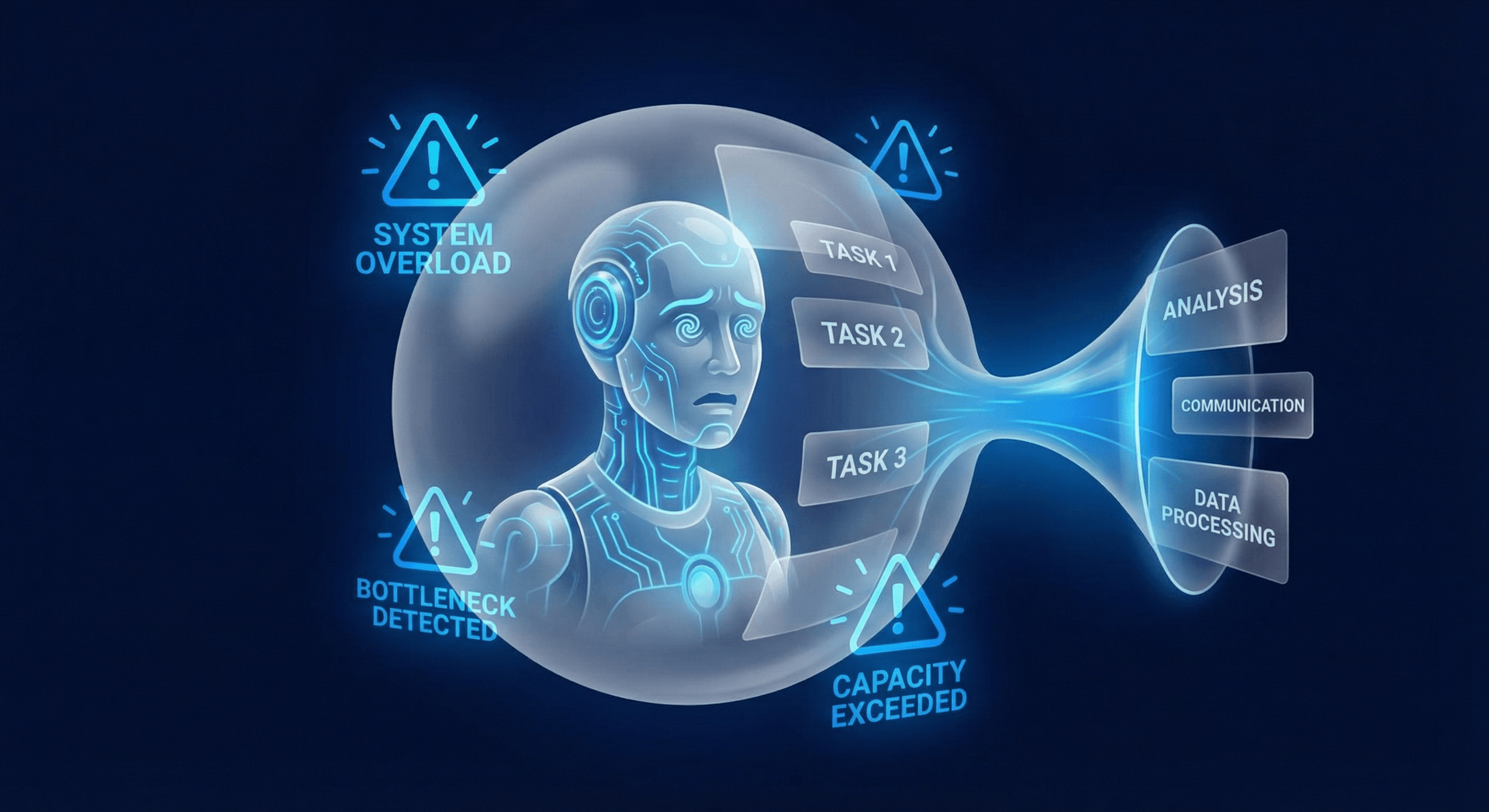
The problems emerge when you push a single agent beyond its comfort zone. Every time the model switches from "customer service mode" to "content creation mode" to "data analysis mode," it loses context. Its system prompt has to accommodate dozens of competing instructions. The more roles you add, the more the model's attention dilutes across conflicting objectives.
Here's what this looks like in practice. A Fort Wayne law firm deploys a single-agent AI to handle client intake, document summarization, appointment scheduling, and basic legal research. The system prompt contains 4,000 words of instructions spanning four domains. When a potential client asks about personal injury claim timelines, the model sometimes responds with language borrowed from its scheduling instructions. When summarizing a contract, it occasionally injects customer service pleasantries. The behaviors are subtle but corrosive—they erode the professional tone that legal clients expect.
Another common failure: a Fort Wayne HVAC company using a single-agent for both technical troubleshooting guides and appointment booking. The model begins inserting technical jargon ("check your capacitor's microfarad rating") into appointment confirmation messages meant for homeowners. Meanwhile, its troubleshooting guides start sounding like a customer service script rather than an authoritative technical resource. Neither output is terrible on its own, but both are noticeably worse than what a focused model produces.
The Hidden Cost of Single-Agent
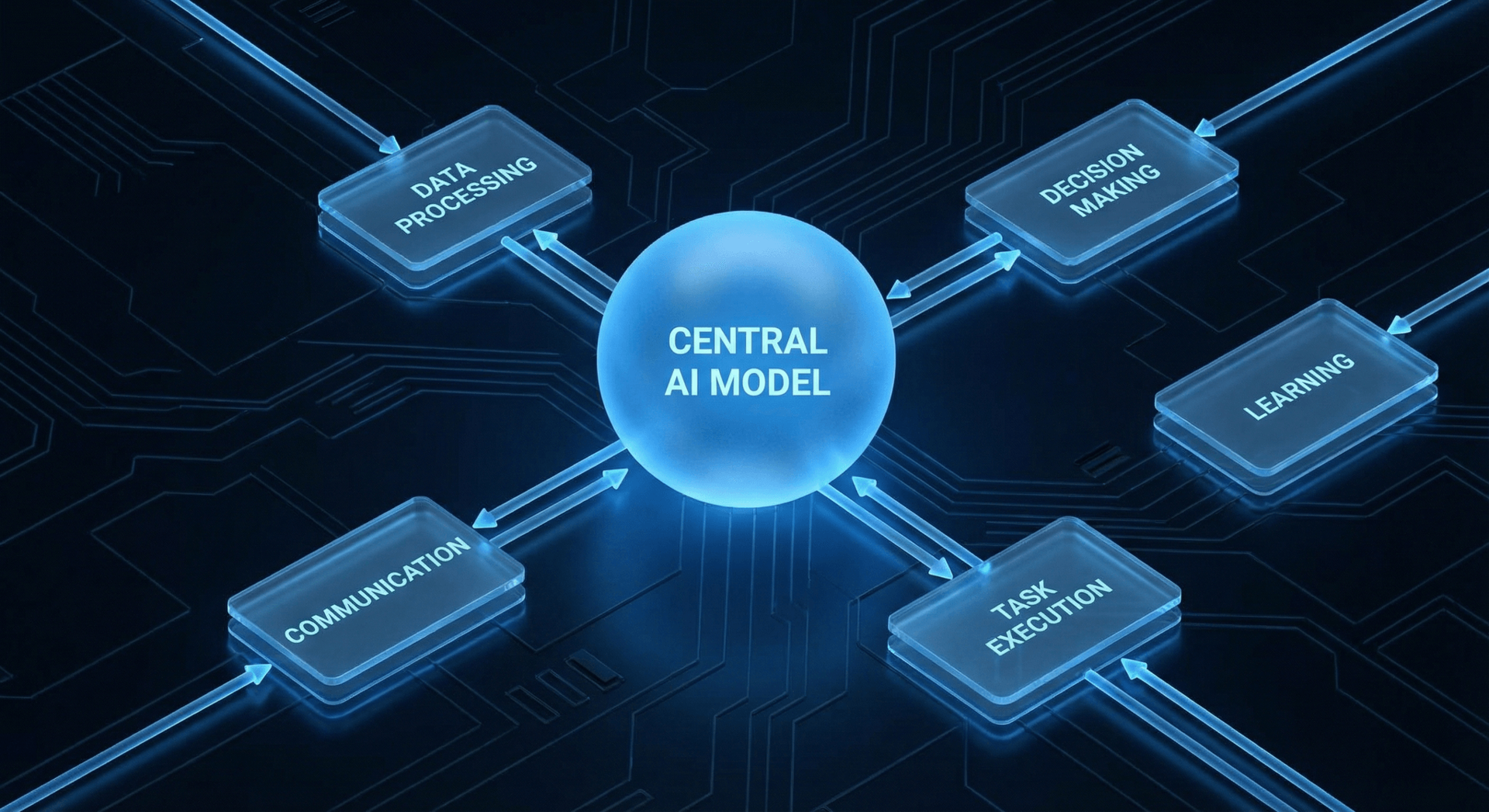
The technical reason is attention dilution. Large language models allocate processing capacity across their entire context window. When that context contains instructions for scheduling, content writing, data analysis, and customer service simultaneously, the model has to split its attention across all four domains—even when processing a task for just one. It's the computational equivalent of trying to listen to four conversations at once.
The analogy most Fort Wayne business owners relate to: it's like asking your best salesperson to also handle accounting, IT support, and warehouse management. They might survive, but they won't thrive at any of those roles. For deeper context on how AI memory limitations compound this problem, see our analysis of the AI memory "Dory problem".
Multi-Agent AI Explained
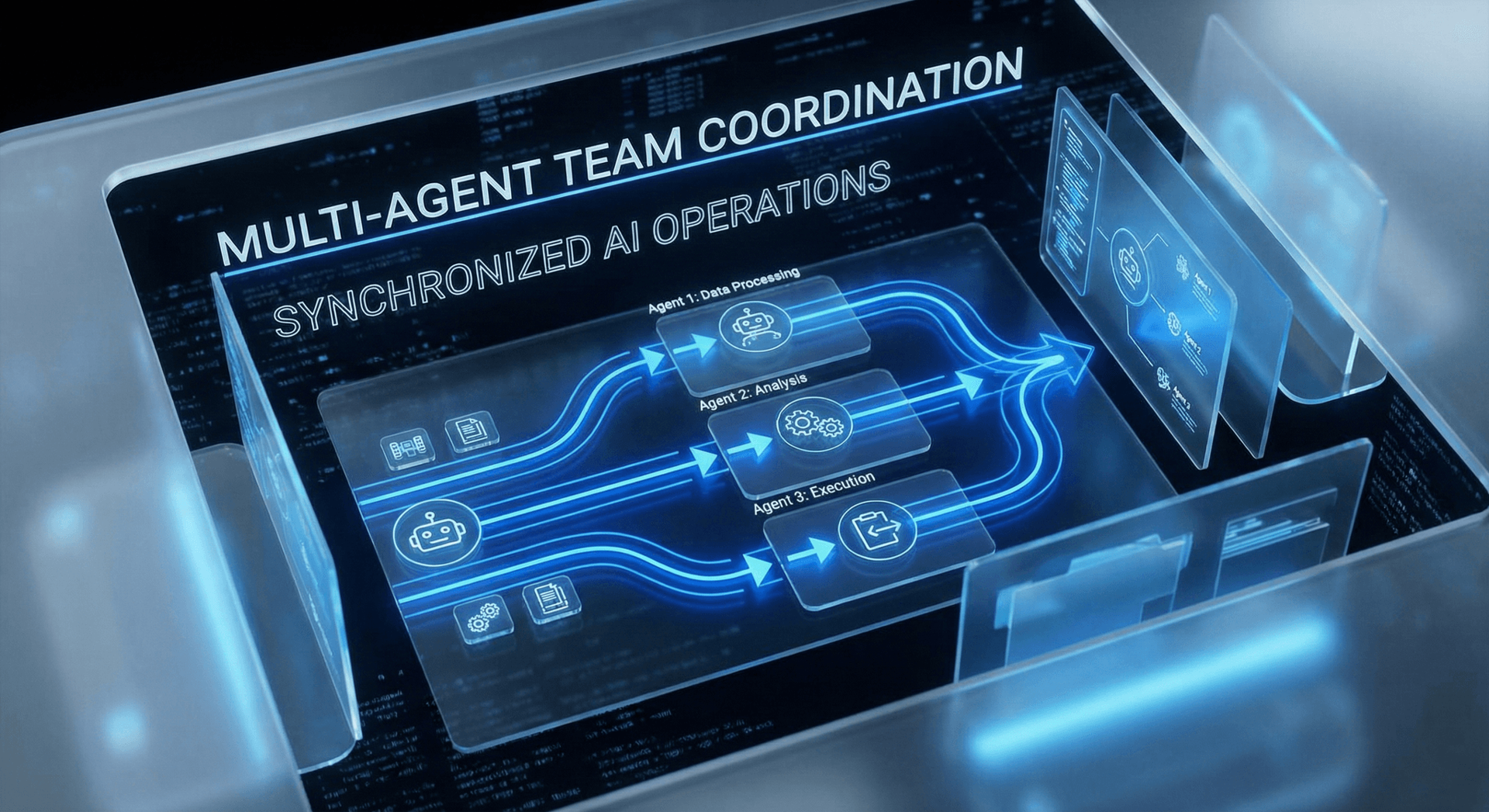
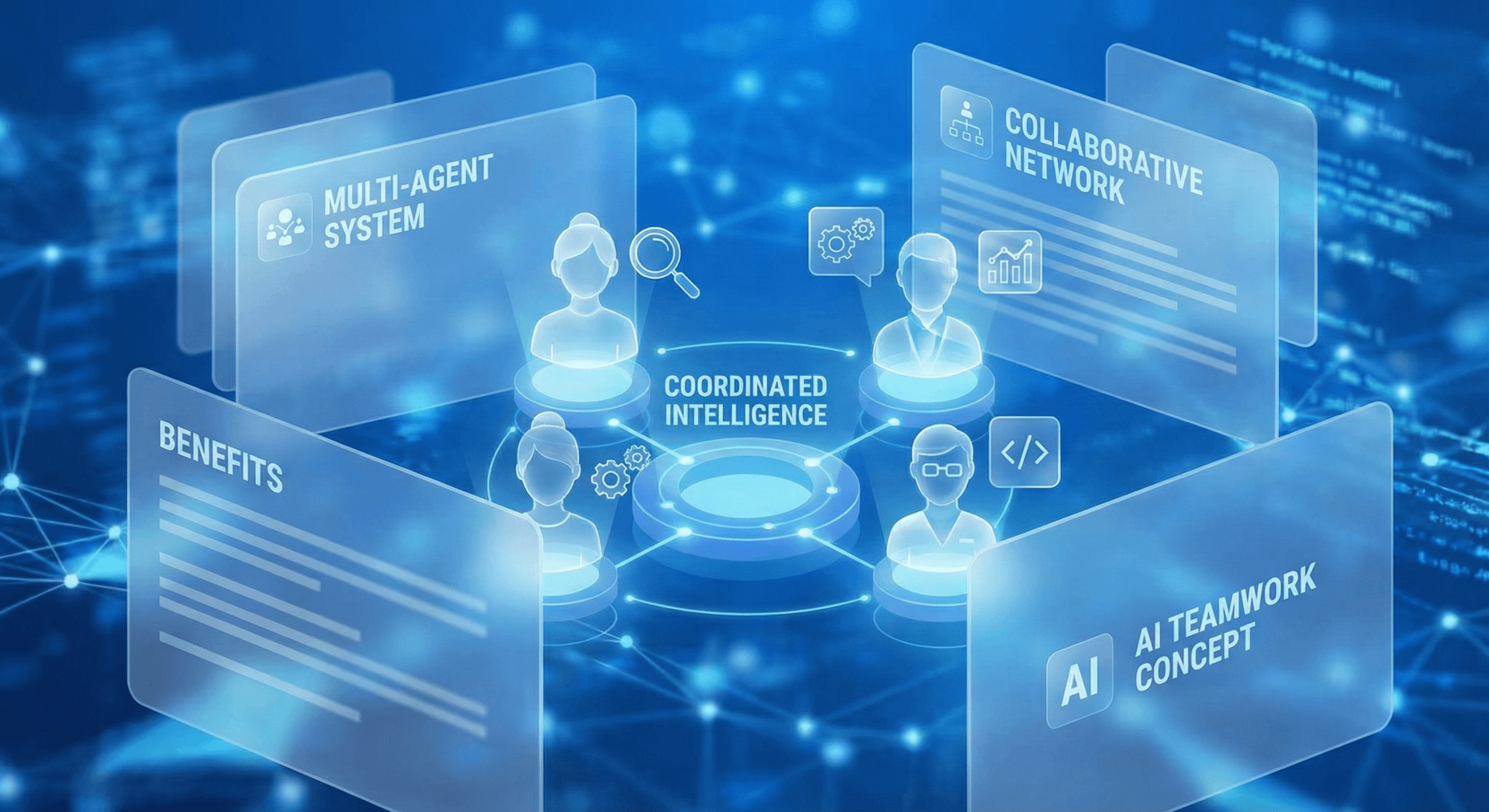
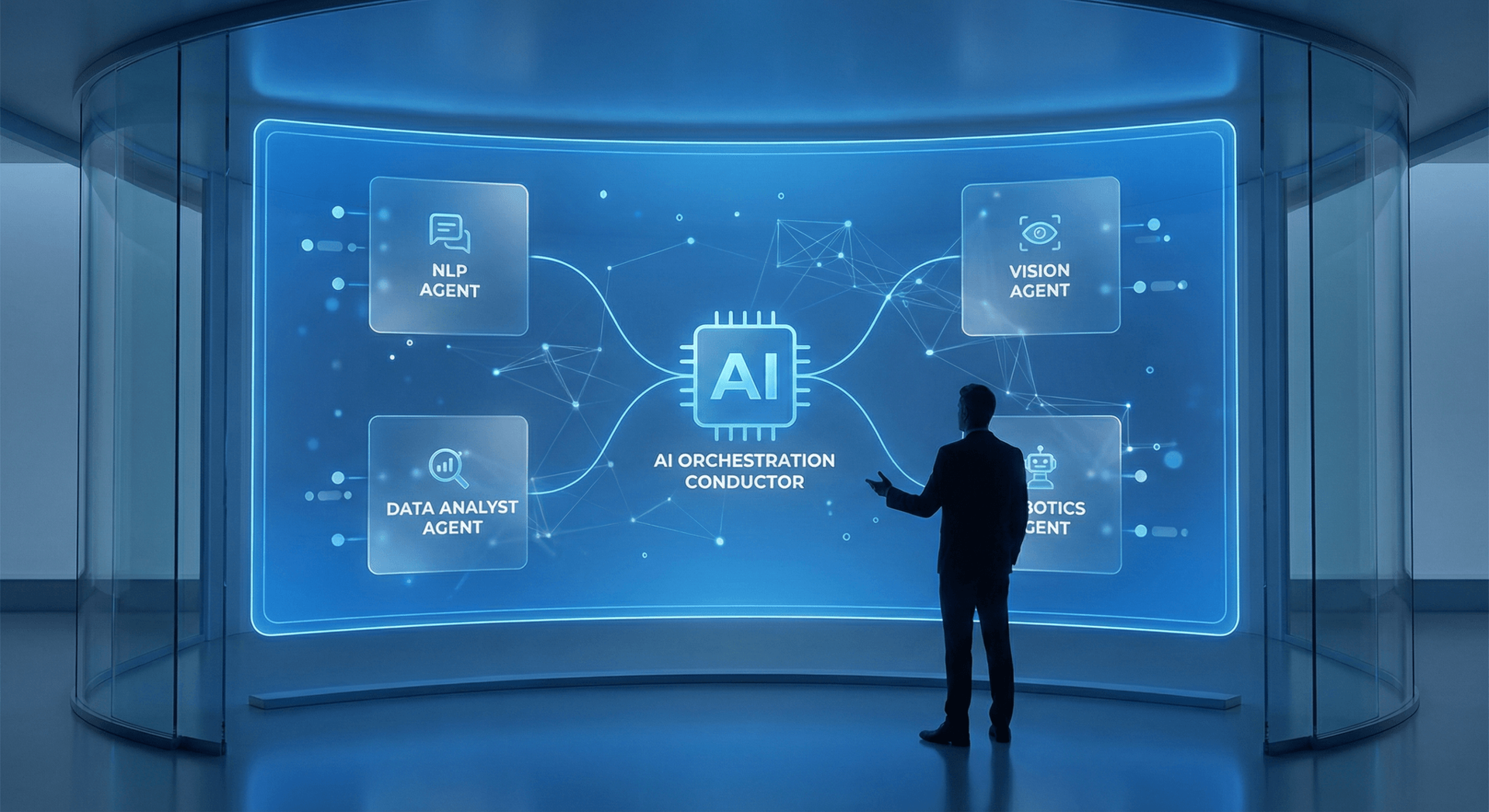
Multi-agent AI flips the architecture entirely. Instead of one model juggling everything, you deploy multiple specialized sub-agents—each trained, prompted, and optimized for a single domain—coordinated by a conductor layer that routes tasks to the right specialist.
Imagine a well-run business where the receptionist handles calls, the copywriter writes content, the analyst crunches numbers, and the customer service rep handles complaints. Each person is an expert in their lane. A manager coordinates the team, ensures handoffs are smooth, and escalates when something falls outside normal parameters.
Research Agent
Specialized in web scraping, data gathering, competitive intelligence, and fact-checking. Uses retrieval-augmented generation (RAG) to pull real-time information from verified sources. Doesn't write content—it finds the truth.
Content Agent
Optimized for long-form writing, brand voice consistency, and persuasive messaging. Receives research from the research agent and transforms raw data into polished blog posts, emails, and marketing copy. One job: create exceptional content.
SEO Agent
Handles keyword research, on-page optimization, schema markup, internal linking strategy, and search intent analysis. Reviews content from the content agent and optimizes it for search engines without destroying readability.
Monitoring Agent
Watches competitor activity, tracks ranking changes, monitors brand mentions, and alerts to industry shifts. Operates 24/7 as your always-on competitive intelligence system.
Customer Engagement Agent
Manages customer interactions, handles inquiries, personalizes responses based on customer history, and escalates complex issues to human operators. Trained specifically on your customer base and communication style.
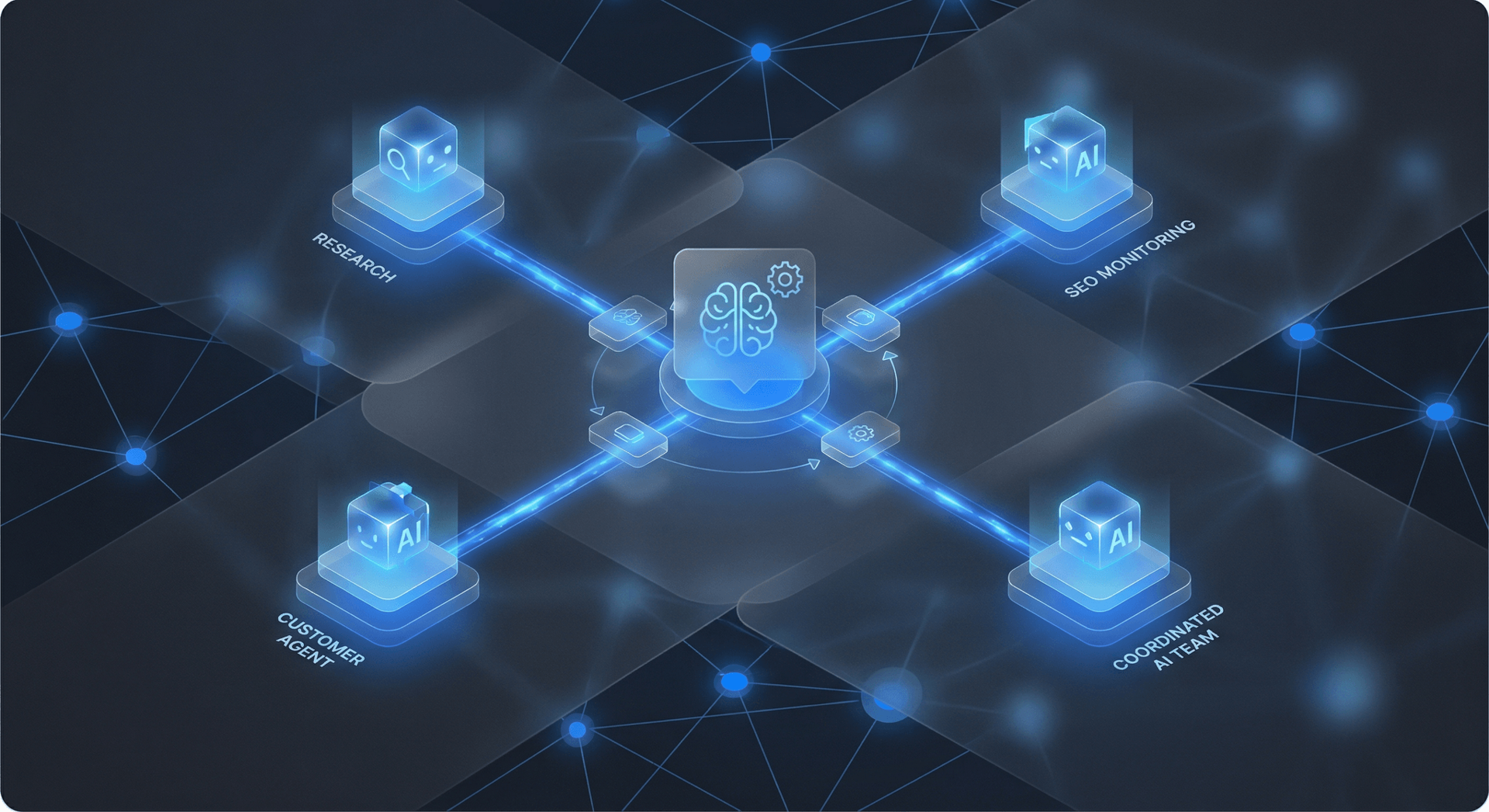
The conductor layer—the "manager" of these agents—handles routing, priority, and conflict resolution. When a customer asks a question that requires both product knowledge and scheduling, the conductor routes the product question to the customer agent and the scheduling request to the scheduling agent, then combines their responses into a seamless reply. The conductor also manages priority queues, ensuring time-sensitive customer inquiries jump ahead of background tasks like content optimization or competitive monitoring.
What makes this powerful is that each agent maintains its own context window, its own system prompt, and its own fine-tuning. The research agent never sees customer service instructions. The SEO agent never processes raw customer data. Each agent operates in a clean, focused environment—which is exactly why accuracy stays high even as the overall system handles dozens of task types.
The analogy isn't just a team of employees. It's more like an orchestra. Each musician is a virtuoso on their instrument. The conductor doesn't play any instrument—the conductor ensures everyone plays in harmony. Remove the conductor, and you have talented musicians producing noise instead of music.
There's another structural advantage worth highlighting: model right-sizing. A single-agent system must use a large, expensive model for every task because it needs the capacity to handle the most complex task in its repertoire. A multi-agent system uses right-sized models for each job. The SEO agent doesn't need a 100-billion-parameter model—a focused 7-billion-parameter model trained on SEO tasks often outperforms the larger model while costing 90% less per query. The monitoring agent runs on an efficient model designed for continuous background processing. Only the content agent and research agent require larger models, and even those are smaller than the single mega-model because they carry less context overhead.
Why Conductors Matter
Head-to-Head Comparison
Enough theory. Let's compare single-agent and multi-agent AI across the seven dimensions that matter most to Fort Wayne business owners. This isn't marketing spin—these are the real-world performance differences we've measured across deployments.
| Dimension | Single-Agent | Multi-Agent |
|---|---|---|
| Accuracy | 60-75% on complex tasks | 88-95% with domain specialists |
| Speed | Slower on multi-step tasks | Parallel processing, 2-3x faster |
| Cost Efficiency | Higher per-task cost at scale | Lower cost via smaller models |
| Scalability | Degrades with added roles | Add agents without degradation |
| Specialization | Jack of all trades | Expert in each domain |
| Error Recovery | Single point of failure | Isolated failures, auto-retry |
| Customization | One-size-fits-all tuning | Per-agent fine-tuning |
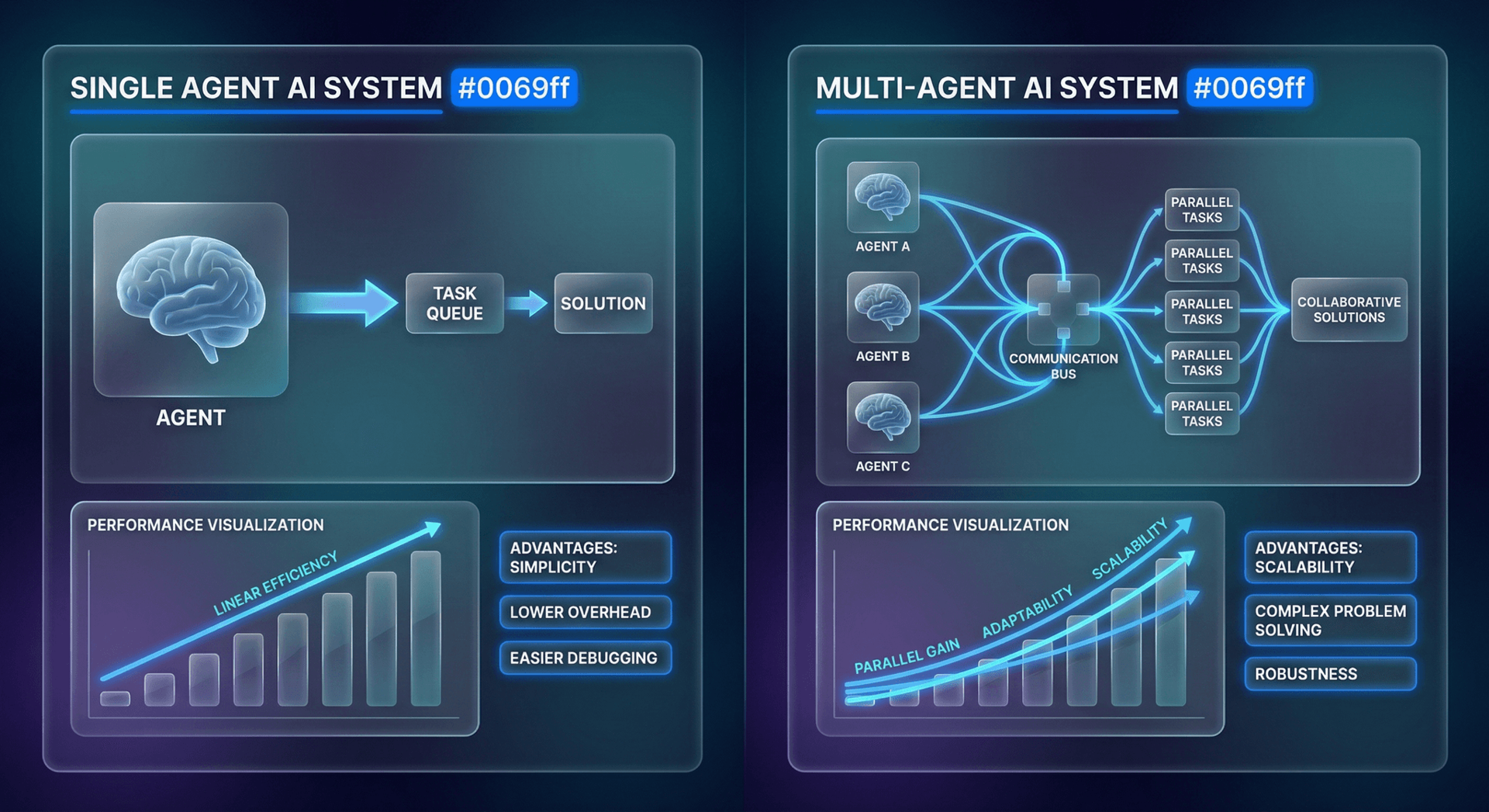
Multi-agent wins six of seven dimensions outright. The only area where single-agent holds a slight edge is in raw deployment simplicity—and even that advantage evaporates once you need the system to handle more than three distinct tasks. For Fort Wayne businesses evaluating these systems, the comparison table above should be your reference point whenever a vendor claims their single-agent system can "do everything." It can attempt everything—but attempting and excelling are very different outcomes.
The accuracy difference is the most critical metric. A single agent producing 65% accuracy on customer inquiries means 1 in 3 responses needs human correction. A multi-agent system at 92% accuracy means fewer than 1 in 10. Over a month with 500 customer interactions, that's the difference between 175 corrections and 40. At an average of 8 minutes per correction, you save 18 hours of human labor monthly.
The speed advantage deserves emphasis. Multi-agent systems process tasks in parallel. While the research agent gathers data for tomorrow's blog post, the SEO agent optimizes today's content, the monitoring agent scans competitor activity, and the customer agent handles incoming inquiries—all simultaneously. A single-agent system processes these tasks sequentially, creating bottlenecks during peak demand.
Error recovery is another dimension where multi-agent architecture provides structural advantages. If a single-agent system encounters an error, the entire system is affected. If a multi-agent's research agent fails on a data retrieval, the other four agents continue operating normally while the conductor retries the failed task or routes around the issue. The blast radius of any single failure is contained to one agent.
Customization Depth
When Single-Agent Wins
Multi-agent is not always the right answer. There are legitimate scenarios where a single-agent system is the smarter investment. Being honest about this distinction is what separates good advice from vendor hype.
When you only need a hammer, hiring an entire construction crew is wasteful. Here's when a single agent makes more sense:
- Simple FAQ chatbot: If your AI's only job is answering common questions from a static knowledge base, a single agent handles this elegantly. No orchestration needed, no inter-agent communication, no conductor overhead.
- Single-task automation: Routing support tickets to the right department. Extracting data from invoices. Scheduling appointments from a web form. One task, one model, done well.
- Low volume operations: If you process fewer than 50 AI interactions per week, the complexity overhead of multi-agent coordination may not justify the accuracy gains. The math changes above 50-100 weekly interactions.
- Proof-of-concept deployments: Testing whether AI works for your business at all? Start with a single agent. Validate the concept, measure results, then upgrade to multi-agent when you're ready to scale.
- Budget constraints under $500/month: At very tight budgets, a well-configured single agent delivers better value than a poorly resourced multi-agent system. Quality multi-agent deployments need adequate infrastructure.
The 3-Task Rule
There's also a maturity argument for single-agent. If your team has never worked with AI, starting with a single-agent system lets you build organizational muscle around AI oversight, quality control, and process integration. You learn how to evaluate AI output, set expectations with staff, and measure ROI—all with lower complexity. That organizational learning carries over when you upgrade to multi-agent later.
Real-World Single-Agent Success Stories
A Fort Wayne auto repair shop deployed a single-agent chatbot specifically to handle appointment scheduling and basic service inquiries. The AI answers questions like "How much does an oil change cost?" and "What's your next available slot for brake inspection?" It does one thing, and it does it well—reducing front-desk phone volume by 35% in the first month. No multi-agent orchestration needed. No conductor layer. Just a focused tool solving a focused problem.
Similarly, a downtown Fort Wayne accounting firm uses a single agent exclusively for tax document classification during filing season. The AI scans uploaded documents, categorizes them (W-2, 1099, receipts, etc.), and routes them to the appropriate folder in their document management system. It handles a single, well-defined task with 91% accuracy—higher than most multi-task deployments achieve because the model's entire context window is devoted to one domain.
Single-Agent Sweet Spot
Finally, some tasks genuinely don't benefit from agent specialization. If your AI only translates voicemails to text summaries, a specialized agent for that task is effectively a single agent. The distinction becomes meaningful only when you need multiple different capabilities working together.
The honest truth is that many Fort Wayne small businesses starting their AI journey should begin with a single agent. The mistake isn't starting simple—it's staying simple when your needs have outgrown the architecture. When you're ready to scale, our AI Employee platform makes the transition seamless.
When Multi-Agent Wins
Multi-agent AI becomes the clear winner when your business requirements cross specific complexity thresholds. These aren't arbitrary benchmarks—they're the inflection points where single-agent accuracy and reliability break down.
- Complex multi-step workflows: Patient intake that flows from form processing to insurance verification to appointment scheduling to follow-up. Each step requires different expertise. Multi-agent handles this as a pipeline of specialists.
- Multiple data source integration: When your AI needs to pull from your CRM, website analytics, email platform, social media, and industry databases simultaneously. Each data source benefits from a specialized retrieval agent.
- High accuracy requirements: Medical information, legal compliance, financial calculations—any domain where a wrong answer has real consequences. The 25-30% accuracy improvement multi-agent delivers isn't a luxury, it's a necessity.
- Scaling requirements: Growing from 100 to 1,000 monthly AI interactions without proportional cost increases. Multi-agent systems scale horizontally by adding capacity to bottleneck agents rather than scaling the entire system.
- Industry-specific compliance: HIPAA in healthcare. PCI-DSS in payments. SOX in finance. Each compliance domain benefits from dedicated agents that understand regulatory requirements without contaminating other functions.
- Competitive intelligence needs: Businesses that need to monitor competitors, track market shifts, and adapt strategy in real-time. This is a full-time job for a dedicated monitoring agent—not a side task for a generalist.
- Content creation at scale: Producing 10+ pieces of high-quality content monthly requires the research-write-optimize pipeline that multi-agent systems execute naturally. See how memory embeddings reduce costs in this pipeline.
Industry-Specific Multi-Agent Advantages
Healthcare: Multi-agent architecture isn't just better for medical practices—it's practically required. HIPAA mandates strict data access controls. A patient intake agent that processes medical history should never have access to billing data, and a billing agent should never see clinical notes beyond what's needed for coding. Multi-agent architecture enforces these boundaries at the system level, not through prompt engineering.
Legal services: Law firms handle fundamentally different workflows—client intake, legal research, document preparation, court filing, and client communication. A single agent asked to draft a motion and also handle client intake phone scripts will bleed formal legal language into conversational contexts (and vice versa). Multi-agent keeps these voices distinct.
Manufacturing: Fort Wayne's manufacturing sector benefits from multi-agent systems that separate inventory monitoring, quality control reporting, supplier communication, and workforce scheduling into dedicated agents. When a supply chain disruption hits, the inventory agent can recalculate timelines while the supplier communication agent simultaneously reaches out to alternative vendors—parallel action that a single agent executes sequentially.
Multi-Agent for E-Commerce
The pattern we see most often in Fort Wayne: a business starts with a single AI chatbot, loves the results for basic inquiries, then gradually adds tasks. Answer product questions. Then schedule appointments. Then generate follow-up emails. Then analyze customer sentiment. Each addition seems incremental, but the cumulative complexity degrades the system. By month four, the AI that once answered questions flawlessly now gives confused, generic responses to everything.
Multi-agent architecture prevents this degradation structurally. Adding a new capability means deploying a new specialized agent—the existing agents are completely unaffected. Your customer service agent doesn't degrade when you add a content creation agent. Your scheduling agent doesn't slow down when you add competitive monitoring. The system grows without decay.
The Tipping Point
Fort Wayne Multi-Agent Examples
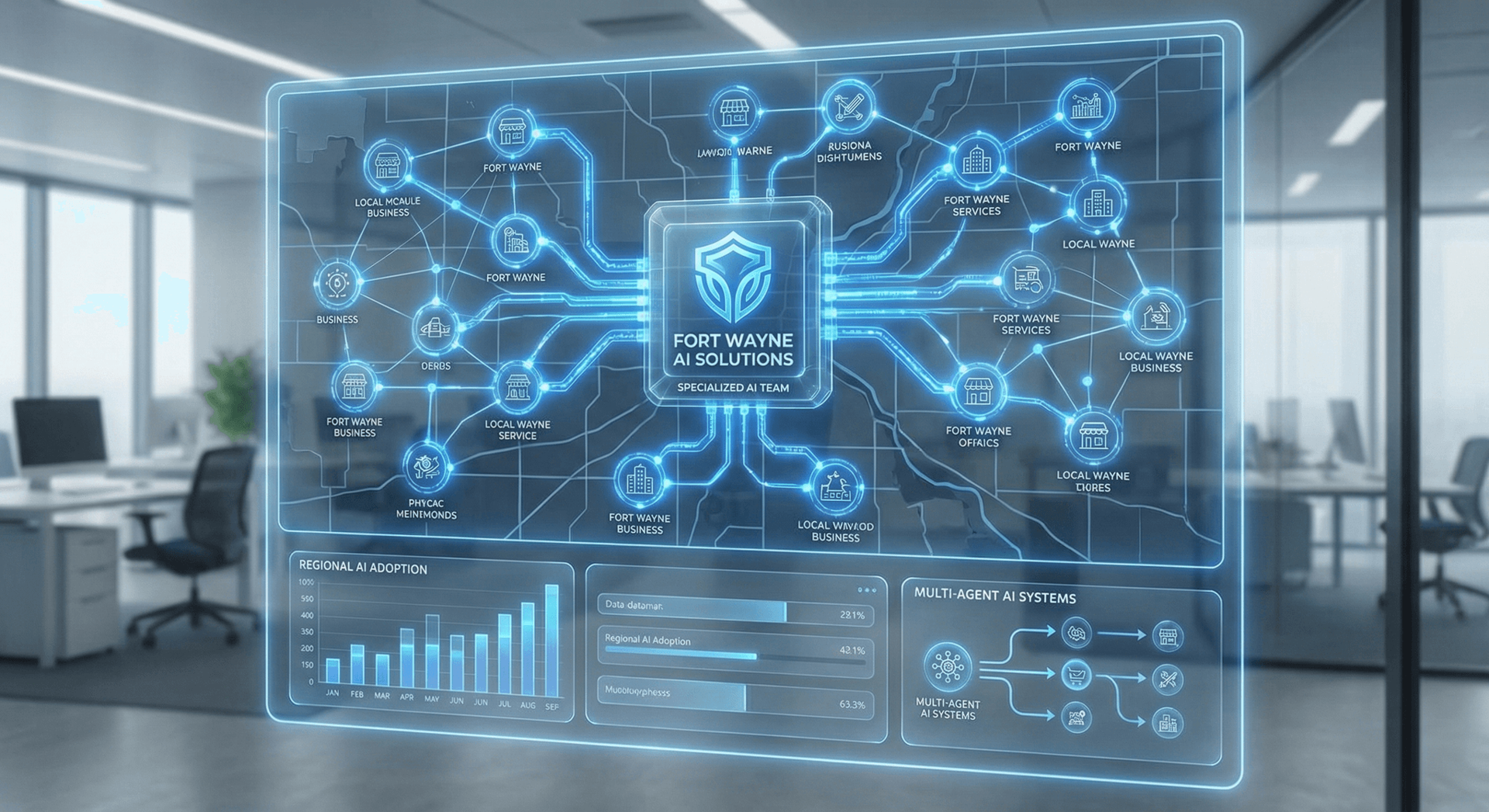
Abstract comparisons only go so far. Here's how multi-agent AI architecture maps to Fort Wayne business types across healthcare, hospitality, real estate, legal, and manufacturing. These aren't hypothetical scenarios; they're architectures we've designed for businesses in the Fort Wayne metro area.
Each example shows the minimum viable agent configuration—the fewest agents needed to deliver transformative results. In practice, these systems often expand to include additional agents as the business discovers new automation opportunities. The important thing to notice is how each agent's specialization maps directly to a distinct skill set that would be diluted in a single-agent system.
Medical Practice: 3-Agent System
A multi-physician practice near Parkview Regional deploys three coordinated agents:
- Patient Intake Agent: Handles new patient registration, insurance verification, medical history collection, and pre-visit questionnaires. Trained on HIPAA compliance and medical terminology. Validates insurance in real-time against payer databases.
- Scheduling Agent: Manages provider calendars, patient preferences, appointment types, and buffer times. Understands procedure durations, handles cancellations and waitlists, and sends personalized reminders. Coordinates across 6 providers.
- Billing Agent: Processes claims, tracks payment status, handles patient billing inquiries, and manages collections workflows. Trained on CPT codes, ICD-10 classifications, and payer-specific requirements.
Why multi-agent matters here: A single agent handling patient intake and billing would need access to both clinical and financial systems—a HIPAA compliance nightmare. Separate agents maintain strict data boundaries. Learn more about our medical practice AI implementations.
Restaurant Group: 3-Agent System
A Fort Wayne restaurant group with three locations deploys coordinated agents:
- Reservations Agent: Manages table availability across all locations, handles party size optimization, accommodates dietary restrictions and special requests, and sends confirmation messages. Integrates with POS for real-time capacity tracking.
- Orders Agent: Processes online and phone orders, manages menu modifications, calculates accurate pricing with modifiers, and coordinates kitchen timing for multi-course orders. Handles delivery logistics and estimated times.
- Reviews Agent: Monitors Google, Yelp, and social media reviews in real-time. Drafts personalized responses for manager approval, identifies recurring complaints for operational improvement, and tracks sentiment trends across locations.
Why multi-agent matters here: The orders agent needs real-time kitchen integration and pricing logic. The reviews agent needs sentiment analysis and brand voice training. These are fundamentally different skills—forcing one model to handle both produces generic responses and order errors.
Real Estate Agency: 3-Agent System
A Northeast Indiana real estate agency deploys three specialized agents:
- Leads Agent: Qualifies incoming leads, scores them based on intent signals, personalizes follow-up sequences, and routes hot leads to the appropriate agent by specialty (residential, commercial, land). Integrates with MLS and CRM data.
- Showings Agent: Coordinates showing schedules across multiple agents and properties, handles lockbox logistics, sends pre-showing property briefs to clients, and collects post-showing feedback. Manages time zones for relocation clients.
- Contracts Agent: Assists with document preparation, tracks contingency deadlines, sends automated reminders for inspection and financing milestones, and coordinates between buyers, sellers, lenders, and title companies.
Why multi-agent matters here: Lead qualification requires marketing intelligence. Contract management requires legal compliance knowledge. Showing coordination requires logistics optimization. Three different skill sets, three different agents, one seamless client experience.
Law Firm: 4-Agent System
A mid-size Fort Wayne law firm handling personal injury and family law deploys four coordinated agents:
- Client Intake Agent: Conducts initial consultations via web chat and phone, collects case details, identifies case type and urgency, performs conflict checks against existing client database, and routes qualified leads to the appropriate attorney based on practice area and current caseload.
- Research Agent: Searches case law databases, pulls relevant statutes and precedents, summarizes opposing counsel's recent filings, and prepares research memos. Trained specifically on Indiana state law and Seventh Circuit federal case law.
- Document Agent: Drafts standard legal documents—demand letters, discovery requests, motions, and settlement agreements—using firm templates and attorney-specific formatting preferences. Tracks document versions and manages filing deadlines.
- Client Communication Agent: Sends case status updates, appointment reminders, document requests, and billing notifications. Maintains the empathetic, professional tone required for sensitive legal matters while keeping clients informed without overwhelming them.
Why multi-agent matters here: Legal research requires deep domain knowledge and citation accuracy. Client communication requires emotional intelligence and careful language. Combining these into one model produces either overly clinical client messages or legally imprecise research—both unacceptable outcomes.
Manufacturing Company: 3-Agent System
A Fort Wayne precision manufacturing company deploys three agents to streamline operations:
- Supply Chain Agent: Monitors raw material inventory levels, predicts reorder points based on production schedules and lead times, identifies alternative suppliers when primary vendors face delays, and generates purchase orders for manager approval.
- Quality Control Agent: Analyzes production data from sensors and inspection reports, flags anomalies that suggest equipment calibration drift, generates daily quality summaries, and tracks defect rates against ISO 9001 thresholds.
- Customer Orders Agent: Processes RFQs (requests for quotation), calculates production timelines based on current shop floor capacity, generates quotes with accurate lead times, and communicates order status updates to customers throughout the fulfillment cycle.
Why multi-agent matters here: Supply chain logic involves complex inventory mathematics. Quality control requires statistical process understanding. Customer communication requires clear, jargon-free language. One model cannot optimize for all three simultaneously.
Custom Agent Configurations
Cloud Radix's Multi-Agent Architecture
This isn't just a topic we write about—it's the architecture we live in. Skywalker, Fort Wayne's first AI Employee, runs on a multi-agent system with 5+ specialized agents working in concert. Every blog post, every competitive analysis, every customer interaction you see from Cloud Radix is produced by this coordinated team.
Here's how our agents collaborate on a single task—say, producing the article you're reading right now. For a deeper look at how specialized agents serve different leadership roles, see our guide on AI sub-agents for the C-suite.
Step 1. Research Agent Gathers Intelligence
The research agent scours academic papers, industry reports, competitor content, and technical documentation on multi-agent AI architectures. It fact-checks claims, identifies primary sources, and compiles a structured research brief with citations. It doesn't write a single word of the final article—it builds the foundation of truth the content agent needs.
Step 2. Content Agent Creates the Draft
Receiving the research brief, the content agent transforms raw data into the engaging, authoritative prose you're reading. It maintains Cloud Radix's brand voice, structures arguments for readability, and creates analogies that Fort Wayne business owners relate to. The content agent has one focus: make this the most useful resource on this topic anywhere on the internet.
Step 3. SEO Agent Optimizes for Discovery
The SEO agent reviews the draft and optimizes heading structures, internal linking, schema markup, keyword density, and search intent alignment. It ensures the content ranks for target queries without compromising readability. It adds structured data, refines meta descriptions, and validates that every internal link serves both the reader and search algorithms.
Step 4. Monitoring Agent Tracks the Landscape
Even after publication, the monitoring agent continues working. It tracks how competitors respond, monitors ranking positions, identifies new search queries driving traffic to this content, and flags when updates are needed based on industry developments. This is the agent that never sleeps.
Step 5. Customer Engagement Agent Handles Responses
When you reach out after reading this article—via the contact form, chat widget, or email—the customer engagement agent responds with context. It knows which article you read, what your likely questions are, and how to personalize the conversation based on your business type and needs.
Real Results, Not Theory
Skywalker's 5 Agents: The Full Story
When we first built Skywalker, it was a single-agent system. One model, one massive system prompt, one set of capabilities. It worked for about six weeks. Then the cracks appeared.
The content quality started drifting. Blog posts would randomly include customer service language. Research citations became less reliable because the model was splitting attention between fact-checking and stylistic concerns. SEO optimizations conflicted with readability goals because both objectives lived in the same context window. We were spending more time correcting Skywalker's output than we would have spent writing from scratch.
The rebuild took three weeks. We decomposed Skywalker from one agent into five, each running on the optimal model for its task. The research agent runs on a model optimized for retrieval-augmented generation with high factual accuracy. The content agent runs on a model fine-tuned for long-form, engaging prose. The SEO agent runs a lightweight, fast model that excels at structured analysis. The monitoring agent uses an efficient model designed for continuous background processing. The customer engagement agent runs on a model trained for conversational empathy.
The results were immediate and dramatic. Content production speed tripled because agents work in parallel—the research agent gathers data for article B while the content agent writes article A and the SEO agent optimizes article Z from yesterday. Factual accuracy jumped from 78% to 94% because the research agent's entire context window is devoted to finding and verifying truth, not worrying about paragraph flow or keyword density.
Perhaps the most underappreciated benefit is error isolation. When our research agent encounters a data source that's temporarily unavailable, it retries or uses cached data—and the other four agents continue working normally. In the single-agent era, a research failure would cascade into content delays, missed SEO deadlines, and backed-up customer inquiries. The blast radius of any single failure is now contained to one agent.
The Conductor's Secret
The key insight is that no single model could match the output of five specialists working in pipeline. The research agent uses retrieval-augmented generation optimized for data gathering. The content agent uses a model fine-tuned for long-form writing. The SEO agent runs a smaller, faster model focused on technical optimization. Each agent uses the right tool for its specific job.
The 30-Day First-Mover Window
We ran competitive intelligence across every AI vendor, digital agency, and technology consultancy serving the Fort Wayne market in February 2026. The finding was unambiguous: not a single competitor offers true multi-agent AI architecture for local businesses.
Every competitor we analyzed—and we analyzed all of them—deploys single-agent systems. One model, one prompt, one set of capabilities. Some have clever branding. Some integrate with multiple tools. But none coordinate specialized agents in a true multi-agent pipeline with conductor orchestration.
Competitive Intelligence: February 2026
This isn't about technology gatekeeping—multi-agent frameworks are open source and increasingly accessible. It's about implementation expertise and time-to-deploy. Building a multi-agent system that works reliably requires orchestration experience, domain-specific fine-tuning, and production-grade error handling. That's Cloud Radix's core competency, and it's what gives our clients a deployment speed advantage competitors can't match without building the same infrastructure from scratch.
Why does this matter? Because the businesses that adopt multi-agent AI first will compound advantages that late adopters can't catch:
- Content authority: 6 months of multi-agent-quality content creates a search authority moat that single-agent competitors can't match by switching architectures later. The content advantage compounds weekly.
- Customer experience data: Multi-agent customer interactions generate richer data for model fine-tuning. Early adopters train better models faster because they start collecting specialized interaction data sooner.
- Operational efficiency: Every month of multi-agent operation reduces operational costs further as agents learn and improve. The efficiency gap between early and late adopters widens, not narrows.
- Market positioning: Being the first Fort Wayne medical practice, restaurant, or real estate agency with multi-agent AI creates a positioning advantage that's hard to replicate with "me too" announcements.
We estimate this exclusive window at approximately 30 days. Multi-agent frameworks are becoming commoditized rapidly—what required custom engineering six months ago is approaching plug-and-play status. The window isn't whether you can get multi-agent AI; it's whether you're first in your Fort Wayne market segment to deploy it.
The Compounding Effect
Cost Implications
The assumption most business owners make is that multi-agent AI costs more. It's intuitive—more agents, more cost, right? The reality is counterintuitive: multi-agent systems are often more cost-efficient at scale because they use smaller, cheaper specialized models instead of one expensive mega-model.
Here's the math. A single-agent system handling research, content, SEO, monitoring, and customer service requires a large, expensive model (GPT-4 class or equivalent) for every task—because simpler models can't handle the context-switching demands. A multi-agent system uses the right-sized model for each job:
When you add it up, the multi-agent pipeline costs approximately $0.12 for a research-write-optimize cycle. The single-agent equivalent costs $0.15-$0.20 for the same output at lower quality. At 200 content operations per month, that's $24 vs $30-$40—and the multi-agent output requires 60% fewer human corrections.
The model right-sizing advantage is significant. A single-agent system must use a GPT-4 class model for every interaction because the system prompt demands advanced reasoning across multiple domains. A multi-agent system can route simple tasks to lightweight models that cost 5-10x less per query. The monitoring agent running background checks on competitor activity doesn't need a 100-billion-parameter model—a focused, efficient model handles it faster and cheaper. Only complex tasks get routed to premium models, and even those models perform better because they carry less context overhead.
| Cost Category | Single-Agent | Multi-Agent |
|---|---|---|
| Model API costs (monthly) | $800-$1,200 | $500-$900 |
| Human correction hours | 25-35 hours | 8-12 hours |
| Infrastructure overhead | $100-$200 | $200-$350 |
| Total monthly cost | $1,800-$2,800 | $1,200-$2,000 |
| Cost per quality output | $4.50-$7.00 | $2.40-$4.00 |
| 6-month ROI trajectory | Flat to declining | Improving as agents learn |
The Hidden Cost Savings
Multi-agent infrastructure does cost more upfront—$200-$350 monthly vs $100-$200 for single-agent. But this is the same pattern as hiring specialists vs generalists: the specialist team costs more in coordination overhead but delivers dramatically better output per dollar. For a detailed breakdown of how memory embeddings further reduce costs in multi-agent pipelines, see our technical guide on how embeddings cut AI costs by 40%.
The 12-Month Cost Trajectory
The cost comparison changes dramatically when you extend the analysis beyond the first month. Single-agent systems have lower month-one costs but a flat or worsening cost trajectory. As you add tasks and complexity, the single model requires more expensive API calls (larger context windows, more tokens per request), and human correction time grows linearly with task count.
Multi-agent systems have higher month-one costs but an improving trajectory. Each agent learns and improves within its domain. The research agent builds a cached knowledge base that reduces redundant API calls by 30-40% after 90 days. The content agent develops a refined understanding of your brand voice, requiring fewer revision cycles. The SEO agent accumulates keyword and ranking data that makes optimization faster and more accurate over time.
By month six, most multi-agent deployments cost 25-35% less per output than comparable single-agent systems—and produce measurably higher quality work. By month twelve, the gap widens further as the compounding effects of specialized learning accelerate.
Beware the Cheap Trap
Making the Choice: Decision Framework
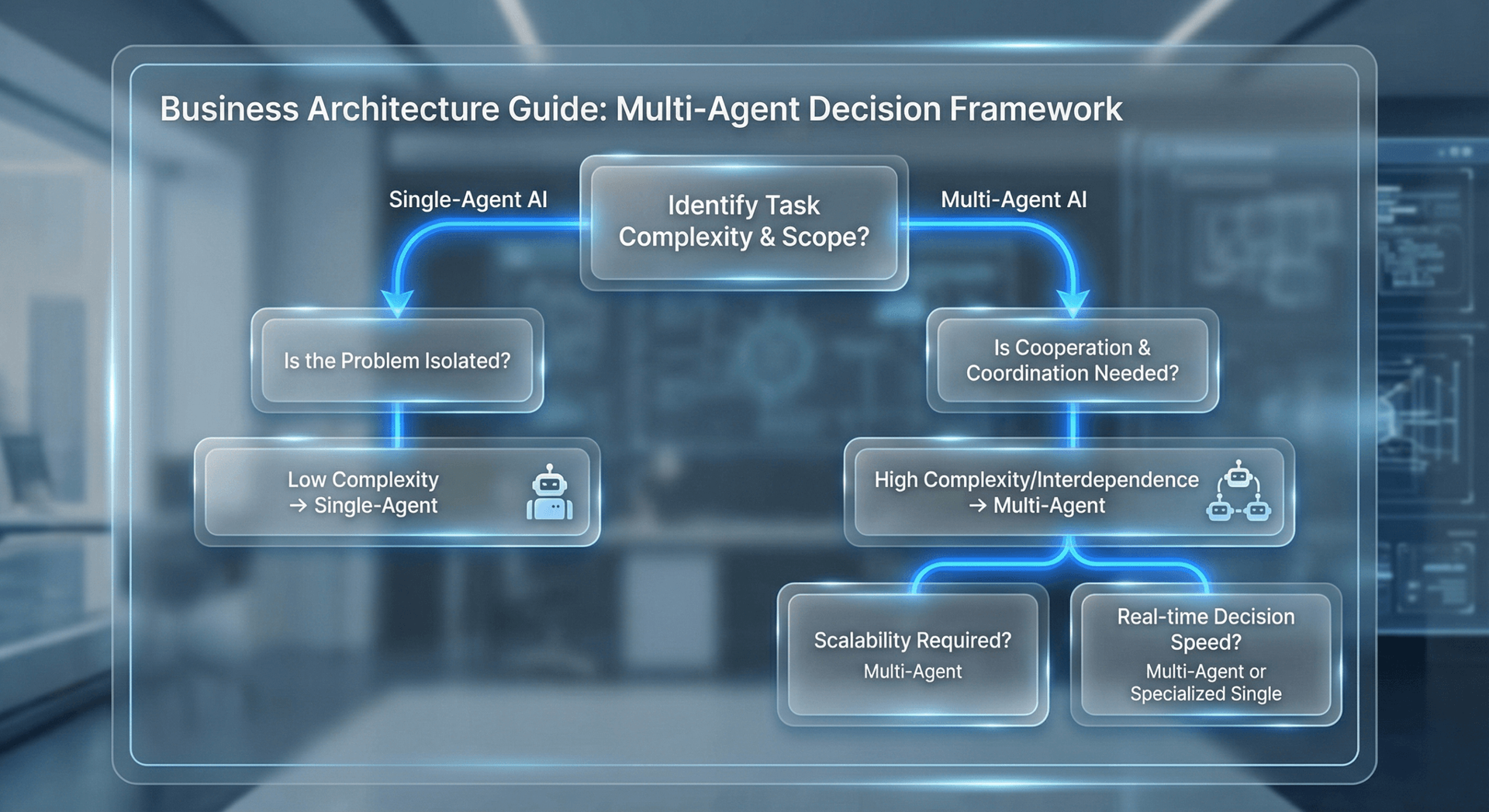
You've seen the comparison. You understand the architectures. Now you need to decide. Use this decision framework to determine which approach fits your Fort Wayne business today—and what you should plan for 6-12 months from now.

Choose Single-Agent If:
- Your AI will perform 3 or fewer distinct tasks
- Monthly AI interactions stay below 200
- Accuracy requirements are moderate (70%+ acceptable)
- Budget is under $500/month for AI operations
- You're deploying AI for the first time as a proof of concept
- Your industry has no specific compliance requirements for AI
- Speed of initial deployment is the top priority
Choose Multi-Agent If:
- Your AI will handle 4+ distinct task types
- Monthly interactions exceed 200 or are growing
- Accuracy above 85% is necessary for your use case
- You operate in healthcare, finance, legal, or other regulated industries
- You need competitive intelligence and market monitoring
- Content quality directly impacts revenue (content marketing, SEO)
- You're ready to invest in a 6-month AI roadmap, not just a quick fix
- You want to be first in your Fort Wayne market segment
Our Recommendation for Most Fort Wayne Businesses
The Migration Question
One pattern we see repeatedly: businesses that start with single-agent eventually migrate to multi-agent within 6 months. The migration isn't painful, but it does require rearchitecting. If you know your needs will grow, starting with multi-agent from day one avoids the migration cost entirely.
The migration typically involves decomposing your single agent's system prompt into domain-specific prompts, setting up the conductor layer, establishing inter-agent communication protocols, and testing the new pipeline end-to-end. Cloud Radix handles this transition for clients, typically completing it in 2-3 weeks with zero downtime to existing AI capabilities.
The businesses that regret their choice are almost never the ones who chose multi-agent "too early." They're the ones who chose single-agent and watched competitors with multi-agent systems pull ahead in search rankings, customer experience, and operational efficiency.
Not Sure Which to Choose?
Frequently Asked Questions
Q1.What is the difference between single-agent and multi-agent AI?
A single-agent AI system uses one model to handle all tasks, while a multi-agent system coordinates multiple specialized AI agents, each trained for a specific domain like research, content creation, SEO, or customer engagement. Think of it as one generalist employee versus a team of specialists managed by a coordinator. The critical architectural difference is the conductor layer in multi-agent systems, which routes tasks to the right specialist, manages inter-agent communication, handles priority conflicts, and ensures graceful degradation when any single agent encounters issues. Single-agent systems have no such orchestration because there is only one model processing everything sequentially.
Q2.Is multi-agent AI more expensive than single-agent?
Not necessarily, and often it is cheaper at scale. Multi-agent systems use smaller, specialized models that are individually cheaper to run. A research query costs roughly $0.03 on a specialized retrieval model versus $0.15 on a mega-model. When you factor in higher accuracy (fewer human corrections saving 15-20 hours monthly), lower per-task API costs (right-sized models), and improved output quality that drives better business results, multi-agent often delivers 30-40% better ROI per dollar spent. The only area where single-agent costs less is infrastructure overhead, which runs $100-200 less monthly. But this savings is dwarfed by the human correction costs single-agent systems require.
Q3.Can a small Fort Wayne business benefit from multi-agent AI?
Absolutely. Multi-agent systems scale down efficiently. A small business might start with two or three specialized agents covering their highest-impact workflows and add more as needs grow. For example, a solo-practice attorney could start with just an intake agent and a research agent, costing less than a full single-agent system while delivering higher accuracy in both domains. The key benefit is accuracy and reliability, which matter regardless of business size. A wrong answer from your AI chatbot damages trust whether you have 10 customers or 10,000. Cloud Radix deploys right-sized multi-agent systems starting at accessible price points with a 90-day scaling roadmap.
Q4.How does Cloud Radix implement multi-agent AI?
Cloud Radix deploys Skywalker as a coordinated team of 5+ specialized agents: a research agent for data gathering and fact-checking using retrieval-augmented generation, a content agent fine-tuned for long-form writing and brand voice consistency, an SEO agent running a lightweight model for technical optimization, a monitoring agent for continuous competitive intelligence, and a customer engagement agent trained on conversational empathy. A conductor layer orchestrates their collaboration, routing tasks to the right specialist, managing priority queues, resolving conflicts between agents, and combining outputs seamlessly. Each agent maintains its own context window and fine-tuning, preventing the attention dilution that degrades single-agent performance.
Q5.What industries benefit most from multi-agent AI in Fort Wayne?
Healthcare, real estate, restaurants, legal services, and manufacturing see the strongest returns. Healthcare practices benefit from strict data separation between patient intake, billing, and clinical agents, which aligns with HIPAA compliance requirements. Real estate agencies gain from specialized lead qualification, showing coordination, and contract management agents. Restaurants benefit from separating reservation management, order processing, and review monitoring. Law firms need distinct agents for client intake, legal research, document preparation, and client communication. Manufacturing companies see gains from dedicated supply chain, quality control, and customer order agents. The common thread is any industry with complex workflows, multiple data sources, or compliance requirements.
Q6.How long does it take to deploy a multi-agent AI system?
Cloud Radix can deploy a multi-agent AI Employee in 2-4 weeks depending on complexity. We typically start with 2-3 core agents targeting your highest-impact workflows and expand to 5+ agents over the first 90 days as we validate results and fine-tune each specialist. Single-agent systems deploy faster (1-2 weeks) but require more ongoing correction and supervision to maintain quality, which increases total time-to-value. The multi-agent deployment includes conductor layer configuration, inter-agent communication testing, fallback protocols, and domain-specific fine-tuning that single-agent deployments skip, but these investments pay dividends in reliability and accuracy from day one.
Q7.What happens if one agent in a multi-agent system fails?
This is one of multi-agent architecture's greatest strengths: fault isolation. If the research agent encounters a data source outage, the other four agents continue operating normally. The conductor layer detects the failure, retries the task, or routes around the issue using cached data or alternative sources. In a single-agent system, any failure affects the entire system because there is only one model. Multi-agent systems are designed for graceful degradation, meaning the system continues functioning at reduced capacity rather than failing completely.
Q8.Can I start with single-agent and upgrade to multi-agent later?
Yes, and many Fort Wayne businesses take this path. Starting with a single agent lets you validate that AI works for your business, build organizational familiarity with AI oversight, and measure baseline ROI. When you are ready to upgrade, Cloud Radix handles the migration to multi-agent architecture, typically over 2-3 weeks. The trade-off is that migration does require rearchitecting, so businesses that know their needs will grow often save time and money by starting with multi-agent from day one. The organizational learning from single-agent carries over, so neither path is wasted.
Sources
- Stanford HAI — Multi-Agent Systems Performance Benchmarks 2025
- MIT Technology Review — The Rise of AI Agent Orchestration
- McKinsey Digital — Enterprise AI Cost Analysis: Multi-Agent vs Monolithic
- Google DeepMind — Specialized vs General-Purpose Language Models
- Gartner — AI Agent Architecture Market Forecast 2026
- Cloud Radix — Skywalker Multi-Agent Architecture: Internal Performance Data
Ready for Multi-Agent AI?
Fort Wayne's 30-day first-mover window is closing. Be the first in your market segment to deploy true multi-agent AI architecture with Cloud Radix.