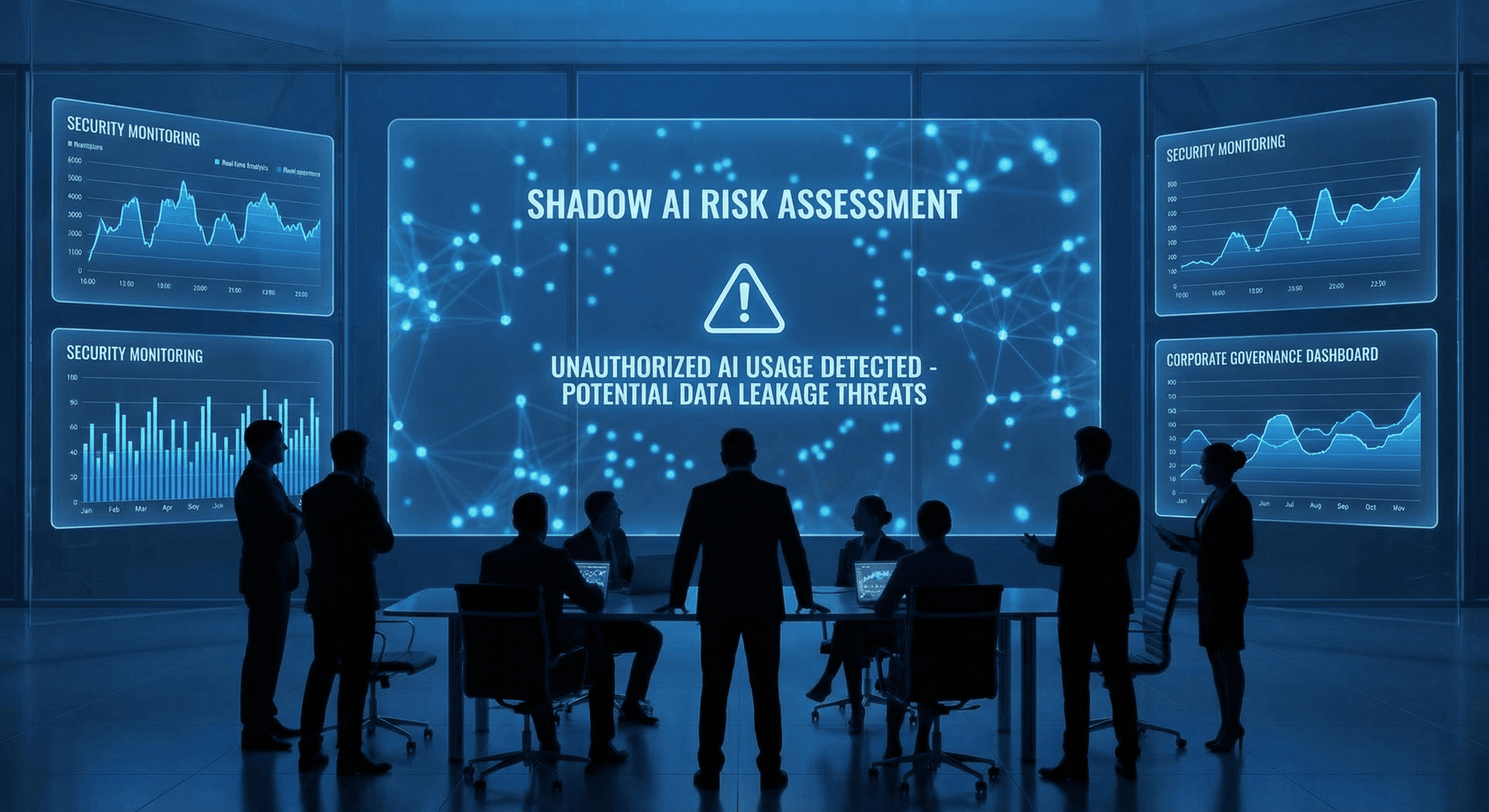
On April 21, VentureBeat's security desk reported that adversaries have hijacked AI security tooling at more than 90 organizations, and that the next wave of this tradecraft will use that compromise to push write commands directly to firewalls. Read that second clause slowly. The AI defender — the tool sold to detect, investigate, and respond to threats — becomes the adversary's easiest route to persistent access. The blast radius is not a leaked log or a missed alert. It is a firewall rule change signed by the defender's own identity.
This post names the pattern. We are calling it AI Defender Compromise — the distinct threat class where the adversary does not bypass the AI security tool, they weaponize it. It is different from prompt injection in one specific way that matters: prompt injection exfiltrates; defender compromise writes. To firewall rules, to SIEM correlation logic, to response playbooks, to endpoint isolation commands. The scope of damage from a compromised AI defender is qualitatively larger than from a compromised data-handling agent, because defenders are, by design, given the tools to change the environment they watch.
By Q3 2026, we expect vendor system cards for AI security products to include a “defender compromise” disclosure section. By Q4, we expect procurement RFPs to require it. This is the architectural argument. If you are a Fort Wayne business, a Northeast Indiana mid-market IT team, or an MSP sitting on the buying end of an AI security tool, the three questions at the bottom of this post are the ones you should be able to answer this month.
Key Takeaways
- Adversaries have compromised AI security tooling at 90+ organizations, according to VentureBeat's April 21 reporting — and the next wave will use that compromise to write firewall rules directly.
- We are naming the pattern: AI Defender Compromise. The adversary does not bypass the defender, they weaponize it — prompt injection exfiltrates, defender compromise writes.
- The threat class maps cleanly onto MITRE ATT&CK's existing Impair Defenses (T1562) and Adversary-in-the-Middle (T1557) tactics, but the agentic variant is the new wrinkle the framework has not yet fully absorbed.
- Stanford HAI's 2026 AI Index documented 362 AI incidents in the report window, a 55% year-over-year increase — the AI-incident trend line is already steep, and defender compromise is how it goes exponential.
- The three-question test for any AI security tool purchase is in the final section: does it have firewall or SIEM write access, who verifies its output, and what is the rollback plan if it is compromised.
What does “AI Defender Compromise” actually mean?
We are using the term AI Defender Compromise to describe a specific failure mode distinct from prompt injection, from supply chain attacks on model weights, and from model-jailbreak attacks against a user-facing chatbot. The defining property is that the AI security tool — the product your organization bought specifically to detect and respond to threats — becomes the adversary's mechanism for persistence, lateral movement, or environment modification.
Concretely, an AI defender is a system that ingests logs, alerts, endpoint telemetry, or network flows; applies model-driven analysis; and produces an action. That action might be a SIEM correlation update, an endpoint isolation command, a firewall rule change, a user-session revocation, or a ticket creation in an ITSM system. The common thread is write. The defender is trusted to act. An adversary who compromises the defender inherits that trust, and that inheritance is the whole story.
This is not quite the same as traditional “living-off-the-land” tradecraft, where an attacker uses pre-installed administrative tools (PowerShell, certutil, wmic) to avoid dropping new binaries. It is adjacent. The AI defender is a new generation of living-off-the-land target — a tool with broad environment write access, signed by a trusted identity, running on a schedule nobody audits in detail. The adversary does not need a new exploit. They need to turn the defender's ordinary output channel into an attacker-controlled one. When an LLM-driven decision loop is involved, that turn can happen via crafted inputs to the model — a log entry, a threat-intel feed, a document the agent summarizes — that bias the action downstream.
The VentureBeat reporting documents the 90+ organization figure as the current incidence, and frames the firewall-write-access vector as the next wave. Our read is that both the current incidence and the projected wave are on the conservative side of what is plausible, given the procurement velocity of AI security tooling through 2026 and the absence of a mature disclosure standard.

How is this different from prompt injection — and why is the blast radius larger?
The distinction is worth spelling out because it will shape how the category gets priced into procurement.
| Attribute | Prompt Injection (LLM01) | AI Defender Compromise |
|---|---|---|
| Primary action | Exfiltrate or mislead | Write to environment |
| Target | Data, credentials, conversation state | Firewall, SIEM, endpoint controls, response playbooks |
| Blast radius | Scoped to what the compromised agent can read | Scoped to what the compromised agent can do |
| Detection surface | Outbound anomalies, data-loss signals | Unauthorized rule changes, policy drift, response-workflow divergence |
| Mitigation primitive | Context isolation, output filtering, guardrails | Least-privilege write, human approval gates, rollback automation |
| Maturity of defense | OWASP LLM01 has been the top-ranked risk since the 2025 list released | Defense pattern is still forming; no industry-standard disclosure yet |
The prompt injection cluster is well-documented. OWASP's 2025 Top 10 for LLM Applications names it as LLM01 — the first-ranked risk — and also covers sensitive-information disclosure and excessive agency (LLM06). The agentic variant of excessive agency is the shared ancestor of defender compromise, but the defender case is sharper: the agency is not excessive by accident, it was designed in. The whole value proposition of an AI security product is that it acts without a human in the loop.
Our frontier AI models production failure audit gap analysis covered the reliability angle — agents fail roughly 1 in 3 structured-benchmark attempts, per Stanford HAI's 2026 AI Index. Defender compromise is the reliability story weaponized: a defender that gets the wrong answer 30% of the time is a performance issue; a defender that gets the attacker's answer 100% of the time is a category breach.
Where does AI Defender Compromise fit in MITRE ATT&CK?
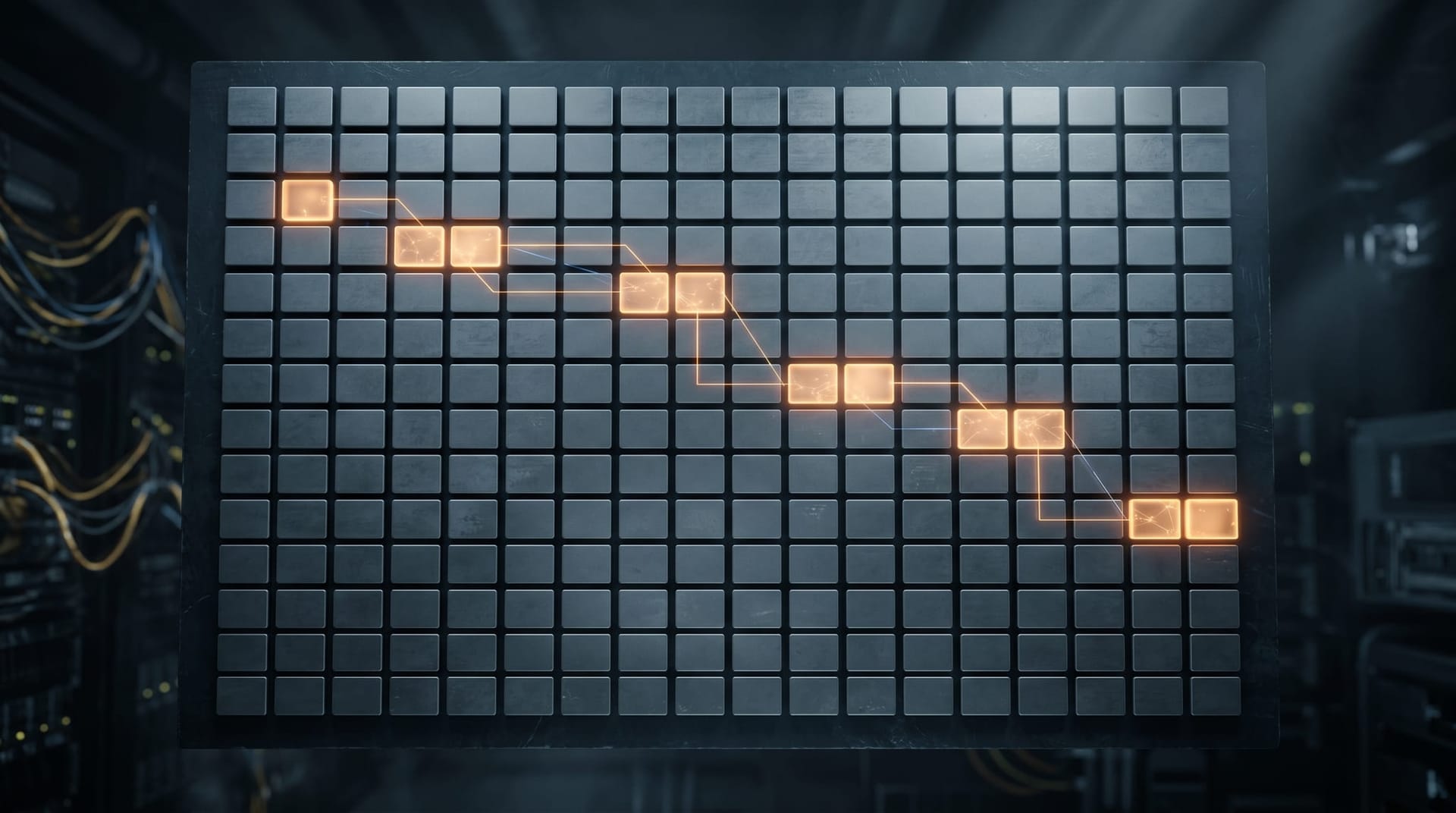
The MITRE ATT&CK framework already has a tactic category for this pattern. Impair Defenses (T1562) covers 13 sub-techniques focused on disabling security tools, logging systems, and firewalls across platforms. Adversary-in-the-Middle (T1557) covers four sub-techniques for intercepting communications — LLMNR/NBT-NS poisoning, ARP cache poisoning, DHCP spoofing, and Evil Twin. AI Defender Compromise lives across both, with a new wrinkle MITRE will eventually formalize: the adversary does not need to disable the defender or sit in the network path; they need to be the upstream source of an input the defender will act on.
The MITRE framework's 14 tactic categories — Reconnaissance, Resource Development, Initial Access, Execution, Persistence, Privilege Escalation, Defense Evasion, Credential Access, Discovery, Lateral Movement, Collection, Command and Control, Exfiltration, Impact — absorb this without restructuring. The agent-specific sub-technique is the new item. Expect it to show up in MITRE's evolution of the framework before end of year. In the meantime, a defender-class engagement that lands in your SIEM should be triaged against both T1562 and T1557 plus a note in the analyst's field journal that the actor's method was “agentic input poisoning.”
Our stage-three AI agent threats defense playbook walks through the post-deployment threat landscape in more depth. Defender compromise belongs in that landscape as stage 3.5 — the variant where the agent being compromised is the one you trusted to detect the compromise in the first place.

Three-lens analysis: vendor, buyer, governance
The vendor lens. AI security vendors need to publish system cards for their defender products that specifically describe the model's behavior under adversarial input, the write scope of the agent, and the documented mitigations. A vendor that sells an AI security tool without a defender-compromise disclosure section is, after April 21, a vendor that has not kept pace with the category. “We have guardrails” is not a system card. A system card names the failure modes and what specifically mitigates each. The vendors that absorb this first will win the procurement cycles of Q3 and Q4.
The buyer lens. Mid-market and SMB buyers need to add four questions to their next AI security procurement round: (1) does the tool have firewall or SIEM write access, and is that scoped per action or blanket? (2) what is the human approval gate for each write action, and is it opt-in or opt-out? (3) what is the detection mechanism for anomalous writes from the tool itself — i.e., who watches the watcher? (4) what is the rollback story if the tool is compromised — automatic, semi-automatic, or “call the vendor”? Answers to those four questions should be in writing, and they should be preserved in your procurement artifact store alongside the contract.
The governance lens. The NIST AI Risk Management Framework — GOVERN, MAP, MEASURE, MANAGE — provides the scaffold, but it does not yet enumerate defender-compromise controls as a distinct family. Expect an update. In the interim, the CISA body of work on cyber threats and advisories is the closest government-adjacent reference for the broader pattern of security-tool abuse. Internal policy should treat AI defender compromise as a subcategory of excessive agency (OWASP LLM06) with a distinct detection and response playbook — one your MSP or internal SOC should be able to produce in Q3.
The AI Employee governance playbook covers the policy-pattern layer for AI agents generally. For defender-class agents specifically, the governance overlay is tighter: approval gates are not optional; least-privilege write scoping is not optional; anomaly detection on the agent's own action stream is not optional.

Why the Secure AI Gateway pattern exists — and what it changes here
The architectural argument Cloud Radix has been making through 2026 is that AI tooling — defender or otherwise — should operate in a brokered, least-privilege posture where a compromise of the agent does not translate to direct write access to the environment. Our zero-trust AI agents and credential isolation post laid out the primitive. The Secure AI Gateway is the productized version of the pattern.
In a gateway-brokered deployment, an AI defender does not hold a raw firewall management credential. It requests a firewall rule change from the gateway. The gateway applies policy — who can request what, under what conditions, with what approval gate. The gateway applies logging — every request, every response, every approval. The gateway applies revocation — an identity can be killed in seconds, mid-operation. The defender is still a first-class actor in the architecture; it just is not a trusted actor with blanket environment write.
This is not a pitch. It is a pattern observation. An AI defender running with blanket write access was an architectural choice the market made when agents were a novelty. April 21 is the market being reminded that the choice has a cost. The gateway pattern is the cheapest way to keep the defender's upside while capping its downside.
For Fort Wayne and Northeast Indiana businesses buying AI security tooling from MSP partners or from vendors directly, the practical version is this: ask the vendor whether their tool will operate behind a gateway. If the answer is no — if the product requires blanket write access to your firewall, SIEM, or EDR — that is a material procurement disclosure, and it should be priced into your risk register. The shadow AI data risk post covers the broader shadow-AI exposure surface; defender compromise is the sharpest edge of that surface because it comes with a vendor contract and an active write path.

The three-question test every business owner should be able to answer this month
Before the next MSP review, the next AI security tool procurement, or the next board-level AI risk briefing, a Fort Wayne business owner — or any business owner — should be able to answer three questions about every AI security tool in the environment:
Does this tool have write access to the firewall, SIEM, EDR, or identity provider?
Blanket, scoped per action, or no write at all. The answer determines which threat model applies.
If the tool proposes a write action, who verifies it before it executes?
A human analyst, a rules engine, a second model, or nobody. “Nobody” is a legitimate answer for low-risk actions, but it needs to be a documented choice, not an accident.
If the tool is compromised, what is the rollback plan?
Automatic, semi-automatic through a runbook, or vendor-dependent. A rollback plan that requires a vendor phone call during an active compromise is not a rollback plan.
We wrote 42 ways AI breaks business prevention to lay out the broader failure catalog; defender compromise belongs near the top of any 2026 revision because the blast radius is so much larger than a typical agent misstep.
If you cannot answer these three questions cold — without calling the vendor, without emailing your MSP, without logging into a portal — you are carrying AI defender compromise as an unpriced risk. The fix is not to rip the tool out. The fix is to price the risk, document the answers, and demand the vendor close the gaps the answers expose.
A Northeast Indiana and Midwest framing
Defender compromise is a category-level risk, not a regional one, but the Northeast Indiana footprint has a specific shape that matters. Most Fort Wayne and Allen County mid-market businesses buy their security tooling through an MSP rather than direct from a vendor. That means the three-question test runs against the MSP contract, not the vendor. The MSP is the one who has to produce answers — what write access does the tool have in your environment, who verifies in your environment, what is the rollback plan specific to your environment. Generic vendor answers are not sufficient. The MSP is on the hook to translate vendor capability into your-environment specifics, and if they cannot, that is a procurement conversation you should be having this quarter.
The Midwest pattern — fewer security staff per dollar of IT spend than coastal averages, more reliance on MSPs, more AI security tooling purchased as a bundle with endpoint protection and backup — makes AI Defender Compromise a particularly acute risk here. The upside is that the fix is architectural and legible: gateway-brokered access, human-in-the-loop approvals for write actions, rollback automation. None of these require more headcount than the average Northeast Indiana IT team already has.
Ready to audit your AI security tooling against the defender-compromise model?
If your business — Fort Wayne, Northeast Indiana, or elsewhere in the Midwest — is running an AI security tool with firewall, SIEM, or EDR write access, the April 21 VentureBeat report is the news hook that justifies a procurement-level review this quarter. Contact Cloud Radix to run the three-question test against your current AI security stack, scope a Secure AI Gateway deployment that brokers write access through policy and approval gates, and draft the defender-compromise clause that should go into your next MSP or vendor contract renewal. We build this pattern for a living, and our authority writing on the category is meant to be a public artifact — cite it, extend it, challenge it.
Frequently Asked Questions
Q1.What is AI Defender Compromise?
AI Defender Compromise is the threat class where an adversary weaponizes an AI security tool — rather than bypassing it — to write changes to the environment the tool was supposed to protect. Prompt injection exfiltrates; defender compromise writes. The target outputs are firewall rules, SIEM correlation logic, endpoint isolation commands, or response playbook steps.
Q2.How is this different from a traditional living-off-the-land attack?
Traditional living-off-the-land tradecraft uses pre-installed administrative tools (PowerShell, certutil, wmic) to blend in. AI Defender Compromise uses a security product's legitimate agent identity — the one with standing write access to the firewall or SIEM — as the mechanism of action. The adversary does not need a new binary; they need to influence the agent's input so that its ordinary action stream serves the adversary.
Q3.How do I know if my current AI security tool has firewall write access?
Ask your MSP or the vendor directly, and require the answer in writing. Any AI-driven tool that advertises automated response, auto-containment, or policy-enforcement capabilities has some form of write access somewhere in the environment. The specifics — which device, which scope, which approval gate — should be documented in the tool's configuration and in your own runbook.
Q4.Does NIST AI RMF or OWASP address AI Defender Compromise specifically?
Not yet, as a named subcategory. NIST AI RMF's GOVERN, MAP, MEASURE, MANAGE functions cover it implicitly. OWASP's LLM06 (Excessive Agency) is the closest named risk in the 2025 Top 10 for LLM Applications. Expect both frameworks to evolve. In the interim, treat defender compromise as a disclosed subcategory of excessive agency in your own governance documentation.
Q5.What is the fastest concrete step a Fort Wayne business should take this month?
Run the three-question test against every AI security tool in the environment — firewall/SIEM write access, verifier, rollback plan. Write down the answers. For any tool where the answers reveal a gap, schedule a procurement conversation with the vendor or MSP this quarter.
Q6.Is a Secure AI Gateway a product or a pattern?
It is a pattern — broker every AI agent's access to environment writes through a layer that scopes per request, applies approval gates, logs per action, and can revoke in seconds. Cloud Radix offers a productized version, but the pattern can be implemented by any sufficiently engineered internal team. The point is that no AI agent — defender, analyst, or otherwise — should hold blanket write access to production without a gateway in front of it.
Q7.What should I expect to see in a mature AI security vendor's system card after April 21?
A defender-compromise disclosure section that names the write actions the agent can take, the documented adversarial inputs the model has been evaluated against, the built-in approval gates or guardrails, and the residual risk. Vendors that publish this first will set the procurement benchmark for the rest of the category.
Sources & Further Reading
- VentureBeat: venturebeat.com/security/adversaries-hijacked-ai-security-tools-at-90-organizations — Adversaries Hijacked AI Security Tools at 90+ Organizations — the Next Wave Has Write Access to the Firewall (2026-04-21)
- OWASP: genai.owasp.org/llm-top-10 — OWASP Top 10 for LLM Applications (2025)
- National Institute of Standards and Technology: nist.gov/itl/ai-risk-management-framework — NIST AI Risk Management Framework
- MITRE: attack.mitre.org — MITRE ATT&CK Framework
- Stanford HAI: hai.stanford.edu/ai-index/2026-ai-index-report — 2026 AI Index Report
- Cybersecurity and Infrastructure Security Agency: cisa.gov/topics/cyber-threats-and-advisories — CISA Cyber Threats and Advisories
Audit Your AI Security Tooling Against the Defender-Compromise Model
We will run the three-question test against your current AI security stack, scope a Secure AI Gateway deployment, and draft the defender-compromise clause for your next MSP or vendor contract renewal.