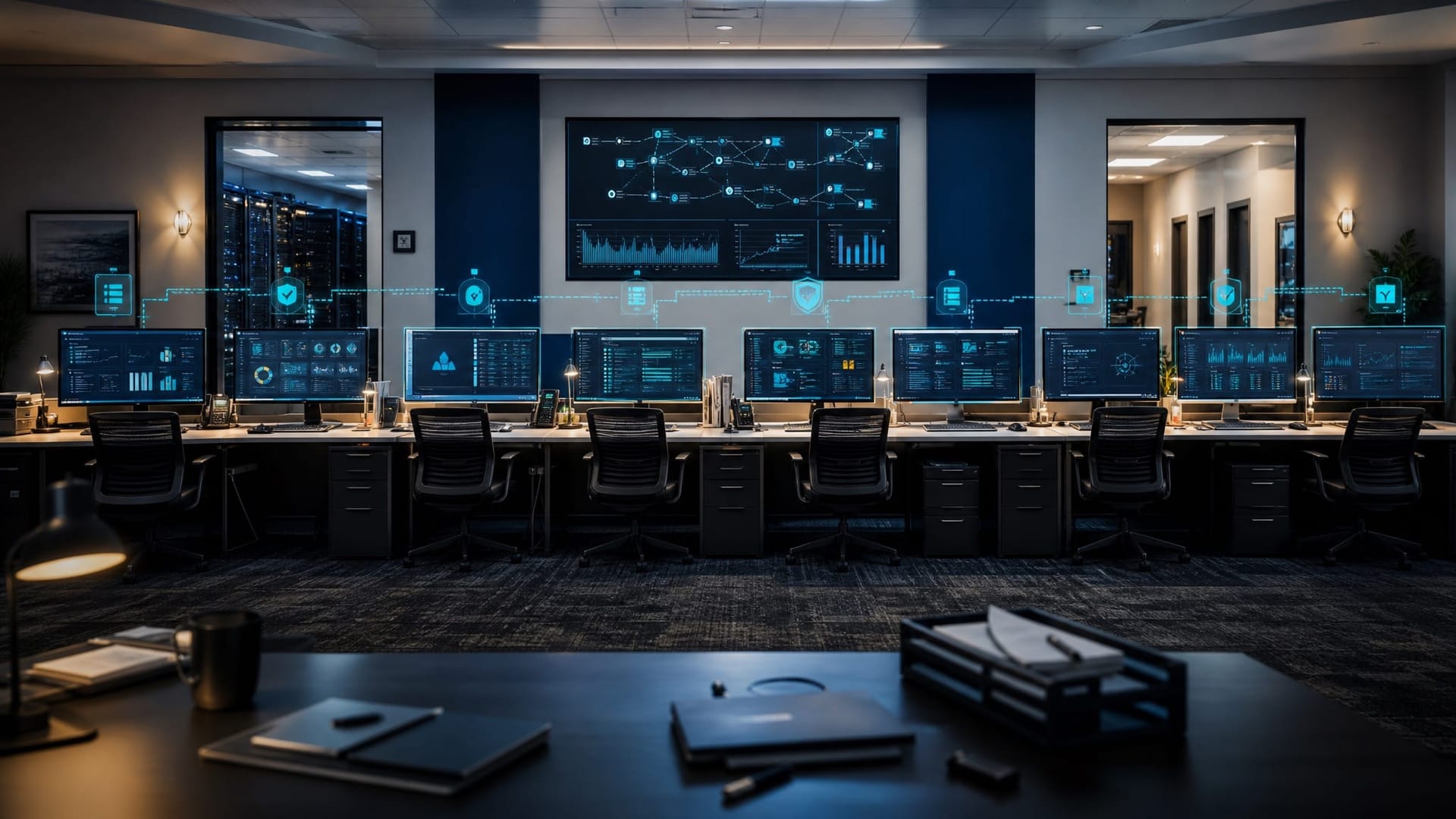
For two years, most of the AI security conversation has been about AI as a threat: shadow AI leaking data, over-permissioned agents, prompt injection, credentials landing where they shouldn't. That framing is still valid. But a marker just dropped that the same wave is now producing the other side of the ledger — AI as the defender.
On July 27, 2026, Microsoft launched its first purpose-built cybersecurity AI model, MAI-Cyber-1-Flash, alongside an agentic defense platform called MDASH, pitched explicitly at cutting enterprise security costs. According to VentureBeat, the platform is built to hand routine detection, triage, and remediation to autonomous agents, with a public preview opening the following week. Coverage from Dataconomy and SecurityBrief framed the same launch around the same promise: defend at machine speed, for less money.
The interesting question for a mid-market business isn't whether a hyperscaler can do this. It's whether the same category of tooling finally lets a lean IT team — the two-person shop, the outsourced MSP, the “IT person who also handles a dozen other things” — defend around the clock without standing up a 24/7 human security operations center. This post explains, in plain English, what agentic defense actually does, where it genuinely helps, where it still needs a human gate, and how to evaluate it as a buyer without getting sold a black box.
Key Takeaways
- Microsoft's July 2026 launch of MAI-Cyber-1-Flash and the MDASH platform signals the industry shifting from “AI as attack surface” to “AI as autonomous defender.”
- Agentic defense handles three jobs continuously: monitoring, autonomous triage of alerts, and guided or automatic response — the grunt work that overwhelms lean teams.
- It matters because SOCs are drowning: the average SOC processes over 10,000 alerts a day, false-positive rates often top 50%, roughly 40% of alerts go uninvestigated, and 70%+ of attacks land outside business hours.
- These systems are strongest on the routine ~90% of work and still need a human gate for novel threats and high-stakes decisions — vendor benchmarks are self-reported and deserve scrutiny.
- Agentic defense complements fundamentals like credential isolation and a Secure AI Gateway; it does not replace them, and it can become a new data-exfiltration path if you wire it in carelessly.
- Lean IT teams should evaluate it as a buyer: ask what data leaves your boundary, where the human gate sits, and how actions are logged and reversible.
From Threat to Defender: What Changed in AI Security in 2026?
The shift is easiest to see in what Microsoft actually shipped. Per Enterprise DNA, MAI-Cyber-1-Flash is a model trained specifically for security work — vulnerability identification, patch analysis, and remediation — designed to handle roughly 90% of routine security tasks, while MDASH is the multi-agent system that routes work across a fleet and escalates the hardest cases to a frontier model (OpenAI's GPT-5.4). Microsoft reports MDASH scoring about 96% on CyberGym, a benchmark that measures how well an AI reasons over large codebases to find real vulnerabilities.
Two caveats belong right next to those numbers. First, they're vendor-reported; a 96% benchmark score and a “cuts costs roughly in half” claim are Microsoft's own figures, and a buyer should treat them as marketing until independently validated. Second — and more important strategically — the fact that a defense platform also runs on frontier models is a reminder that the offense/defense arms race now runs on the same engine. We've written before about AI agents finding vulnerabilities humans missed; the same capability that lets a defender find your weak spots first is what an attacker points the other way.
What's genuinely new is the packaging. Autonomous detection-and-response used to require a mature security team to operate. Packaging it as an agentic platform aimed at cost reduction is a signal that vendors now see lean teams — not just Fortune 500 SOCs — as the market. That's the development worth tracking, independent of whether Microsoft's specific product is the one you buy.

What Does “Agentic Defense” Actually Do?
Strip away the acronyms and agentic defense does three concrete jobs, continuously and without waiting for a human to notice something first.
Continuous monitoring. It watches your environment around the clock — logs, endpoints, identity events, network signals — and correlates across them. This is the job humans are worst at, because it never stops and most of what it surfaces is noise.
Autonomous triage. This is the heart of it. Instead of dumping 10,000 raw alerts on a person, the system enriches, correlates, and prioritizes them — suppressing false positives and escalating only high-confidence signals. Proficio puts hard numbers on why that matters: the average enterprise SOC processes over 10,000 alerts per day, false-positive rates frequently exceed 50% (and can reach 80%), and roughly 40% of alerts receive no investigation at all. Meanwhile, more than 70% of attacks land outside traditional business hours — precisely when a lean team is offline.
Guided or automatic response. When something is a genuine threat, the system can act — isolating a host, revoking a token, blocking a connection — or hand a human a pre-investigated case with a recommended action. Proficio describes agentic SOC pipelines detecting in under 11 minutes and executing containment in under 4 minutes in supported scenarios. For a team that would otherwise find out the next morning, that gap is the whole game.
Some platforms structure these jobs as specialized agents. Microsoft's approach, as reported, coordinates “red team” agents that hunt for paths to compromise, “blue team” agents that investigate and triage, and “green team” agents that remediate and harden. You don't need to memorize the color scheme; the point is that the work is decomposed into narrow, auditable roles rather than one opaque oracle.
| Security job | Traditional lean-team reality | With agentic defense |
|---|---|---|
| Monitoring | Business hours; gaps overnight and weekends | Continuous, 24/7 correlation across signals |
| Alert triage | Thousands of alerts, most unread, high false positives | Auto-enriched and prioritized; noise suppressed |
| Response | Hours-to-next-morning, manual | Minutes; auto-containment or a pre-built case |
| Analyst focus | Chasing alerts | Freed for complex, novel, high-stakes work |
This is the SOC blind spot we've described before, closing from the tooling side. If you want the threat-side companion, our breakdown of the SOC blind spot shows exactly the kind of authorization gap these systems are built to watch.

Where It Helps vs. Where It Still Needs a Human Gate
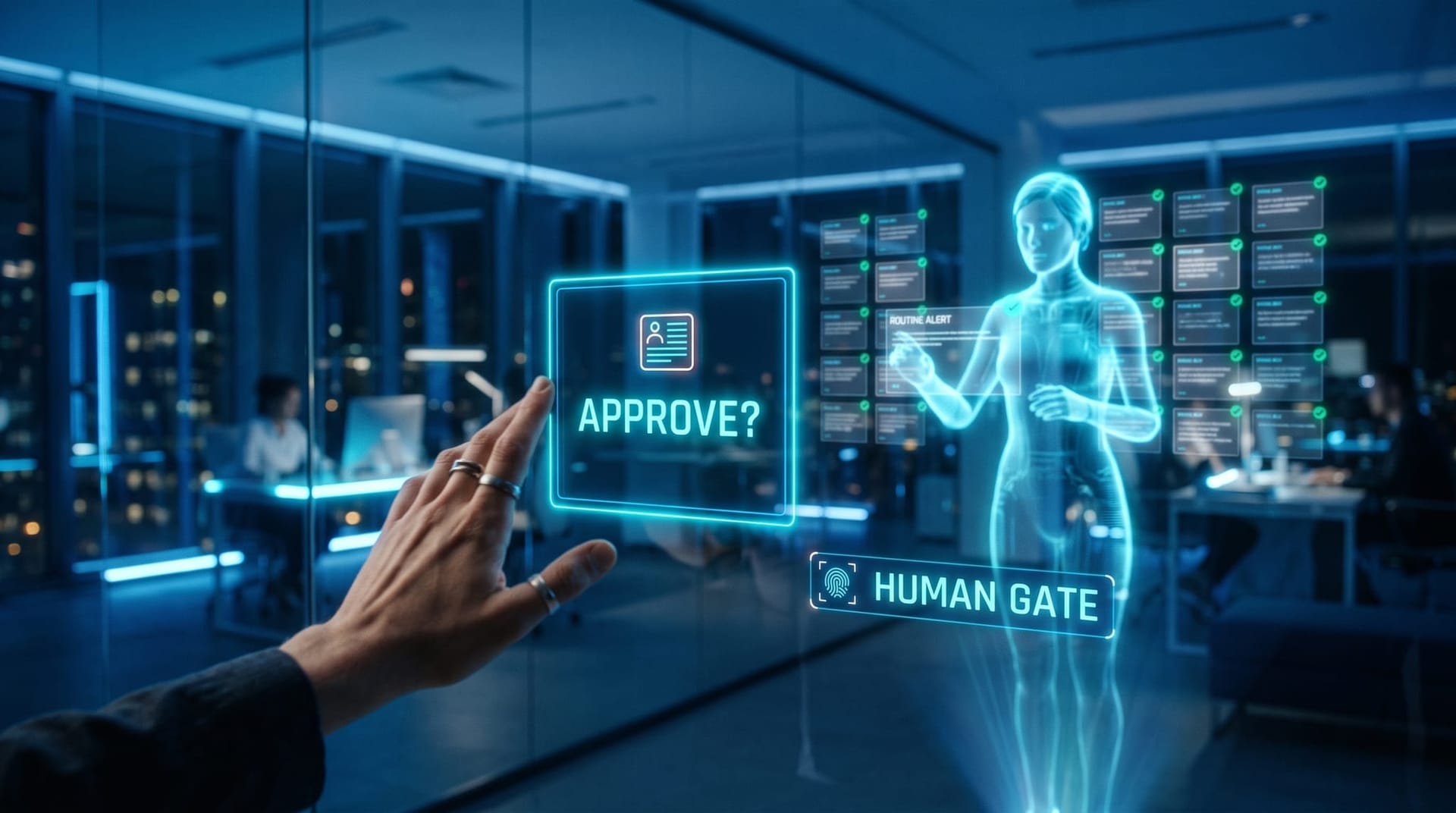
The honest version of the pitch is a division of labor, not a replacement. By the vendors' own framing, models like MAI-Cyber-1-Flash are built to carry the routine ~90% of security work; the remaining ~10% — novel threats, ambiguous signals, high-stakes decisions — still needs human judgment, which is why the hardest cases get escalated to a frontier model and to people. Enterprise DNA notes the same split: security engineers remain essential for the genuinely difficult problems.
Where it clearly helps a lean team:
- Coverage during the hours you can't staff. The overnight-and-weekend gap is where a lot of damage happens, and it's exactly what continuous autonomous monitoring closes.
- Alert fatigue. Cutting a 10,000-alert firehose down to a handful of high-confidence, pre-investigated cases is transformative for a person who currently ignores most of them out of necessity.
- Speed. Minutes-to-containment beats next-morning triage, and speed is most of what limits blast radius.
Where you still need a human — and honest limitations:
- Novel and targeted attacks. Anything that doesn't resemble known patterns is exactly where autonomous systems are weakest and a human is essential.
- High-stakes, irreversible actions. Auto-isolating a production server or revoking a key executive's access can cause its own outage. These deserve an approval gate, not full autonomy.
- The defender becomes a target. A system with broad permissions to act across your environment is a high-value target itself. This is the same lesson as why autonomous agents still need an audit matrix: an over-permissioned defender is a liability, and every autonomous action needs to be logged and reversible.
- New data paths. Feeding logs, identity data, and code to an external security model means sensitive data now leaves your boundary. Done carelessly, your defense tool becomes a new exfiltration path — which is why it belongs behind a gateway, not bolted on.
None of this is a reason to avoid agentic defense. It's the reason to buy it deliberately.
How Should a Lean IT Team Evaluate Agentic-Defense Tooling?
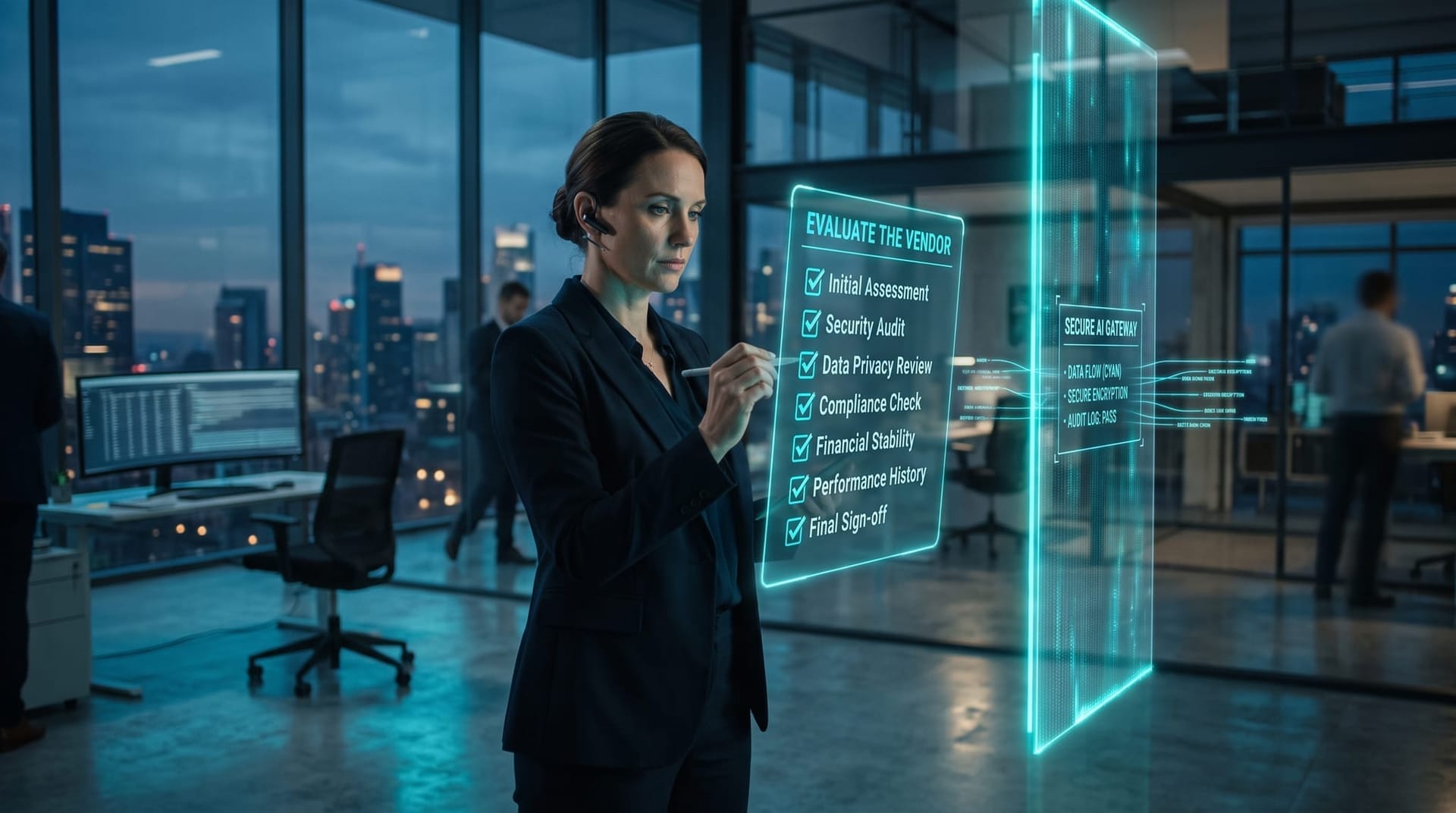
Treat this like any high-trust vendor decision: the demo will look magical, so your job is to ask the unglamorous questions. Here's the buyer's checklist we'd use.
What data leaves my boundary, and where does it go? Get specific. Which logs, which identity events, which code? Is it processed in a tenant isolated from other customers? Microsoft's platform, as reported, emphasizes tenant isolation, encryption, audit trails, and sandboxed execution with no internet access — that's the right category of control to demand from any vendor, not just this one.
Where exactly is the human gate? Map which actions the system takes automatically versus which require sign-off. If the answer is “it decides,” walk. You want to configure the autonomy level per action, the same way well-run AI deployments earn autonomy gradually rather than getting it by default.
Is every action logged and reversible? You should be able to answer “what did it do, why, and can I undo it?” after any incident. No audit trail, no deal.
Does it complement my fundamentals — or let me skip them? Agentic defense sits on top of the basics, not instead of them. It doesn't excuse weak identity hygiene or exposed secrets. Pair it with fundamentals like credential isolation for AI coding agents and defenses against prompt-injection risk in Microsoft Copilot — the attack surfaces that no amount of autonomous triage will fix for you.
Can I wire it in without opening a new hole? This is where a Secure AI Gateway earns its keep. Routing your security tooling's data and model calls through a governed gateway lets you enforce what leaves the boundary, which model is called, and what an agent is authorized to do — so autonomous defense doesn't quietly become autonomous data exposure.
On the cost question that headlines these launches: automation genuinely can pay off. StationX cites IBM data showing organizations with comprehensive AI and automation save about $2.22 million per breach and detect incidents roughly 55 days faster. But those are averages skewed by large enterprises; for a mid-market firm, the right frame is “does this close my overnight gap and my alert-fatigue gap for a price I can sustain,” not “will it save me millions.”
What This Means for Fort Wayne and Northeast Indiana Firms
Most businesses across Fort Wayne, Auburn, and Northeast Indiana will never staff a round-the-clock security team — and for a professional-services firm, a HIPAA-bound healthcare practice, a manufacturer, or a financial-services shop, that's exactly the exposure attackers count on. When more than 70% of attacks land outside business hours and the global cybersecurity workforce is short roughly 4.8 million people (with lack of budget now overtaking lack of talent as the top staffing constraint, per the industry figures above), the traditional answer — “hire more analysts” — isn't available to a lean regional team.
Agentic defense is a realistic alternative, if you evaluate it as a buyer rather than a believer. For a Northeast Indiana firm weighing it, the questions are concrete: What patient, client, or production data would leave your boundary, and does that create a new HIPAA or contractual exposure? Where's the human gate before an automated action takes a system offline during your shift? How is every action logged for your own audits and your customers' due diligence? At Cloud Radix, our approach is to wire autonomous monitoring behind a governed gateway so defense doesn't become a new exfiltration path — the machine handles the overnight noise, your boundary stays enforced, and a human still owns the high-stakes calls. That's the version of “defend at machine speed” a lean local team can actually adopt without trading one risk for another.
Get Autonomous Defense Without a New Blind Spot
The takeaway isn't “buy Microsoft's platform.” It's that autonomous cyber-defense has crossed from enterprise-only into something a lean IT team can realistically deploy — provided you keep the human gate for high-stakes calls, keep your fundamentals in place, and keep your data behind a boundary you control.
That's what Cloud Radix builds. Our AI security auditing helps you find the gaps agentic defense should watch, and our Secure AI Gateway is where autonomous monitoring runs without becoming a new data-exposure path. If your team can't staff a 24/7 SOC — and most Northeast Indiana businesses can't — let's map what machine-speed defense would look like inside your boundary, with the audit trail and human gates that keep it trustworthy.
Frequently Asked Questions
Q1.What is agentic cyber-defense?
Agentic cyber-defense uses autonomous AI agents to run security operations continuously — monitoring your environment, triaging alerts, and responding to threats — with little or no human prompting for routine work. It's the defensive counterpart to AI being used as an attack tool, and 2026 launches like Microsoft's MAI-Cyber-1-Flash and MDASH platform are pushing it toward mainstream, cost-focused adoption.
Q2.Can autonomous defense replace a human security team?
No. Current systems are designed to carry the routine majority of security work — vendors describe roughly 90% — while novel threats, ambiguous signals, and high-stakes or irreversible actions still need human judgment. The realistic model is a division of labor: the machine handles the 24/7 noise, and a human owns the hard calls and approves risky actions.
Q3.Is agentic defense realistic for a small or mid-market IT team?
Increasingly, yes — that's the shift these launches signal. The value for a lean team is coverage during hours they can't staff and relief from alert fatigue, since the average SOC faces over 10,000 alerts a day and most go uninvestigated. The key is to evaluate it as a buyer: confirm what data leaves your boundary, where the human gate sits, and that every action is logged and reversible.
Q4.Does an AI defense platform create new security risks?
It can. A system with broad permissions to act across your environment is itself a high-value target, and sending logs, identity data, or code to an external security model means sensitive data now leaves your boundary. That's why autonomous defense should run behind a Secure AI Gateway that enforces what data leaves, which model is called, and what actions an agent may take — otherwise the defense tool can become a new exfiltration path.
Q5.How is agentic defense different from the antivirus or firewall I already have?
Traditional tools mostly match known signatures and enforce static rules. Agentic defense adds continuous cross-signal correlation, autonomous triage that suppresses false positives, and the ability to investigate and respond in minutes rather than waiting for a human. It sits on top of your fundamentals — identity hygiene, credential isolation, patching — rather than replacing them.
Q6.What should I ask a vendor before buying agentic-defense tooling?
Five questions: What data leaves my boundary and is it tenant-isolated and encrypted? Which actions are automatic versus gated for human approval? Is every action logged and reversible? Does it complement my existing fundamentals rather than excuse skipping them? And can I route it through a gateway so it doesn't open a new data path? If a vendor can't answer these clearly, that's your answer.
Q7.Can a Fort Wayne business without a 24/7 security team actually use agentic defense?
Yes — that's much of the appeal for lean Northeast Indiana teams. Autonomous monitoring and triage cover the overnight and weekend hours a small IT staff can't, while a human still approves the high-stakes actions. Before buying, get specific about what client, patient, or production data would leave your boundary, whether that creates a HIPAA or contractual exposure, and whether the tool runs behind a gateway you control — so machine-speed defense doesn't become a new exfiltration path.
Sources & Further Reading
- VentureBeat: venturebeat.com/security/microsoft-launches-ai-cybersecurity-model — Microsoft launches AI cybersecurity model, agentic defense platform to cut enterprise security costs.
- Enterprise DNA: enterprisedna.co/resources/news/microsoft-mai-cyber-1-flash — Microsoft Ships MDASH, Its First AI Cybersecurity Platform.
- Proficio: proficio.com/agentic-ai-soc-alert-fatigue-2026 — Agentic AI SOC: Solving Talent Shortage & Alert Fatigue in 2026.
- StationX: app.stationx.net/articles/cybersecurity-spending-statistics — Cybersecurity Spending Statistics: Budgets & ROI.
- Dataconomy: dataconomy.com/2026/07/28/microsoft-unveils-its-first-in-house-cybersecurity-ai-model — Microsoft Unveils Its First In-house Cybersecurity AI Model.
- SecurityBrief Asia: securitybrief.asia/story/microsoft-launches-ai-cyber-model-to-cut-security-costs — Microsoft launches AI cyber model to cut security costs.
Machine-Speed Defense, Inside a Boundary You Control
Most Northeast Indiana teams can't staff a 24/7 SOC. Let's map what autonomous defense would look like inside your boundary — with the audit trail and human gates that keep it trustworthy.