A mid-market buyer signs a 36-month enterprise AI Employee contract today, and the architecture diagram in the appendix has a small rectangle labeled “vector store” and an arrow pointing into the agent's runtime that says “retrieval.” That diagram is a 2024 diagram. The buyer is signing a 2026 contract that locks them into a 2024 picture of how the agent learns the knowledge it needs. The contract is going to outlive the picture by at least one architecture generation, and the buyer has no leverage written into the contract to swap retrieval patterns when the picture changes. That is the silent bet most mid-market firms are about to lose.
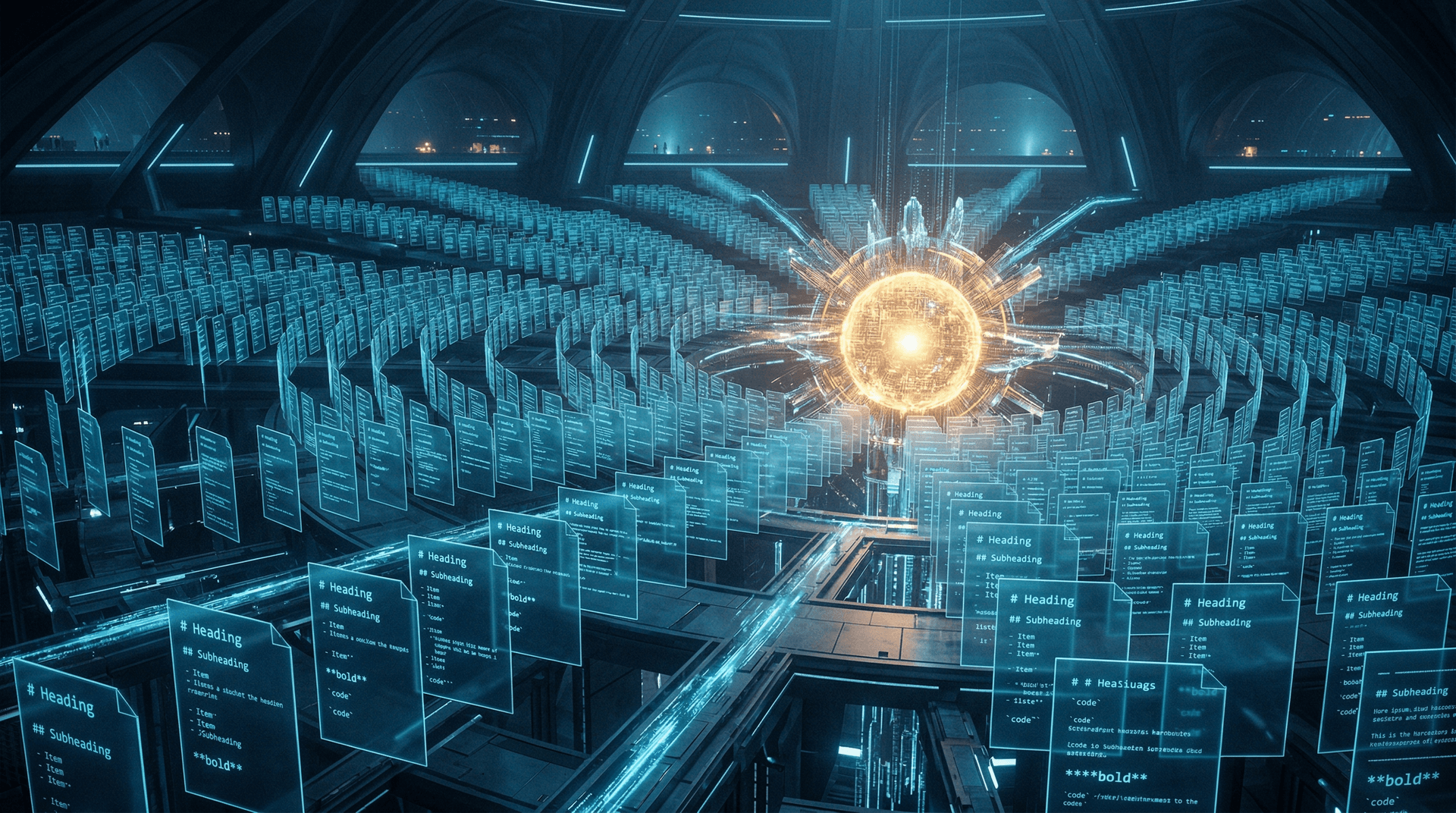
According to VentureBeat's 2026-05-04 piece on the end of the RAG era, the architectural conversation has named the next shift out loud: runtime retrieval — the workaround the field invented in 2023 and 2024 because models could not be cheaply re-trained and fine-tuned on customer-specific knowledge — is collapsing into a compilation-stage knowledge layer. Instead of retrieving the knowledge at query time, the knowledge is compiled into the agent's call graph ahead of time. The hot-path latency goes away. The retrieval-failure surface goes away. The stale-embedding tax goes away. What replaces them is a build-stage discipline that bakes the knowledge into the agent itself.
This piece prosecutes four claims and one buyer-decision pattern for the mid-market AI Employee buyer whose vendor roadmap is the question that actually matters for the next 36 months. The claims are that RAG was a workaround driven by two specific constraints that are now loosening, that the compilation-stage knowledge layer collapses three failure modes at once, that the mid-market consequence is contractual lock-in to the older pattern, and that the Cloud Radix Secure AI Gateway plus supervisor architecture is retrieval-pattern-agnostic by design. The pattern is a five-question Buyer Architecture-Timing Test any IT director can run against a vendor roadmap conversation in 45 minutes.
Key Takeaways
- RAG was the practical answer to two 2023–2024 constraints: models could not be cheaply fine-tuned weekly, and enterprises did not want to retrain. Both constraints are loosening fast in 2026, and the workaround is now collapsing into a compilation-stage knowledge layer.
- The compilation-stage knowledge layer compiles knowledge into the agent's call graph ahead of time. Three runtime failure modes — stale embeddings, retrieval miss, and multi-hop latency — collapse together because the knowledge is no longer retrieved at query time.
- The mid-market consequence is contractual: most enterprise AI Employee contracts now in market still bake RAG in as the only retrieval pattern, and the buyer has no leverage to swap when the architecture moves.
- The Cloud Radix architecture answer is a supervisor tier plus Secure AI Gateway that is retrieval-pattern-agnostic by design — the same governance and policy substrate covers a RAG-based worker today and a compilation-stage-knowledge worker tomorrow.
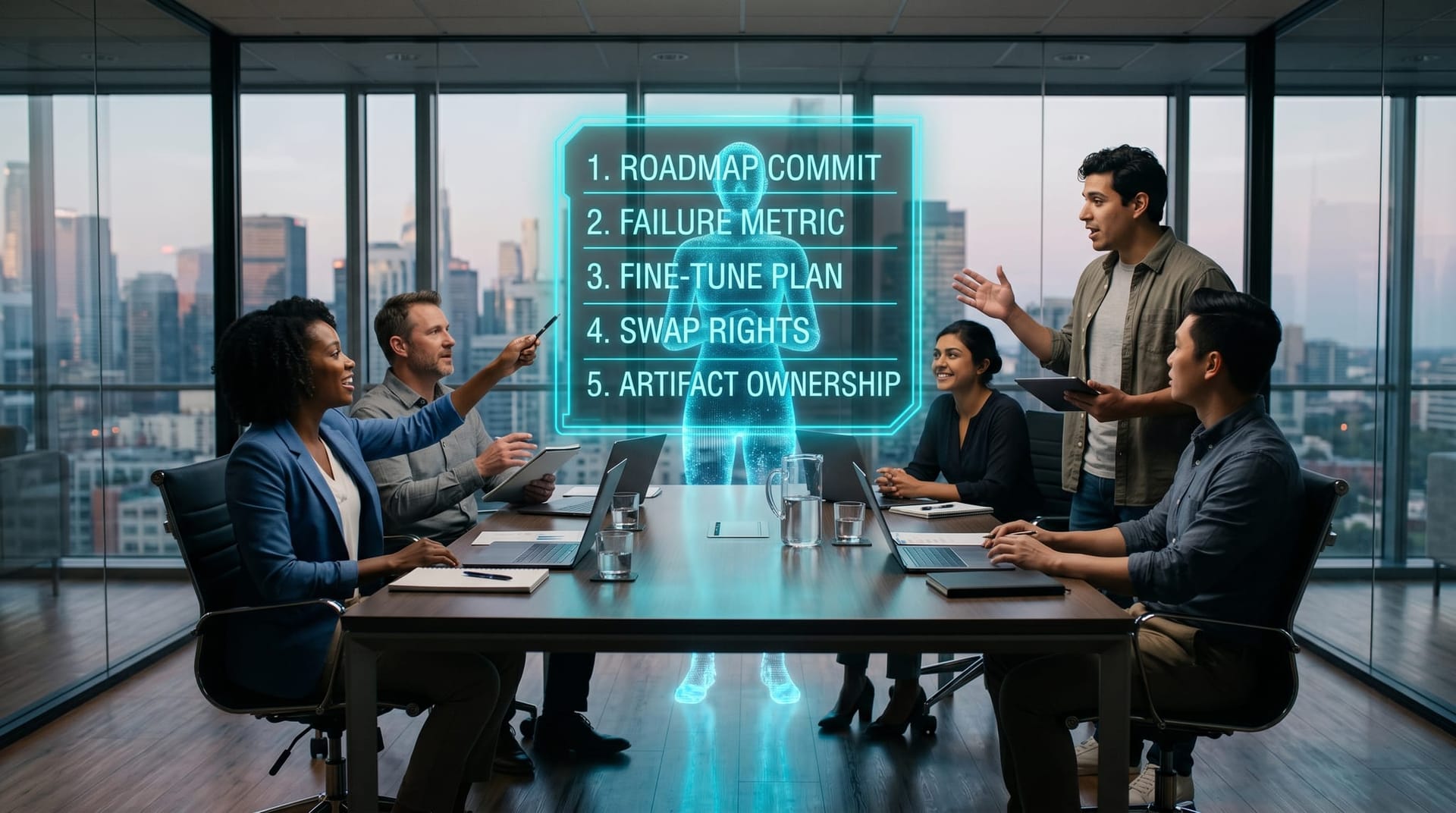
- The 5-question Buyer Architecture-Timing Test surfaces the vendor's roadmap commitment, retrieval-failure transparency, fine-tuning posture, contractual swap rights, and knowledge-artifact ownership — five questions a mid-market buyer should ask before signing a multi-year contract.
Why was RAG the dominant pattern in 2024 and why is it ending in 2026?
Retrieval-augmented generation became the dominant pattern for enterprise agent knowledge in 2023 and 2024 because it solved a real problem cheaply. Foundation models could not be re-trained on customer-specific knowledge at the speed customers needed. Fine-tuning was expensive, brittle, and required specialized ML staff most enterprises did not have. The workaround was elegant: keep the foundation model frozen, store customer knowledge in a vector database, retrieve the relevant chunks at query time, and stuff them into the model's context window. The pattern shipped. It worked well enough to fund a generation of products.
The two constraints that drove the workaround are loosening in 2026. The cost and speed of fine-tuning open-weight and frontier models has dropped to the point where a weekly fine-tune on customer-specific knowledge is operationally feasible for mid-market buyers, not just hyperscalers. The Stanford HAI 2026 AI Index Report documents the multi-quarter compression of fine-tuning cost and the rise of open-weight families that are competitive with closed frontier models on a wide range of task benchmarks. Customer reluctance to retrain has also softened as the operational pattern matured, and as vendor offerings now bundle the fine-tune cadence into the platform rather than asking the customer to staff an ML team.
When the constraints driving a workaround disappear, the workaround stops being the natural choice. The field is now naming the successor pattern explicitly. The compilation-stage knowledge layer compiles the customer-specific knowledge into the agent's call graph during a build step rather than retrieving it during inference. The build step can be a fine-tune, a knowledge-graph projection into model weights, a continuation-pretraining pass on customer-specific corpora, or a hybrid that compiles structured knowledge into the agent and reserves runtime retrieval only for truly long-tail and novel queries. The shared property across these implementations is that the bulk of the knowledge is no longer fetched at query time. It is part of the agent.
This is the third leg of a broader architecture-compression arc Cloud Radix has been tracking. World models is the foundation-model architectural shift. The AI scaffolding layer is collapsing is the orchestration-layer consolidation. The compilation-stage knowledge layer is the retrieval-pattern collapse. The three shifts are happening in parallel and they have one shared consequence: the mid-market architecture diagram is going to be substantially different in 2027 than it is today, and the contracts being signed in 2026 are going to govern the transition.
What does the compilation-stage knowledge layer collapse fix?
Three failure modes that mid-market AI Employee programs spend operational budget on every quarter collapse together when the knowledge is compiled into the agent.
The first is the stale-embedding tax. Vector embeddings drift. Source documents change. The embeddings indexed in the vector store at build time stop matching the embeddings the model would produce at query time after a model update. The remediation is re-indexing — a periodic operational cost the customer pays in compute, engineering attention, and short windows of retrieval degradation. When the knowledge is compiled into the agent at build time, the stale-embedding problem does not exist as a runtime concern. It exists as a build-stage concern that the build cadence already handles, the same way a software build pipeline handles dependency updates.
The second is retrieval miss. The single most common silent failure of a RAG agent is that the right document existed in the knowledge base and the retrieval step did not find it. Sometimes the embedding was off. Sometimes the chunking was wrong. Sometimes the reranker mis-ordered. Sometimes the query phrasing did not match the indexed phrasing. The user sees a confidently wrong answer and the operator sees no obvious failure signal because the retrieval pipeline returned something, just not the right something. The OWASP Top 10 for LLM Applications catalogs related retrieval-pipeline weaknesses under excessive agency and insecure output handling, where the agent's confident response to a wrong retrieval result becomes the downstream business problem. The Karpathy LLM knowledge base architecture beyond RAG piece described the architectural critique of this exact failure mode a year ago. When the knowledge is part of the agent's parameters and call graph, the retrieval miss as a discrete failure mode goes away because there is no discrete retrieval step to miss.
The third is multi-hop latency. Complex queries against a RAG system frequently require multiple retrieval rounds — a first retrieval, a synthesis step, a follow-up retrieval against the synthesis, and so on. Each round is a network call, a vector search, a rerank, and a context-window cost. For an interactive AI Employee — a customer-service agent, a phone agent, a sales rep co-pilot — the cumulative latency erodes the experience and the workflow's economic case at the same time. Compiled knowledge eliminates the multi-hop pattern for the queries it covers, leaving runtime retrieval for the long-tail cases that genuinely benefit from it. The latency budget gets returned to the user.
Mid-market operators reading this list will recognize all three. They are the recurring failure modes their AI Employee program manages around every quarter. The compilation-stage knowledge layer does not promise zero failures; it changes the category of failure from a runtime mystery to a build-stage discipline.

Why is this a 36-month contract problem and not a research problem?
Most mid-market AI Employee contracts in market today are written against a 2024 architecture assumption. The vendor's data flow diagram shows runtime retrieval. The pricing model assumes per-query vector lookups. The SLA assumes the vendor controls the retrieval pipeline. The vendor's roadmap may or may not commit to a compilation-stage path, and the contract typically does not require the vendor to disclose that roadmap. The buyer signs the contract and inherits the vendor's architectural timing decision as a sunk cost.
The cost of being on the wrong side of an architecture transition is not theoretical. It is the cost of running the older pattern's operational overhead — the re-indexing, the retrieval-failure triage, the latency budget consumed by multi-hop queries — for the remaining term of the contract while the competition runs the newer pattern at lower cost and higher quality. It is the cost of not being able to swap retrieval patterns when the architecture shifts, because the vendor's product design assumed only the older pattern and the contract did not preserve the buyer's right to renegotiate when the architecture moved.
The Gartner 2026 strategic technology trends commentary on agentic AI explicitly names architecture-timing risk as a 2026 procurement consideration. The NIST AI Risk Management Framework frames the same exposure under its Map and Measure functions — buyers need to identify how the architectural pattern of an AI system affects downstream risk, then measure that risk against alternative patterns before committing. Mid-market buyers without a structural framework for evaluating that risk default to the vendor's framing, which is invariably the framing that locks in the vendor's existing architecture. The buyer's leverage is highest before the contract is signed, and the leverage is exercised by asking questions the vendor's standard sales conversation is not designed to surface.
The Cloud Radix architectural answer is to build the buyer's program on a retrieval-pattern-agnostic substrate. The Cloud Radix Secure AI Gateway and the supervisor tier — covered in the manager-agent supervisor layer — do not depend on which retrieval pattern the worker agent uses. The same authorization decision, the same audit log, the same supervision evaluation works whether the worker retrieves at runtime or operates on compiled knowledge. This is the kind of management-system discipline that ISO/IEC 42001 describes for AI systems — a governance substrate that survives architectural change rather than depending on a specific implementation. The buyer's program does not have to bet on the architecture timing. The vendor of the underlying worker can change retrieval patterns and the buyer's governance, policy, and supervision substrate keeps working.

The 5-Question Buyer Architecture-Timing Test
The test is designed to be asked in a single 45-minute vendor conversation with the IT director and an engineering lead from the buyer side. The five questions are direct, are not phrased to be friendly, and are not the questions the vendor's standard demo is built to answer. That is the point.
Question 1: Does your roadmap commit to a compilation-stage knowledge path, or is runtime retrieval your permanent answer?
The vendor will answer one of three ways. They will commit to a compilation-stage path with a timeline; they will hedge with “we are exploring”; or they will say runtime retrieval is the right answer for the long term. The first answer is the strongest signal of architectural maturity. The third answer is honest and acceptable if the vendor's downstream commitments — contract terms, swap rights, knowledge-artifact ownership — back it up. The second answer is a flag. “Exploring” with no timeline usually means the vendor has not staffed the work.
Question 2: Can you produce a per-workflow retrieval-failure-rate metric today?
Vendors that cannot tell the buyer how often the retrieval step returns the wrong chunk or no chunk are operating an opaque pipeline. The metric is the most directly diagnostic number a buyer can ask for. Vendors that have the metric usually have it because they tuned the pipeline against it. Vendors that do not have it usually do not have it because they have not built the observability to measure it. Both signals are useful. The first is reassuring; the second is a procurement risk.
Question 3: What is your plan when open-weight fine-tuning on a 70B-parameter model is cheap enough for a weekly cadence on customer-specific knowledge?
This is the architecture-shift question phrased operationally. The vendor's answer reveals whether they have an internal view on the compilation-stage transition or whether they are betting on retrieval as the permanent center of gravity. The right answer is not necessarily that the vendor has the plan today. The right answer is that the vendor has thought about it, has an opinion, and has a position on how the customer's program adapts.
Question 4: Does the contract let me swap retrieval architectures without re-signing?
This is the contractual lock-in question. The buyer wants language that preserves the right to renegotiate scope, pricing, and SLA when the underlying retrieval architecture changes — whether the change is driven by the vendor, by the buyer's operational needs, or by a broader market shift. Vendors that resist this clause are telling the buyer that the lock-in is the business model.
Question 5: Do I own the knowledge artifact, or do you?
In a runtime-retrieval pattern, the knowledge artifact is the vector store. In a compilation-stage pattern, the knowledge artifact is the fine-tuned model, the knowledge-graph projection, or the continuation-pretraining checkpoint. Either way, the buyer should own the artifact. Ownership is what makes the program portable when the vendor's roadmap diverges from the buyer's. Vendors that retain ownership of the knowledge artifact are renting the buyer their own data back, which is the long-tail contractual position the buyer should not accept on a 36-month term.
What does this mean for the Northeast Indiana mid-market buyer?
The local angle is mostly contractual rather than technical. Mid-market firms in the Auburn, Fort Wayne, and Allen, DeKalb, Whitley, and Noble county corridor sign AI Employee contracts with the same multi-year terms and the same architectural assumptions as larger firms, but with fewer internal resources to renegotiate when the architecture shifts. The result is a structural exposure: the regional firm signs the longest-term contract, has the least leverage written in, and is the most affected when the underlying architecture moves on the vendor's timeline rather than the customer's.
The mitigation is to run the Buyer Architecture-Timing Test before signing and to architect the firm's governance and policy substrate to be retrieval-pattern-agnostic regardless of which worker vendor wins the contract. Northeast Indiana firms that have already adopted the Cloud Radix Secure AI Gateway and the supervisor tier do not need to bet on the architecture timing. The supervisory and authorization substrate covers whatever retrieval pattern the worker happens to be running. The firm's program is portable across the architecture shift without a re-platforming.
The local angle also matters for regional managed-service partners and consulting relationships. MSPs that advise mid-market clients on AI procurement should be the parties asking the five questions on the customer's behalf in the procurement conversation. The questions are not adversarial to vendors that have done the architectural work. They are filters that surface which vendors actually have. A regional MSP that institutionalizes the Architecture-Timing Test in its standard procurement support becomes the buyer's structural protection against signing a 2026 contract against a 2024 architecture.

Cloud Radix's architecture-timing audit
The Cloud Radix architecture-timing audit pairs a mid-market buyer with a Cloud Radix architect to run the 5-question Buyer Architecture-Timing Test against the buyer's shortlist of AI Employee vendors, evaluate the contractual exposures against the retrieval-pattern-agnostic Secure AI Gateway substrate, and produce a written procurement-defense report the buyer can carry into the vendor negotiation. Firms that want this as a one-time engagement should look at Cloud Radix AI Consulting. Firms that want the audit as part of a broader managed AI Employee program should look at Cloud Radix AI Employee Solutions. Mid-market buyers in Northeast Indiana with an active vendor shortlist should run the audit before the next signature.

Frequently Asked Questions
Q1.Is RAG dead?
No. RAG is still the right pattern for the long tail of queries that compiled knowledge does not cover — genuinely novel queries, fast-moving operational data, and reference material that changes faster than a build cadence. The compilation-stage knowledge layer is the new default for the bulk of an agent's knowledge work, not a wholesale replacement of runtime retrieval. The architectural conversation is about which knowledge belongs where, not retrieval is gone.
Q2.What is the compilation-stage knowledge layer in concrete terms?
It is a build-time process that bakes customer-specific knowledge into the agent's parameters and call graph before the agent goes into production. Implementations include weekly or daily fine-tunes on customer-specific corpora, knowledge-graph projections into model weights, continuation-pretraining passes on domain-specific data, and hybrid pipelines that compile structured knowledge into the agent and reserve runtime retrieval for long-tail queries.
Q3.Can a Fort Wayne or Northeast Indiana MSP run the Architecture-Timing Test for a mid-market client?
Yes. The 5-question test is designed to be MSP-deliverable in a single 45-minute vendor conversation. Regional managed-service partners serving Auburn, Fort Wayne, and the Allen, DeKalb, Whitley, and Noble county corridor can institutionalize the test as part of standard procurement support. Cloud Radix supports MSPs that want to add the Architecture-Timing audit as a line item, including the question script, the contractual-clause checklist, and the retrieval-pattern-agnostic Secure AI Gateway substrate the customer's program sits on regardless of which worker vendor wins.
Q4.What is the operational cost of running compiled-knowledge AI Employees?
Compiled-knowledge agents trade runtime cost for build-time cost. The build cadence — weekly or daily fine-tunes, continuation-pretraining passes — is a recurring compute expense that runs offline. The runtime cost drops because retrieval and multi-hop work shrinks. In our experience the net cost reduction on mid-market workflows is meaningful, but the exact ratio depends on the build cadence, the corpus size, and the model substrate. The architecture-timing audit produces firm-specific numbers.
Q5.Should we delay our AI Employee program waiting for the architecture to settle?
No. Delaying the program by a year to wait for the architectural picture to settle costs more than the cost of being on the older pattern for a year. The mitigation is not to delay; it is to architect the program on a retrieval-pattern-agnostic substrate so the program can adopt the new pattern when it stabilizes without re-platforming. That is the role of the Cloud Radix Secure AI Gateway and supervisor tier in the architecture.
Q6.What is the single most important question to ask a vendor?
Question 4 — does the contract let me swap retrieval architectures without re-signing. The technical questions surface the vendor's architectural maturity. The contractual question protects the buyer regardless of the vendor's answer. A vendor that has the technical maturity but resists the swap clause is telling the buyer that lock-in is the business model, which is the most important signal in the conversation.
Q7.How does this fit with the agent control plane discussion?
The agent control plane is the runtime layer that decides what is allowed at the moment of action. The compilation-stage knowledge layer is the build-time layer that decides what the agent knows. The two layers are orthogonal and a mature 2026 mid-market architecture has both. The control plane stays the buyer's regardless of which worker the buyer adopts. The knowledge layer is what the buyer is actually signing for in the worker contract — and the test in this post is how the buyer evaluates it.
Sources & Further Reading
- VentureBeat: venturebeat.com/data/the-rag-era-is-ending-for-agentic-ai — The RAG era is ending for agentic AI; a new compilation-stage knowledge layer is what comes next (2026-05-04).
- NIST: nist.gov/itl/ai-risk-management-framework — AI Risk Management Framework; Map and Measure functions for architectural risk evaluation (2023-01-26).
- Stanford HAI: hai.stanford.edu/ai-index/2026-ai-index-report — 2026 AI Index Report documenting fine-tuning cost compression and open-weight family convergence (2026-04-01).
- ISO: iso.org/standard/81230.html — ISO/IEC 42001 Artificial Intelligence Management System (2023-12-18).
- OWASP GenAI Security Project: genai.owasp.org/llm-top-10 — OWASP Top 10 for LLM Applications 2025; excessive agency and insecure output handling (2025-11-01).
- Gartner: gartner.com/en/articles/top-strategic-technology-trends — Top Strategic Technology Trends 2026; agentic AI architecture-timing risk as a 2026 procurement consideration (2026-01-15).
Run the Architecture-Timing Audit Before You Sign
A Cloud Radix architect runs the 5-Question Buyer Architecture-Timing Test against your AI Employee vendor shortlist, scores the contractual exposures, and hands you a written procurement-defense report you can carry into the next negotiation. Retrieval-pattern-agnostic by design.