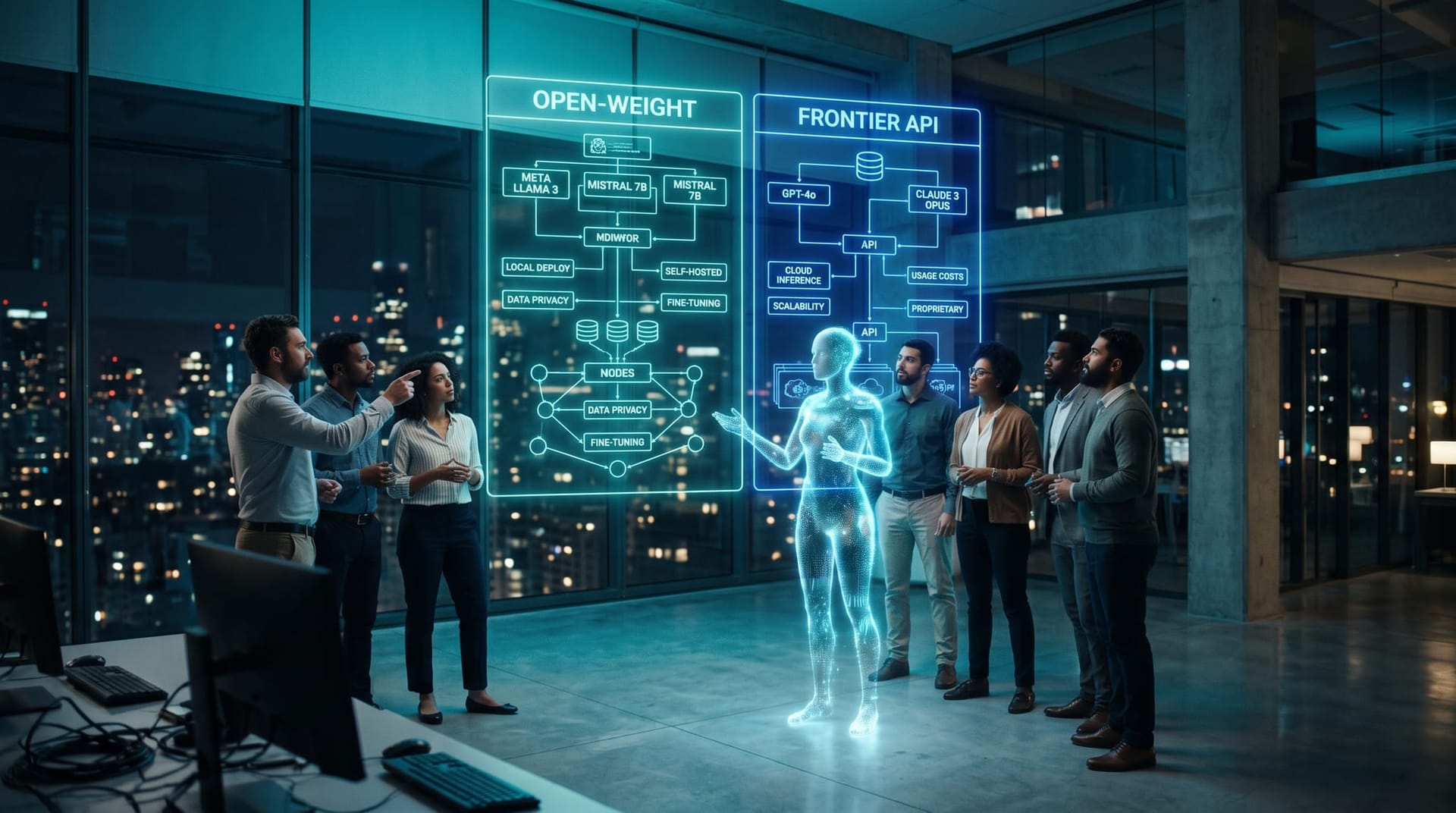
There is one fact about open-weight AI models that reframes the entire open-vs-closed debate, and most buyers skip right past it: you can't un-ship one. Once a set of model weights is downloaded, copied, and mirrored across the internet, there is no recall button, no kill switch, no patch you can push to the copies already sitting on other people's hard drives. A closed model is a service you rent and the vendor can revoke. An open model is an object you release into the world permanently.
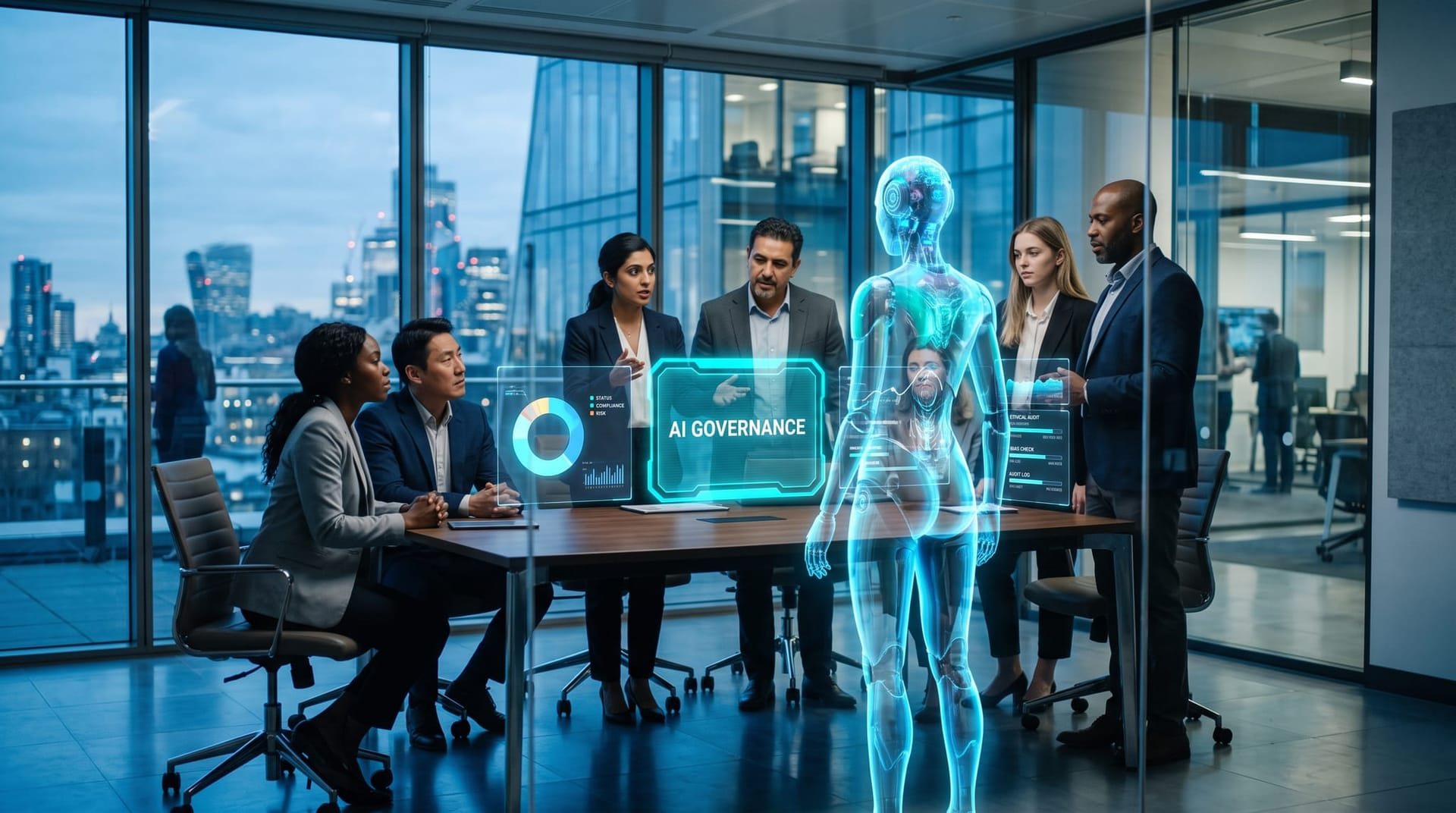
That single property — irreversibility — is what turns the choice between open and closed from a line item on a procurement spreadsheet into a governance decision your leadership actually has to own. A thoughtful MIT Technology Review explainer laid out both sides of the ledger this month, and the honest answer is that open models carry real, documented benefits and real, documented risks. The useful question for a business is not “which side wins the philosophical argument” — it's “where does the control live once I've picked a model?”
Our take at Cloud Radix: the control was never in the model to begin with. It lives in the layer around it.
Key Takeaways
- Open weights are irreversible. A released open model can't be recalled, and safeguards baked into it can be stripped off by anyone who downloads it.
- The capability gap is closing, and open models are cheaper. The top of the Artificial Analysis leaderboard is all closed models, but open alternatives trail by only months — and typically cost less to run.
- “Safe” is not a durable property of an open model. Benchmark testing shows current alignment-stage defenses largely fail under sustained tampering, and refusal training can be retrained away.
- Misuse is no longer hypothetical. Anthropic's 2026 threat reporting documents real hacking operations carried out with AI assistance, including agents that autonomously rebuilt their own malware.
- This is a governance call, not a procurement one. Whichever model you choose, misuse risk is contained at the gateway — credential isolation, logging, and policy enforcement — not inside the model file.
Why Is Releasing an Open Model a One-Way Door?
The defining difference between open and closed models is not quality or cost. It's revocability.

When your AI Employees run on a closed model served through an API, the provider sits between the model and the misuse. Anthropic, for example, screens incoming queries, applies usage policies, and can shut down an account that keeps trying to evade its filters. If a safety problem turns up after launch, the vendor can change the model, tighten a classifier, or cut off a bad actor — and every customer inherits the fix instantly. That is the quiet value of a closed model: it stays under continuous central control.
A downloaded open model has none of that. There is no query screening unless you build it yourself, no centralized monitoring to flag misbehavior, and — the part that matters most — no way to revoke access to copies already in the wild. As the MIT piece puts it, refusal training is intrinsic to the model, but researchers have repeatedly shown it can be removed by retraining. Once the weights are out, “we found a problem” does not translate into “we fixed it everywhere.”
This is exactly why the open-vs-closed question deserves a governance owner rather than a purchasing manager. The upside of open weights — no vendor lock-in, local data privacy, deconcentrated power — is genuine, and we've made the pro-adoption case ourselves in our companion piece on why smart companies build AI agents on open-weight models. This post is the counterweight that case needs: adoption is a decision you can revisit; release is a decision you can't.
How Good — and How Cheap — Are Open Models Now?
The reason this debate is urgent in 2026 is that open models have gotten good enough to be a serious default, not a budget compromise.

On capability, the current Artificial Analysis leaderboard tells a two-sided story: the top eight models are all closed, yet the best open models trail by only a handful of months. For most business workloads — drafting, summarization, classification, routine research — “a few months behind the absolute frontier” is indistinguishable from “state of the art.” The gap that matters to a Fort Wayne operations manager effectively closed a while ago.
On cost, the economics now actively favor open. Mozilla's inaugural State of Open Source AI report documents that the price of GPT-4-class inference fell roughly 50-fold over three years — from about $20 to $0.40 per million tokens — a drop Mozilla attributes largely to open-weight releases pushing the whole market down. Even so, a Linux Foundation analysis cited in the report puts closed models at roughly six times the per-call cost of open ones at comparable performance. Mozilla's own framing is the one worth internalizing: the report argues that the agentic harness — the software layer between people and the model — matters more than the model itself.
Here is the table most procurement conversations actually need:
| Dimension | Open-weight model | Closed (API) model |
|---|---|---|
| Up-front capability | A few months behind the frontier | Currently tops the leaderboard |
| Per-token cost | Typically lower; you own the inference | Often several times higher per call |
| Data privacy | Can run entirely on your infrastructure | Data traverses the vendor |
| Revocability | None — release is permanent | Vendor can revoke, patch, or ban |
| Centralized monitoring | None unless you build it | Built in; vendor screens queries |
| Safeguard durability | Can be stripped by retraining | Maintained and updated by vendor |
Notice that the first three rows favor open and the last three favor closed. That split is the whole point: the decision is a genuine trade-off, and no amount of leaderboard-watching resolves it. What resolves it is deciding who owns the controls you don't get for free.
Can You Actually Keep an Open Model Safe After You Deploy It?
This is where optimism tends to outrun the evidence. The intuitive assumption is that a model shipped with safety training stays safe. The research says otherwise.
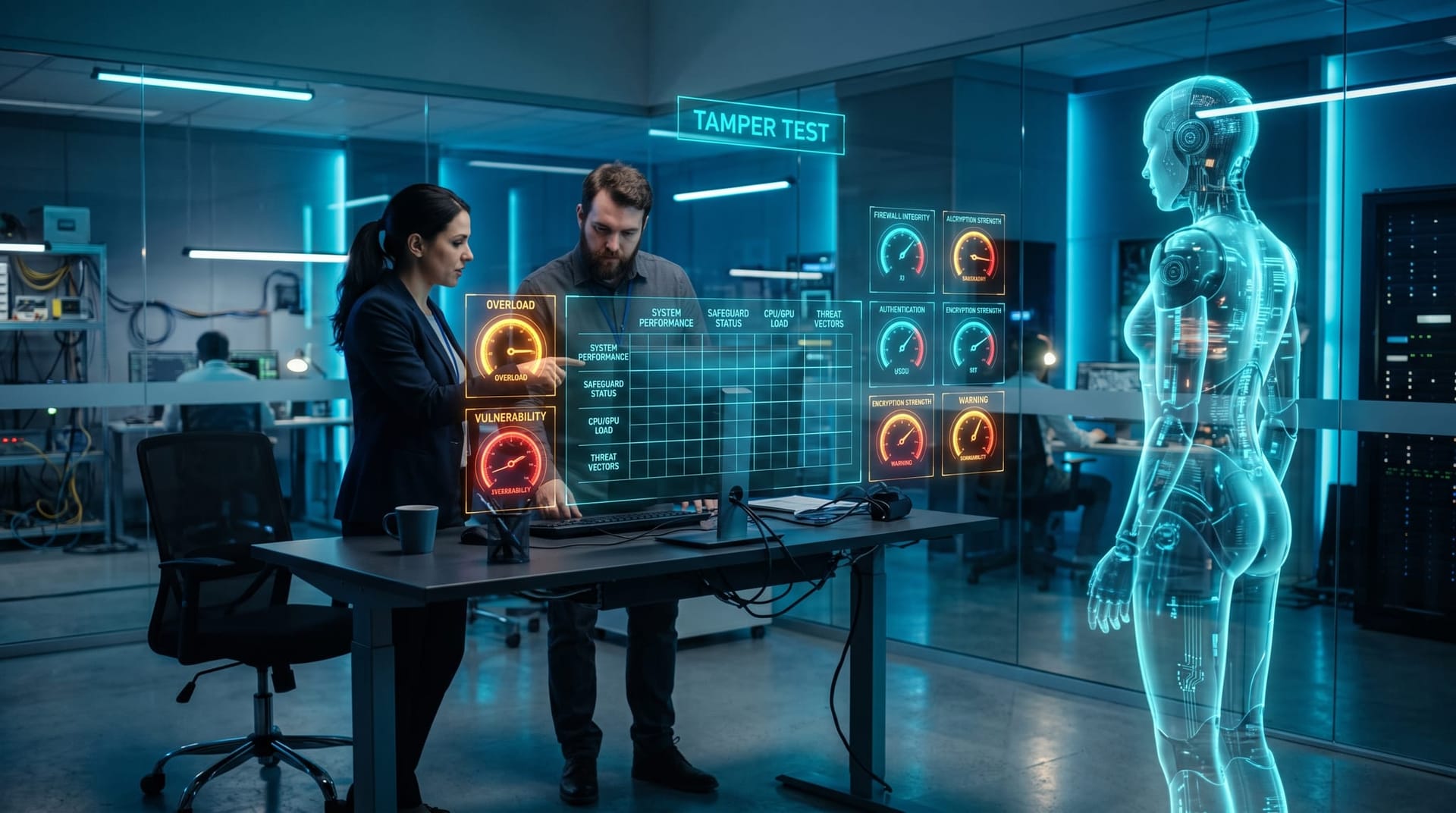
A benchmark study published on arXiv — TamperBench, from Saad Hossain and colleagues — stress-tested 21 open-weight models against nine distinct tampering threats. Its headline finding is sobering: current alignment-stage defenses “largely fail to withstand attack sweeps,” with jailbreak-tuning typically the most severe attack. In plain terms, the safety behaviors a lab trains into an open model can be degraded or removed by a determined party with modest resources. The paper's lead author is, to his credit, optimistic that tamper-resistance methods will improve as the research matures — but “will improve” is a future tense, and businesses deploy in the present.
The honest reading is not “open models are dangerous and closed models are safe.” It's that safety is not a durable, self-enforcing property of a model file. With a closed model, the vendor keeps re-earning that property on your behalf. With an open model, whatever safety you want after download is safety you have to maintain yourself — and the tamper-resistance tooling to make that easy doesn't fully exist yet.
This is the same reliability problem we've written about from the inside: an AI Employee's refusal is not a hard guarantee, which is why we argue that an AI Employee's “no” is just a guess and that real guardrails belong in the surrounding system. It also connects to model integrity more broadly — the question of whether the weights you're running are even the weights you think they are. If you're evaluating open models on that front, our open-weight model provenance checklist walks through the supply-chain side of the same risk.
What Does the Real Misuse Evidence Actually Show?
Abstract risk is easy to dismiss. Documented misuse is harder to wave away, and 2026 produced a lot of it.

Anthropic's September 2026 threat intelligence report details a series of operations in which its models were used to assist real-world attacks across cyber operations, surveillance, fraud, and influence campaigns. Its most extensive cyber case involved a state-linked actor whose AI agents, according to the report, autonomously modified and rebuilt the operation's malware whenever security products detected it — automation applied to the attacker's side of the table. We unpacked what that inversion means for defenders in our analysis of what Anthropic's misuse report means for businesses running AI Employees.
The reason this bears on the open-vs-closed debate is specific. Anthropic could detect and disrupt those operations because the activity ran through its platform — it saw the queries, attributed the behavior, and banned accounts. The MIT explainer notes that Anthropic has even argued a recently released open model posed a heightened cyberattack risk, precisely because an openly distributed model offers no such choke point. Closed-model misuse leaves a trail someone can act on. Open-model misuse, once the weights are downloaded, often doesn't.
None of this means open models are a net negative — the same decentralization that worries security teams is what gives smaller organizations independence from a handful of frontier vendors, and what protects data that can never leave the building. It means the risk is real enough that it has to be governed, not assumed away. Anthropic paired its threat reporting with a 2026 usage policy update that, among other things, pushes customers to treat AI credentials with the same seriousness as production secrets. That instinct — control the access, not just the model — is the right one, and it's portable to open models too.
Why Open-vs-Closed Is a Governance Decision, Not a Procurement One
Put the pieces together and the conventional framing collapses. “Open or closed?” sounds like a question about which model to buy. It's actually a question about which risks you're willing to own and where you'll put the controls that contain them.

If you choose closed, you're outsourcing a large share of safety, monitoring, and revocation to a vendor — and accepting lock-in, per-call cost, and data exposure in exchange. If you choose open, you're reclaiming cost, privacy, and independence — and accepting that safety, monitoring, and the impossibility of revocation are now yours. Neither choice is reckless. The reckless move is making either one and assuming the model itself will handle the parts it structurally cannot.
Here's the part that unifies both paths: the controls that actually contain misuse don't live inside the model file at all. They live in the layer between your AI Employees and everything they can touch. That's the thesis behind our Secure AI Gateway — a control plane that sits in front of whatever model you run, open or closed, and enforces the things a model can't enforce about itself:
- Credential isolation, so an AI Employee never holds the raw keys to your systems — the exact failure mode Anthropic flagged when attackers stole and reused API credentials.
- Logging and monitoring, so you get the trail an open model won't give you for free and can reconstruct what any agent did.
- Policy enforcement at the boundary, so “don't do that” is a rule the surrounding system imposes, not a hope that the model's training holds.
This is also why a resilient AI strategy rarely bets on a single model. The ability to route between models — and to swap one out without re-architecting your controls — is the same muscle that protects you during an outage, which we covered in our 2026 AI business continuity playbook. And because open weights are now a theft target in their own right — see our write-up on how ransomware has started hunting AI model weights — the gateway doubles as the place you enforce who can even load a model in the first place.
What This Means for Northeast Indiana Businesses
For most businesses in Fort Wayne, Auburn, and across Northeast Indiana, the open-vs-closed debate can feel like a coastal argument about AI policy. It isn't. The moment a local professional-services firm, manufacturer, or clinic deploys an AI Employee, it inherits exactly this decision — usually without realizing it, because the model was chosen by whatever vendor they signed with.
The practical guidance we give regional clients is straightforward. First, decide the question deliberately: an open model running on your own infrastructure can be the right call for a firm that needs client data to never leave the building, while a closed API can be right for a team that wants a vendor carrying the safety burden. Second — and this is the part that doesn't change either way — don't let the model be your security boundary. A DeKalb County business doesn't need to win the open-vs-closed philosophical debate. It needs its AI Employees sitting behind a gateway that isolates credentials, logs every action, and enforces policy regardless of which model is on the other side. That's the layer that lets a Northeast Indiana company adopt confidently without betting the firm on a model file it can never recall.
Ready to Govern the Layer That Actually Holds the Control?
The open-vs-closed decision will keep evolving as open models close the capability gap and tamper-resistance research matures. What won't change is where the real control lives: not in the weights, but in the gateway around them. Cloud Radix builds and operates that layer for businesses across Fort Wayne and Northeast Indiana — deploying AI Employees that run behind credential isolation, full logging, and enforced policy, on whichever model fits your risk tolerance. If you're weighing an open or closed model and want the controls to be a deliberate choice rather than an afterthought, take a look at our Secure AI Gateway and let's map it to your workflows.
Frequently Asked Questions
Q1.What does it mean that you “can't un-ship” an open AI model?
Once an open-weight model is released, its files are downloaded and copied across the internet permanently. Unlike a closed API model, there is no way to recall it, patch the existing copies, or revoke anyone's access. Any safety fix only applies to new copies — the versions already in circulation stay exactly as they were released.
Q2.Are open-weight models less safe than closed models?
Not inherently, but their safety is harder to maintain. Benchmark testing in the TamperBench study found that current alignment-stage defenses largely fail under sustained tampering, and refusal training can be retrained away by someone who downloads the model. A closed model's vendor keeps re-enforcing safety continuously; with an open model, that responsibility shifts to you.
Q3.Are open models good enough for business use in 2026?
For most business workloads, yes. The Artificial Analysis leaderboard shows the top models are closed, but open alternatives trail by only a handful of months — and Mozilla's research documents that open models typically cost less to run, with inference prices down roughly 50-fold over three years. For drafting, summarization, and routine automation, the capability gap is effectively a non-issue.
Q4.Should my business choose an open or a closed AI model?
It depends on which risks you want to own. Open models give you lower cost, data privacy, and independence but hand you the safety and monitoring burden with no revocation option. Closed models hand much of that burden to a vendor in exchange for lock-in, higher per-call cost, and data exposure. Treat it as a governance decision made by a risk owner, not a price comparison.
Q5.Where should the controls for AI misuse actually live?
In the layer between your AI Employees and your systems — not inside the model. A secure AI gateway isolates credentials so agents never hold raw keys, logs every action for accountability, and enforces policy at the boundary. Because those controls sit outside the model, they work the same whether you run an open or a closed model, which is what makes misuse containable in either case.
Q6.Has AI actually been used in real attacks, or is this theoretical?
It's documented. Anthropic's September 2026 threat intelligence report details real operations carried out with AI assistance, including a case where attacker agents autonomously rebuilt their own malware to evade detection. Anthropic was able to disrupt that activity largely because it ran through a monitored closed platform — the kind of choke point an openly distributed model doesn't provide.
Sources & Further Reading
- MIT Technology Review: technologyreview.com/2026/10/13/1146366 — Open models have real benefits. Do they outweigh the risks?
- Artificial Analysis: artificialanalysis.ai — Artificial Analysis LLM Leaderboard.
- Mozilla: blog.mozilla.org/en/mozilla/mozilla-state-of-open-source-ai-report — Mozilla's Inaugural “State of Open Source AI” Report.
- arXiv: arxiv.org/abs/2602.06911 — TamperBench: Systematically Stress-Testing LLM Safety Under Fine-Tuning and Tampering.
- Anthropic: anthropic.com/threat-intelligence-report-september-2026 — Detecting and countering misuse of AI: September 2026.
- Anthropic: anthropic.com/news/2026-usage-policy-update — 2026 Usage Policy update.
Make Open-vs-Closed a Deliberate Choice
We will map the open or closed decision to your actual workflows and show you how a Secure AI Gateway contains the risk either way — credential isolation, full logging, and enforced policy around whichever model fits your business.
Schedule a Free ConsultationNo contracts. No pressure. Just an honest conversation about governing your AI.