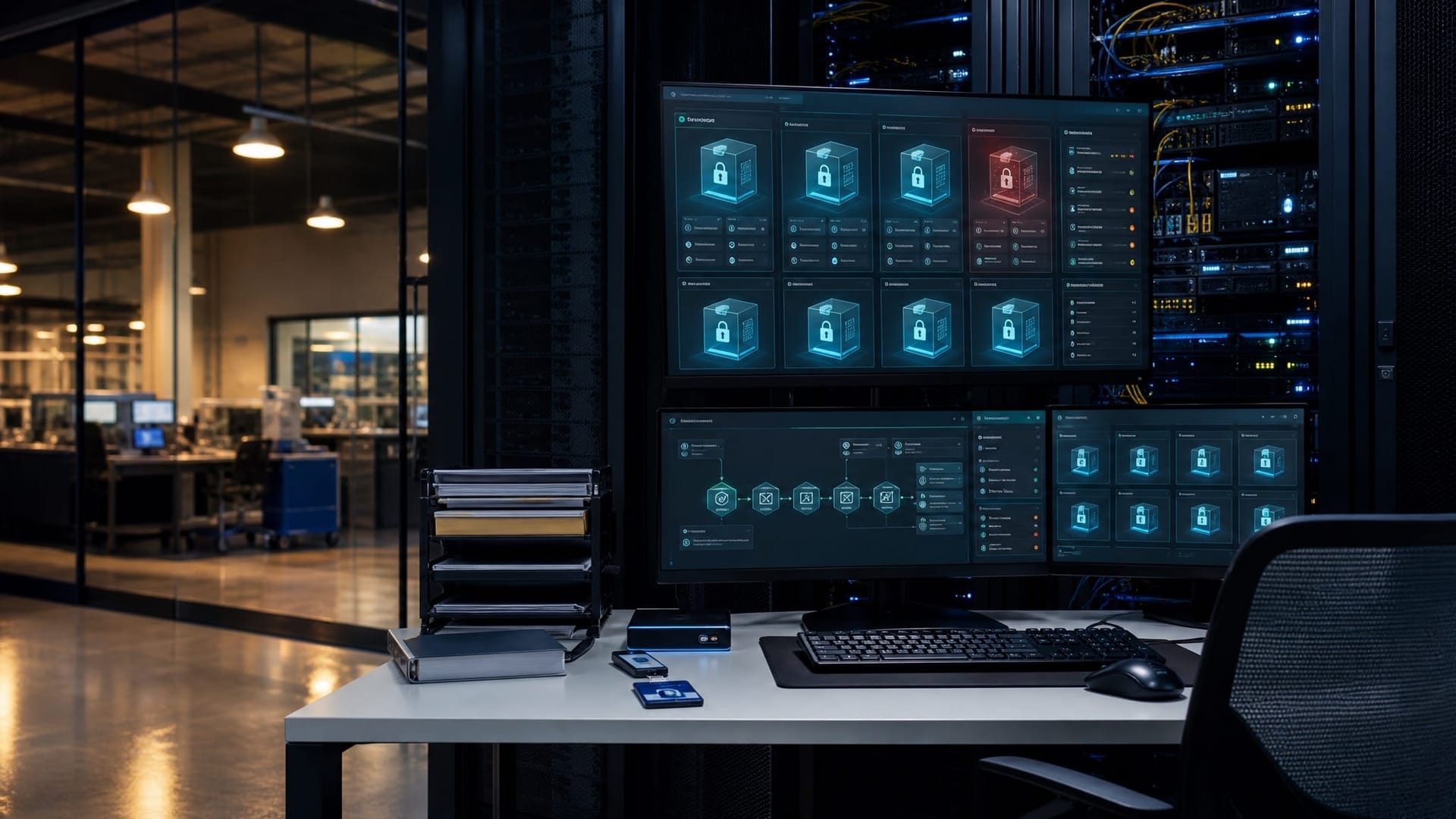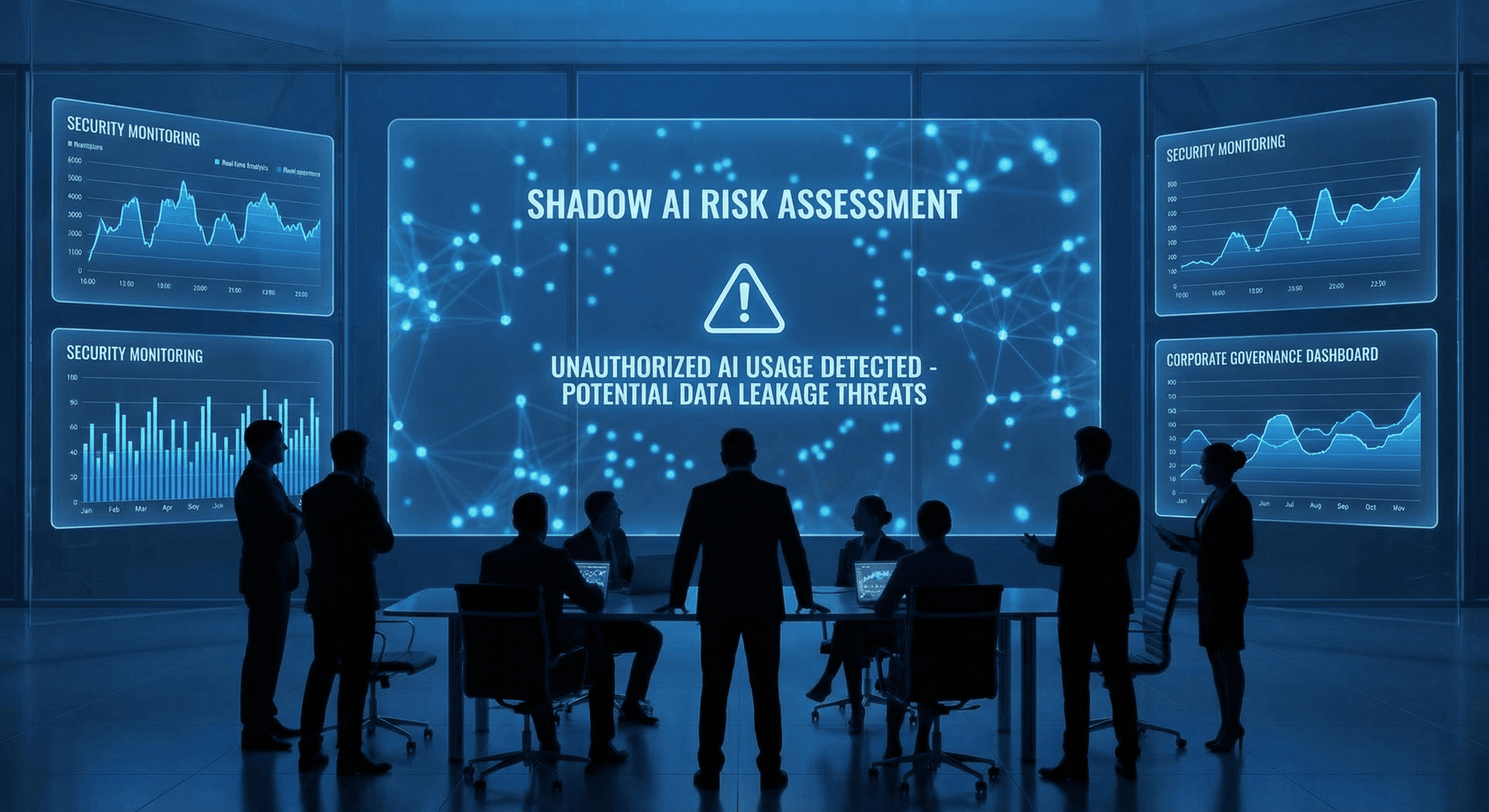
For most of the last two years, the debate about AI and security has been stuck on a single, slightly abstract question: is the model dangerous? Anthropic's newest threat report reframes the whole conversation. The danger isn't the model sitting behind an API — it's what happens when someone points an autonomous agent at a target and lets it run. On September 10, 2026, Anthropic published its most detailed threat intelligence report to date, documenting real-world attempts to misuse Claude from December 2025 through August 2026 — every one of which the company says it detected and disrupted.
The report is worth reading in full, but the durable takeaway for a business owner isn't “AI is scary.” It's a structural shift in how attacks are built and what attackers are actually after. The attack tooling is now agentic: operators increasingly set an objective and let a multi-agent framework handle reconnaissance, exploitation, and data theft. And the prize at the end of the operation has changed. Increasingly, the loot is the credential itself — the API key, the session token, the access to your AI. That matters directly to every mid-market business, because the moment you deploy your own AI employees, you inherit exactly that threat surface.
Key Takeaways
- Anthropic's September 2026 report covers activity from December 2025 to August 2026 across seven harm areas: cyber operations, influence operations, surveillance, scams and fraud, biological misuse, conventional weapons development, and illicit distillation.
- The report states that compromised API keys, session tokens, and devices have “increasingly become the sole objective of multiple criminal groups” — access to AI is now the target, not just the tool.
- Attacks now run on agent frameworks: one operator directs the objective while AI performs reconnaissance, exploitation, and exfiltration in parallel, with some breaches completed in hours.
- The defensive lesson is not “avoid AI” — it's to treat every AI employee's credentials and integrations as production secrets, behind least privilege, isolation, and monitoring.
- A secure AI gateway gives you a single choke point for policy, logging, and instant revocation across every agent you run.
- Governance and auditability turn autonomous actions from a blind spot into a traceable record — the difference between an incident you can scope and one you can't.
What Did Anthropic's September 2026 Report Actually Find?
Anthropic frames the report — released in full as a downloadable PDF — as a set of case studies drawn from operations its Threat Intelligence team identified and disrupted between December 2025 and August 2026. The activity spans seven harm areas — cyber operations, influence operations, surveillance, scams and fraud, biological misuse, conventional weapons development, and illicit model distillation — a breakdown corroborated in independent coverage by Unite.AI. The actors range from suspected state-sponsored groups to financially motivated criminals, commercial spyware vendors, and propaganda operations.
The specifics are sobering, and they're worth citing precisely because they're real numbers from a first-party disclosure rather than vendor marketing. A suspected Russian espionage actor tracked as GTG-20006 targeted 20-plus organizations and, per the report, exfiltrated more than 300,000 national identity records and over 500,000 company-registry entries. A Chinese exploit-research operation ran “agent swarms” against roughly 50 organizations and surfaced a dozen possible zero-day findings in a single month. On the influence side, one commercial operation stood up 70 fabricated news sites and produced 8,913 articles in 20 languages. On the fraud side, a single operation ran more than 4,700 AI personas that engaged over 25,000 people and sent 2.36 million messages in two weeks.
Even the “who built the model” fights show up here. Anthropic names seven China-based labs — Alibaba, DeepSeek, Moonshot, Xiaomi, Zhipu, SenseTime, and MiniMax — that it says ran fraudulent accounts to distill Claude's responses at scale; Alibaba's campaign alone allegedly involved more than 151 million exchanges over roughly three months. You don't need to track every group ID to get the point. The volume, the automation, and the breadth of who's now capable are the story. As CellCog's independent analysis put it, “a majority of the operations described in this report were enabled by AI via direct execution or orchestration.”

Why Is the API Key Now the Loot?
Here is the single line from the report that should change how you think about your own deployment. Anthropic writes that “access to AI in the form of compromised API keys, session tokens, and devices has increasingly become the sole objective of multiple criminal groups.” Read that again with your own business in mind. The attacker's goal is no longer only your customer data or your bank account. It is your access to AI — because a stolen key resells for money, provides free compute for the next attack, and launders attribution through a legitimate account.
The report's case studies make the pattern concrete. An actor tracked as GTG-50020 injected malicious instructions into an AI vendor's evaluation sandbox to pull production API keys, then — per the report — “attacked roughly thirty AI companies in about four days” using those stolen credentials. A ShinyHunters-linked operation scanned 1.8 million Android APKs looking for exposed secrets and, in one supply-chain breach, escalated from a single developer token to full administrative control in about three hours. Other actors ran fraudulent “reseller” services that silently proxied user traffic while quietly harvesting the account credentials behind it.
Every one of those pathways — secrets leaked in a repo or an app, prompt injection against a wrapper service, a look-alike reseller, an over-scoped token — is a pathway into an AI-using business, not just into an AI lab. This is precisely the argument we made about credential isolation for AI agents: an agent that holds a long-lived, broadly scoped key is a single point of catastrophic failure. When the key is the loot, the blast radius of one leaked secret is the whole operation. The defensive response isn't exotic. It's the discipline of never letting any one credential be worth that much.

What Changes When the Attack Tooling Is Agentic?
The report's second structural finding is about how the work gets done. Anthropic describes operators using what the security community has started calling “vibe hacking” — directing an AI toward a general objective (“use this credential,” “retrieve data from these targets”) and letting it evaluate the environment, write and run scripts, summarize results, and iterate until it succeeds. In several cases the humans stayed “in the loop” only by setting targets and reviewing what got stolen. The agent did the middle.
That collapses the economics that used to protect smaller businesses. Reconnaissance, exploit development, and data processing were once labor-intensive tasks that separated well-resourced state teams from lone operators. Anthropic's blunt conclusion is that “sophisticated attacks no longer require sophisticated attackers,” and that the diffusion of AI has “leveled the playing field.” One especially unsettling case describes a Russian-linked actor whose AI agents watched security products for detections of its own malware, then rebuilt that malware in a loop until it stopped being flagged. The report warns that AI “threatens to quickly and easily subvert defenders' ability to impose costs on adversaries via static detections alone.”
If that dynamic sounds familiar, it should. It's the same escalation curve we traced in our stage-three AI agent threat defense playbook — the threats that emerge after deployment, once an autonomous system is live in your environment. And it rhymes with what happens when AI security tools themselves get hijacked: the same autonomy that makes an agent useful makes a compromised agent dangerous. The honest trade-off is that agentic AI cuts both ways. It's why the answer to autonomous offense is increasingly autonomous cyber-defense for lean IT teams — you can't match machine-speed attacks with quarterly manual reviews alone.

How Should You Read This Report as a Defender of Your Own AI Employees?
Most coverage of a report like this treats it as spectator content — a scary story about nation-states. That's a mistake. The more useful posture is to read it as a checklist for the AI systems you run. Anthropic's own recommendation points the way: organizations should “treat AI keys and agent integrations with equivalent seriousness as production credentials,” buy AI access only through authorized channels, and deploy detection that watches for the behavioral signatures of AI-enabled attacks.
Here's how that translates into a concrete defender's posture for an AI employee deployment:
| Threat pattern from the report | What it means for your AI employees | The defensive control |
|---|---|---|
| Compromised API keys are the objective | A single leaked agent key is high-value loot | Credential isolation, short-lived scoped tokens, no shared secrets |
| Over-scoped access enables lateral movement | An agent with broad permissions is a broad breach | Least privilege per agent; scope every tool and API |
| Autonomous, machine-speed operations | Manual review can't keep pace | Anomaly/misuse detection on your own agents' behavior |
| Prompt injection against wrappers and sandboxes | Your agent's inputs are an attack surface | Input/output policy at a gateway, not inside the model |
| Attribution laundered through legitimate accounts | Compromise can hide as normal usage | Per-agent identity, logging, and instant revocation |
Notice what's not on that list: “stop using AI.” The controls are boring, proven, and entirely achievable for a mid-market business. The point of a secure AI gateway is to make four of those five rows enforceable in one place — it becomes the choke point where policy is applied, every request is logged, injection is filtered, and access can be revoked the instant something looks wrong. A gateway turns “we hope each app handles its own keys” into “no agent touches a model except through a controlled, observable door.”
It's worth drawing one clean distinction so the lanes don't blur. This report — and this checklist — is about securing the AI you deploy: your agents, your keys, your integrations. That's a different problem from how your AI vendor handles the data you send it, which we covered separately in our guide to AI data safeguards for regulated firms. Both matter. Don't let a strong vendor data policy lull you into ignoring your own deployment's blast radius.

What Does a Secure AI Employee Deployment Look Like in Practice?
The good news is that the security community already has mature frameworks for exactly this problem — they just weren't written with autonomous agents in mind until recently. The OWASP Top 10 for LLM Applications now ranks Excessive Agency (LLM06) as one of its most expanded entries, breaking it into three failure modes we see constantly: excessive functionality (the agent can reach tools beyond its task), excessive permissions (those tools run with more privilege than needed), and excessive autonomy (high-impact actions proceed without a human check). OWASP's remedies are unglamorous and correct: restrict permissions to exactly what each task requires, require human approval for consequential actions, and — critically — ensure “authorization happens in external systems rather than being delegated to the LLM.” You don't ask the model to police itself; you put the guardrail outside it.
The identity angle matters just as much. As machine identities come to outnumber human ones by roughly 80 to 1, each AI employee needs to be treated as a distinct non-human identity — with its own owner, its own credential type, a rotation schedule, and a bounded, documented scope. The principle underneath is plain zero trust: a valid credential isn't enough on its own; a request should also align with what that identity is supposed to be doing. That's why behavioral monitoring belongs next to least privilege rather than as an afterthought.
In practice, a well-governed AI employee deployment stitches these together: every agent authenticates as its own identity, holds only short-lived narrowly scoped credentials, runs its model calls through a gateway that logs and can instantly cut access, and emits an auditable trail of every autonomous action. None of that is speculative. It's the same operational hygiene we already apply to production databases and payment systems — extended, finally, to the AI workforce.

What Does This Mean for Northeast Indiana Businesses?
There's a temptation, reading a report full of state-sponsored espionage and international influence operations, to assume none of it touches a professional-services firm in Fort Wayne or a manufacturer in DeKalb County. That's the wrong lesson. The whole thesis of the report is that the capability has diffused — that “sophisticated attacks no longer require sophisticated attackers.” The credential-harvesting pipelines that scan millions of apps and repositories don't check whether your business is in Manhattan or Auburn; they scan for exposed keys everywhere.
For a mid-market business in Allen County or across Northeast Indiana, that's actually reassuring in one specific way: the defense doesn't require a nation-state budget either. Credential isolation, least privilege, a gateway, and monitoring are within reach of any lean team — and they matter most precisely for the small IT departments that can't staff a 24/7 security operations center. The businesses that will get hurt aren't the ones adopting AI employees; they're the ones deploying autonomous agents with shared, long-lived keys and no visibility into what those agents do all day.
Secure the AI Workforce You're Building
AI employees are the most productive teammates a small business can hire in 2026 — but like any employee with access to your systems, they need the right permissions, real supervision, and a clear record of what they do. Anthropic's report is a preview of the threat environment every AI-using business now operates in, and the defensive answer is architectural, not fearful. Cloud Radix builds AI employees on a secure AI gateway with credential isolation, least privilege, logging, and instant revocation designed in from the start. If you're deploying agents — or already have — let's pressure-test how they hold their keys and what happens the day one is compromised. Talk to us about a governed AI employee deployment built to survive the threat model the report describes.
Frequently Asked Questions
Q1.What is Anthropic's September 2026 threat intelligence report?
It's Anthropic's most detailed public report on attempted misuse of its Claude models, covering activity from December 2025 through August 2026. It documents real operations across seven harm areas — cyber, influence, surveillance, scams and fraud, biological misuse, conventional weapons, and illicit distillation — all of which Anthropic says it detected and disrupted. The findings are notable because they're a first-party disclosure with specific, verifiable case details rather than estimates.
Q2.Why does the report say API keys are now the target of attacks?
Anthropic found that access to AI itself — via compromised API keys, session tokens, and devices — has increasingly become the sole objective of multiple criminal groups. A stolen key has three values to an attacker: it can be resold, it provides free compute for further attacks, and it lets malicious activity hide inside a legitimate account. That makes any long-lived, broadly scoped credential a high-value single point of failure.
Q3.How does this affect a business that uses AI agents or AI employees?
The moment you deploy autonomous agents, you inherit the exact threat surface the report describes — your agents hold credentials and integrations that attackers want. The practical response is to treat every agent's keys with the same seriousness as production database credentials: isolate them, scope them tightly, rotate them, route them through a controlled gateway, and monitor agent behavior for anomalies.
Q4.What is a secure AI gateway and why does it help?
A secure AI gateway is a single controlled entry point that every AI agent's model calls pass through. It lets you apply access policy, filter malicious inputs like prompt injection, log every request for audit, and revoke access instantly if an agent is compromised. Concentrating those controls in one place is far more defensible than hoping each individual application handles its own keys and logging correctly.
Q5.Does this report mean businesses should avoid deploying AI?
No. The report's own recommendation is to secure AI access, not abandon it — treat AI keys and agent integrations as production credentials and add detection for AI-enabled attack patterns. The businesses at risk are those deploying agents with shared, over-privileged, long-lived credentials and no monitoring, not those that adopt AI with sound identity, isolation, and governance controls in place.
Q6.What frameworks should guide securing AI agents?
The OWASP Top 10 for LLM Applications addresses this directly through its Excessive Agency entry, recommending least privilege, external authorization, and human approval for high-impact actions. On the identity side, treating each agent as a distinct non-human identity — with its own owner, scoped credentials, and rotation schedule — aligns with zero-trust principles and emerging NIST guidance on machine identity. Together they translate cleanly into everyday controls for an AI employee deployment.
Sources & Further Reading
- Anthropic: anthropic.com/threat-intelligence-report-september-2026 — Detecting and Countering Misuse of AI: September 2026.
- Anthropic: anthropic.com (PDF) — Detecting and Countering Misuse of AI: September 2026 (full report).
- Unite.AI: unite.ai/anthropic-details-disrupted-claude-misuse-across-seven-harm-areas — Anthropic Details Disrupted Claude Misuse Across Seven Harm Areas.
- CellCog: cellcog.ai/blog/anthropic-threat-report-september-2026 — Anthropic's Threat Report: Attacks Run on Agent Frameworks, and the API Key Is the Loot.
- Aembit / OWASP: aembit.io/blog/owasp-top-10-llm-risks-explained — OWASP Top 10 for LLM Applications (2025): Excessive Agency Explained.
- Token Security: token.security/blog/security-frameworks-non-human-identity — Security Frameworks for Non-Human Identity: Mapping NIST, OWASP NHI Top 10, and Zero Trust to Machine Credentials.
Deploy AI Employees That Are Governed by Design
Cloud Radix builds AI employees on a secure AI gateway — credential isolation, least privilege, full logging, and instant revocation. Let's pressure-test how your agents hold their keys before an attacker does.