A company that sells web development is about to tell you that Canva giving away an AI website builder is good news. Stay with me — this isn't spin.
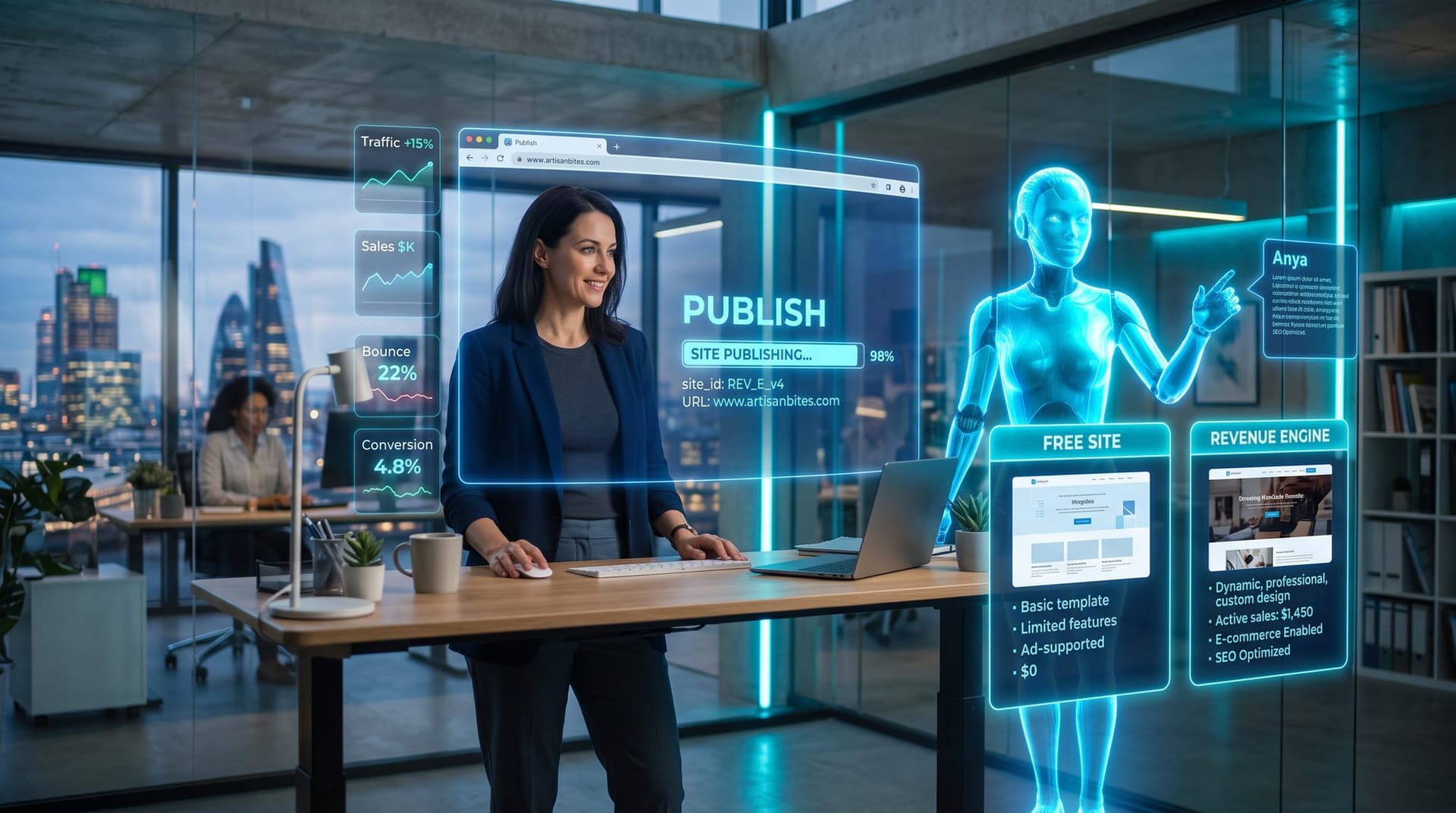
Last week Canva shipped Code 2.0, and per VentureBeat's coverage, the headline move is distribution: AI website building is now available to all of Canva's 265 million+ monthly users, on every tier including free accounts. Type a plain-language prompt, get a working site, edit it like a Canva presentation, publish it to a real domain. Canva says it cut average code generation time by 75% and the median time from first prompt to published site by 30%. Six million sites have been published with Canva Code in its first year.
So yes: the era of “a website costs thousands of dollars minimum” is over for a whole category of websites. Every business owner in Fort Wayne will hear some version of “you know you can just make that for free now” before the year is out. Some of them will be right.
Here's the part that matters for your 2026 planning: the floor just rose, and the floor was never the business. What a free AI builder produces and what a revenue-generating web presence does are two different products that happen to both be called “a website.” Knowing which one you actually need — honestly, case by case — is the whole game. That's what this post is for.
Key Takeaways
- Canva Code 2.0 gives all 265 million+ monthly Canva users — including free accounts — an AI website builder with drag-and-drop editing, 50+ templates, and HTML import from tools like ChatGPT, Claude, Lovable, and Bolt.
- Canva is deliberately targeting non-technical users, and its own AI product lead says it's not suitable for complex backends or high-traffic sites.
- The vibe-coding market is real and compounding — research cited by VentureBeat pegs it at $4.7 billion in 2026, projected to hit $12.3 billion in 2027.
- A brochure site and a revenue engine differ on the invisible layers: conversion engineering, structured data that answer engines can cite, lead capture, security, and data ownership.
- For some uses — event pages, side projects, prototypes — a Canva site is genuinely the right call, and we'll say so.
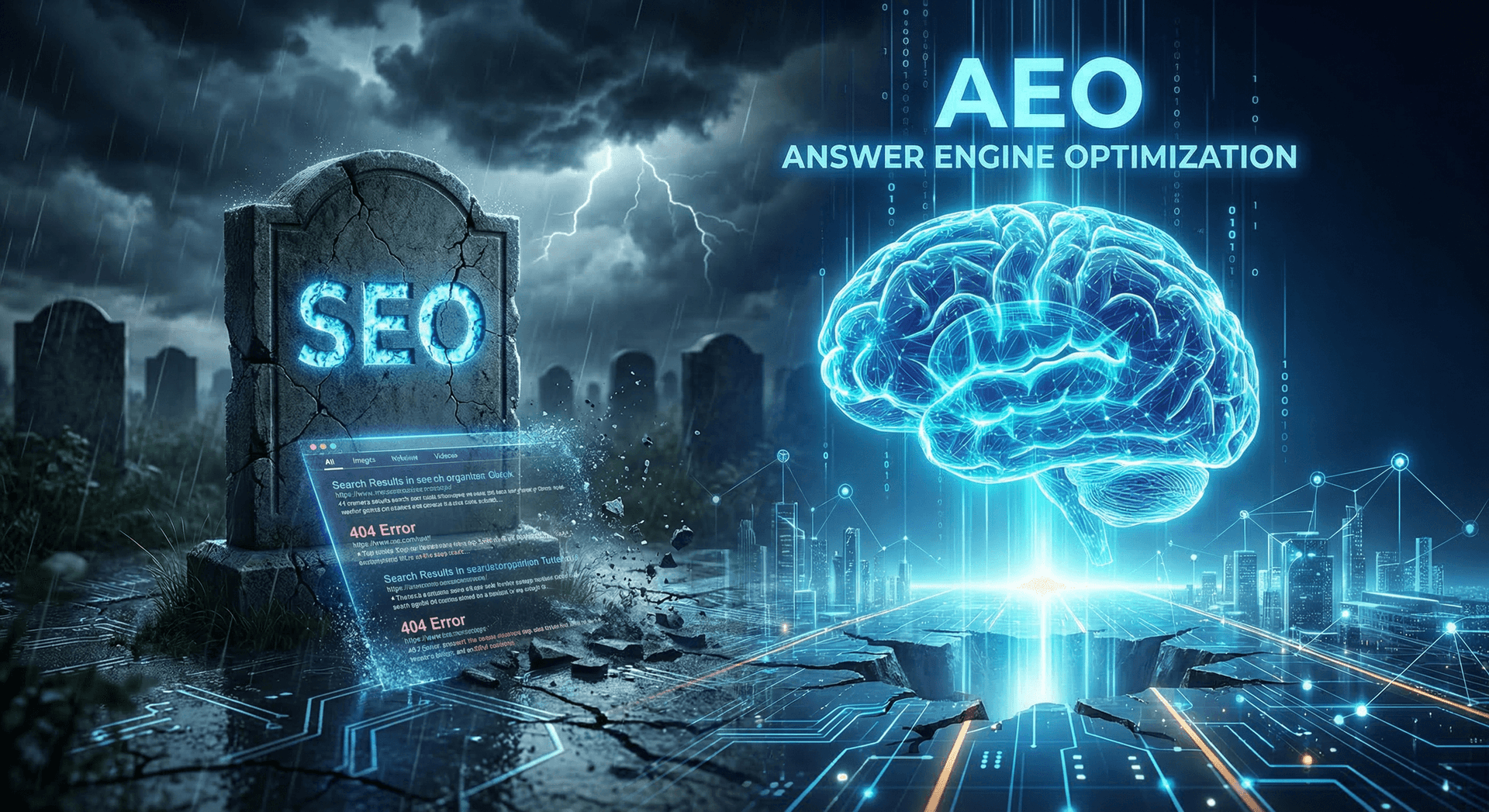
- The strategic question for 2026 isn't “can I get a site for free?” It's “when an AI answers questions about my industry, does it cite me?”
What Did Canva Actually Ship With Code 2.0?
The original Canva Code generated working sites from prompts; the 2.0 release, announced by Canva this month and rolled out to every pricing tier, closes the gap that made version one frustrating: editing. Per VentureBeat, users can now edit AI-generated output like any Canva design — changing text, colors, fonts, and images directly — instead of re-prompting for every tweak. The release adds 50+ templates for interactive designs and, notably, HTML import: paste in code generated by ChatGPT, Claude, Lovable, or Bolt, and it becomes an editable Canva design.
EdTech Innovation Hub's coverage adds useful texture: generated sites can pull from Canva's 120-million-asset library, adapt responsively across screen sizes, keep brand fonts and colors, and publish to a free Canva domain, a custom domain, or behind an organization's single sign-on. Form responses can flow into Canva Sheets — which is a real, if basic, lead-capture loop.

The honest fine print, from the same reporting: free accounts get lower AI generation capacity on a credits system; you still can't freely drag elements to reposition them (that requires re-prompting, as Windows News detailed); and Canva's Head of AI Products Danny Wu is refreshingly direct about who this is for: “We are deliberately targeting non-technical users. Canva Code isn't a tool we're building for developers.” He goes further: “Canva Code is probably not going to be suitable if you're trying to build a website with complex backends, or if you're handling hundreds of thousands of visitors per day.”
When the vendor tells you the product's limits that plainly, believe them.
Why Is a Web Development Company Calling This Good News?
Three reasons, and none of them are cope.
First, the market context says this was inevitable, so wishing it away was never a strategy. VentureBeat cites Luminix AI research from May 2026 putting the vibe-coding and AI app-builder market at $4.7 billion this year, projected to reach $12.3 billion in 2027, with AI-generated code now roughly 41% of all code written globally. Lovable is reportedly around $400 million in annual recurring revenue; Bolt.new scaled from $4 million to $40 million ARR within months. The capability was coming to everyone; Canva just got it to 265 million people first.
Second, a rising floor educates the market. Every business owner who builds a Canva site this year learns something previously invisible: the page itself was never the hard part. They'll discover — usually around month three, when the site has produced zero customers — that traffic, conversion, citations in AI answers, and follow-up were the actual product. A market that understands the difference between “having a website” and “having a website that produces revenue” is a better market for everyone who does serious work, and a worse one for agencies that were charging $5,000 for what is now genuinely a prompt.

Third — and this is the deep one — Canva's own co-founder framed the new differentiator for us. “When everyone has access to the same AI,” Cameron Adams told EdTech Innovation Hub, “the thing that sets you apart is whether what you make actually looks like you.” He's talking about design. Extend the logic one level: when everyone can generate a site, the differentiator isn't having one. It's whether your web presence behaves like your business — captures its leads, answers its customers' questions, earns its citations. The floor rose. The ceiling is where the competition moved.
When Is a Canva Site Genuinely Enough?
Real answer: more often than a web agency would like to admit.
Use a free AI builder without hesitation for an event page or fundraiser, a side project or hobby site, a “does anyone want this?” landing page to validate a business idea, an internal guide or training hub, a portfolio, or a temporary campaign page — the use cases Canva's own documented examples (classroom hubs, event forms, interactive roadmaps, property listings) cluster around. For these, speed and cost beat everything, nothing sensitive is at stake, and the site's job ends at “exists and looks decent.” Paying professional rates for that would be malpractice.
Know the technical ceiling before you commit, though. A hands-on developer review of the original Canva Code — which rated it 4 out of 10 for developers while acknowledging it isn't built for them — noted the output is vanilla HTML, CSS, and JavaScript with no modern framework underneath, and that deep customization ran out quickly (a pain point 2.0's editing tools now partially address). Add Wu's own caveats — no complex backends, not for heavy traffic — and the boundary is clear: Canva Code builds pages, not systems.
The switch flips when the site is supposed to make money. A local service business competing for customers is not running an event page; it's running a lead acquisition system that happens to have pages. And in 2026, as we've written in our analysis of how Fort Wayne restaurants started taking orders through ChatGPT, the customer increasingly isn't even browsing your pages — an AI is reading them and deciding whether to recommend you. Which brings us to the layers a prompt can't generate.
What Does a Revenue Site Have That a Vibe-Coded Site Doesn't?
The visible layer — layout, colors, copy blocks — is what AI builders commoditized. The invisible layers are where revenue lives:
| Layer | Free AI builder site | Revenue-engineered site |
|---|---|---|
| Design & pages | Generated in minutes — genuinely good enough | Custom, but this is the smallest differentiator now |
| Conversion path | A form, maybe wired to a spreadsheet | Engineered calls-to-action, tracking, and follow-up on every lead |
| Answer-engine visibility | None by default | Structured data + content built to be cited by AI search |
| Lead response | Whenever you check the inbox | An AI Employee answers, qualifies, and books 24/7 |
| Security & data governance | Unreviewed generated code, data on a third-party platform | Reviewed code, owned infrastructure, governed data |
| Ownership | Platform-dependent domain, hosting, and data | Your domain, your data, portable by design |
Two of these rows deserve expansion, because they're where we watch local businesses silently lose.
Answer-engine visibility. AI search engines and Google's AI features assemble answers from sites they can parse and trust. Google's own structured-data documentation explains the mechanism — machine-readable JSON-LD markup that tells search systems exactly what your page is — and its case studies quantify the stakes: Nestlé measured 82% higher click-through on pages appearing as rich results, Rotten Tomatoes saw 25% higher CTR on marked-up pages, and Food Network a 35% visit increase. A generated brochure site carries none of this by default. It can look perfect and be functionally invisible to the systems that now answer your customers' questions — the dynamic we broke down in our AEO dominance playbook.

Security and governance. Generated code that nobody reviews is how citizen-built software becomes an incident. We documented a case study of exactly this failure mode in our vibe-coded S3 data leak playbook — enthusiasm, a working prototype, and customer data exposed by a configuration nobody understood because nobody wrote it. Canva's walled garden actually reduces this risk relative to raw vibe coding (their enterprise tier even offers organizational controls over AI training data, per VentureBeat) — but the moment your “free site” starts handling customer information, intake forms, or payments, you've built software, and software has custodial obligations no prompt discharges for you.
What Should a Fort Wayne Business Check on Its Site This Quarter?
Skip the redesign conversation. Run this four-point audit instead — it takes an afternoon and tells you whether your current site (Canva-built, agency-built, or 2014-vintage) is doing its job:
- Ask the answer engines about yourself. Query ChatGPT and Google's AI results for “best [your service] in Fort Wayne” and the questions your customers actually ask. Are you cited? Is the information even correct? If the AI layer doesn't know you exist, you have an AEO problem no visual refresh will fix.
- Test your after-hours lead path. Submit your own contact form at 8 PM on a Friday. Time how long until anyone — human or AI — responds. Northeast Indiana service businesses win and lose on this number, and it's the single strongest argument for pairing any website with an AI Employee that answers immediately.
- Confirm you own your assets. Domain registration, hosting account, site files, and the customer data in your forms — in whose name, on whose platform? Free-tier convenience often means platform dependence. If leaving a builder would mean starting over, you're renting your web presence, not building equity in it.
- Check what your markup says. View your page source and look for JSON-LD structured data (or have us look — it's a five-minute check). No markup means answer engines are guessing about your hours, services, and service area. Guessing engines don't cite.
A Canva site can pass points 2 and 3 with deliberate setup. Points 1 and 4 are where generated sites, by their nature, stay silent — and where a local business competing for AI-mediated attention needs actual engineering.

Get a Web Presence That Answer Engines Cite and Leads Can't Escape
Cloud Radix builds revenue-engineered websites with the invisible layers included: structured data and AEO so AI search cites you, conversion paths that track every lead, and integration with AI Employees that answer inquiries 24/7. If you've got a Canva site that's working — genuinely, keep it. If you've got one that's quietly costing you customers you never see, book a free site audit and we'll show you exactly what the answer engines are saying about you.
Frequently Asked Questions
Q1.What is Canva Code 2.0?
Canva Code 2.0 is the second generation of Canva's AI website and app builder, released in July 2026. Users describe what they want in plain language, and the tool generates an interactive website or app that can then be edited like a normal Canva design — with drag-and-drop tools, brand fonts and colors, and 50+ templates. It's available to all 265 million+ monthly Canva users, including free accounts, with free tiers getting lower AI generation capacity.
Q2.Is Canva Code really free?
Access is free on every Canva tier, but generation runs on a credits system, and free accounts receive less AI capacity than paid plans. Publishing works on a free Canva-hosted domain, with custom domains available. So "free" is accurate for getting a real site live, with usage caps as the practical limit.
Q3.Can Canva Code replace a professional web developer?
For simple sites — event pages, portfolios, prototypes, internal tools — often yes, and Canva positions it exactly there. Canva's own Head of AI Products says it's deliberately built for non-technical users and isn't suitable for complex backends or sites handling hundreds of thousands of daily visitors. Revenue-critical business sites also need layers Canva doesn't generate: conversion engineering, structured data for AI search visibility, integrated lead response, and owned infrastructure.
Q4.What is a "vibe-coded" website?
It's a site built by describing what you want to an AI in natural language and accepting the generated result — coding by vibes rather than by writing code. The approach is booming: research cited by VentureBeat values the vibe-coding and AI app-builder market at $4.7 billion in 2026, projected to reach $12.3 billion in 2027. The strength is speed; the risk is shipping code nobody on your team actually reviewed or understands.
Q5.Why does structured data matter if my site already looks good?
Because AI search engines and Google's rich results read markup, not aesthetics. Structured data (Google recommends the JSON-LD format) tells machines exactly what your business does, where it operates, and what your pages contain. Google's published case studies show measurable effects — including 82% higher click-through rates on rich-result pages for Nestlé. A beautiful site without markup can be invisible to the systems that now answer customers' questions.
Q6.Should my business rebuild its site because of AI website builders?
Not necessarily — and don't let anyone panic you into it. Audit first: check whether AI answer engines cite you, whether after-hours leads get an immediate response, whether you own your domain and data, and whether your pages carry structured data. If those check out, your site is fine regardless of what built it. If they don't, fix those specific layers — that's a targeted investment, not a from-scratch rebuild.
Sources & Further Reading
- VentureBeat: venturebeat.com/technology/canva-launches-code-2-0-offering-ai-website-building-to-every-user-including-free-accounts — Canva launches Code 2.0, offering AI website building to every user — including free accounts (2026-07-14)
- Canva: canva.com/newsroom/news/Canva-Code — Vibe coding that matches your vision: Canva Code 2.0 is now available to all (2026-07)
- EdTech Innovation Hub: edtechinnovationhub.com/news/canva-opens-code-20-to-free-users-with-editable-ai-built-websites-and-apps — Canva Code 2.0 opens AI website builder to free users (2026-07)
- Windows News: windowsnews.ai/article/canva-code-20-unlocks-html-import-and-drag-and-drop-editing-for-free-users.438937 — Canva Code 2.0 Unlocks HTML Import and Drag-and-Drop Editing for Free Users (2026-07)
- Medium (Rohit Kumar Thakur): ninza7.medium.com/canva-code-my-hands-on-review-of-canvas-new-ai-powered-website-builder-f775b18ef7ae — Canva Code: My Hands-On Review of Canva's New AI-Powered Website Builder (2025)
- Google Search Central: developers.google.com/search/docs/appearance/structured-data/intro-structured-data — Intro to How Structured Data Works (2026)
Find Out What the Answer Engines Say About You
Book a free site audit and we'll show you whether AI search cites your business, whether your leads get answered after hours, and exactly which invisible layers your site is missing.