Most Fort Wayne companies find out a system is down the same way: a customer calls in the morning, annoyed, and someone scrambles to figure out what broke overnight. There was no 24/7 operations center watching. There was no on-call engineer paging at 2 a.m. There was just a quiet failure that nobody saw until the damage was already done.
That gap — between when a system degrades and when a human notices — is exactly the gap a new class of AI is built to close. On June 23, 2026, Microsoft published its framing of “agentic observability”: autonomous AI agents that watch cloud operations, correlate signals across systems, investigate root cause, and surface (or help fix) problems without a person staring at a dashboard. For large enterprises with existing operations teams, it is an efficiency play. For a lean Auburn or Fort Wayne business running a handful of cloud apps with no dedicated site-reliability staff, it is something more interesting: the first realistic way to have your systems watched around the clock without hiring a night shift you can't afford.
This is precisely the kind of standing, never-sleeps work an AI Employee is suited for — provided it is deployed with the right limits. Here is what agentic observability actually is, where the honest caveats are, and how a Northeast Indiana operator should think about putting an AI watchdog on production systems.
Key Takeaways
- Agentic observability means AI agents that continuously watch cloud systems, correlate signals, and investigate root cause on their own — not just dashboards a human has to read.
- The problem it targets is acute for small teams: most Fort Wayne businesses have no 24/7 monitoring, so failures surface only when customers complain.
- Downtime is expensive even for small businesses, and detection gaps are real — many monitoring tools catch only a fraction of issues before they bite.
- AI doesn't automatically reduce operational toil; recent data shows toil rising despite AI adoption, so deployment design matters more than the demo.
- The safe pattern keeps a human in the loop: the AI observes and investigates freely, but automated remediation sits behind approval gates and scoped permissions.
- An AI watchdog belongs behind a Secure AI Gateway with audited, least-privilege access — never with raw admin keys to production.
What is agentic observability, in plain terms?
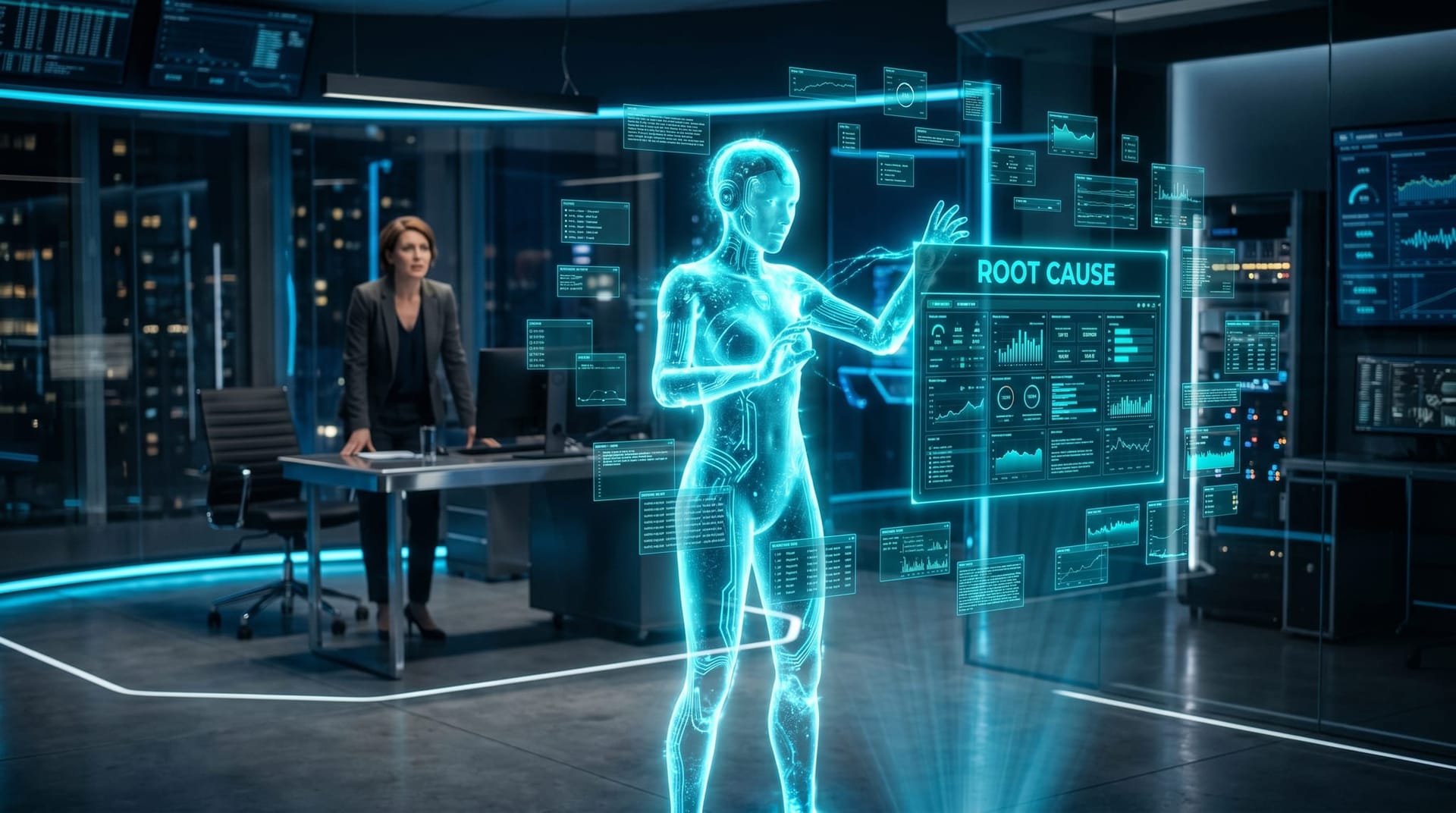
Traditional monitoring is passive. Tools collect logs, metrics, and traces and draw them on a dashboard. A human has to look at the dashboard, notice something wrong, and start investigating. The intelligence lives entirely in the person.
Agentic observability moves some of that intelligence into the system. According to Microsoft's June 2026 writeup — authored by Brendan Burns, a Microsoft technical fellow and corporate vice president for Azure's cloud-native platform — the approach pairs telemetry with autonomous agents that correlate signals across applications, infrastructure, and services, connect logs, metrics, traces, and topology into a single operational view, and reason across those signals in real time to move operators “from detection to understanding” by identifying root cause. Microsoft's own implementation is the Azure Copilot Observability Agent, built on Azure Monitor.
The motivation Microsoft cites is straightforward: complexity has outrun human capacity. The company reports that 84% of organizations say cloud complexity has increased and 69% say that complexity outpaces their operating model. As a concrete result, Microsoft points to KPMG reclaiming an estimated 250 engineering hours per month after adopting the observability agent. Customer accounts in the post describe moving “from manual incident hunting to faster, AI-guided investigations.”
Strip away the enterprise vocabulary and the idea is simple: instead of a dashboard that waits for you to read it, you get an agent that reads it for you, all the time, and tells you when something needs a human.
Why does this matter so much for a business without a 24/7 IT team?
Because the people this is pitched to — large enterprises drowning in telemetry — are not the people who need it most. The team with the least slack benefits the most from an agent that never sleeps.
Start with what an outage actually costs, even for a small operation. Industry data compiled by The Network Installers puts the range between roughly $8,000 and $25,000 per hour for small and mid-sized businesses, with ITIC estimating micro-SMBs under 25 employees can lose on the order of $1,670 per minute, and Datto reporting that 78% of SMBs say a single hour of downtime costs them more than $10,000. The same compilation cites EMA research pegging the cross-industry average near $14,000 per minute. The exact figure for your shop will be lower or higher, but the direction is unambiguous: a degraded checkout flow or a downed scheduling system on a Saturday is not a minor inconvenience.
Now layer on the detection problem. The same data notes that only about 6% of organizations say their monitoring tools predict 90–100% of issues, while roughly a quarter say their tools catch fewer than 25%. For a Fort Wayne business with no night shift, that detection gap is the 2 a.m. failure nobody sees until morning. An always-on AI watchdog is aimed squarely at that window — the hours when no human is looking but customers in other time zones, or insomniac shoppers, still are.
There is also a quieter cost: alert noise. Analyses of alert fatigue from Vectra AI and incident.io describe the same trap — teams buried under alerts where only a small fraction are actionable, so the meaningful ones get missed. Optrics' analysis makes the related point that much of the delay in resolving incidents isn't detection at all but the manual coordination that follows. A small team doesn't have the bandwidth to triage a wall of alerts; an agent that correlates them down to “here is the one thing that actually matters, and here's what I think caused it” is genuinely useful precisely because attention is the scarce resource.
Does AI in operations actually reduce the work — or just move it?
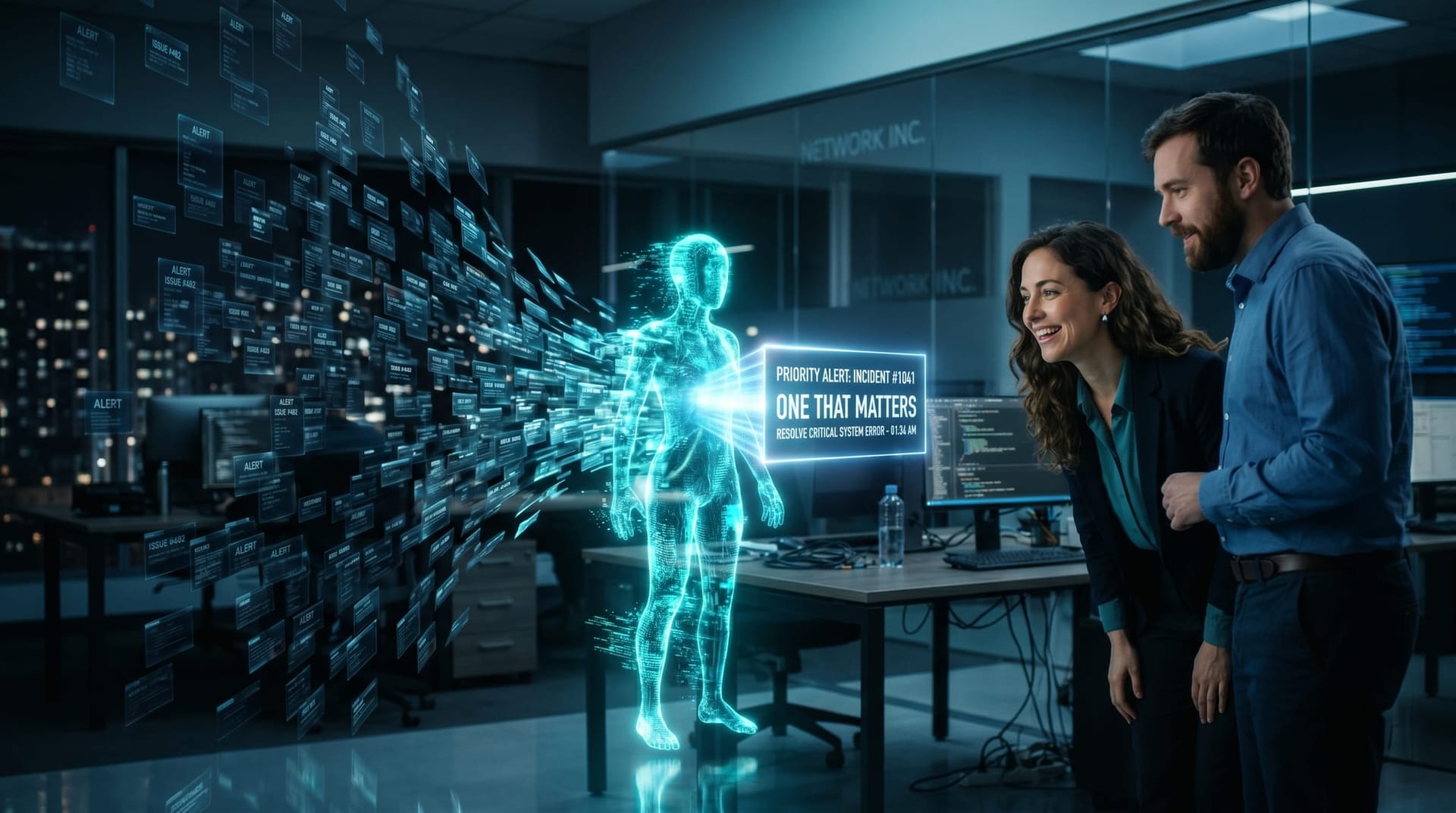
Here is where honesty has to override the sales pitch, because the data does not say “deploy AI and your operational burden disappears.”
A 2026 state-of-incident-management analysis from Runframe reported that operational toil rose roughly 30% even as AI adoption climbed. That should not be surprising. Adding an autonomous agent to your operations adds a new system that itself has to be configured, monitored, and occasionally corrected. If you bolt an AI watchdog onto a messy environment with no clear ownership, you can easily end up with more noise, not less — now including the AI's own false positives.
This connects directly to a decision we've written about before: when an AI agent in production proves unreliable, you face a rebuild-or-patch decision for unreliable agents, and the wrong call compounds the cost. The lesson for a mid-market operator is not “don't use agentic observability.” It is “don't trust it blindly on day one.” You earn the right to lean on an AI watchdog by validating its judgment first — which is the entire premise of intent-based chaos testing: deliberately break things in a controlled way and confirm the agent detects, diagnoses, and escalates the way you'd want before you rely on it during a real incident.
So the realistic promise is narrower and more defensible than the marketing: a well-scoped, well-tested AI watchdog can compress the time between a problem starting and a human understanding it, and can absorb the triage of routine noise. It does not eliminate operations work. It changes what your scarce human hours get spent on.
Where does the human stay in the loop?
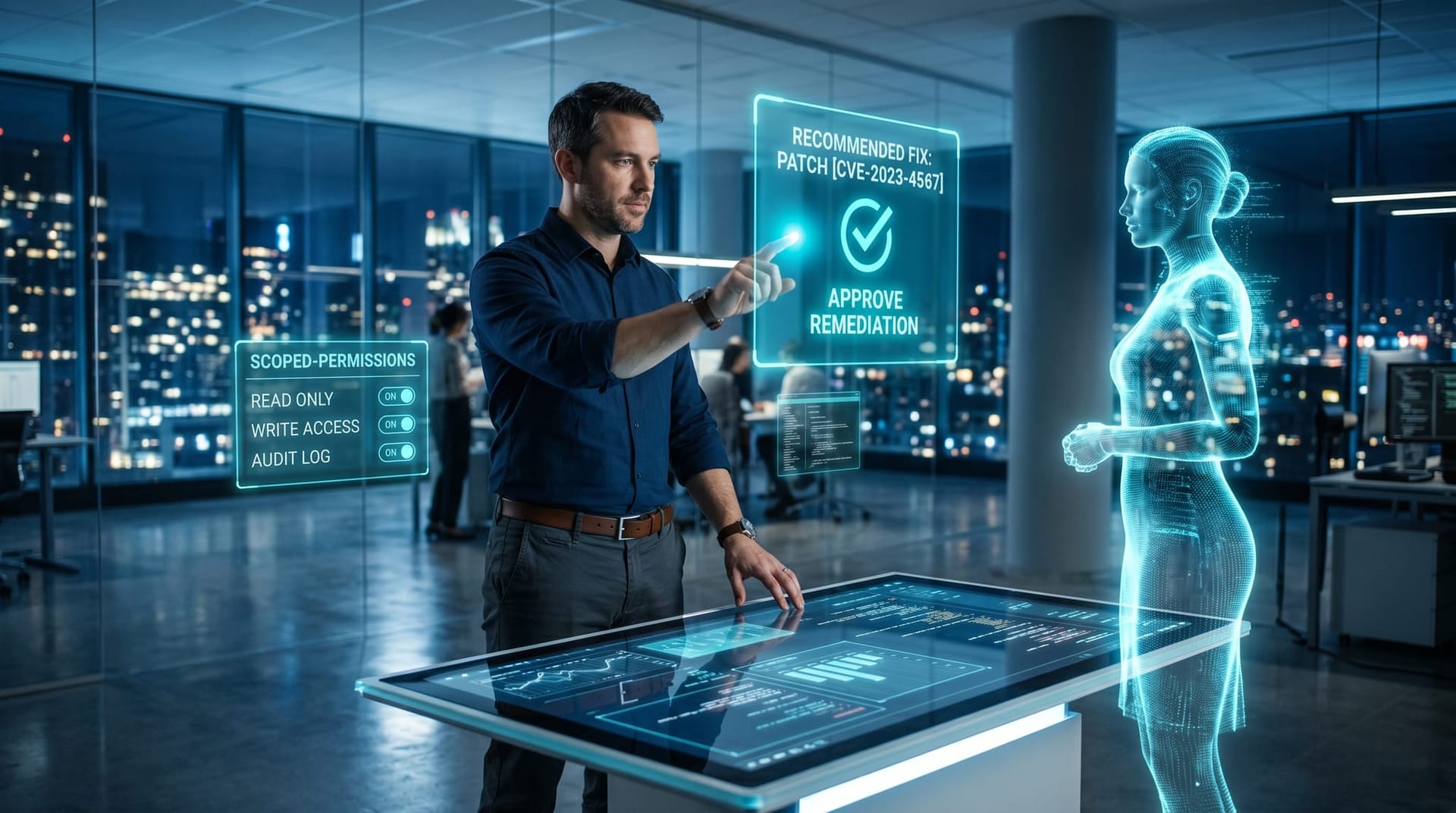
This is the question that separates a useful deployment from a dangerous one, and the answer is a hard line: the AI can observe and investigate as freely as you like, but it should not change production on its own.
Observation is low-risk. Letting an agent read logs, correlate metrics, and draft a root-cause hypothesis costs you nothing if it's wrong — you simply disregard a bad guess. Remediation is the opposite. An agent that can restart services, roll back deployments, change configurations, or scale infrastructure can also do real damage if it misreads a signal. Even Microsoft's framing is careful here: its post stresses that human oversight remains essential “not as a bottleneck, but as a mechanism for building confidence,” alongside policy, auditability, and guardrails to keep agent actions aligned with intent.
The practical pattern we recommend for Northeast Indiana operators looks like this:
| Capability | Autonomy level | Human role |
|---|---|---|
| Watch logs, metrics, traces | Fully autonomous | None routine |
| Correlate signals, propose root cause | Fully autonomous | Review the hypothesis |
| Notify and escalate | Autonomous, rules-based | Receive and decide |
| Run read-only diagnostics | Autonomous within scope | Spot-check |
| Restart / roll back / reconfigure production | Gated | Approve before execution |
| Change permissions or access | Never autonomous | Human-only |
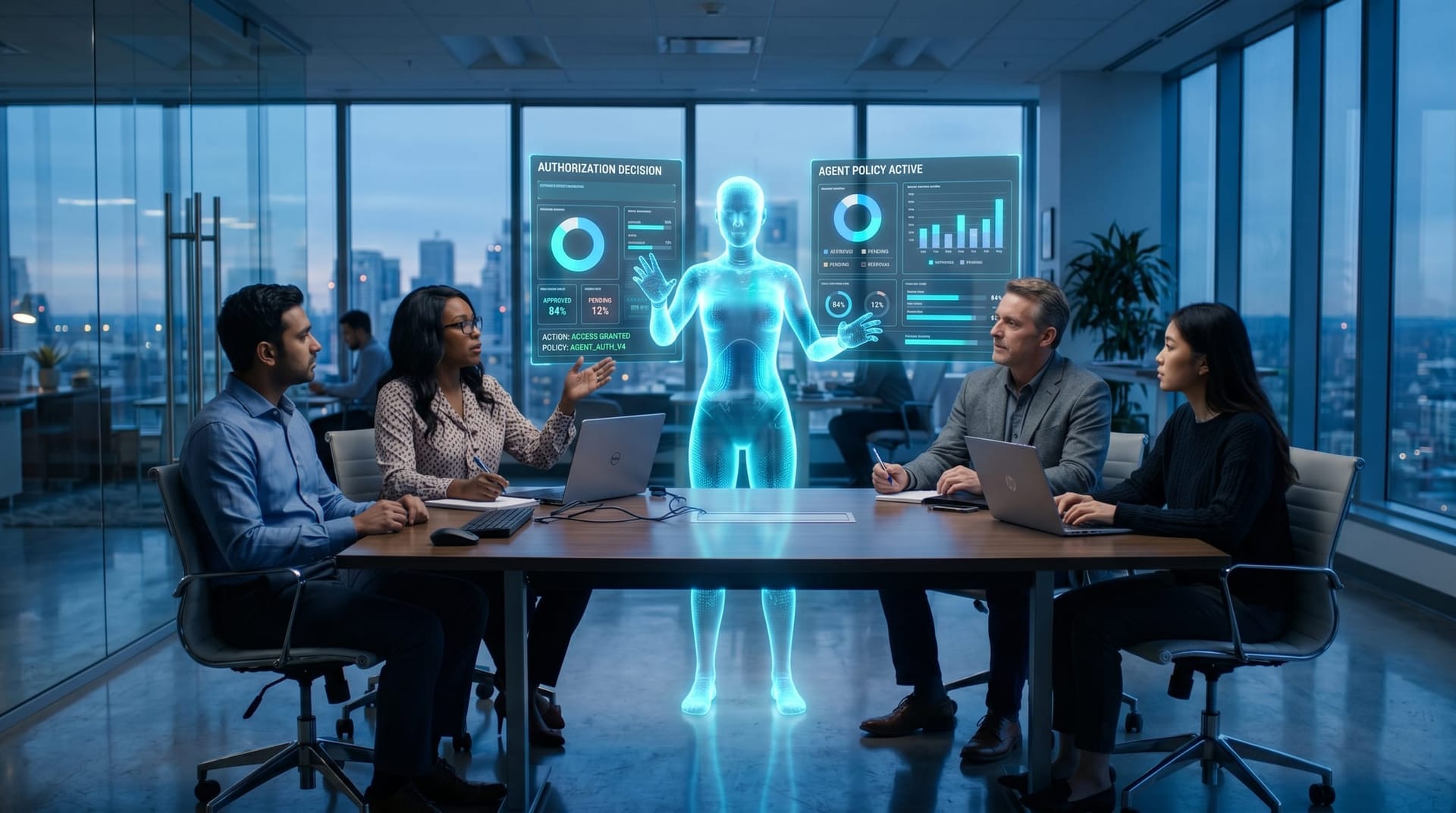
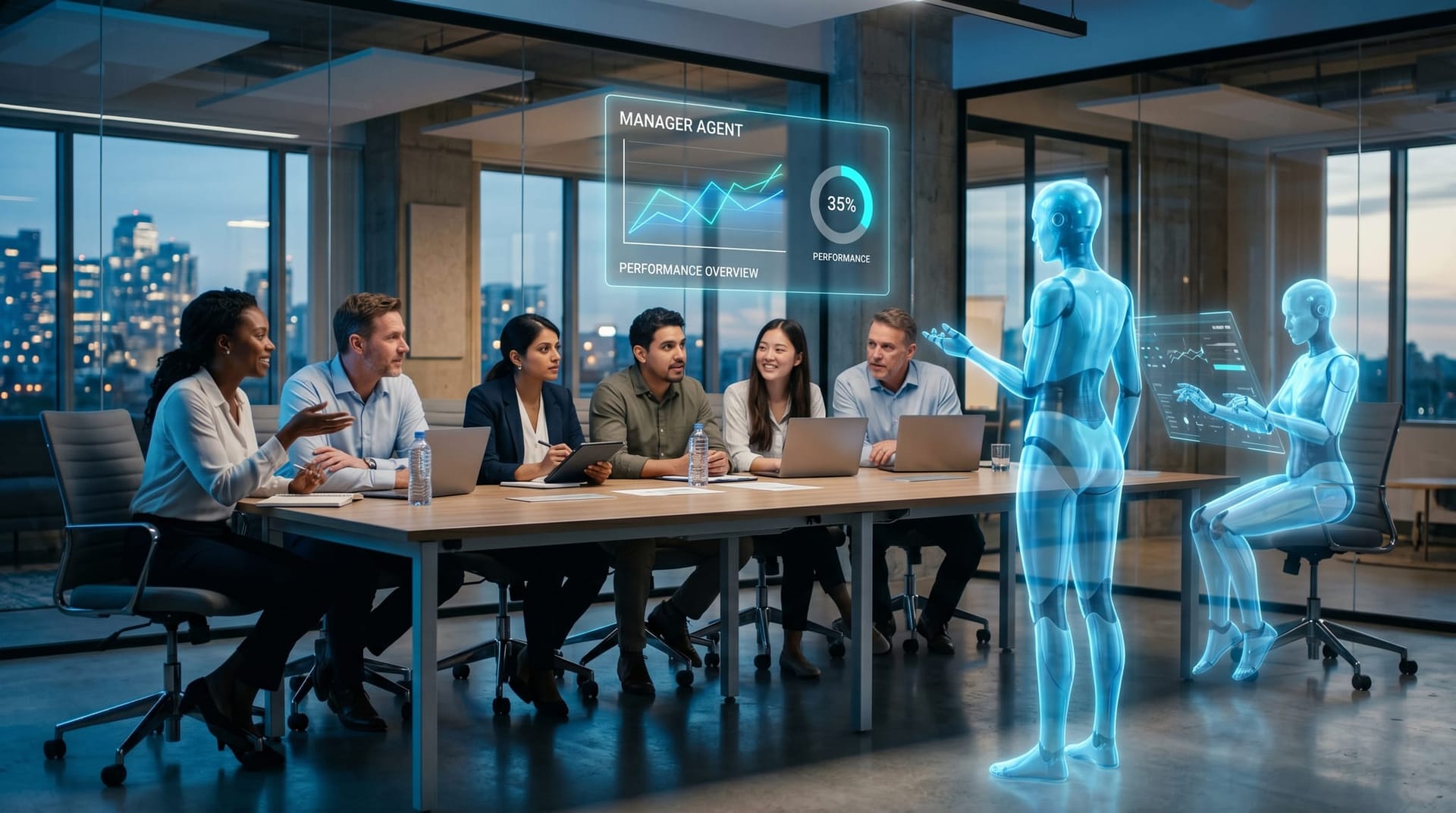
Every consequential action sits behind an approval gate. The agent says “I believe the payment service is degraded because of a connection-pool exhaustion; I recommend restarting worker pool 3 — approve?” and a human clicks yes before anything changes. For a deeper treatment of supervising autonomous agents, our piece on a manager-agent supervisor layer lays out how to put a check above the agent doing the work.
Why must this run behind a Secure AI Gateway, not on raw admin access?
Because the fastest way to turn a helpful watchdog into a catastrophic one is to hand it the keys to everything.
An observability agent needs access to your systems to be useful — but “access” should mean narrowly scoped, audited, least-privilege access, not a production admin credential. Giving an autonomous agent broad admin rights means a single compromised prompt, a confused inference, or a leaked token can translate into changes across your whole environment. That is a security posture no Fort Wayne business should accept, and it's the reason we run AI Employees through a Secure AI Gateway: every action the agent takes passes through a layer that enforces what it is allowed to touch and logs what it actually did.
Two companion pieces are worth reading before you grant any agent operational access. The first is an AI agent authorization audit, which walks through scoping permissions so an agent can do its job and nothing more — the exact discipline you need before letting one near production remediation. The second, for businesses in healthcare, legal, or other regulated NE Indiana sectors, is our look at an air-gapped, sovereign AI posture, where data residency and isolation requirements shape how — and where — an observability agent can run at all. Watching your systems and respecting your compliance obligations are not in tension, but only if you design for both from the start.
What does an AI watchdog look like for a Northeast Indiana operator?
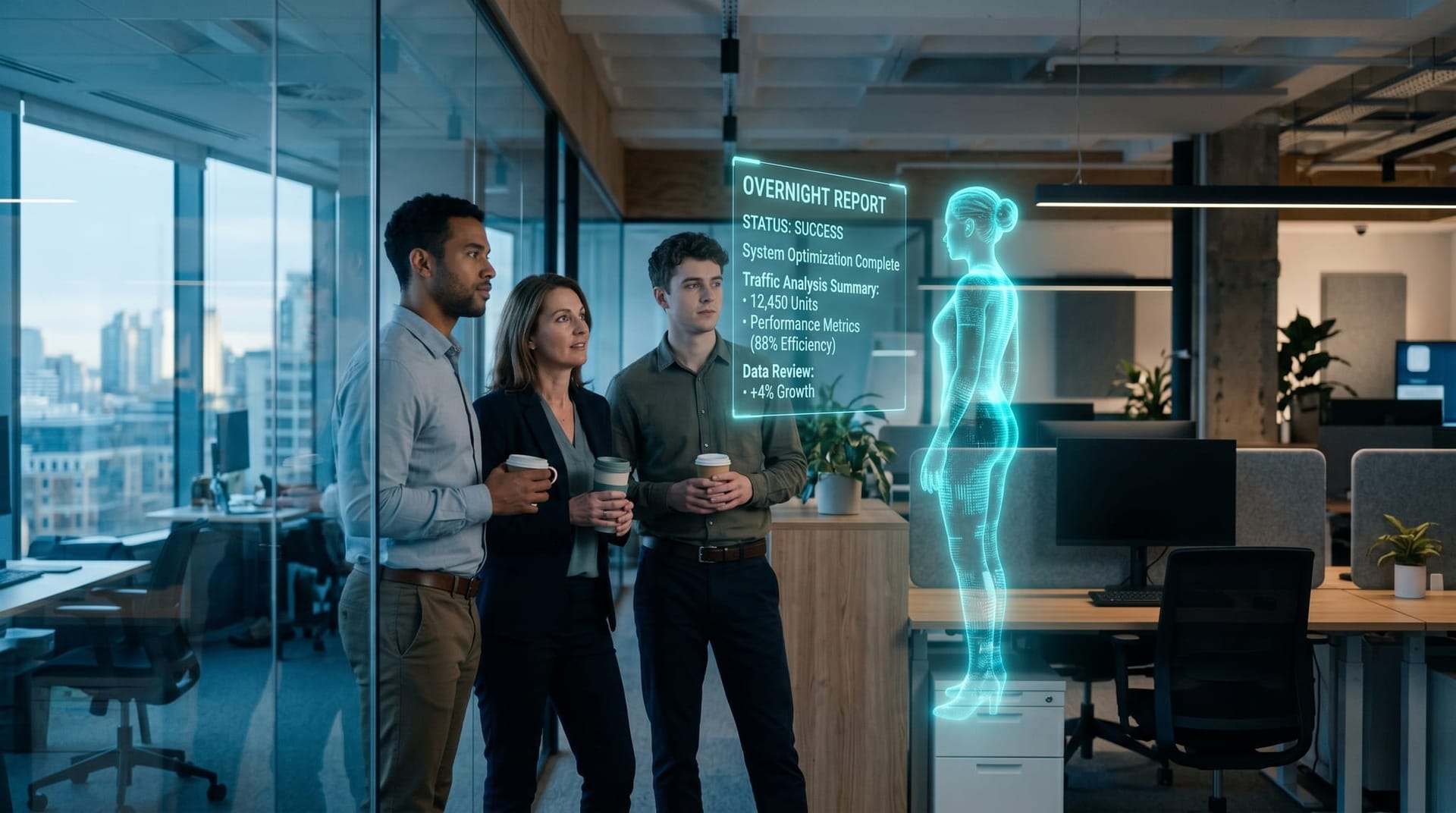
Make it concrete. Consider a DeKalb County manufacturer running a customer order portal, an inventory sync, and a scheduling app across a couple of cloud services. There is no IT department — there's an office manager who is “good with computers” and an outside contractor on call for emergencies. Today, if the order portal's database connection starts timing out at 11 p.m., the first sign is a sales rep unable to pull up orders at 7 the next morning, and a contractor invoice for emergency hours after that.
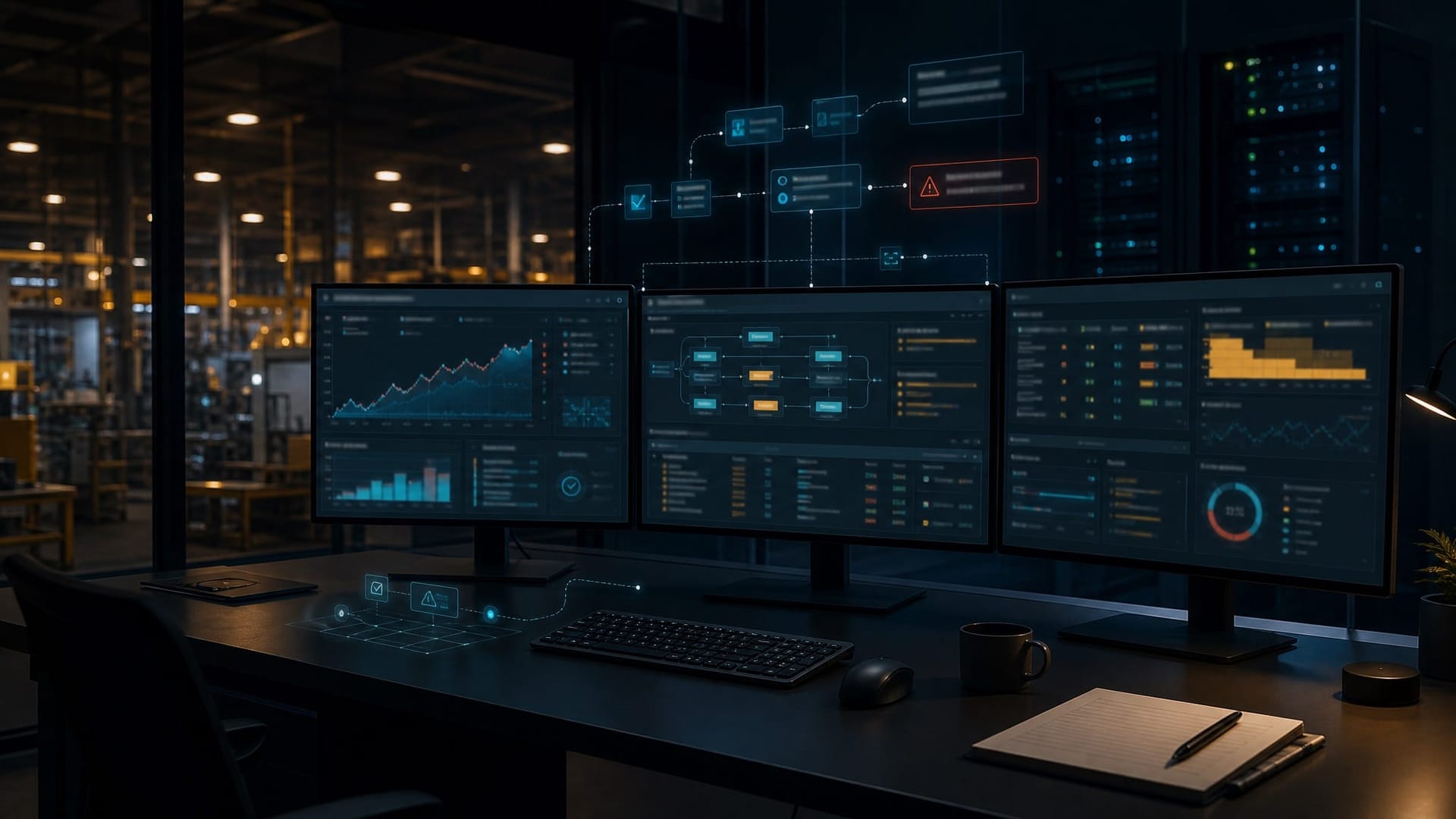
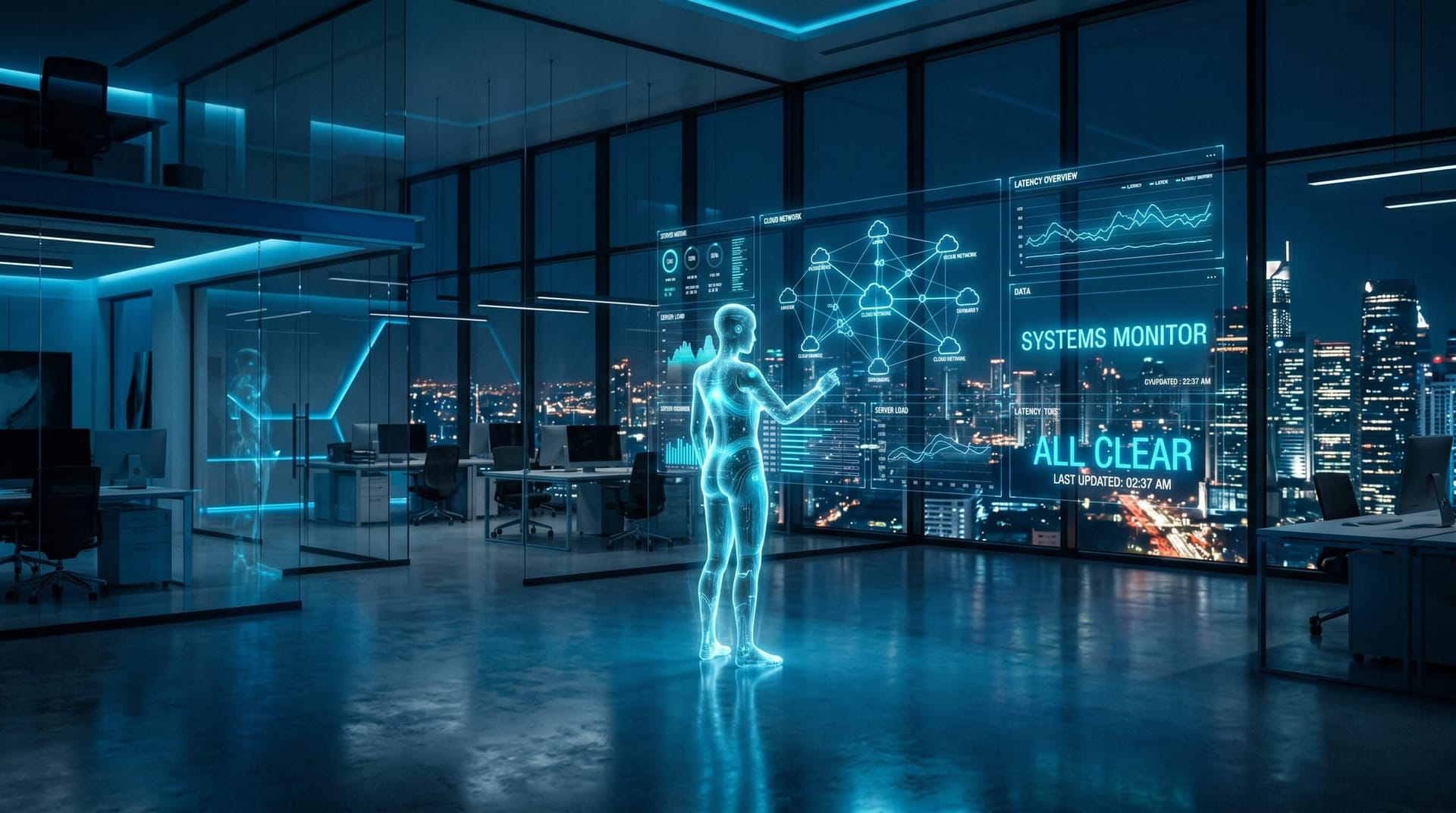
With a scoped AI Employee acting as an observability watchdog, the sequence changes. The agent notices the rising error rate and latency in real time, correlates it to a specific service, and forms a root-cause hypothesis. Because it's after hours and the issue is below the “wake a human” threshold, it logs the diagnosis and runs the read-only checks it's permitted to run. If the situation crosses the escalation rule — sustained errors, customer-facing impact — it pages the office manager with a plain-language summary and a recommended fix, waiting for approval before touching anything. By the time the team logs in, the problem is either already understood or already escalated, not discovered cold.
That is the local value proposition: not a Silicon Valley operations center, but a single always-on AI Employee that gives a lean Fort Wayne or Auburn business the overnight coverage it could never justify staffing — with the human firmly holding the controls on anything that changes production.
Putting an always-on watchdog on your systems, safely
Agentic observability is a real shift, and for Northeast Indiana businesses without a 24/7 operations team it closes a gap that has cost them quietly for years. But the value is entirely in the deployment: scoped access, validated judgment, approval gates on remediation, and a full audit trail.
That is how Cloud Radix builds it. We deploy AI Employees that watch your cloud systems around the clock and investigate problems the moment they start, all behind our Secure AI Gateway so the agent operates with least-privilege access and every action is logged and reversible. If you run business-critical systems in Fort Wayne or anywhere across Northeast Indiana and you're tired of finding out about failures from your customers, talk to us about an AI watchdog scoped to your environment — we'll start with observation only and earn the right to do more.
Frequently Asked Questions
Q1.What is agentic observability?
Agentic observability is an approach to cloud operations where autonomous AI agents continuously watch system telemetry — logs, metrics, traces, and topology — correlate signals across services, and reason about root cause in real time, rather than leaving a human to read dashboards and investigate manually. Microsoft's June 2026 framing positions it as moving operators from detection to understanding. The agent watches constantly and surfaces what needs human attention.
Q2.Can a small business without an IT team actually use this?
Yes, and arguably it's the clearest beneficiary. A lean Fort Wayne business can't staff a 24/7 operations center, so failures often go unnoticed until customers complain. An always-on AI watchdog covers the overnight and weekend hours no human is monitoring. The key is scoping it correctly and keeping a human in the loop on any action that changes production systems.
Q3.Will an AI agent fix problems on its own?
It can, but for most businesses it shouldn't without approval. The safe pattern lets the agent observe, diagnose, and escalate fully autonomously, while any remediation that changes production — restarts, rollbacks, configuration changes — waits behind a human approval gate. Observation is low-risk; automated changes to live systems are not, so they should require a human yes.
Q4.Does adding AI to operations actually reduce work?
Not automatically. A 2026 incident-management analysis found operational toil rose roughly 30% even as AI adoption increased, because a poorly deployed agent adds noise and a new system to manage. The work reduction comes from careful scoping and validation — testing the agent's judgment before you rely on it — not from the technology alone.
Q5.How do you keep an observability agent secure?
Run it behind a Secure AI Gateway with least-privilege, audited access rather than raw production admin credentials. The agent should only reach the systems it needs to do its job, every action should be logged and reversible, and permissions changes should never be automated. An authorization audit before deployment defines exactly what the agent is and isn't allowed to touch.
Q6.How expensive is downtime for a small business, really?
It varies widely by industry, but it adds up fast. Compiled industry data puts small and mid-sized business downtime in the range of roughly $8,000 to $25,000 per hour, with some estimates much higher per minute for time-sensitive operations, and Datto reports 78% of SMBs say a single hour of downtime exceeds $10,000. Combined with the fact that many monitoring tools catch only a fraction of issues, the cost of not watching overnight is real.
Sources & Further Reading
- Microsoft: blogs.microsoft.com/blog/2026/06/23/rethinking-cloud-operations-with-agentic-observability — Rethinking cloud operations with agentic observability.
- The Network Installers: thenetworkinstallers.com/blog/cost-of-it-downtime-statistics — Cost of IT Downtime Statistics, Data & Trends (2026).
- Vectra AI: vectra.ai/topics/alert-fatigue — Alert fatigue: causes, real cost, and how to fix it.
- incident.io: incident.io/blog/alert-fatigue-solutions-for-dev-ops-teams-in-2025-what-works — Alert fatigue solutions for DevOps teams in 2025: What works.
- Optrics: optrics.com/alert-fatigue-mttr-coordination-gap — Alert Fatigue Hiding Half Your MTTR in Manual Coordination.
- Runframe: runframe.io/blog/state-of-incident-management-2025 — State of Incident Management 2026: Toil Rose 30% Despite AI.
Tired of Hearing About Outages From Your Customers?
We'll scope an always-on AI watchdog to your Fort Wayne or Northeast Indiana environment — starting with observation only, behind a Secure AI Gateway, with every action logged and reversible.
Schedule a Free ConsultationNo contracts. No pressure. Just an honest conversation about watching your systems around the clock.