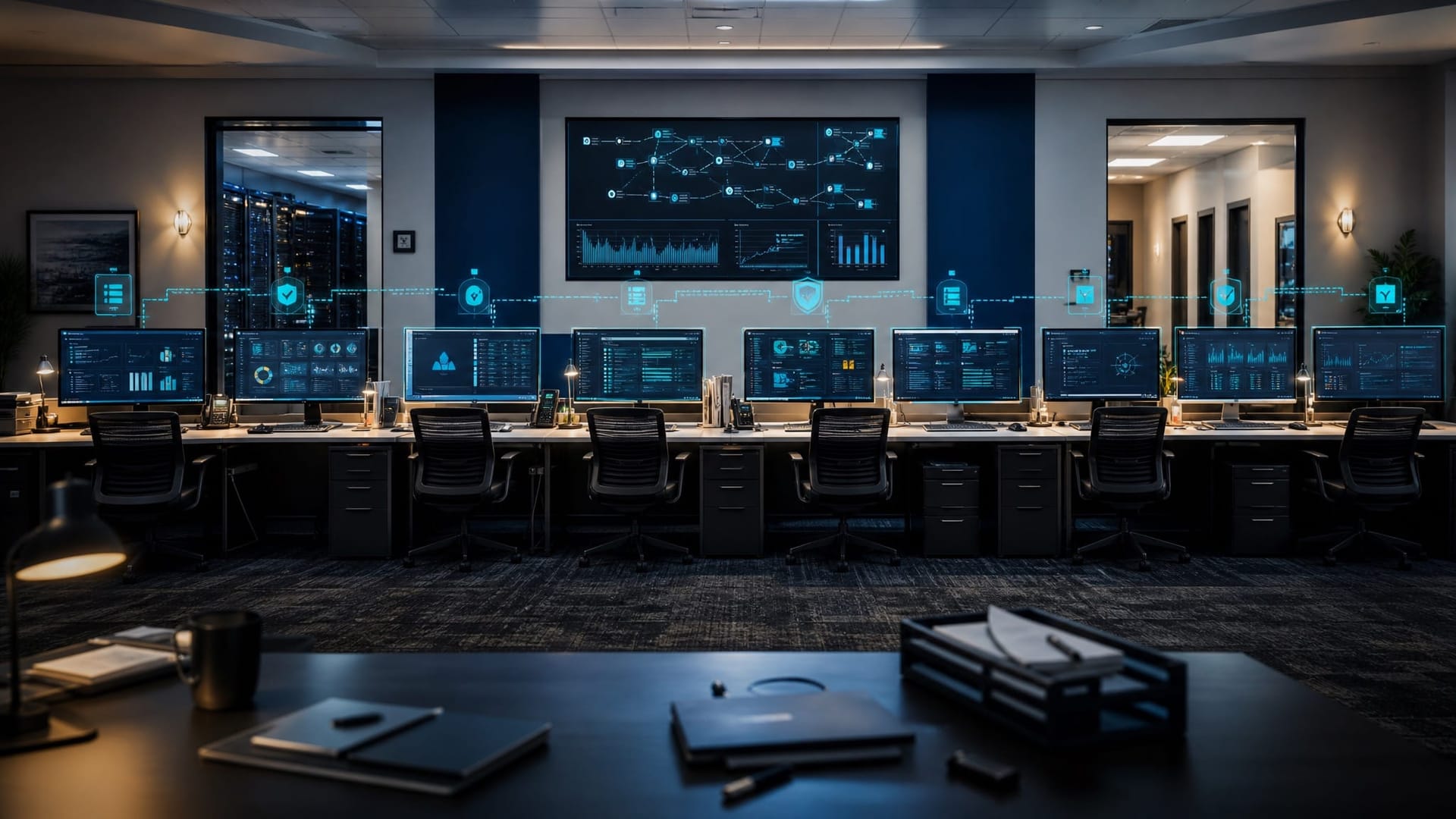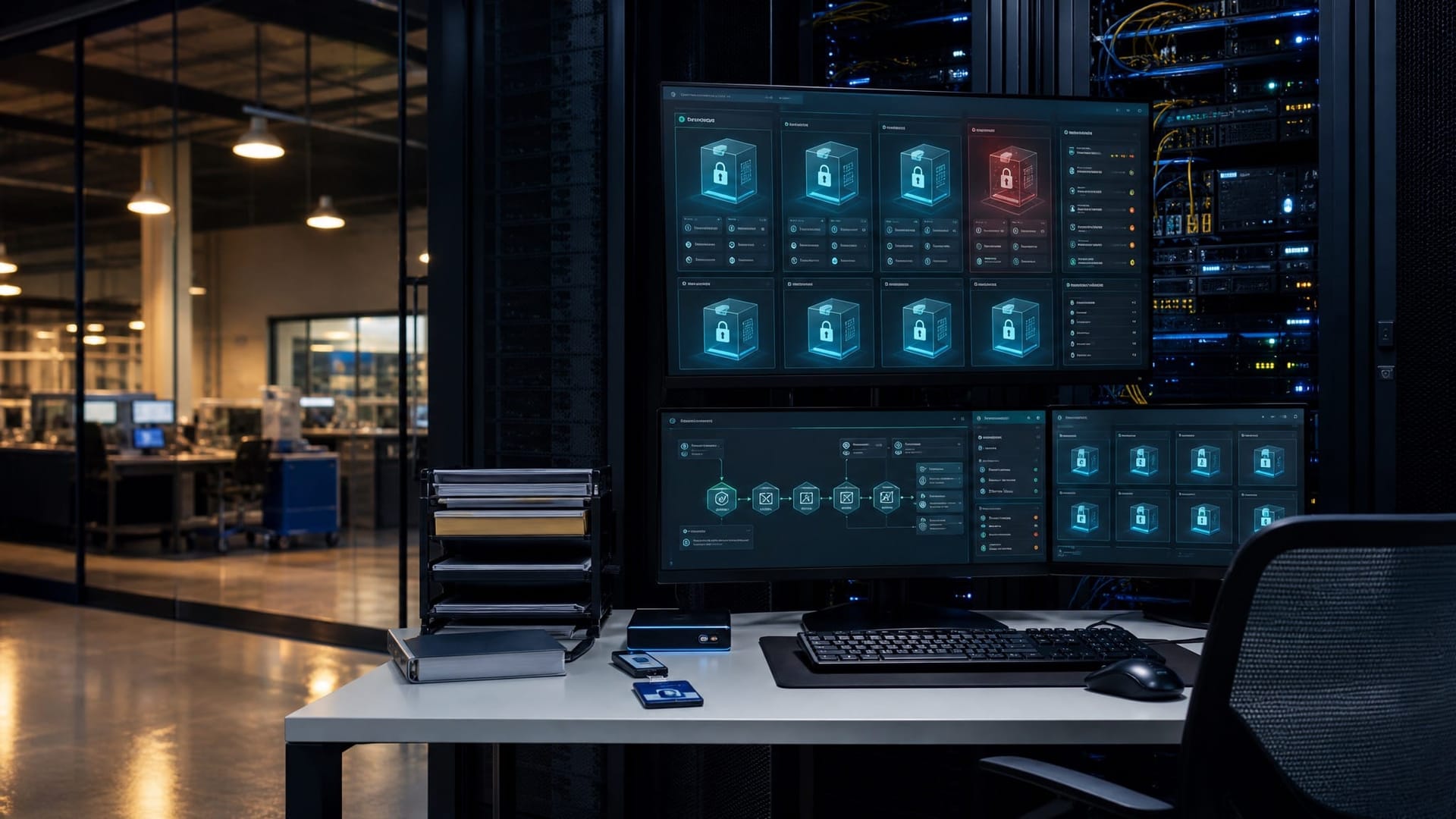
When the three largest names in computing agree on something at the same time, it is worth slowing down to read what they actually agreed on. On June 2, 2026, VentureBeat reported that Microsoft had launched MXC — Microsoft Execution Containers — an OS-level sandbox for AI agents, and that OpenAI, Nvidia, and three other agent builders were already on board. For most businesses, the takeaway won't be MXC itself — it will be the boundary MXC stands for, the thing we call a secure AI gateway.
The headline is the partnership. The signal underneath it is more useful: the industry now treats agent containment as a foundational requirement, not a feature you bolt on later. An AI agent that can read files, run commands, and call out to the network is, functionally, a new kind of user on your systems — one that acts faster than a human and never gets tired of trying. The question every operator now has to answer is the one MXC is built around: where does this agent actually execute, and what can it reach?
Most Fort Wayne and Northeast Indiana businesses will never deploy MXC directly. You don't run a hyperscaler, and you don't need to. But you do need the principle MXC encodes — agents running inside a scoped, observable boundary — and in the Cloud Radix stack that principle is the secure AI gateway. This post translates the MXC announcement into decisions a mid-market operator can act on.
Key Takeaways
- MXC is a containment layer, not a model. Microsoft built a policy-driven execution boundary into Windows itself, enforced by the OS kernel, so administrators can declare exactly what an AI agent can and cannot touch.
- OpenAI, Nvidia, Manus, Nous Research, and OpenClaw signed on. When competing labs adopt the same isolation primitive, agent sandboxing has moved from research to table stakes.
- A sandbox and a secure AI gateway solve different halves of the same problem. Sandboxing scopes where code runs and what it reaches; a gateway scopes what credentials and data the agent can use. You need both.
- Mid-market operators need the principle, not the product. You don't need MXC to get a scoped, observable, deny-by-default boundary around your AI Employees.
- The evaluation question is always the same: where does this agent execute, and what can it reach? Frameworks like the NIST AI RMF and the OWASP risk list give you a structured way to answer it.
What Is Microsoft MXC, and Why Did OpenAI and Nvidia Sign On?
MXC stands for Microsoft Execution Containers. According to VentureBeat's reporting, it is a policy-driven execution layer built directly into the Windows operating system that lets developers and IT administrators declare exactly what an AI agent can and cannot access, with those boundaries enforced at runtime by the OS kernel. It ships as an SDK and a policy model embedded in Windows and the Windows Subsystem for Linux.
The design that matters is what Microsoft calls a “composable sandbox spectrum.” Rather than one fixed jail, MXC lets you dial the level of isolation to fit the risk: lightweight process isolation at one end — already adopted by GitHub Copilot's command-line interface — scaling up through micro-virtual machines, Linux containers, and full cloud instances at the other. A low-risk research agent and a high-risk agent that touches production data don't need the same blast door, and MXC lets you choose per agent.
The partner list is the tell. Microsoft named five builders working on top of MXC: OpenAI, Nvidia, Manus, Nous Research (the maker of the Hermes agent), and the OpenClaw open-source project. David Wiesen, a member of OpenAI's technical staff, said that working with Microsoft on MXC “allows us to explore new patterns for AI agents to safely and efficiently generate and execute code,” with the goal of helping developers “move from intent to reliable execution faster, while maintaining the security and control enterprises need.” Nvidia, for its part, is bringing its OpenShell framework to Windows built on MXC. MXC is available now in early preview.
Read past the product names and the message is plain: companies that compete fiercely on models are cooperating on containment. That only happens when everyone has concluded the same thing — that autonomous agents are too capable to run unbounded.

Why Is the Whole Industry Suddenly Building Agent Sandboxes?
MXC is not an isolated launch. It is the most visible point in a wave of agent-isolation tooling that arrived across 2026, and the parallel designs tell you what problem everyone is actually solving.
Nvidia's OpenShell framework is an open-source (Apache 2.0) runtime that sits as a governance layer between agents and infrastructure. Its core design principle is out-of-process policy enforcement — what NVIDIA describes as “the browser tab model applied to agents.” Constraints live on the execution environment itself, outside the agent's reach, so the agent cannot override them even if it is compromised. OpenShell breaks into three parts: a Sandbox with programmable system and network isolation, a Policy Engine that evaluates actions at the binary, destination, method, and path level across filesystem, network, and process layers, and a Privacy Router that keeps sensitive context on local models and only sends data to frontier models when policy permits. The threats it names — credential leaks via prompt injection, unreviewed third-party skills with filesystem access, and subagents inheriting unintended permissions — are precisely the failure modes we covered in our breakdown of AI Coding Agent Security: The Credential, Not the Model.
OpenAI ships the same idea twice. Codex sandboxing uses platform-native enforcement — Seatbelt on macOS, bubblewrap on Linux and WSL2, and Windows Sandbox on Windows — with three named modes: read-only, a default workspace-write that can edit the current workspace but must ask before using the internet, and danger-full-access that removes the boundaries entirely. At the API level, OpenAI's Sandbox Agents guide draws the cleaner architectural line: it separates the harness (the control plane handling agent logic, model calls, and orchestration) from compute (where the agent actually runs commands), and it insists that credentials be handled “as runtime configuration, not prompt content.”
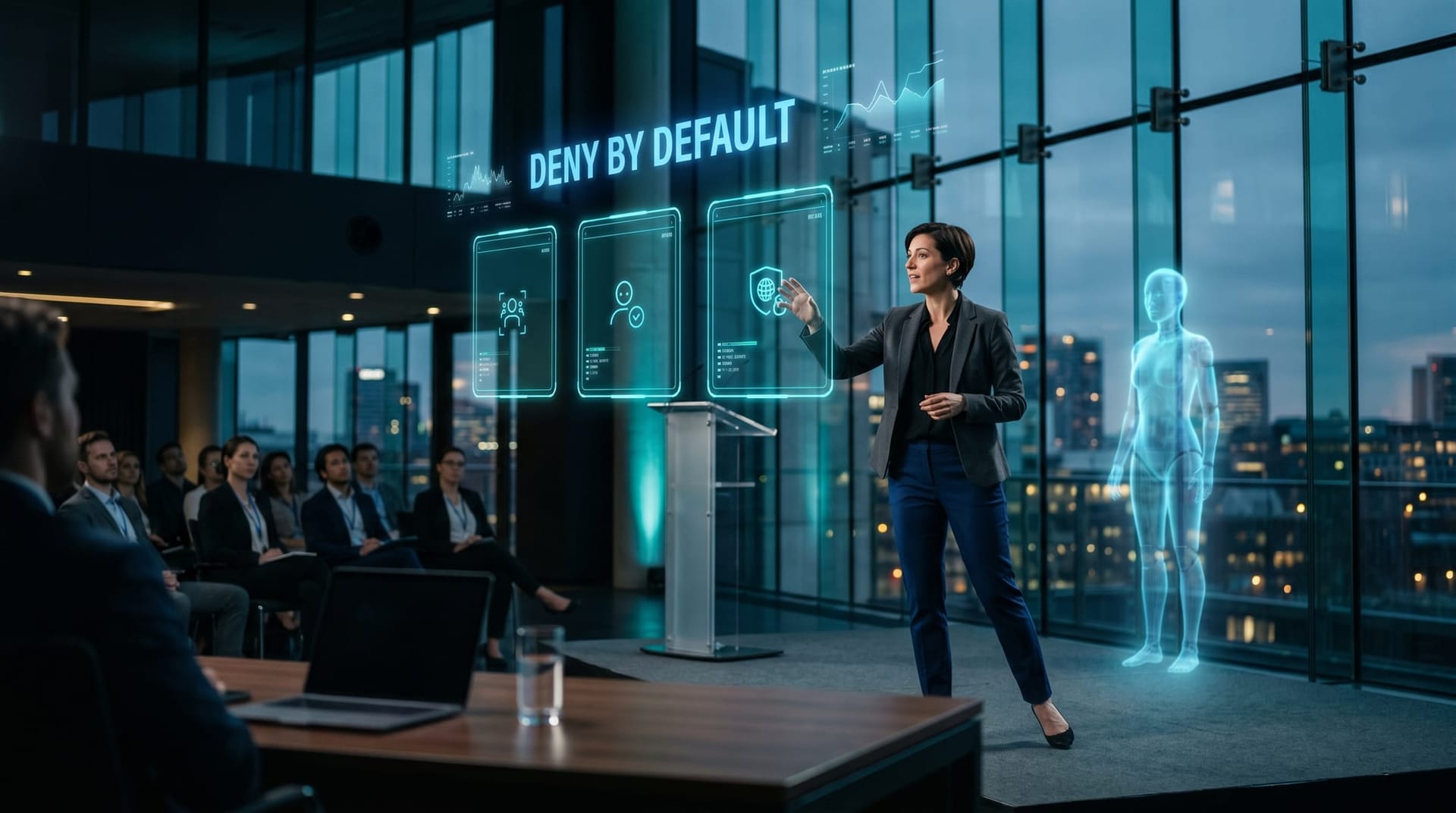
Why now? Because the risk these tools address is no longer theoretical. The OWASP Top 10 for LLM Applications lists Excessive Agency (LLM06), Prompt Injection (LLM01), and Improper Output Handling (LLM05) among the ten most critical risks for AI systems — and an autonomous agent with shell access is the place all three converge. The common thread across MXC, OpenShell, and Codex is identical: enforce limits on the environment, deny by default, and keep an audit trail, because you cannot trust an agent to police itself.
| Isolation approach | Where the boundary lives | Default posture | Best fit |
|---|---|---|---|
| Microsoft MXC | OS kernel (Windows / WSL) | Declared per-agent policy | Teams standardizing agents on Windows hosts |
| NVIDIA OpenShell | Out-of-process governance layer | Deny-by-default | Long-running, self-evolving autonomous agents |
| OpenAI Codex sandbox | Platform-native (Seatbelt, bubblewrap, Windows Sandbox) | Workspace-write, network off | Coding agents editing a local repo |
| Secure AI gateway | Network + credential broker in front of the agent | Scoped, observable, least-privilege | Mid-market AI Employees calling business systems |
Sandbox vs. Secure AI Gateway: What's the Difference?
This is where teams get confused, so it is worth being precise. A sandbox and a secure AI gateway are not competitors. They guard different doors.
A sandbox scopes execution: where the agent's code runs, which files it can read or write, whether it can open a network socket, and what happens when it crashes. MXC, OpenShell, and Codex all live here. The question a sandbox answers is, “If this agent does something stupid or gets hijacked, how far can the damage spread?”
A secure AI gateway scopes access: which credentials the agent is allowed to use, which business systems and data it can call, and whether a human has to approve a sensitive action. The question a gateway answers is, “What is this agent permitted to do on behalf of the business, and can I prove what it did?” We made the credential side of this case in Zero-Trust AI Agents: Why Credential Isolation Matters in 2026, which argues that the agent should never hold the long-lived secret in the first place.
The two layers reinforce each other. A sandbox with no gateway is an agent that can't escape its box but still holds the keys to your CRM. A gateway with no sandbox is an agent whose access is brokered but whose runtime can be poisoned by a malicious file or a prompt-injected web page. The newer attack classes — where an agent is tricked into misusing legitimate authority — sit in the seam between the two, which is exactly why we built the Confused-Deputy AI Agent Audit Matrix for Mid-Market IT to be run across both layers.
In our experience, the order of operations matters: scope the access first (a leaked read-only token is far less dangerous than a leaked admin token), then scope the execution. Both, not either.

What Does a Mid-Market Operator Actually Need? (You Don't Run a Hyperscaler)
Here is the honest part. MXC is built for organizations standardizing fleets of agents on Windows infrastructure, with developers writing containment policies against an SDK. If you run a 40-person manufacturer, a regional clinic, or a professional-services firm in Allen County, that is not your world, and pretending otherwise wastes money.
What you need is the principle MXC encodes, delivered at your scale: every AI Employee runs inside a scoped, observable, least-privilege boundary, and you can see what it did. That is the job of a secure AI gateway. It sits in front of the agent and brokers every call — which model it talks to, which systems it can reach, which credentials it borrows for how long, and which actions pause for a human. You get the deny-by-default posture and the audit trail that MXC, OpenShell, and Codex all converge on, without standing up kernel-level container policy yourself.
For teams that genuinely do want to own the runtime — usually regulated industries with data-residency rules — self-hosting is a legitimate path, and we walked through the buyer's test for it in Self-Hosted Kubernetes AI Agent Runtime: Mid-Market Buyer Test. For everyone else, the gateway pattern delivers the same containment principle with far less operational weight.
To keep this honest about trade-offs: a gateway adds a hop, which adds a little latency and one more component to maintain. The payoff is that the boundary is yours, observable, and consistent across every agent — instead of trusting each vendor's sandbox to be configured correctly. For most mid-market operators, that trade is worth it.

How Should You Evaluate “Where Does This Agent Execute and What Can It Reach?”
You don't need a security team to apply the MXC principle. You need a short list of questions and the discipline to ask them before an agent goes live. The NIST AI Risk Management Framework gives a clean structure for this — its four functions (Govern, Map, Measure, Manage) map almost directly onto the agent-evaluation problem, and the framework is voluntary and free to adopt.
Map — understand what the agent touches:
- Where does this agent's code actually execute — a vendor's cloud, our infrastructure, or an employee's laptop?
- What files, folders, and systems can it read? What can it write?
- Can it reach the open internet by default, or does network access require approval (the way Codex's default mode does)?
- Which credentials does it use, and are they short-lived and scoped, or long-lived and broad?
Govern and Manage — decide and enforce:
- Is the boundary enforced outside the agent (on the environment), so a hijacked agent can't lift its own limits?
- Which actions require a human approval gate before they execute?
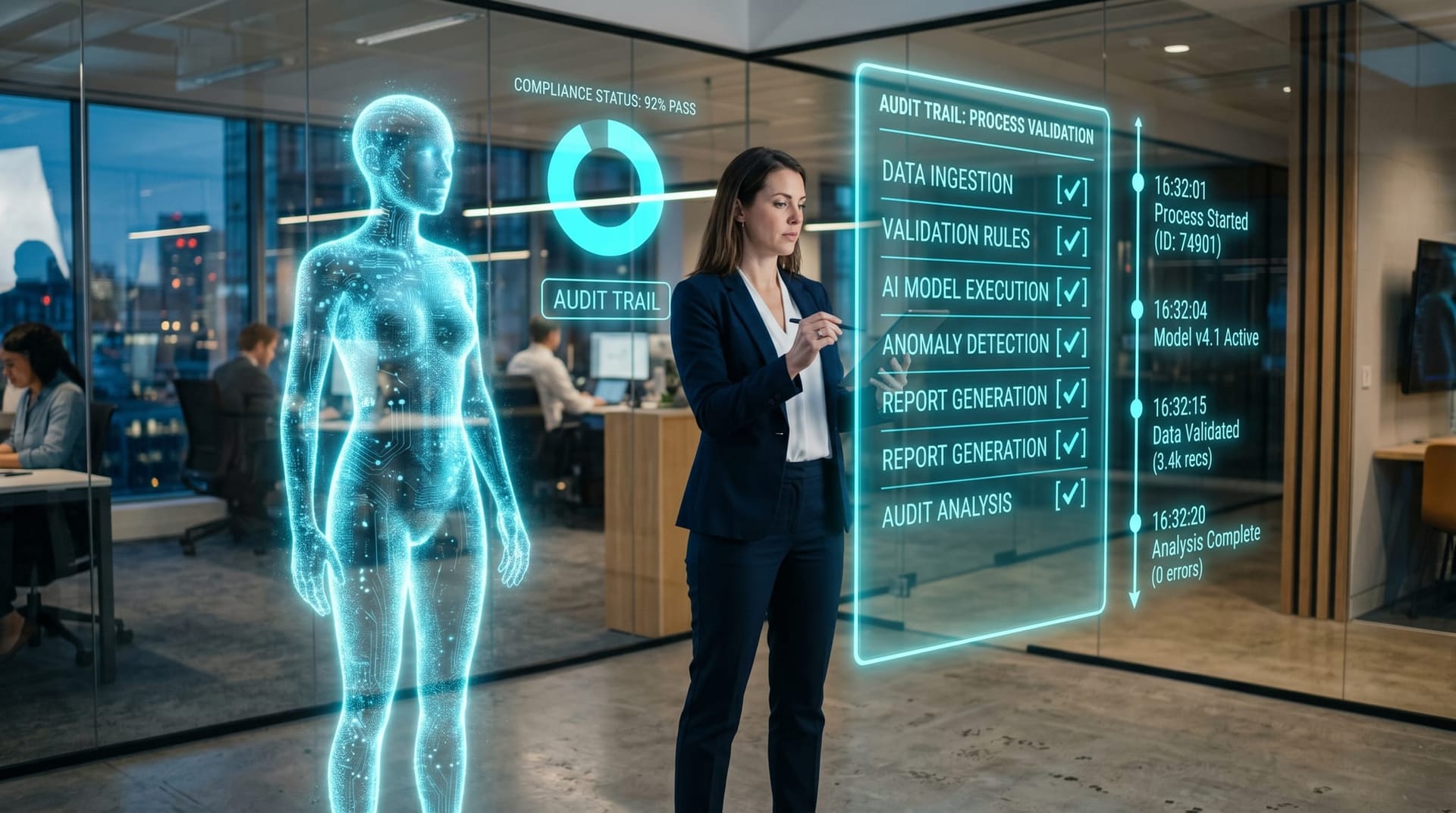
- Is there a complete, reviewable audit trail of what the agent did?
- Who reviews that trail, and how often?
Measure — check it on a schedule. Treat this as a recurring control, not a launch checklist. Our AI Employee Security Checklist turns these questions into a repeatable review you can run quarterly. The goal is not to slow agents down — it is to be able to answer, on any given day, exactly where each agent runs and what it can reach.
Northeast Indiana: How a Fort Wayne Manufacturer or Clinic Should Read MXC
For a business in Auburn, Fort Wayne, or anywhere across DeKalb and Allen County, the MXC announcement is not a buy signal — it is a confirmation. The biggest players in the industry just told you, in product form, that autonomous agents belong inside a boundary. That is the same standard a 30-person shop should hold its AI Employees to.
The translation is straightforward. A Northeast Indiana manufacturer running an AI Employee that drafts quotes and pulls from an ERP doesn't need Microsoft Execution Containers; it needs to know that the agent can read order history but cannot wire payments, that its access to the ERP is brokered and time-limited, and that every action it took last Tuesday is reviewable. A regional clinic experimenting with an AI scheduling agent needs the agent walled off from the records it has no business reading, with that wall enforced on the environment rather than on the agent's good behavior.
The local advantage is that mid-market operators can adopt this principle faster than a hyperscaler can roll out a new OS feature — there are fewer systems, fewer stakeholders, and a shorter path from decision to deployment. Treat the secure AI gateway as the boundary, ask the four questions above before each AI Employee goes live, and you are holding your business to the same containment standard Microsoft, OpenAI, and Nvidia just endorsed.
Put a Boundary Around Your AI Employees
The lesson of MXC is not “go buy a sandbox.” It is that an AI agent without a scoped, observable boundary is an unmanaged risk — and the industry's biggest names now agree on that openly. Cloud Radix builds AI Employees that run inside exactly that boundary. Our secure AI gateway brokers every model call, scopes every credential, gates sensitive actions behind human approval, and logs what each agent did — so you can put autonomous agents to work without guessing where they execute or what they can reach.
If you operate in Fort Wayne or Northeast Indiana and want AI Employees that come with the boundary already built in, let's talk. We'll map what your agents touch and show you the gateway that contains them.
Frequently Asked Questions
Q1.What is Microsoft MXC in simple terms?
MXC, or Microsoft Execution Containers, is a containment layer built into Windows that lets administrators declare exactly what an AI agent is allowed to access, with those limits enforced by the operating system itself. According to VentureBeat, it offers a “composable sandbox spectrum” ranging from lightweight process isolation up to full virtual machines, so the level of containment can match the risk of the agent.
Q2.Do Fort Wayne businesses need Microsoft MXC, or is a secure AI gateway enough?
For most Fort Wayne and Northeast Indiana businesses, a secure AI gateway is enough. MXC is aimed at organizations standardizing fleets of agents on Windows infrastructure. A mid-market manufacturer, clinic, or professional-services firm gets the same benefit — a scoped, observable, deny-by-default boundary — from a secure AI gateway that sits in front of the agent and brokers its access, without having to manage kernel-level container policy themselves.
Q3.What is the difference between an agent sandbox and a secure AI gateway?
A sandbox scopes execution: where the agent's code runs, which files it can touch, and whether it can reach the network. A secure AI gateway scopes access: which credentials and business systems the agent may use, and which actions need human approval. They guard different doors, and a well-secured agent uses both layers together.
Q4.Why did OpenAI and Nvidia partner with Microsoft on MXC?
Per VentureBeat, OpenAI, Nvidia, Manus, Nous Research, and the OpenClaw project all signed on to build atop MXC. Companies that compete on models are cooperating on containment because they have reached the same conclusion: autonomous agents are too capable to run without an enforced boundary. Nvidia is bringing its OpenShell runtime to Windows on MXC.
Q5.What questions should I ask before deploying an AI agent?
Start with two: where does this agent execute, and what can it reach? Then map its file and system access, confirm whether network access requires approval, check that its credentials are short-lived and scoped, verify the boundary is enforced outside the agent, and confirm there is a reviewable audit trail. The NIST AI Risk Management Framework's Govern, Map, Measure, and Manage functions provide a structure for this.
Q6.Is it safe to let an AI agent access the internet?
It depends on whether access is bounded. Tools like OpenAI's Codex sandbox default to asking before using the internet rather than browsing autonomously, because uncontrolled network access is how prompt-injected content and data exfiltration reach an agent. The safer pattern is deny-by-default network access that opens only for approved destinations.
Q7.What frameworks help govern AI agent risk?
The NIST AI Risk Management Framework offers a voluntary structure built around four functions — Govern, Map, Measure, and Manage. The OWASP Top 10 for LLM Applications names the specific risks agents face, including Excessive Agency, Prompt Injection, and Improper Output Handling. Used together, they turn “is this agent safe?” into a checklist you can actually run.
Sources & Further Reading
- VentureBeat: venturebeat.com/security/microsoft-launches-mxc — Microsoft launches MXC, an OS-level sandbox for AI agents, with OpenAI and Nvidia already on board.
- NVIDIA Technical Blog: developer.nvidia.com/blog/run-autonomous-self-evolving-agents-more-safely-with-nvidia-openshell — Run Autonomous, Self-Evolving Agents More Safely with NVIDIA OpenShell.
- OpenAI Developers: developers.openai.com/codex/concepts/sandboxing — Sandbox — Codex.
- OpenAI API Documentation: developers.openai.com/api/docs/guides/agents/sandboxes — Sandbox Agents.
- NIST: nist.gov/itl/ai-risk-management-framework — AI Risk Management Framework (AI RMF 1.0).
- OWASP: genai.owasp.org/llm-top-10 — OWASP Top 10 for LLM Applications.
Put a Boundary Around Your AI Employees
We'll map exactly what your agents touch — where they execute, which systems they can reach, and which credentials they borrow — and show you the secure AI gateway that contains them. Built for Fort Wayne and Northeast Indiana operators who don't run a hyperscaler.
Scope a Secure AI Gateway ReviewNo contracts. Just an honest map of where your AI agents run and what they can reach.