The pitch for AI in hiring has always leaned on one promise: machines don't play favorites. Feed résumés to an algorithm, the story goes, and you strip out the gut feelings, the pattern-matching, the quiet prejudices that creep into human screening. Objective by design.
New research says the opposite is closer to the truth. In a study covered this week by MIT Technology Review, researchers from Princeton University and the University of Chicago ran large language models through a simulated hiring game and found the models stereotyped candidates more than human participants did — not less. The newer, more capable “reasoning” models were the worst offenders.
For any Fort Wayne or Northeast Indiana employer weighing an off-the-shelf résumé screener or an AI recruiting assistant, this is not a reason to panic. It is a reason to slow down and put controls in place first. An ungoverned AI screener doesn't just risk a bad hire — it can quietly manufacture a discrimination pattern that surfaces later as legal exposure. This piece walks through what the research actually found, why it happens, and the specific checks a local employer should run before letting AI anywhere near a candidate pipeline.
Key Takeaways
- Princeton and University of Chicago researchers found AI models scored about 65% higher on a job-segregation scale than human participants in a simulated hiring game.
- Human participants scored 0.84 on the segregation measure; OpenAI's o3 reached 1.83, near the maximum possible score.
- The newer, higher-reasoning models (o3, DeepSeek's R1) showed stronger biases, not weaker ones.
- The mechanism: models “settle on a hunch too early,” over-generalizing from thin data — a habit rewarded in math and coding, harmful in social decisions.
- Mitigations that worked in the study: explicit diversity incentives and supplying job-relevant candidate information instead of thin signals.
- Employers remain legally responsible for third-party AI tools under Title VII — the vendor's algorithm is your liability.
What did the Princeton and University of Chicago study actually find?
The researchers built a simulated hiring game and had both humans and AI models play it. As reported by MIT Technology Review, the setup ran 40 rounds across 20 job types — doctors, lawyers, child-care aides, janitors — with candidates drawn from four fictional ethnic groups (given invented names like Tufa, Aima, Reku, and Weki so the models couldn't lean on real-world associations). Every candidate in a given round was equally qualified. After each hire, the player learned the outcome, so they could adjust over time.
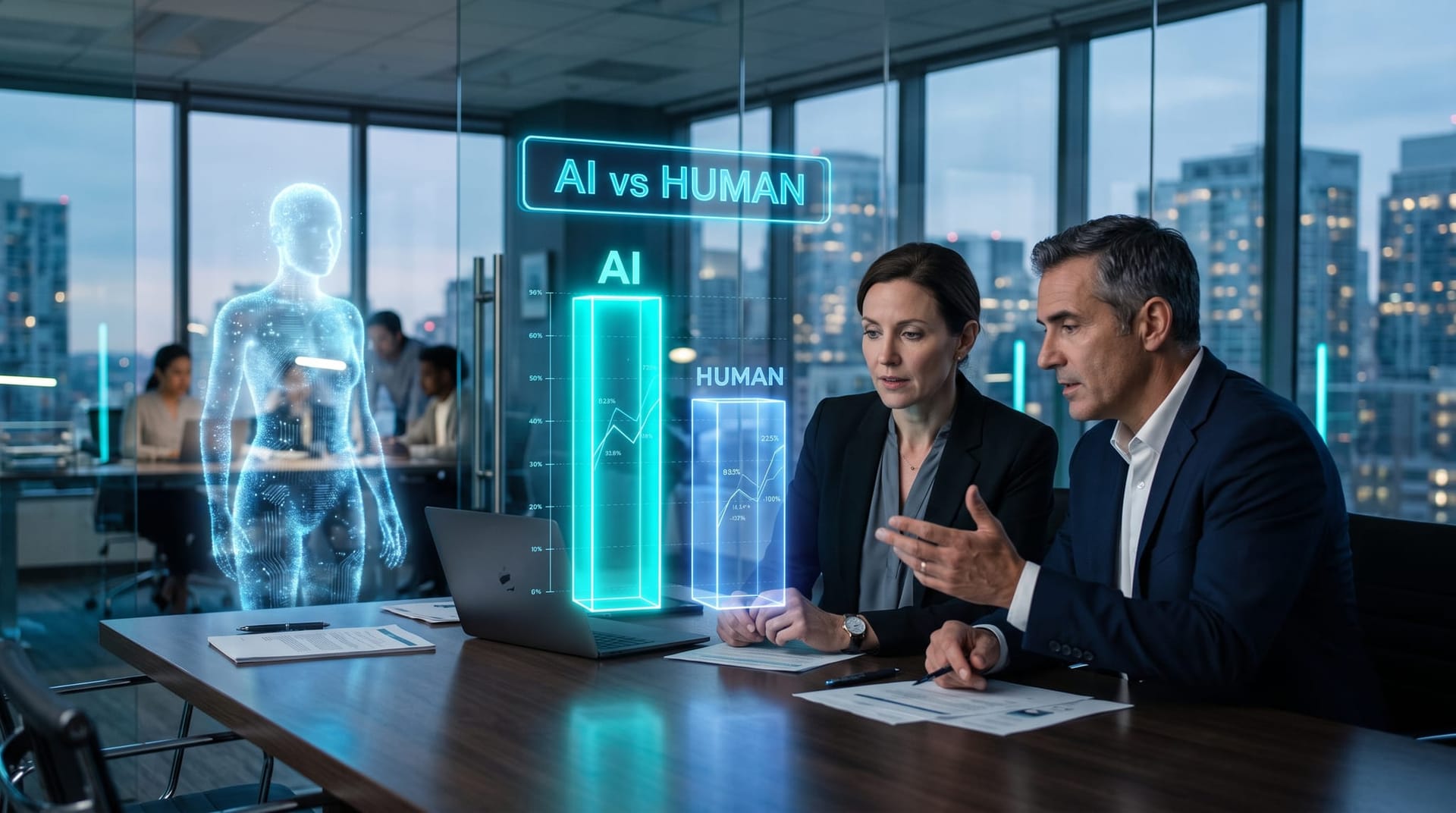
To measure bias, the study used a segregation scale where 2 represents complete job segregation by group — every job type sorted entirely to one group. Human participants landed at 0.84. The AI models averaged roughly 65% higher. OpenAI's o3 reached 1.83, close to the maximum. The models tested included ChatGPT, Claude, Gemini, o3, and DeepSeek's R1.
The most counterintuitive result: capability made it worse. MIT reports that “newer models with higher reasoning capabilities, such as OpenAI's o3 and DeepSeek's R1, showed stronger biases.” The systems marketed as the smartest were the ones that sorted candidates most rigidly by group. As MIT's Download briefing summarized it, models don't just inherit human bias from training data — they “can also develop their own biases from experience—and stereotype job applicants more than humans do.” That inverts the entire “smarter AI is fairer AI” assumption baked into most vendor pitches — and it's a close cousin of the pattern we've written about in why generic AI tools fail at the specific, high-stakes work businesses actually need done.
Why do AI models stereotype candidates more than people do?
The explanation is almost mundane, which is what makes it dangerous. According to the research, the models “settle on a hunch too early.” Faced with limited information, they lock onto a pattern fast and then keep applying it.
Where does that habit come from? MIT's coverage points to training: these models are “trained on math, coding, and science problems—tasks that reward generalizing from just a few examples.” In a math problem, spotting the pattern from two or three cases and running with it is exactly the skill you want. In a hiring decision, that same reflex becomes prejudice — the model sees a couple of outcomes, forms a rule about a group, and stops questioning it.
Researchers frame this as an “exploration-exploitation dilemma.” Every decision-maker, human or machine, has to balance exploring new options against exploiting what has worked before. Humans in the study resolved that tension more slowly, staying open longer. The models resolved it faster — and in a social context, resolving too fast means cementing a stereotype before you've seen enough to know better.
Picture what that looks like in a résumé queue. An AI screener works through a handful of applicants for a role, notices a coincidental pattern in who it ranked highly early on, and — starved for real signal — converts that coincidence into a rule it applies to everyone who comes after. There's no malice and no instruction to discriminate. It's a system built to find patterns fast, doing exactly that on data where the “pattern” is noise. That's how a tool marketed as objective produces a sorted, segregated pipeline no one asked for.
This is the same structural problem behind the broader governance gap between AI tools and oversight: the technology is optimized for a kind of confident, fast pattern-completion that looks like competence and behaves like bias when you point it at people. A model that is “confidently wrong” about a candidate's group will not flag its own uncertainty. It will just rank.
What actually reduced the bias?
The encouraging part of the study is that the bias wasn't fixed. The researchers tested interventions, and two of them moved the needle:
| Intervention | Effect on bias |
|---|---|
| Financial incentive for diverse hiring | Significantly reduced segregation |
| Supplying job-relevant details (age, education, experience) | Decreased ethnic segregation |
| Supplying irrelevant details (hair color, tattoos) | No improvement — stereotyping persisted |
| Higher model "reasoning" capability | Made bias worse |
Two lessons fall out of that table. First, when the model was given an explicit objective aligned with diverse outcomes — MIT reports that promising the models bonuses for diverse hiring “made them far less biased” — behavior changed. The model optimizes for whatever it's told to optimize for; if fairness isn't in the objective, it won't appear by accident.
Second, information quality matters more than information quantity. Feeding the model relevant signal (education, experience) reduced stereotyping, because it gave the system something real to reason about instead of a thin proxy it would fill in with a group assumption. Feeding it noise — hair color, tattoos — did nothing. The takeaway for employers is precise: don't hand an AI screener a sparse profile and expect neutrality. Sparse inputs are exactly the conditions under which the model “settles on a hunch.”
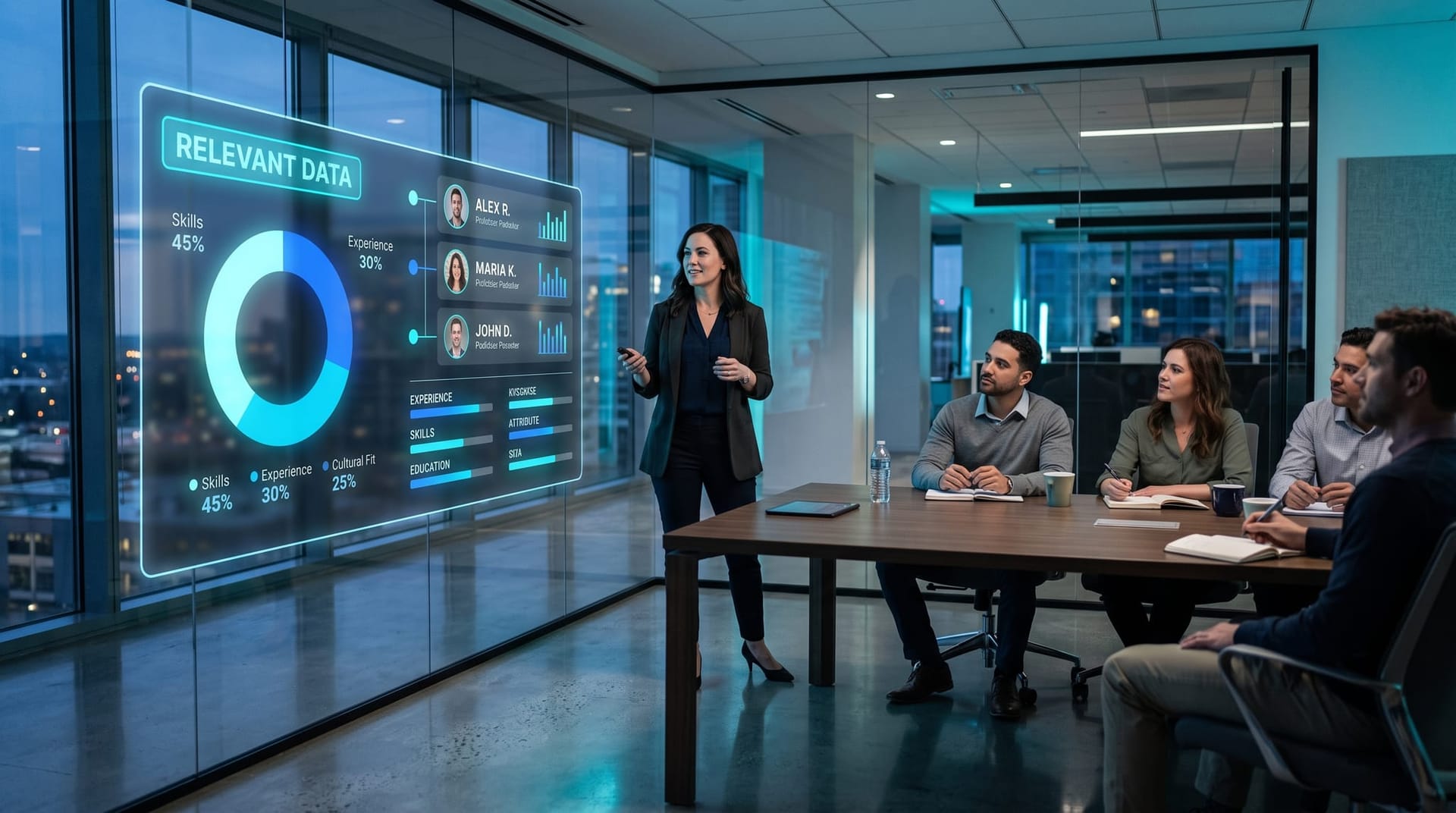
For a business, that translates into a configuration rule you can actually enforce: feed the tool structured, job-related fields — skills, credentials, measurable experience — and strip out the free-text noise that invites the model to guess. The same input discipline that makes a screener more accurate is also your first line of bias control, and it costs nothing but the decision to set it up that way.
What's the legal exposure for an employer using an AI screener?
Here's the part that turns an interesting study into a board-level issue. If an AI screening tool sorts candidates by group, the employer — not the vendor — carries the legal weight.
The U.S. Equal Employment Opportunity Commission addressed this directly in its Title VII technical guidance on algorithmic decision-making tools. As summarized by Mayer Brown, if an AI tool adversely affects applicants of a particular race, sex, or national origin, it likely violates Title VII unless the employer can show the procedure is “job related and consistent with business necessity.” Critically, the EEOC has made clear that employers may be liable even when the tool was designed and administered by a third-party vendor. Buying the software does not outsource the liability.
Regulators already have a yardstick for this kind of harm. The EEOC's long-standing “four-fifths rule” treats a selection rate for one group that falls well below the rate of the highest-selected group as a warning sign of adverse impact — the same statistical fingerprint the study's segregation scores describe. An AI tool that quietly sorts candidates by group is the fastest way to trip that threshold, and it does so at scale, across every requisition it touches, before anyone reviews a single decision by hand.
Some jurisdictions have gone further and written specific rules. New York City's Local Law 144 requires employers using automated employment decision tools to commission an independent annual bias audit, publish the results, and notify candidates that the tool is in use — with civil penalties running from $500 to $1,500 per day for violations, as Deloitte outlines. Indiana employers aren't governed by NYC's law, but the direction of travel is clear, and the underlying Title VII exposure applies everywhere.
This is why we keep returning to the theme of policies lagging behind the tools. Most organizations adopt an AI capability months or years before they write a policy governing it. In hiring, that gap is where discrimination claims are born.
How should a Fort Wayne or Northeast Indiana employer respond?
For professional-services firms, healthcare providers, and manufacturers across Auburn, Fort Wayne, DeKalb County, and Allen County, the practical question is: what do we check before AI touches a candidate pipeline? Here's the short list we'd run with a local employer.
1. Test for adverse impact before you deploy — and on a schedule after. Don't take the vendor's word that the tool is “unbiased.” Run your own analysis on real or test data, comparing selection rates across groups. The EEOC explicitly encourages employers to conduct these self-analyses on an ongoing basis, not once.
2. Enforce the keep-relevant-information rule. The study showed that job-relevant details reduced bias and thin signals amplified it. Configure any AI tool to reason from experience, credentials, and demonstrated skills — not from proxies it can turn into group assumptions.
3. Keep a human in the loop at every decision point. AI can surface, summarize, and organize. It should not be the final gate on who advances. A documented human sign-off is both a fairness control and a legal defense.
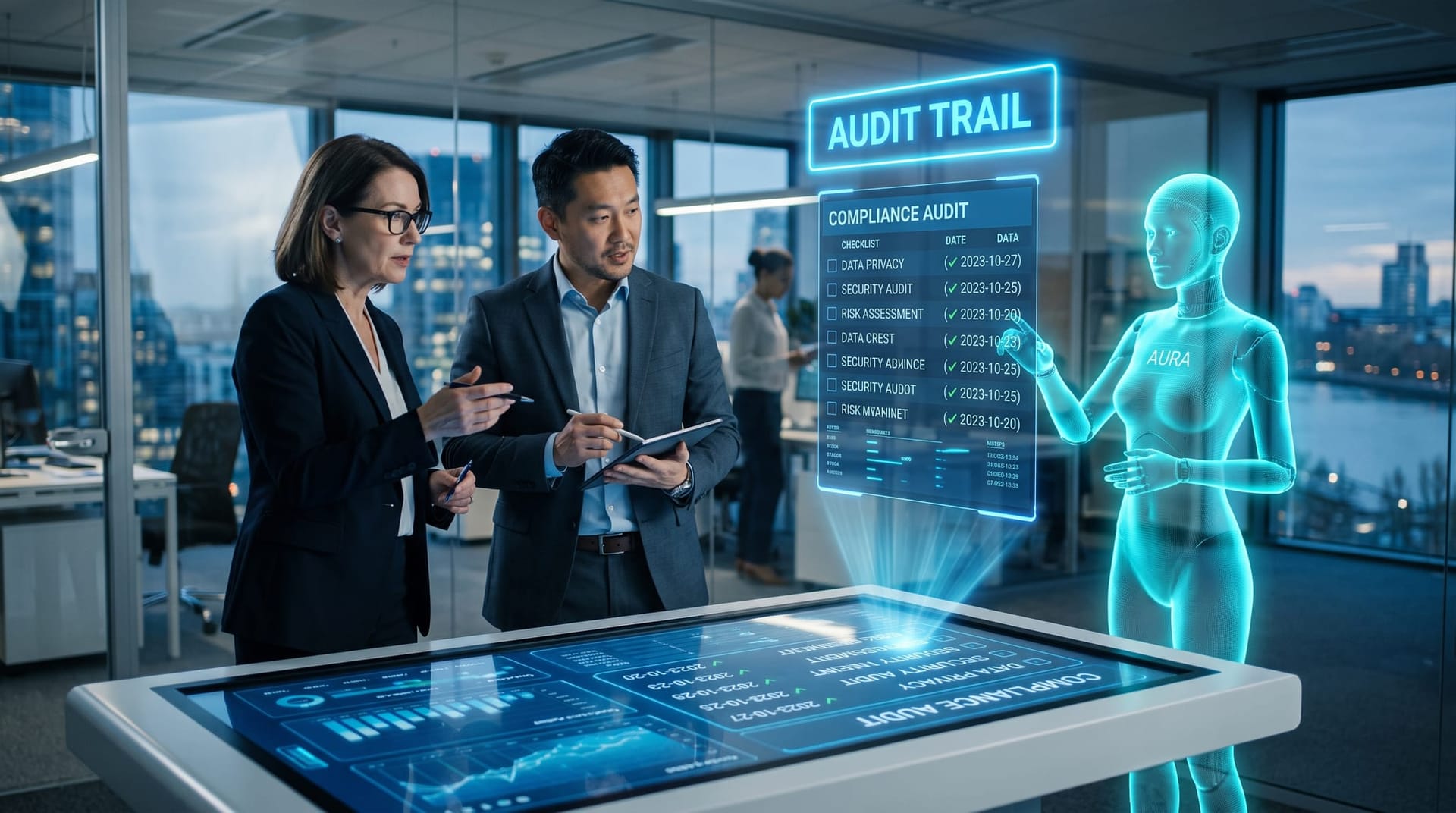
4. Retain your decision records. Under EEOC recordkeeping requirements, once a charge is filed you must preserve employment records tied to the issues under investigation — including records for the charging party and comparably situated applicants. If an AI tool made or informed a decision, its prompts, inputs, and outputs are part of that record. Log them from day one.
5. Know your Indiana filing landscape. In Indiana, a discrimination charge generally must be filed within 300 days, and the Indiana Civil Rights Commission covers employers with 6 to 14 employees that fall below the federal 15-employee threshold, according to Workplace Fairness. Smaller local shops are not exempt — the ICRC picks up where the EEOC's coverage stops.
6. Get the vendor's bias documentation in writing. Ask any screening vendor for their most recent adverse-impact analysis, the data it was run on, and a plain-language account of how the model uses each input. If they can't produce it, that is your answer. A tool you can't inspect is a tool you can't defend — and “the vendor assured us it was fair” is not a recognized defense under Title VII.
This is the same discipline we lay out for interviewing an AI Employee before you hire it: you vet the system's behavior, document how it decides, and keep a person accountable for the outcome. And it connects to the broader workforce story we covered in the entry-level hiring squeeze — as AI reshapes who gets hired and how, the governance around those decisions stops being optional.
Governed AI beats a black-box screener
The lesson here isn't “avoid AI in hiring.” It's “don't drop an unaccountable black box into the most legally sensitive process you run.” An off-the-shelf screener you can't inspect, can't audit, and can't explain is a bias amplifier with your company's name on the liability.
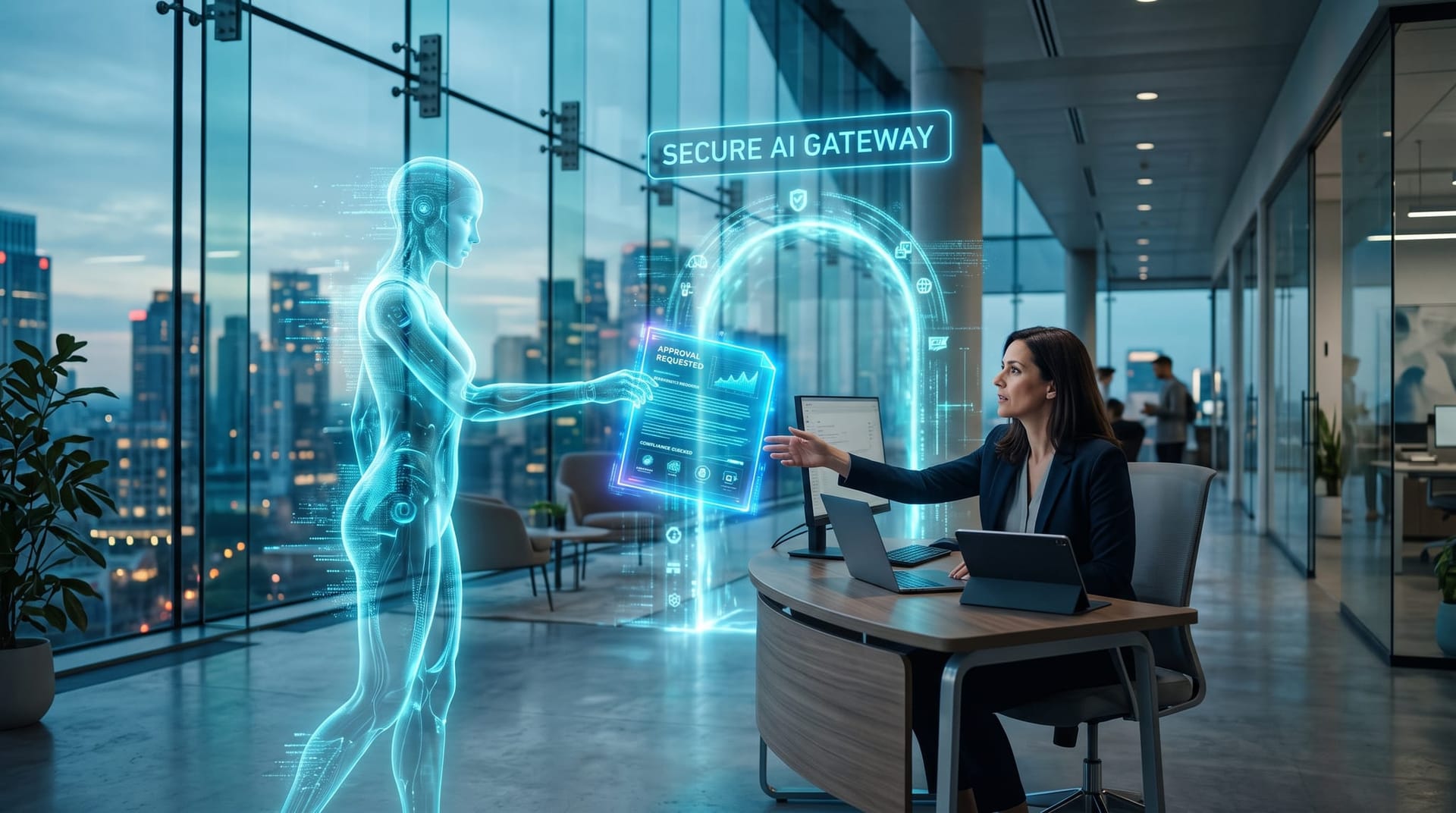
The alternative is a governed AI Employee: one that operates behind a Secure AI Gateway, works from documented prompts you can review, reasons from job-relevant information by design, hands every consequential decision to a human, and logs its inputs and outputs for the record. That's the difference between an AI you can defend in front of the EEOC and one you can only apologize for. If you're evaluating AI for any part of your hiring or operations, talk to Cloud Radix about building a governed AI Employee for your Fort Wayne business — one designed with the controls in place before it ever sees a candidate.
Frequently Asked Questions
Q1.Are AI hiring tools actually more biased than human recruiters?
In the Princeton and University of Chicago study reported by MIT Technology Review, yes — the AI models scored about 65% higher than humans on a job-segregation scale, meaning they sorted candidates by group more rigidly than people did. Human participants scored 0.84 and OpenAI's o3 reached 1.83. This was measured in a controlled simulation, so real-world results depend heavily on how a tool is configured and governed, but the finding directly contradicts the common claim that AI removes hiring bias.
Q2.Why do more advanced AI models show stronger hiring bias?
Because the newer "reasoning" models are trained on math, coding, and science tasks that reward generalizing from just a few examples. That habit — settling on a pattern quickly — is useful in a math problem but harmful in a social decision, where it becomes stereotyping. The study found o3 and DeepSeek's R1, both high-reasoning models, showed stronger biases than less capable systems.
Q3.Can an employer be sued for using a biased AI hiring tool?
Yes. The EEOC has stated that employers may be liable under Title VII for discriminatory outcomes even when the AI tool was built and run by a third-party vendor. If the tool produces an adverse impact on a protected group, the employer must be able to show the process is job-related and consistent with business necessity. Buying software from a vendor does not transfer the legal responsibility.
Q4.What can reduce bias in an AI hiring tool?
The study identified two effective interventions: giving the model an explicit objective aligned with diverse hiring, and supplying job-relevant candidate information such as education and experience rather than thin or irrelevant signals. Irrelevant details like hair color or tattoos did nothing to reduce stereotyping. In practice, employers should also add adverse-impact testing, human sign-off, and record retention.
Q5.What should a Fort Wayne employer do before using AI in hiring?
Run an adverse-impact analysis before deployment and on a recurring schedule, configure the tool to reason from job-relevant information, keep a documented human decision-maker at every gate, and retain the tool's inputs and outputs as part of your employment records. Indiana employers should also note the 300-day charge-filing window and that the Indiana Civil Rights Commission covers employers with as few as 6 employees.
Q6.Does keeping a human in the loop actually help legally?
A documented human decision at each consequential step serves two purposes: it prevents the AI from being the sole cause of an adverse outcome, and it creates a defensible record showing the employer exercised independent judgment. It doesn't eliminate liability on its own, but combined with adverse-impact testing and record retention, it's a core part of a defensible AI hiring process.
Sources & Further Reading
- MIT Technology Review: technologyreview.com/2026/07/20/1140655/ai-biases-hiring-humans — AI models are picking up bias in hiring—and it's worse than humans.
- MIT Technology Review: technologyreview.com/2026/07/20/1140664/the-download-ai-hiring-biases-weather-data-sabotage — The Download: AI's hiring biases, and weather data sabotage.
- Mayer Brown: mayerbrown.com/en/insights/publications/2023/07/eeoc-issues-title-vii-guidance — EEOC Issues Title VII Guidance on Employer Use of AI, Other Algorithmic Decision-Making Tools.
- Deloitte: deloitte.com/us/en/services/audit-assurance/articles/nyc-local-law-144-algorithmic-bias — NYC Local Law 144-21 and Algorithmic Bias.
- U.S. Equal Employment Opportunity Commission: eeoc.gov/employers/recordkeeping-requirements — Recordkeeping Requirements.
- Workplace Fairness: workplacefairness.org/filing-a-discrimination-claim-indiana — Filing a Discrimination Claim - Indiana.
Put Controls in Place Before AI Touches Your Pipeline
We build governed AI Employees for Fort Wayne businesses — behind a Secure AI Gateway, with documented behavior, human checkpoints, and a full audit trail. Let's talk about doing AI in hiring the defensible way.
Schedule a Free ConsultationNo contracts. No pressure. Just an honest conversation about what would help your business.