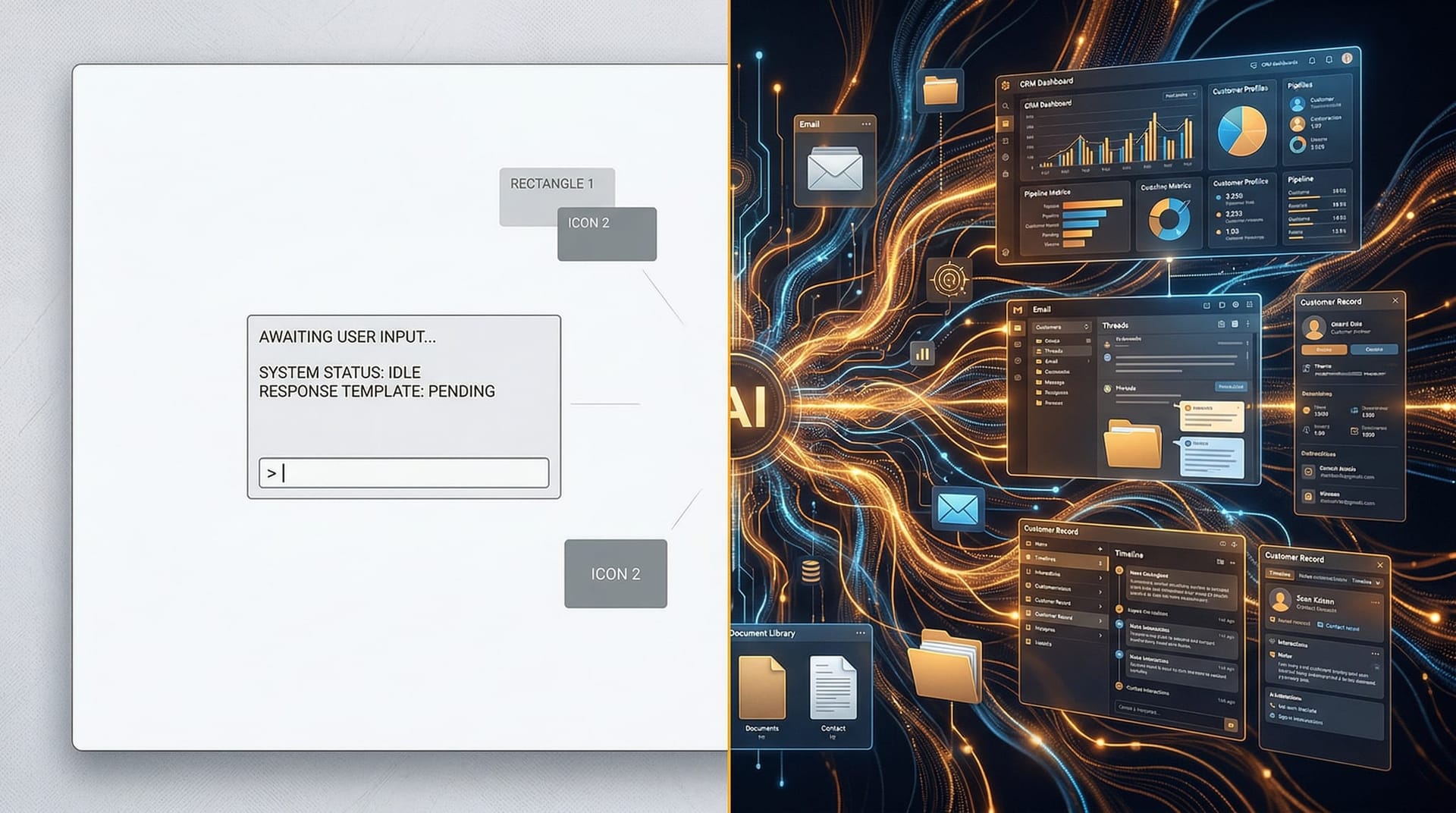
For most of the AI era, “research” meant typing a question into a box and getting an answer back in seconds. That framing is about to feel quaint. In June 2026, Tokyo-based Sakana AI launched Marlin, an autonomous research agent that doesn't answer in seconds — it works for up to eight hours straight, issues hundreds to thousands of model queries, and hands back a 60-to-100-page report with cited sources and presentation slides. According to reporting from MarkTechPost, Sakana positions it as a “Virtual CSO” — a virtual chief strategy officer you assign a hard question and walk away from.
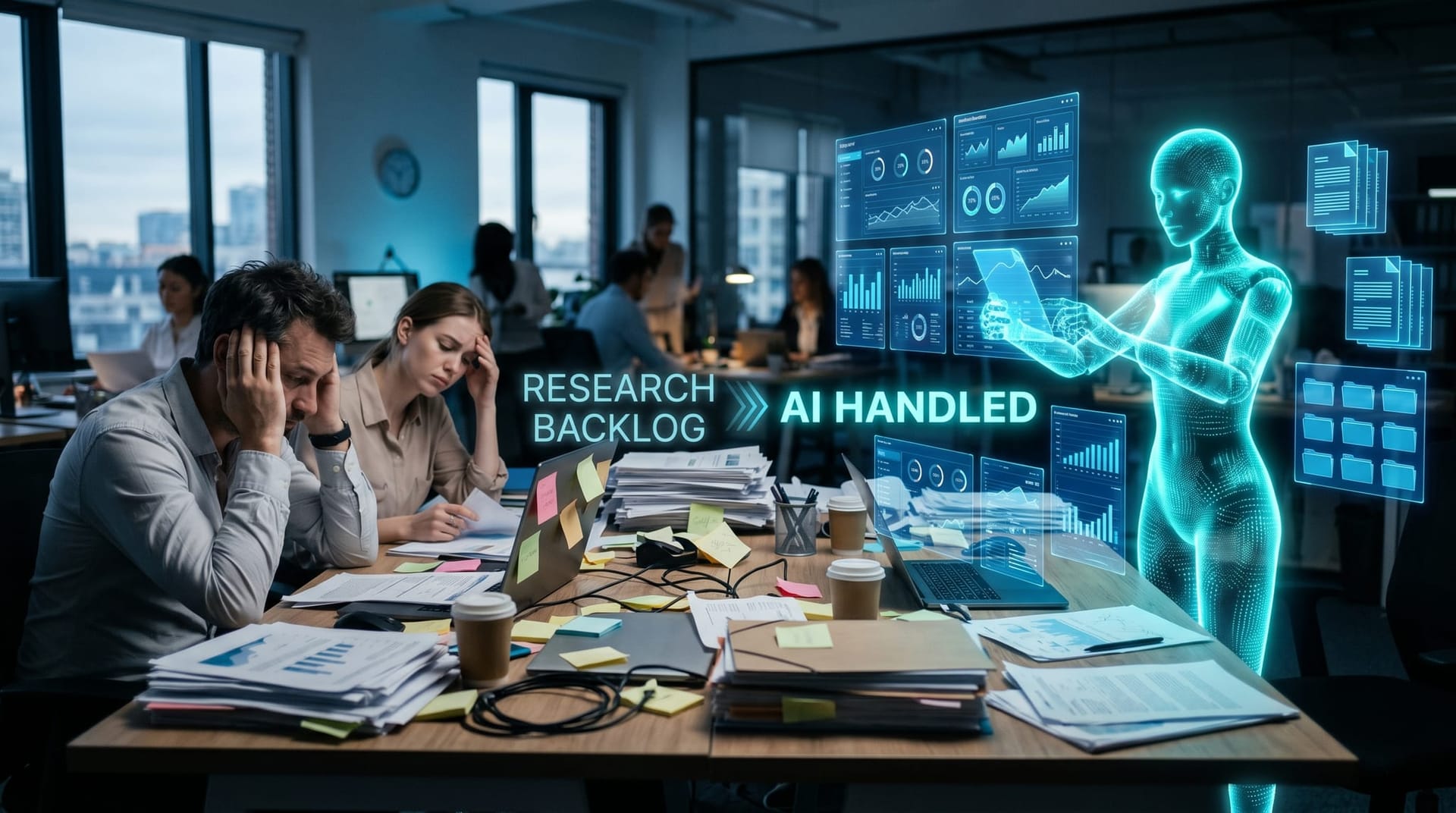
Strip away the frontier-lab packaging and here's what actually happened: a research analyst's deepest, most time-consuming deliverable became something you can delegate to software and review later. That is the core Cloud Radix worldview made literal. Research is no longer a button you press; it's a job you can hand to an AI Employee. And the work it targets — competitive analysis, market sizing, vendor due diligence, RFP responses, regulatory scans — is exactly the work that, in most mid-market companies, either eats days of a senior person's week or quietly never gets done at all.
Key Takeaways
- Sakana's Marlin runs autonomously for ~8 hours and returns 60–100 page reports with 60–80 cited sources plus slides — a different category of tool than minute-scale “deep research” buttons.
- The deliverable, not the chat, is the point. This is research as a delegated job with a finished output, not a conversation you have to babysit.
- The work it targets is universal: competitive intelligence, market sizing, due diligence, RFP responses, and regulatory scans — the research most mid-market teams skip for lack of time.
- Depth amplifies the accuracy problem. A longer, more confident report still requires human verification; “more pages” is not “more true.”
- The mid-market unlock is delegation without headcount: a research AI Employee runs continuously and cites its work so a person can verify and decide.
- The safe pattern is depth + a Secure AI Gateway + a human checkpoint — not an unsupervised agent with access to everything.
What Did Sakana AI Actually Build — and Why Does 8 Hours Matter?
The headline number is deliberately strange. Most research tools compete on speed; Marlin competes on the opposite. As VentureBeat framed it, the pitch is for the moment “when deep research isn't enough” — when a three-minute answer is too shallow for a decision that actually matters.
Per MarkTechPost's breakdown, a single Marlin run can spend up to roughly eight hours on one task, issue “hundreds to thousands of LLM queries,” and produce a report spanning dozens to about 100 pages with 60 to 80 cited sources, plus accompanying presentation slides generated by image AI. It does not behave like a chatbot. You don't ping-pong with it; you assign a question and collect a deliverable.

Under the hood, Marlin is built on a technique Sakana calls AB-MCTS — Adaptive Branching Monte Carlo Tree Search. Instead of generating one linear chain of reasoning, it treats the problem as a search tree and decides at each step whether to go “wider” (try new candidate directions) or “deeper” (refine a promising path). A multi-model variant routes different steps to different underlying models. In Sakana's reported experiments, combining o4-mini, Gemini 2.5 Pro, and DeepSeek-R1 reached roughly 27.5% task completion versus about 23% for o4-mini alone — a modest but real gain from letting several models check each other's work. The approach traces back to a NeurIPS 2025 Spotlight paper and Sakana's earlier “AI Scientist” research published in Nature. (If the idea of routing across multiple models sounds familiar, it should — we covered the same company's lighter-weight approach in Sakana's 7B router and the multi-model era.)
The eight hours matter because they encode a trade. The agent is buying depth and breadth with time and compute — exploring more sources, cross-checking more claims, and assembling a structured argument rather than a paragraph. Whether that trade is worth it depends entirely on the decision you're feeding it.
It's also worth noting what Sakana did and didn't release. Marlin itself stays closed and enterprise-priced, but the AB-MCTS search algorithm underneath it ships as an open-source library called TreeQuest under an Apache 2.0 license. That split is telling: the genuinely defensible part is the system — the orchestration, the data access, the human workflow wrapped around the model — not the raw reasoning trick, which anyone can now build on. For a business, that's the right lesson. You don't win by owning a clever algorithm; you win by wiring a capable agent into an actual job with the right guardrails. The model is a commodity; the deployment is the product.
What Research Work Is Actually Eating Your Team's Week?
It's easy to read “100-page autonomous report” as a research-lab curiosity. It isn't. The same shape of work shows up in nearly every mid-market business, just without the fancy label. Consider the research a 40-to-300-person company actually owes itself but rarely produces:
- Competitive intelligence — what three rivals changed in pricing, packaging, hiring, and messaging this quarter, with sources.
- Market sizing and entry analysis — is the adjacent service line or county worth pursuing, and what does the demand look like?
- Vendor and partner due diligence — a real read on a software vendor, an acquisition target, or a channel partner before you sign.
- RFP and proposal research — the background, incumbent, and requirements digging that makes a bid credible.
- Regulatory and compliance scans — what changed in the rules that govern your industry, and what it means for you.
Sakana didn't pull these examples from thin air either. According to MarkTechPost, roughly 300 professionals tested Marlin during a closed beta in April 2026 on real tasks spanning strategy formulation, market research, risk analysis, and competitive analysis — and Sakana reports partnerships with MUFG and a strategic investment from Citigroup. The validation pool is enterprise-flavored, but the underlying jobs are universal.
Here's the uncomfortable part for most operators: in a mid-market company, this work usually has no owner. There's no full-time analyst. So competitive intel gets done in a frantic afternoon before a board meeting, market sizing gets skipped, and due diligence becomes “the founder Googled it.” A research AI Employee changes the economics of that decision. The work that didn't justify a hire can justify a continuously-running agent — the same delegation logic we walk through in moving from AI pilots to AI Employees.
How Is a Research AI Employee Different From a Chatbot or a Deep-Research Button?
This is where precision matters, because three very different things now share the phrase “deep research.” A consumer chat tool, a minute-scale deep-research feature, and an hours-long autonomous agent are not interchangeable.
| Capability | Standard AI chatbot | “Deep research” button | Research AI Employee (e.g. Marlin-class) |
|---|---|---|---|
| Runtime per task | Seconds | A few minutes | Up to ~8 hours |
| Typical output | A paragraph or two | A cited text report | 60–100 page report + slides, 60–80 sources |
| Interaction | You drive every step | One prompt, one report | Delegate-and-collect |
| Source grounding | Often none | Cited | Cited, cross-checked across many queries |
| Best for | Quick lookups | Mid-depth questions | Decisions that justify the depth |
The minute-scale tools — OpenAI's Deep Research, Perplexity, and Google's Gemini all ship a version — are genuinely useful and fast. MarkTechPost's own comparison puts them at minutes-scale cited reports, while Marlin deliberately spends hours for a thicker deliverable. Neither is “better” in the abstract; they answer different questions.
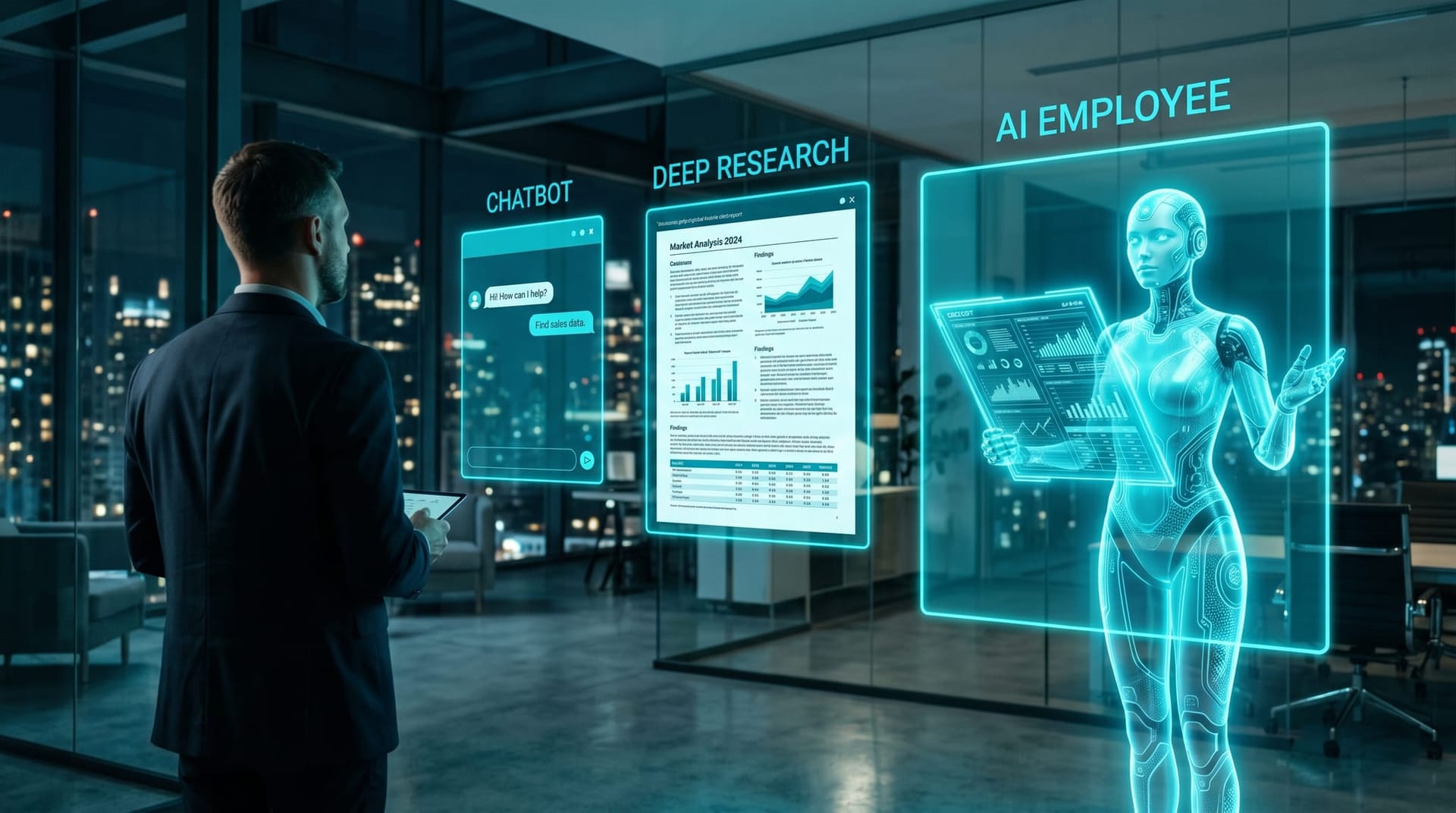
But there's a deeper distinction than runtime, and it's the one Cloud Radix cares about most: a button produces an artifact, while an AI Employee holds a role. A research AI Employee isn't just Marlin-the-model; it's the model plus a defined job, a standing brief, scheduled cadence, access controls, and a human it reports to. It knows your business context, runs the competitive scan every Monday without being asked, and routes its output to the right person. That's the gap between a powerful tool and an actual hire — the same gap we unpack in why generic AI tools fail where custom AI Employees don't. Capability is necessary; it isn't sufficient.
When Deep Research Isn't Enough: The Accuracy and Verification Problem
Now the honest counter-beat — and it's the most important section in this post. The depth that makes Marlin impressive is also what makes it dangerous to trust blindly. VentureBeat's framing (“when deep research isn't enough”) cuts both ways: depth solves shallowness, but it does not solve correctness.
MarkTechPost is candid about the limits. Long runtimes slow iteration compared to minute-scale tools. Automated reports “require human review for hard-to-spot errors.” The enterprise pricing excludes individual developers. And Marlin itself stays closed — only the underlying AB-MCTS algorithm is open-sourced as a library called TreeQuest (Apache 2.0). A 100-page report is, paradoxically, harder to fact-check than a paragraph, and a confident, well-formatted, source-studded document is exactly the kind of output people stop questioning. More pages is not more true.
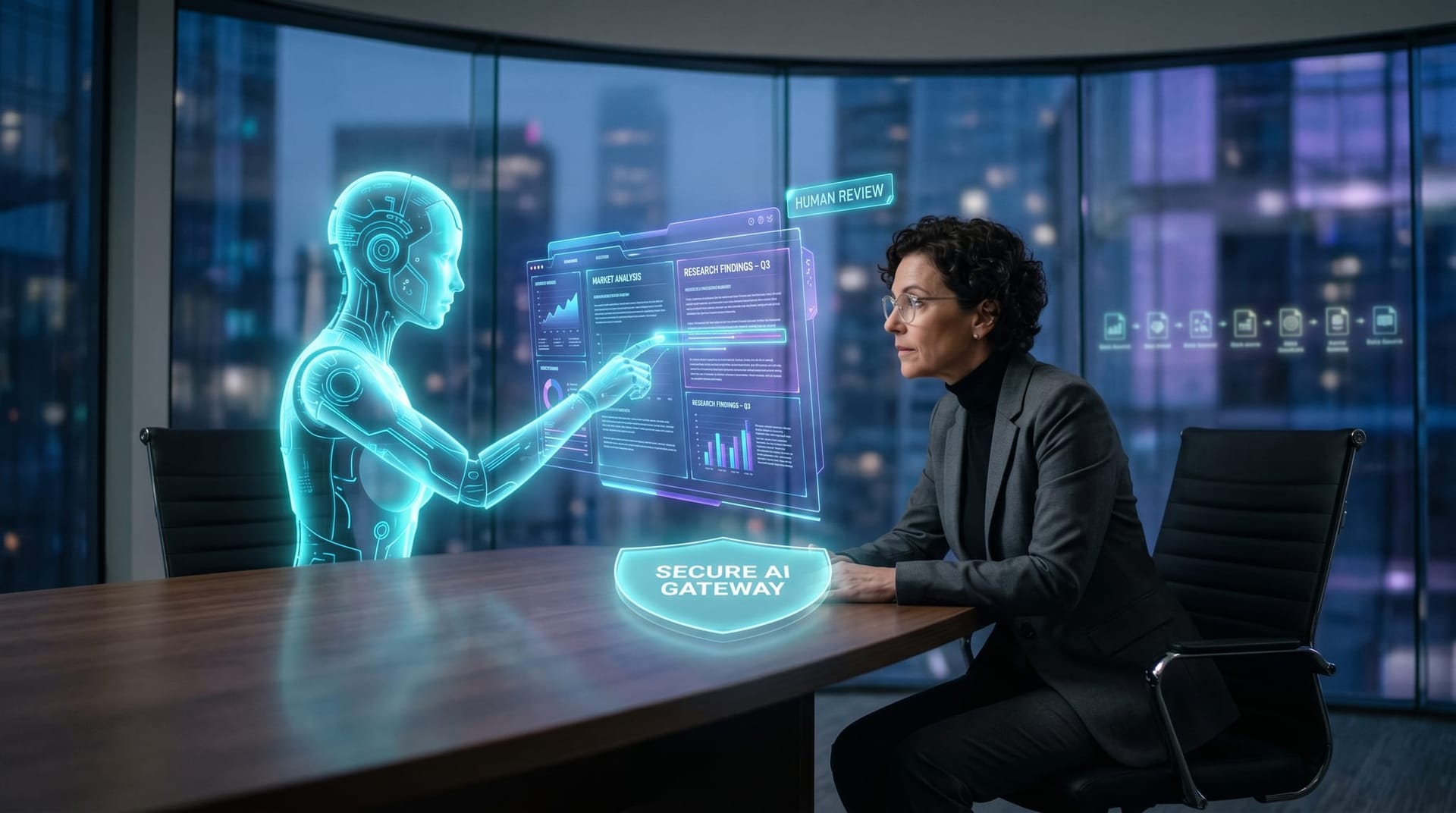
This is why Cloud Radix doesn't sell “an agent with the keys to everything.” The pattern that actually works for a business is depth plus a Secure AI Gateway plus a human checkpoint:
- Depth gives you a real brief instead of a shallow summary.
- A Secure AI Gateway governs what data the research Employee can touch, what it can send out, and what gets logged — so an autonomous agent running for hours doesn't quietly become a data-exfiltration path.
- A human checkpoint means the finished brief lands on a person's desk for review before it drives a decision. The Employee does the 90% that's mechanical; the human owns the judgment.
That review layer isn't optional, and it isn't free. Someone has to own the agent's output, spot-check its sources, and decide what to act on — the supervisory role we describe in the manager-agent supervisor layer. The companies that get burned by autonomous research are the ones that mistake a polished PDF for a verified one. The companies that win treat the AI Employee as a tireless junior analyst whose work still gets checked — and they actually measure that output against clear performance metrics instead of assuming length equals quality.
What This Looks Like for a Northeast Indiana Mid-Market Firm
Picture an Auburn or Fort Wayne professional-services or manufacturing firm — 60 to 200 people, no dedicated research analyst, and a leadership team that knows it's flying half-blind on competitors and market shifts. They'd love a weekly competitive-intelligence brief and a quarterly market-sizing read, but they can't justify a $90K full-time analyst to produce them, so the work simply doesn't happen.

A research AI Employee changes that math. The first 90 days look concrete, not theoretical. In month one, you define one standing brief — say, a weekly two-page competitive scan of three named rivals — and connect only the sources it needs through a Secure AI Gateway. In month two, you add a monthly market-and-regulatory scan for the firm's core service lines, and you formalize the human checkpoint: one manager reviews each brief, flags errors, and tightens the prompt. By month three, you've expanded to vendor due diligence on demand, and the firm has a research function it never had the headcount for — running continuously, citing its sources, and reporting to a human. For Northeast Indiana businesses that have watched enterprise tooling stay out of reach, this is the rare capability that scales down to the mid-market. We walk through the budget-friendly version of exactly this in our AI for market research without a five-figure budget playbook for NE Indiana.
Ready to Hand Research to an AI Employee?
You don't need an eight-hour frontier agent to start — you need one well-scoped research job, the right guardrails, and a human who owns the review. Cloud Radix builds research AI Employees for Fort Wayne and Northeast Indiana businesses that handle competitive intelligence, market sizing, and due diligence continuously, cite every source, and route a finished brief to your team for the final call. If your senior people are still losing days to research that an AI Employee could draft, explore our AI Employee solutions and let's scope a first standing brief that pays for itself in time saved.
Frequently Asked Questions
Q1.What is an AI research employee?
An AI research employee is an autonomous agent assigned a standing research role — not a one-off chatbot query. It runs on a defined cadence (for example, a weekly competitive scan), pulls from approved sources, cites its work, and delivers a finished brief to a human for review. Tools like Sakana's Marlin demonstrate the underlying capability; an "AI Employee" wraps that capability in a job, access controls, and a reporting relationship.
Q2.How is Sakana's Marlin different from OpenAI or Perplexity deep research?
The main difference is depth versus speed. According to MarkTechPost, Marlin runs autonomously for up to about eight hours and produces 60–100 page reports with 60–80 cited sources plus slides, while OpenAI, Perplexity, and Google's Gemini deep-research features return cited reports in minutes. Minute-scale tools are better for quick mid-depth questions; an hours-long agent is built for decisions that justify a much thicker deliverable.
Q3.Can I trust a 100-page AI-generated research report?
Not without review. Even Marlin's own documentation notes that automated reports require human review for hard-to-spot errors. A longer, more confident, source-studded report is actually harder to fact-check than a short answer, and length does not equal accuracy. The safe pattern is to treat the report as a strong first draft from a junior analyst — verified by a human before it drives any real decision.
Q4.What kinds of business research can an AI Employee handle?
The most common jobs are competitive intelligence, market sizing and entry analysis, vendor and partner due diligence, RFP and proposal research, and regulatory or compliance scans. Sakana reports that roughly 300 professionals tested Marlin during its April 2026 beta on strategy, market research, risk analysis, and competitive analysis — the same work most mid-market teams skip for lack of time.
Q5.Is autonomous research AI safe for handling company data?
It can be, with the right architecture. Because a research agent may run for hours and touch many sources, it should operate behind a Secure AI Gateway that governs which data it can access, what it can send externally, and what gets logged. Combined with a mandatory human checkpoint before action, this keeps an autonomous agent from becoming an unmonitored data-exposure path.
Q6.Does a Northeast Indiana mid-market business actually need this, or is it enterprise-only?
The capability originated in enterprise settings — Sakana's beta partners include MUFG and Citigroup — but the underlying jobs are universal, and the delegation economics favor smaller firms most. A Fort Wayne or Auburn company that can't justify a full-time research analyst is exactly the kind of business an AI research employee unlocks, because the work that couldn't justify a hire can justify a continuously-running agent with human oversight. For Northeast Indiana firms, that means a research function — competitive scans, market sizing, due diligence — that was previously out of reach without enterprise headcount.
Sources & Further Reading
- VentureBeat: venturebeat.com/technology — When deep research isn't enough for your business: Sakana AI launches ultra deep research agent for 100-page reports in 8 hours.
- MarkTechPost: marktechpost.com/2026/06/15/sakana-ai-marlin — Sakana AI's Marlin: An Autonomous Research Agent for 100-Page Enterprise Reports.
- Sakana AI: sakana.ai — Sakana AI, the Tokyo research lab behind Marlin and the AB-MCTS / TreeQuest approach.
- OpenAI: openai.com/index/introducing-deep-research — Introducing Deep Research, the minute-scale cited-report feature.
- Perplexity: perplexity.ai — Perplexity's AI search and deep-research capability.
- Google: gemini.google.com — Google's Gemini and its deep-research feature.
Hand Your Research to an AI Employee
We'll scope one well-defined research job — a weekly competitive scan, a market-sizing read, vendor due diligence — wire it behind a Secure AI Gateway, and set up the human checkpoint so the brief is trustworthy before it drives a decision.
Scope a Research AI EmployeeServing Fort Wayne, Auburn, and Northeast Indiana businesses ready to delegate the research nobody has time for.