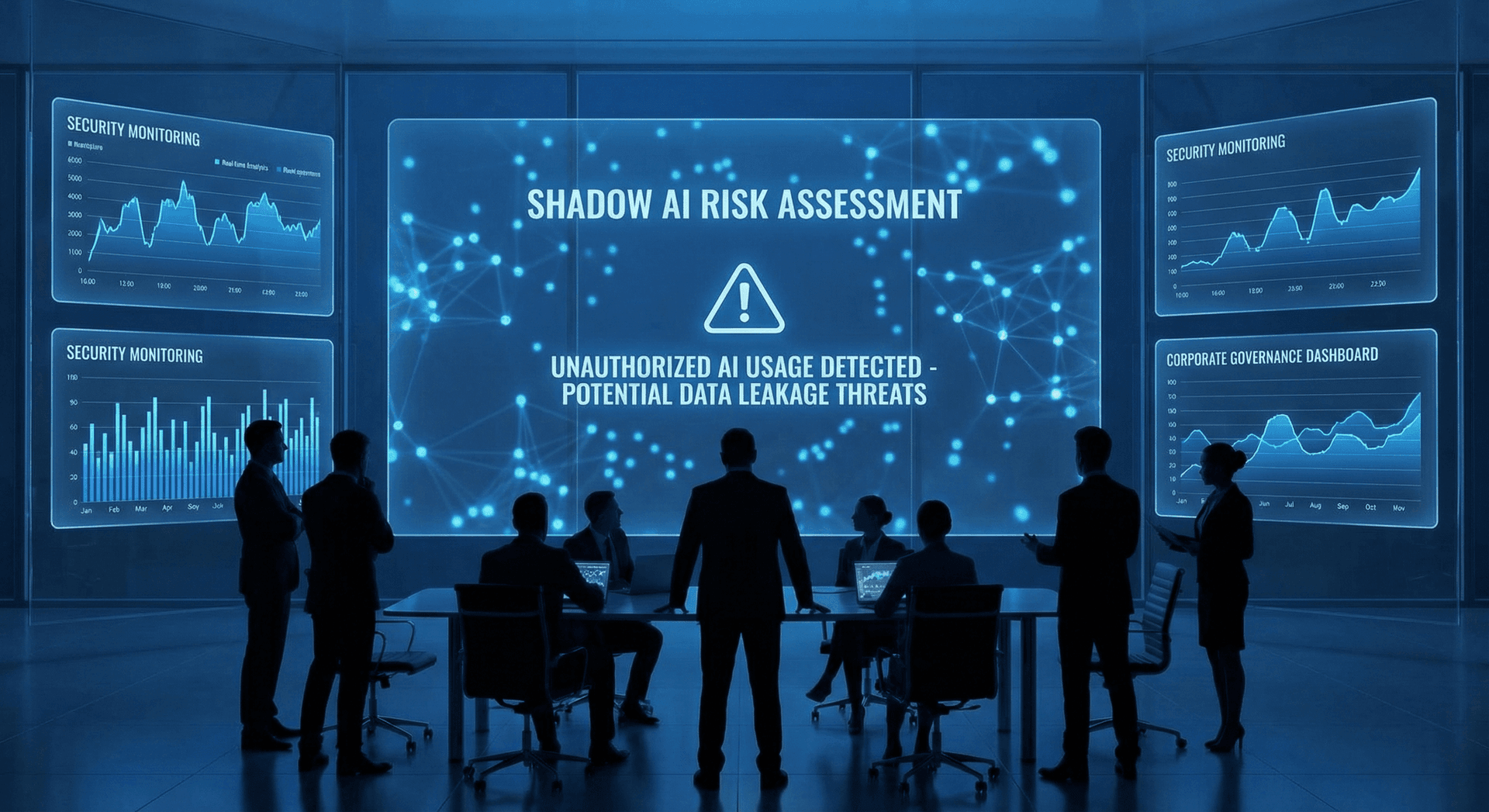
There is a strange, uncomfortable fact hiding underneath every confident headline about the AI revolution: nobody actually has an independent, trustworthy picture of how AI is being used. Not the analysts. Not the press. Not even the companies building the models.
In a sharp piece of reporting published on August 18, MIT Technology Review laid out the problem plainly. The two most-cited datasets on AI behavior — Anthropic's Economic Index and OpenAI's usage report — are curated slices published by the vendors themselves, with no outside party able to check them. As Anka Reuel of Stanford's STAIR Lab told MIT of that vendor data, “There is no independent source to corroborate it.”
Here is why that matters for a business owner in Fort Wayne or anywhere else: if the labs with full server-side logs can't produce an honest, complete picture of how their tools get used, you have almost no chance of seeing how your own team uses AI. That blind spot is not academic. It is simultaneously a shadow-AI security exposure and the reason most “AI ROI” figures are closer to fiction than fact. You cannot govern, secure, or measure what you cannot see.
Key Takeaways
- The most-quoted AI usage stats come from vendor-curated reports that no independent party can verify — a new study found nearly half of real conversations would be filtered out of that reporting entirely.
- If AI labs can't see the full picture with server-side logs, your business almost certainly can't see how staff use consumer AI tools day to day.
- That invisibility is a security problem: most sensitive data pasted into chatbots flows through unmanaged personal accounts your IT team can't monitor.
- It is also a measurement problem: “AI ROI” claims collapse when nobody can attribute a specific outcome to a specific AI action.
- A governed AI Employee running through a secure gateway is the structural opposite of the blind spot — every action is logged, attributable, and measurable.
- Local owners can close the gap this quarter with sanctioned tools, a usage audit, and one governed workflow instead of guessing.
If the AI Labs Can't See How AI Is Used, How Can You?
The clearest illustration of the blind spot comes from an independent effort to do what the vendors won't: aggregate real conversations from across models and analyze them without a marketing agenda. According to MIT's reporting, an independent AI Observatory analysis pulled together roughly 85,633 conversational turns across 24,521 conversations from about 5,000 users interacting with 52 different models — ChatGPT, Gemini, Claude, and Grok — between 2023 and 2025.
The headline result is not a number about productivity. It is a number about visibility. Nearly 48% of the conversations in that independent dataset would be filtered out entirely by the work-focused methodology Anthropic uses for its Economic Index. In other words, almost half of how people actually use these tools falls outside the frame the vendors choose to report on. The uses that get filtered — health questions, relationship advice, personal matters, and a long tail of messier categories — don't vanish because a report ignores them. They just become invisible.
The researchers MIT spoke with were blunt about what this means. “No single company report tells the whole story,” said Shayne Longpre of the MIT Media Lab. When even the organizations with complete logs publish only the slice that flatters their narrative, the public picture of “how AI is used” is built on selective disclosure.

Now scale that problem down to a 40-person professional services firm in Allen County. You don't have server-side logs. You don't have a research team. Your visibility into AI usage is whatever employees choose to tell you — which, as we've written about before when shared AI chats turned into a shadow-AI warning, is usually far less than what's actually happening. If Anthropic and OpenAI can only see part of the picture, your default visibility is close to zero.
What Do the Vendor Reports Actually Measure — and What Do They Hide?
The vendor reports are not worthless. They are just narrow, and the narrowness is the point. Anthropic's Economic Index is built on an analysis of roughly 1 million Claude conversations, deliberately focused on work and economic tasks. OpenAI's report analyzed about 1.5 million conversations and, as MIT summarized, found that only around 30% of consumer ChatGPT use was actually work-related. (OpenAI's own usage report breaks work-message share out by occupation — higher for technical and management roles, lower for others — which is a useful reminder that “AI at work” is not one uniform behavior.)
Put those together and a pattern emerges. Each vendor defines the question, chooses the sample, sets the filter, and then publishes the answer. There is no shared definition, no shared denominator, and no referee. The table below is the uncomfortable summary.
| Dataset | Who reports it | How many conversations | What it emphasizes | Who can verify it |
|---|---|---|---|---|
| Anthropic Economic Index | Anthropic (vendor) | ~1 million Claude chats | Work and economic tasks | No independent party |
| OpenAI usage report | OpenAI (vendor) | ~1.5 million ChatGPT chats | Consumer usage, ~30% work | No independent party |
| Independent AI Observatory | Outside researchers | ~24,521 conversations, 52 models | Full range of real use | Aggregated with user consent |
The independent analysis is smaller, but it is the only one collected with the explicit goal of showing the whole distribution rather than a curated corner of it. That is exactly why it found the 48% gap. The lesson for a business isn't “distrust the labs.” It's “recognize that even the best-instrumented organizations on earth publish partial pictures — so your own unmeasured, unsanctioned AI usage is a much bigger unknown than you think.” This is the same visibility problem at the heart of the AI governance gap: the tools moved faster than anyone's ability to see and account for them.

Why Is Your AI Blind Spot Also a Shadow-AI Security Risk?
Invisibility isn't a neutral state. When you can't see how your team uses AI, the specific thing you can't see is your own data walking out the door in a chat window.
The numbers here are not speculative. Coverage in The Register of LayerX's enterprise AI data-security research found that among employees using generative AI at work, about 77% copy and paste data into chatbot prompts, and more than a fifth of those paste operations — around 22% — include personally identifiable or payment-related information. Most damning for visibility specifically: roughly 82% of those pastes come from unmanaged personal accounts, the kind your IT team has no window into at all. Separate research from Cyberhaven found that around 11% of the data employees paste into ChatGPT is confidential, and that the share of sensitive corporate data going into AI tools climbed to roughly 34.8% — up from about 10.7% two years earlier, as later summarized by outlets like eSecurity Planet.
Read those figures back through the visibility lens. The problem isn't only that employees paste sensitive data into consumer tools. It's that the overwhelming majority of that activity happens on accounts and devices you can't audit. It is shadow AI by construction. We've documented how quickly this turns concrete when vibe-coded shadow AI starts leaking client data from personal cloud accounts — no malice required, just invisible, well-intentioned usage that never touched a sanctioned system.

You can't write a policy against a behavior you can't observe. And you can't prove compliance with a data-handling standard — HIPAA for a clinic, client confidentiality for a law firm, contractual controls for a manufacturer — when a material fraction of your AI usage is happening on tools you've never seen.
Why Are “AI ROI” Numbers Mostly Fiction Without Visibility?
The same blind spot that creates security risk also quietly poisons every ROI conversation.
Think about what an honest ROI claim requires: you have to attribute a specific business outcome to a specific AI action, then compare it against a baseline. If most AI usage is happening ad hoc, in personal accounts, with no logging, none of those requirements are met. You are left estimating — and estimates about invisible work drift toward whatever story the estimator wants to tell. That's the private-company version of exactly what MIT flagged about the labs: curated numbers with no independent way to check them.
This is why the “everyone's more productive with AI” narrative and the “we can't find the ROI” reality coexist so comfortably. We dug into the gap between individual team speed and company-wide ROI and found the same fracture: individuals feel faster, but the organization can't point to a durable, measurable result — largely because the work is fragmented across invisible tools. When usage is unlogged, “faster” is a feeling, not a metric.
The fix isn't better estimating. It's better instrumentation. As we've argued in our breakdown of the AI Employee KPIs that actually matter, you measure cash flow, cycle times, and risk reduction — and you can only measure those when the AI work is captured, attributed, and repeatable rather than scattered across a dozen personal browser tabs.

How Does an AI Employee Close the Blind Spot?
Here is the structural argument, and it's simple. The blind spot exists because consumer AI usage is unlogged, unattributed, and unmanaged. A governed AI Employee is the exact inverse of all three.
When you deploy an AI Employee through a secure gateway instead of relying on staff quietly using consumer chatbots, the difference isn't the model — it's the accounting around it:
- Every action is logged. The gateway sits between the work and the model, so there's a record of what was asked, what data was used, and what came back. Nothing happens in a personal account you can't see.
- Every action is attributable. You know which workflow ran, on whose behalf, against which data. That's the raw material for both a compliance audit and an honest ROI calculation.
- Every action is measurable. Because the work is captured and repeatable, you can actually track cycle time, error rates, and outcomes — the KPIs that separate a pilot from production.
That auditability compounds as you add more automated work. When multiple agents operate in the same environment, keeping a clean audit trail across those AI agents is what lets you catch conflicts and mistakes before they become incidents — the opposite of the invisible free-for-all that shadow AI creates.
To be clear about the trade-offs: a governed approach is more deliberate than telling everyone to “just use ChatGPT.” It takes setup, policy, and a real decision about which workflows to run through the gateway first. In our experience, that friction is the feature — it's what converts invisible, unaccountable usage into work you can stand behind.

What Fort Wayne and Northeast Indiana Owners Should Do This Quarter
You don't need a research lab to close your own blind spot — you need three concrete moves before the quarter ends.
First, sanction a short list of tools. Pick the AI applications your team is allowed to use for work and say so in writing. The goal isn't to ban AI; it's to pull usage out of unmanaged personal accounts and onto tools you can actually see. Ambiguity is what feeds shadow AI.
Second, run a usage audit. Ask, without blame, what tools people are already using and what data they've put into them. Most Fort Wayne and DeKalb County owners we talk to are surprised by the answer — not because staff are careless, but because nobody ever asked. That conversation alone often surfaces a client-confidentiality or PHI exposure that had been invisible for months.
Third, govern one workflow. Don't try to boil the ocean. Take a single high-value, data-sensitive process — invoice follow-up, intake summaries, research — and run it through a governed AI Employee so you can see exactly what a logged, measurable version looks like. That one workflow becomes your proof of concept for visibility, and the template for the next one.
Ready to See How Your Team Actually Uses AI?
If the takeaway landed — that you can't secure or measure what you can't see — the next step is turning invisible AI usage into governed, logged, measurable work. That's precisely what an AI Employee is built to do. Cloud Radix deploys AI Employees for businesses across Fort Wayne and Northeast Indiana through a secure gateway, so every task is attributable and every result is measurable instead of scattered across personal chatbots.
Explore our AI Employees for Fort Wayne businesses to see how a governed deployment replaces the blind spot with a dashboard — or reach out through our contact page and we'll help you scope a first workflow. Start with visibility. The ROI and the security follow from it.
Frequently Asked Questions
Q1.Why can't AI companies show exactly how their tools are used?
They can see their own server-side logs, but each vendor publishes only a curated slice of that data — Anthropic's Economic Index focuses on work tasks, and an independent analysis found nearly half of real conversations would be filtered out of that framing. Because no outside party can audit the raw data, as Stanford's Anka Reuel noted, there is no independent source to corroborate the vendor numbers, so even the labs' public picture is partial.
Q2.How can I see how my own employees are using AI?
Start with a no-blame usage audit: ask what AI tools people already use and what data they've entered. Then sanction an approved tool list to pull activity out of unmanaged personal accounts, and route high-value work through a governed AI Employee or secure gateway that logs each action. You can't monitor a behavior you've never made visible, so the first step is simply asking and sanctioning.
Q3.Is shadow AI really a security risk for a small business?
Yes. Research covered by The Register found that about 77% of employees using AI at work paste data into chatbots, roughly 22% of those pastes include personal or payment data, and around 82% come from unmanaged personal accounts. For a clinic, law firm, or manufacturer with confidentiality obligations, that unseen activity is a direct compliance and data-exposure risk.
Q4.Why are AI ROI numbers so hard to trust?
An honest ROI figure requires attributing a specific outcome to a specific AI action against a baseline. When most AI usage is ad hoc and unlogged, none of those conditions are met, so the numbers become estimates shaped by whoever is telling the story. Reliable ROI depends on instrumentation — captured, attributed, repeatable work — not better guessing.
Q5.How is an AI Employee different from just using ChatGPT?
A consumer chatbot session is unlogged, unattributed, and unmanaged. A governed AI Employee runs through a secure gateway, so every action is recorded, tied to a specific workflow and data source, and measurable against real KPIs. The underlying model may be similar; the accountability around it is the difference.
Q6.Does governing AI usage slow my team down?
It adds some deliberate setup — deciding which workflows to route through a gateway and writing a short sanctioned-tools policy. In our experience that friction is worthwhile, because it converts invisible, unaccountable usage into work you can audit, secure, and prove ROI on. You can start with a single workflow rather than changing everything at once.
Q7.Where should a Fort Wayne business start?
Begin this quarter with three moves: sanction an approved tool list, run a usage audit to surface what's already happening, and govern one high-value, data-sensitive workflow through an AI Employee. That single governed workflow becomes your visible, measurable proof of concept and the template for expanding safely.
Sources & Further Reading
- MIT Technology Review: technologyreview.com/2026/08/18/how-people-use-ai — Reporting on why no independent party can verify vendor AI usage data, and the independent analysis that found the 48% filtering gap.
- Anthropic: anthropic.com/news/the-anthropic-economic-index — The Anthropic Economic Index, a work-focused analysis of roughly 1 million Claude conversations.
- OpenAI: openai.com/index/how-people-are-using-chatgpt — OpenAI's usage report analyzing about 1.5 million ChatGPT conversations, with work-message share broken out by occupation.
- The Register: theregister.com/2025/10/07/gen_ai_shadow_it_secrets — Coverage of LayerX research: 77% of AI-using employees paste data into chatbots, 22% of pastes include PII/payment data, 82% from unmanaged personal accounts.
- Cyberhaven: cyberhaven.com/blog/4-2-of-workers-have-pasted-company-data-into-chatgpt — Research finding roughly 11% of data pasted into ChatGPT is confidential and sensitive corporate data climbed to about 34.8%.
- eSecurity Planet: esecurityplanet.com/news/shadow-ai-chatgpt-dlp — Summary of shadow-AI data leakage via ChatGPT and the case for DLP controls.
Turn Invisible AI Usage Into Governed, Measurable Work
Cloud Radix deploys AI Employees for Fort Wayne and Northeast Indiana businesses through a secure gateway — so every task is logged, attributable, and measurable instead of scattered across personal chatbots. Let us help you scope a first workflow.
Schedule a Free ConsultationNo contracts. No pressure. Just an honest conversation about closing your AI blind spot.