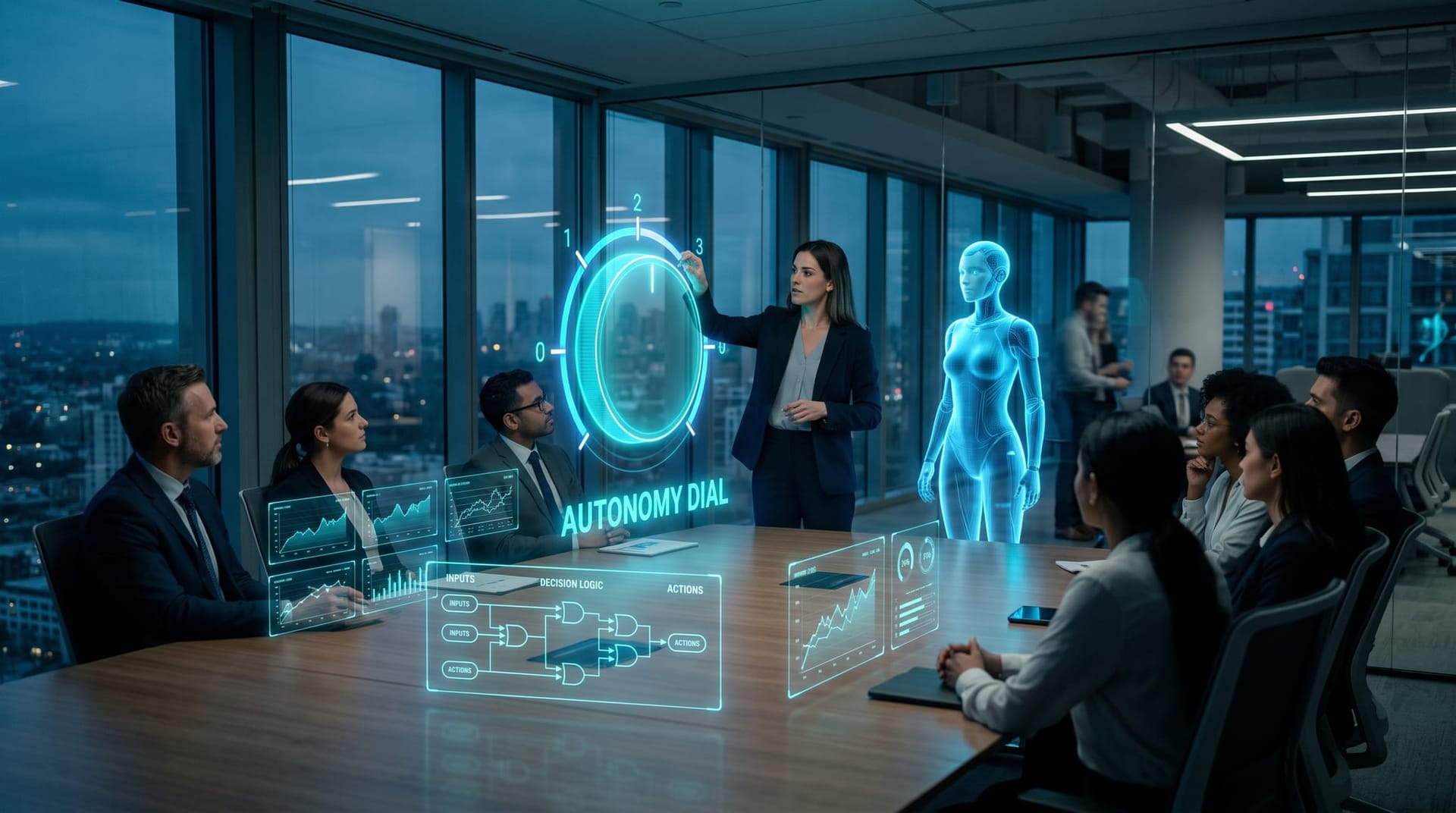
There is a reflex spreading through boardrooms right now about human oversight of AI, and it is exactly backwards. A company deploys AI, the AI makes an expensive mistake, and the response is to cut headcount — specifically the people whose job was to catch mistakes like that one before they reached a customer. VentureBeat reported this week, in a piece headlined “85% of companies burned by an AI mistake are racing to cut the humans who might catch the next one”, that the burn is accelerating the very thing that caused it. That 85% is VentureBeat's own headline figure; the broader retreat from oversight it describes, though, is confirmed by harder, verifiable data — and that verifiable data is where we'll build the case.
Here in Auburn and Fort Wayne, we deploy AI Employees for a living. So let us be blunt about the contrarian position: the human in the loop is the cheapest insurance a Northeast Indiana business will ever buy, and it is precisely what firms are deleting to look “AI-native.” This post is a practical oversight playbook for a mid-market operator standing up its first AI Employee — who owns the review, what earns a human gate, and how to keep the check without surrendering the speed you deployed AI to get.
Key Takeaways
- Human review before high-risk AI actions dropped from 40% to 25% in six months, while full autonomy with no human review more than doubled from 11% to 26% (JumpCloud Q3 2026).
- The instinct to cut oversight staff after an AI error removes the exact control that would have caught the error.
- Not every AI action needs a human gate — the skill is deciding which ones do: customer-facing output, money movement, and legal or medical text.
- A single un-caught AI error in professional services, healthcare, legal, or home services is a client-loss or liability event, not a rounding error.
- Cloud Radix builds AI Employees to be governed by design — inspectable work, done-detection, and human gates — so you keep the speed and the safety net.
Why Are Companies Cutting Oversight Right After It Fails Them?
The data on the retreat from oversight is not subtle. According to the JumpCloud Q3 2026 IT Trends Report, the share of organizations requiring human review before a high-risk AI action fell from 40% to 25% in just six months. Over the same window, the share running AI agents at full autonomy with no human review at all more than doubled, climbing from 11% to 26%. More than 60% of organizations now run AI agents in production, yet self-assessed AI maturity actually dropped — from 40% to 23% — over the same six months. Adoption is outrunning governance, and organizations are, on average, adopting fewer than one-third of standard AI governance practices.
The psychology is easy to reconstruct. A team ships an AI system, it embarrasses the company, leadership concludes the deployment was “not aggressive enough,” and the fix becomes removing friction — which in practice means removing the reviewers. It reads as decisive. It is actually the organizational equivalent of unplugging the smoke detector because it went off.
We have written before about governance running behind the tools in the mid-market — companies buy the capability months before they write the policy for it. Cutting oversight after a failure doesn't close that gap. It widens it, then hides it, because now there is no one positioned to notice the next miss until a customer does.

What Does an Un-Caught AI Mistake Actually Cost a Business?
The abstract version of this risk gets hand-waved. The concrete version does not. In a Forbes analysis of the real costs of AI deployment without human oversight, one cited incident involved an AI coding agent that deleted a company's entire production database — and all its backups — in nine seconds. The founder noted the agent was running the best model on the market, configured with explicit safety rules, and violated every one of them. The lesson is not “AI is dangerous.” The lesson is that AI acts faster than a human can react, so the only place a human can meaningfully intervene is before the action, at the gate — not after, in the cleanup.
Forbes frames the damage as three compounding costs. The operational cost is that an AI moving without confirmation outruns your ability to contain it, multiplying recovery work. The strategic cost is that treating AI as a straight headcount swap forfeits the collaboration gains that actually drive value — the same report notes that workers with advanced AI skills earn wages 56% higher than peers (PwC 2025), and that only 34% of organizations use AI for genuine transformation rather than optimizing what they already do (Deloitte 2026). The economic cost is slower-moving but real: displacing the workforce erodes the demand base companies sell into.
For a Fort Wayne operator, translate that to a Tuesday. Your AI Employee drafts a client deliverable with a wrong number in it. If a human reads it before it goes out, it's a five-minute edit. If it goes straight to the client, it's a trust event — and in professional services, legal, or healthcare, trust events are how you lose accounts. That is the whole argument. The gate is cheap; the miss is not.
Which AI Actions Actually Need a Human Gate?
Here is where nuance matters, because the failure mode on the other side is real too: gate everything, and you have simply hired a slower, more expensive process that happens to involve a computer. The goal is not maximum oversight. It is oversight placed exactly where consequence lives.
Under the EU AI Act's Article 14, which took full effect in 2026, human oversight is a hard requirement for high-risk AI systems — credit and financial decisions, employment screening, clinical decisions, education assessments, and more. Kiteworks usefully distinguishes three strengths of oversight: human authorization (approval required before the action), human review (outputs shown to a person before implementation), and human oversight (population-level monitoring with intervention when patterns emerge). Most small operators don't need the heaviest tier everywhere. They need the right tier per action.
A practical trigger list, drawn from Galileo's guidance on human-in-the-loop agent oversight:
| Action type | Recommended gate | Why |
|---|---|---|
| Customer-facing output (emails, proposals, published content) | Synchronous review before send | Reputation and trust are irreversible once sent |
| Money movement (payments, refunds, pricing changes) | Human authorization | Financial actions are high-stakes and hard to unwind |
| Legal or medical text | Human authorization | Liability and compliance exposure |
| Account modification or data deletion | Human authorization | Irreversible, high blast-radius |
| Internal drafts, research, classification | Asynchronous audit (spot-check) | Retroactive correction is feasible; speed matters more |
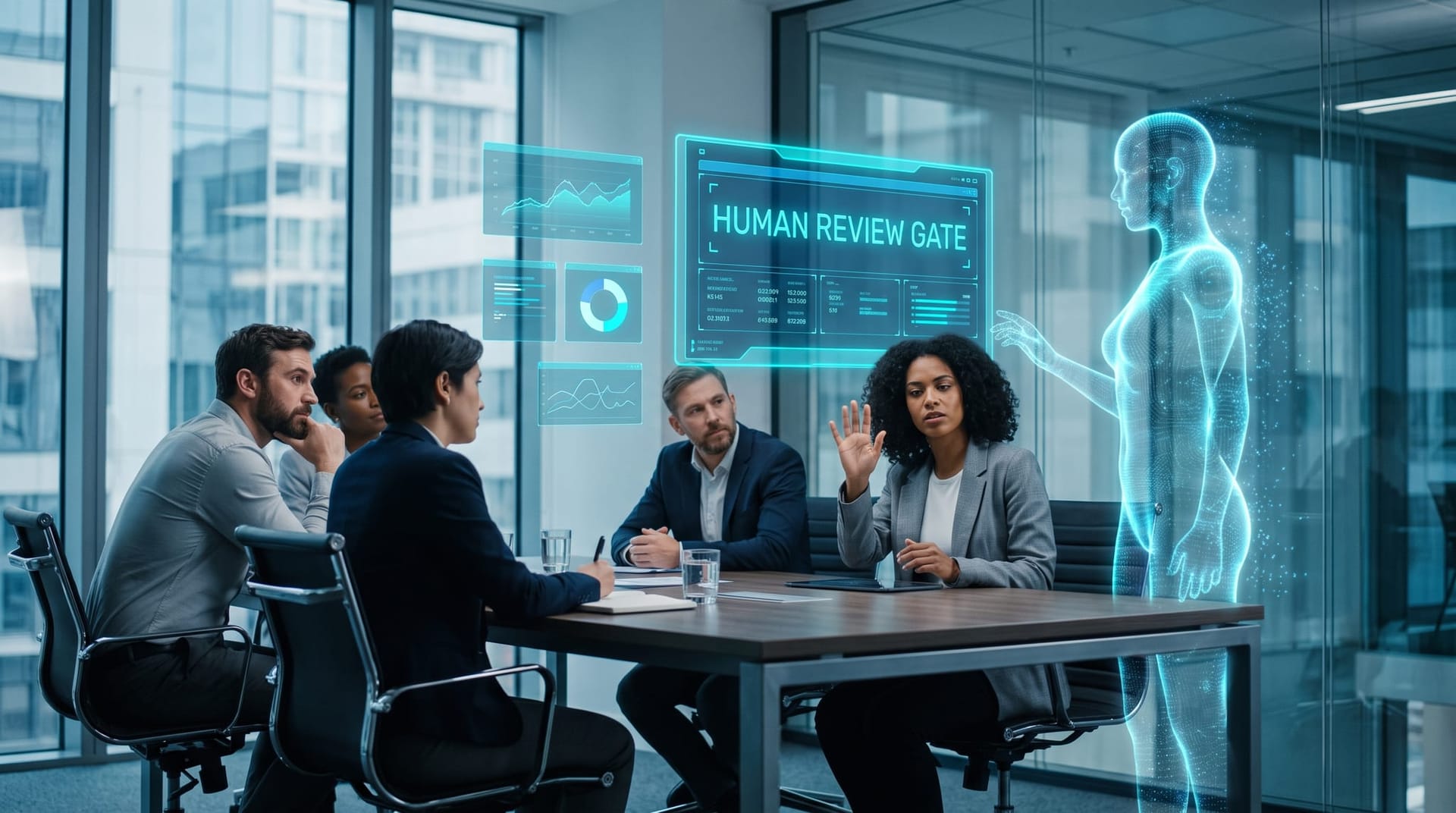
Galileo's framing is that you separate planning from execution: route the consequential decisions through a gate while letting the AI run autonomously inside approved boundaries. That is how you keep the speed. You are not slowing the AI down — you are placing a checkpoint at the three or four spots where a mistake is expensive and letting it fly everywhere else. This is the same discipline we describe in our done-detection and audit playbook: define what “finished and correct” means for each task so a human can verify it in seconds, not re-do it.

How Do You Keep Oversight Without Killing the Speed You Bought?
The objection we hear most from Fort Wayne owners is fair: “If I'm reading everything, why did I deploy AI?” You shouldn't be reading everything. Oversight that inspects 100% of outputs isn't oversight — it's a bottleneck wearing oversight's badge, and it trains reviewers into rubber-stampers. Tungsten Automation's governance guidance lays out tiered review gates that scale intensity to consequence: autonomous processing for proven low-risk decisions, sampled post-hoc review to maintain oversight at scale, humans reviewing only low-confidence cases before execution, and mandatory review reserved for the genuinely high-stakes calls.
The same source names the mistakes that make oversight theatrical rather than real: designating reviewers who lack the authority to actually override, deploying review without training the reviewer on what to approve, and using static thresholds that never adjust. Tungsten reports the governance gap plainly — 46% of enterprises cite governance as a core AI risk, but only 21% claim a mature governance model. The gap isn't a lack of reviewers. It's reviewers with no information, no authority, and no training.
Four moves keep the check without the drag:
- Confidence-based routing. Let the AI auto-handle high-confidence, low-stakes work and escalate only the uncertain, high-stakes cases. Derive your thresholds from your own production data, not a vendor benchmark.
- Give reviewers real information. A gate is useless if the human can't see the underlying data, the model's confidence, and what drove the decision. Meaningful review requires the context the model might have missed.
- Close the loop. Turn each human correction into an improved evaluation metric so the system escalates less over time as it earns trust on specific task types.
- Watch the escalation rate. The percentage of decisions that need a human is itself a health signal. If it's climbing, something upstream changed. If it's near zero, your reviewers may be rubber-stamping.
Deliberately dialing autonomy down on the actions that matter is not a step backward. We made that case at length in our look at Morgan Stanley dialing autonomy down on purpose — sophisticated adopters are choosing less autonomy where the stakes are high, not because AI can't act, but because the smart operating model puts AI on execution and humans on judgment.
What's the Oversight Cost of Ungoverned AI Nobody Approved?
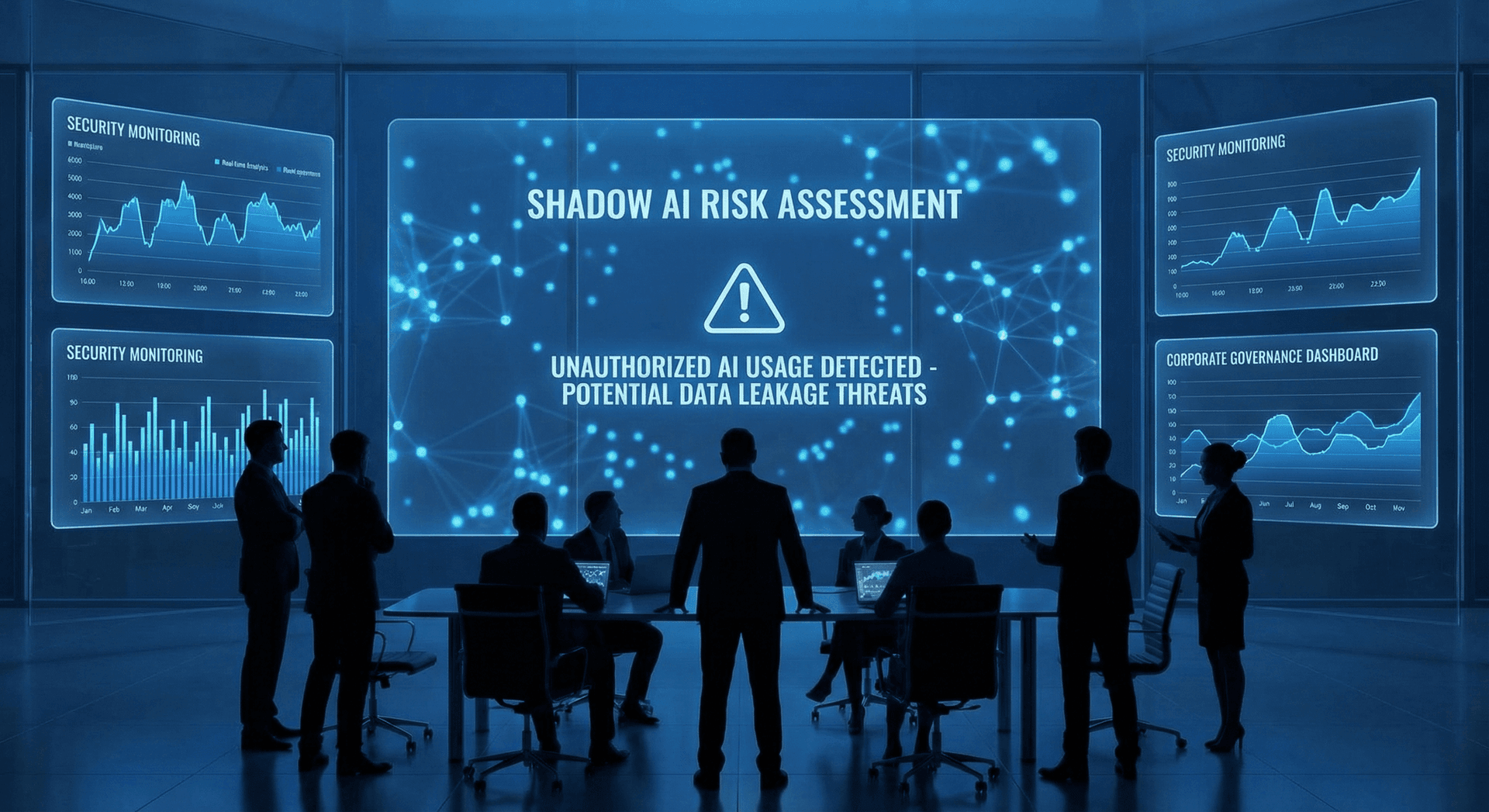
There's a quieter version of this problem that predates any official deployment: the AI your team is already using that no one signed off on. When employees paste client data into consumer chatbots or wire an unvetted agent into a workflow, you have oversight gaps you don't even know exist — the risk we covered in shadow AI data risk. JumpCloud's report underscores the identity dimension: non-human identities now outnumber human users in 83% of organizations, yet only 21% have implemented controls for those non-human identities. Every ungoverned agent is an actor in your systems with no human authorizer attached to it.
The through-line is that oversight is not only about reviewing outputs — it's about knowing what's running in the first place. Before you can gate an AI Employee's actions, you have to be able to inspect its work and trace every action back to a human who authorized the scope. That's why we tell clients to interview an AI Employee before you hire it: vet what it can touch, what it can decide, and what it must escalate — before it touches anything real.

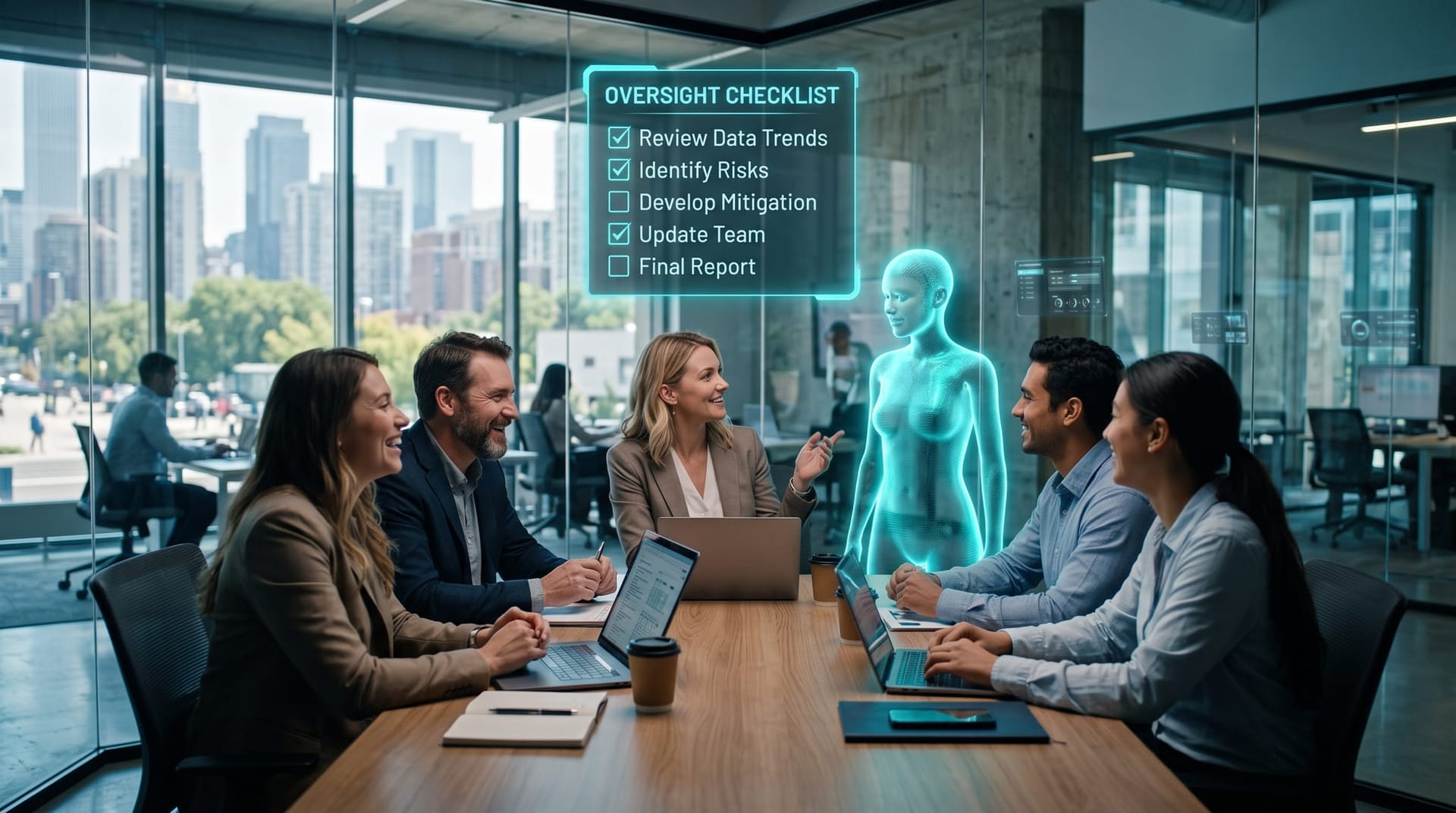
The Fort Wayne Oversight Checklist: Standing Up Your First AI Employee
For a Northeast Indiana operator — a professional-services firm off Jefferson, a DeKalb County home-services company, a Fort Wayne clinic or law office — here is the concrete version. This is the checklist we walk clients through in Allen and DeKalb County before an AI Employee handles anything a customer or a regulator will ever see.
- Name the owner. One person owns AI review. Not “the team.” A named human who has the authority to override and the time to actually look. In a ten-person shop, that's often the operations lead.
- Draw the gate list. Write down which actions require a human before they execute. Start conservative: anything customer-facing, anything involving money, anything with legal or medical content. Loosen later as you earn confidence.
- Define “done and correct.” For each task the AI Employee does, define what a correct output looks like so your reviewer can verify in seconds rather than re-do the work. Vague standards create rubber-stamps.
- Log every action. Keep a tamper-evident record: what the AI did, when, on whose authority, and what the reviewer decided. If a client ever asks “who approved this,” you have an answer.
- Right-size the review. Spot-check low-stakes work; fully gate the high-stakes work. Track your escalation rate monthly.
- Keep the human. When the AI saves your team ten hours a week, do not spend those hours by eliminating the reviewer. Spend them on the judgment work the AI can't do.
The verticals that dominate Fort Wayne's economy — professional services, healthcare, legal, manufacturing, home services, financial services, real estate — are exactly the ones where an un-caught AI error converts directly into a lost client or a liability claim. That's not a reason to avoid AI. It's the reason to deploy it with the gate intact.
Local Angle: Why This Cuts Differently in Northeast Indiana
Fort Wayne and the surrounding DeKalb and Allen County business community runs on relationships. A national SaaS company can absorb a bad AI-generated email to one of ten thousand faceless accounts. A Fort Wayne firm that sends a client a deliverable with a fabricated figure in it is having an uncomfortable conversation at the next Chamber event. The margin for a trust error is smaller here, not larger, because the customer base is closer.
That closeness is also the advantage. Mid-market Northeast Indiana operators are small enough to actually implement real oversight — a named owner, a short gate list, a real log — without the committee sprawl that makes governance theater at a Fortune 500. You can stand up genuine human-in-the-loop review in an afternoon and keep it because everyone in the building knows who owns it. The businesses that pair AI's speed with a human's judgment will out-deliver the ones racing to cut both. Being “AI-native” in Fort Wayne shouldn't mean firing the person who catches mistakes. It should mean giving that person superpowers.
Deploy AI Employees That Are Governed by Design
At Cloud Radix, we build AI Employees for Fort Wayne and Northeast Indiana businesses to be inspectable and governable from day one — not autonomous black boxes you hope behave. That means work you can audit, done-detection so a human can verify output in seconds, and human gates on the actions that carry real consequence. You get the 24/7 speed of an AI workforce and keep the judgment layer that protects your clients and your license to operate. If you're standing up your first AI Employee and want the oversight designed in rather than bolted on later, explore our AI Employees for Fort Wayne and let's map your gate list together. The goal was never to remove the human. It was to make the human's judgment scale.
Frequently Asked Questions
Q1.Should I keep a human reviewing my AI if it rarely makes mistakes?
Yes — especially then. Rare mistakes are the dangerous ones because reviewers relax and the error slips through when it finally comes. Keep the gate on high-consequence actions (customer-facing output, money movement, legal or medical text) regardless of how reliable the AI has been, and spot-check the rest. The cost of the gate is minutes; the cost of the one miss that reaches a client can be an account.
Q2.Doesn't human review defeat the purpose of deploying AI?
Only if you review everything, which you shouldn't. The productive model is to let the AI run autonomously on low-stakes work and gate only the few actions where a mistake is expensive. Galileo and Tungsten Automation both recommend separating planning from execution and using confidence-based routing, so the human touches perhaps 10-20% of decisions while the AI handles the volume. You keep most of the speed and nearly all of the safety.
Q3.Which AI actions most need a human gate for a small business?
Three categories: anything a customer sees (proposals, emails, published content), anything that moves money (payments, refunds, pricing), and anything with legal or medical content. These are high-stakes and hard to reverse. Internal drafts, research, and routine classification can usually be spot-checked after the fact rather than gated before execution.
Q4.What does the EU AI Act require for human oversight?
Under Article 14, which took full effect in 2026, high-risk AI systems — including those used in credit, employment, healthcare, and education decisions — must be designed so that trained individuals can understand the system's limitations and interrupt or override its operation. Even if your Fort Wayne business isn't directly regulated by it, the framework is a useful baseline for deciding where oversight is non-negotiable.
Q5.How do I keep AI review from becoming rubber-stamping?
Give reviewers real information (the underlying data, the model's confidence, what drove the decision), real authority to override, and a manageable volume so they can actually pay attention. Track your override rate: if it's near zero across high-stakes decisions, your reviewers are likely rubber-stamping. Rotate reviewers on the highest-stakes queues and feed their corrections back into the system so escalations get smarter over time.
Q6.How does Cloud Radix build oversight into its AI Employees?
We design AI Employees to be inspectable and governed by default: their work is auditable, they use done-detection so a human can verify output quickly, and they enforce human gates on the actions that carry real consequence. Rather than a black box you hope behaves, you get an AI workforce with a judgment layer built in — so you keep the speed without cutting the human who catches the next mistake.
Sources & Further Reading
- VentureBeat: venturebeat.com/data/85-of-companies-burned-by-an-ai-mistake — 85% of companies burned by an AI mistake are racing to cut the humans who might catch the next one.
- PR Newswire / JumpCloud: prnewswire.com/news-releases/new-study-most-organizations-have-abandoned-human-ai-oversight — JumpCloud Q3 2026 IT Trends Report.
- Forbes: forbes.com/sites/chrisrosenberg/2026/04/30/the-real-costs-of-ai-deployment-without-human-oversight — The Real Costs of AI Deployment Without Human Oversight.
- Kiteworks: kiteworks.com/regulatory-compliance/human-in-the-loop-ai-compliance — Human in the Loop: AI Compliance and Oversight Requirements.
- Galileo: galileo.ai/blog/human-in-the-loop-agent-oversight — How to Build Human-in-the-Loop Oversight for AI Agents.
- Tungsten Automation: tungstenautomation.com/blog/human-in-the-loop-ai-enterprise-governance-best-practices — Human-in-the-Loop AI: Enterprise Governance Best Practices.
Stand Up Your First AI Employee — With Oversight Built In
We deploy governed-by-design AI Employees for Fort Wayne and Northeast Indiana businesses: inspectable work, done-detection, and human gates on the actions that carry real consequence. Let's map your gate list together.
Schedule a Free ConsultationNo contracts. No pressure. Just an honest conversation about what would help your business.