On April 16, Salesforce did something most businesses missed: it stopped pretending its platform was for humans. With the launch of Headless 360, the company peeled the user interface off its entire stack — Sales Cloud, Service Cloud, Marketing Cloud, every object, every flow, every permission — and exposed those primitives as callable surfaces for AI agents. The dashboards, page layouts, and clicks-not-code wizards your sales operations team has spent a decade learning are now optional. The agent-callable layer underneath is the product.
That single move tells you everything about where enterprise software is going in 2026. CRM was never the point. Workflow tools were never the point. The point was always the data, the permissions, and the actions wrapped around them — and now those primitives have to be addressable by an autonomous agent or they don't matter.
For a Fort Wayne machine shop, an Allen County law firm, or a Northeast Indiana home-services company, the implication is uncomfortable: the SaaS spend you've been treating as “tools my team uses” is being rebuilt by the vendor as “infrastructure my team's AI Employees use.” If your team isn't running AI Employees yet, your competitors' AI Employees are about to use Salesforce, HubSpot, and Zoho better than your humans do. This piece walks through what changed, what it means for mid-market businesses, and how to think about CRM, governance, and competitive advantage when the dashboard is no longer the product.
Key Takeaways
- Salesforce Headless 360 strips the UI off Sales, Service, and Marketing Cloud and exposes the underlying objects, flows, and permissions as agent-callable primitives.
- The shift reframes CRM from “a system humans operate” to “infrastructure AI agents operate on behalf of humans” — and every major SaaS vendor is heading the same direction.
- Competitive advantage in 2026 is no longer “we have Salesforce” — it's “our AI Employees use Salesforce better, faster, and more consistently than your humans do.”
- Governance just got harder: any agent with the right credentials can do anything a Salesforce admin can do, with no UI friction to slow it down.
- Mid-market businesses in Fort Wayne and Northeast Indiana on HubSpot, Salesforce, or Zoho should be auditing what an AI agent could (or already does) touch in those systems this quarter.
What is Salesforce Headless 360 — and why is it different from Einstein?
Headless 360 is Salesforce's reframing of its own platform. Instead of selling you a system humans log into, Salesforce is selling you a substrate AI agents call into. The objects (Account, Lead, Opportunity, Case), the flows, the permissions, the audit log — all of it is exposed to be invoked programmatically by an autonomous agent. The UI still exists, but it's no longer the product.
That distinction matters because it's not the same thing as Einstein. Einstein is Salesforce's bundled AI features — predictive scoring, generative reply suggestions, the Agentforce assistant — sitting on top of the existing platform. Einstein is “AI for the user.” Headless 360 is “the platform reconfigured so that any AI agent — Einstein, an Anthropic Claude agent, a Cloud Radix AI Employee, an open-source Llama-based agent — can be the operator.” If you're trying to decide between vendor-locked AI features and a vendor-agnostic AI Employee strategy, our comparison of AI Employees, Microsoft Copilot, and Salesforce Einstein is a good place to start before you make a five-year platform decision.
The bigger pattern here was articulated this week by MIT Technology Review's piece on enterprise AI as an operating layer, which argues that the strategic question for incumbents is no longer “which model do we use?” but “do we own the operational layer where intelligence is applied?” The piece distinguishes between AI as a stateless on-demand utility (one prompt, one answer, no memory) and AI as a learning system embedded inside the operations of a business — where every interaction compounds into proprietary signal. Salesforce just signaled which side of that line it intends to live on. The platform is becoming the operating layer; the agents are the operators.
Why this matters for mid-market businesses (not just the Fortune 500)
It would be easy to dismiss this as enterprise news. Most Northeast Indiana businesses don't have a Salesforce admin team of fifteen people, a six-figure Sales Cloud Lightning license bill, or a Fortune 500 procurement cycle. But the same shift is happening at every tier of the market simultaneously, and the consequences hit mid-market businesses harder, not softer.
Think about what changes when CRM goes headless:
| Before Headless 360 | After Headless 360 |
|---|---|
| Reps log into Salesforce and update opportunities | An AI agent listens to the discovery call and updates the opportunity in real time |
| Marketing builds a Pardot journey by clicking through a wizard | An agent writes the journey definition, simulates 10,000 prospects through it, and submits the optimized version for approval |
| A sales ops analyst pulls a quarterly pipeline report | An agent runs a continuous pipeline-health monitor and Slacks the VP Sales whenever a forecast slips by more than 5% |
| Onboarding a new rep takes weeks of click-training on the Salesforce UI | A new rep talks to an AI Employee that already knows every workflow and runs the system on their behalf |
| Your competitive moat was "we configured Salesforce well" | Your competitive moat is "our AI Employees operate Salesforce continuously, 24/7, with full audit logs" |
The right-hand column doesn't depend on you being Fortune 500. It depends on you having an AI Employee that can hold a credential, call an API, and follow a documented workflow — which, for a mid-market shop, costs orders of magnitude less than another full-time CRM admin. That's the same argument we've been making for our AI Employees in Fort Wayne manufacturing deployments, where the AI Employee is the one updating the ERP, not the engineer.
The smaller you are, the bigger the leverage shift. A 12-person home-services company in Auburn that wires up an AI Employee to Salesforce Sales Cloud or HubSpot CRM gets back the equivalent of a dedicated sales operations hire — at a fraction of the cost. The 1,200-person regional manufacturer that doesn't is now competing against companies whose AI Employees are doing things their humans physically cannot.
How does AI agent infrastructure actually plug into a CRM platform?
The mechanical answer is APIs and OAuth tokens, but the strategic answer is more interesting. When a SaaS platform goes headless, three architectural decisions become permanent:
- 1. The platform's permission model becomes the agent's permission model. Whatever an admin can do, an agent with admin credentials can do — instantly, at machine speed, across every record. There's no UI friction to slow down a misconfigured agent. This is the same problem we wrote about in our Zero-Trust AI Agents and credential isolation piece: the blast radius of a compromised or misbehaving agent is now equal to the blast radius of the most powerful credential it holds. If an agent has full Salesforce admin scope, a single bad prompt could mass-update every Opportunity in your pipeline before a human notices.
- 2. Every action becomes inspectable, but only if you instrument it. The good news: API calls are easier to log than UI clicks. The bad news: most businesses don't actually log them, and most Salesforce admins don't have a real-time view of “what did agents do in our org today?” Frameworks like the NIST AI Risk Management Framework and ISO/IEC 42001:2023 are increasingly the published baselines that auditors will measure your agent operations against. Building that view is now table-stakes governance — it's exactly the gap our AI Employee Governance Playbook was written to close.
- 3. Vendor-agnostic agent infrastructure becomes a strategic asset. If Salesforce, HubSpot, Microsoft Dynamics, and NetSuite all go headless in the same 18-month window — and the trend is unmistakable, with Google's Chrome Skills launch bringing reusable agent-style workflows even to consumer browsers — then the business that wins is the one whose AI Employees can fluently operate any of those platforms. That's a vendor-agnostic AI Employee strategy, not a vendor-bundled assistant. For us at Cloud Radix, the secure AI gateway is the place where those credentials live, where every agent action is logged, and where high-blast-radius operations require human approval before execution.
The Chrome Skills launch is worth a moment of attention here. Google shipped a feature on April 14 that lets users save reusable prompts and dispatch them across multiple browser tabs in one shot, with mandatory user confirmation before high-consequence actions like calendar additions or email sends. That's the consumer mirror of what Salesforce just did at the enterprise tier: workflow automation primitives are escaping the enterprise and becoming default browser capabilities. By the end of 2026, “I can save a multi-step AI workflow” stops being a feature and starts being an expectation.

What's the new competitive moat when CRM is just a database for agents?
If everyone has access to Salesforce Headless 360, and everyone can wire an agent into it, what's left to compete on? Three things:
- Workflow design. The business that has documented, tested, refined workflows — what does our discovery call look like? what's the signal that an Opportunity has stalled? what does an exemplary Service Cloud case resolution look like? — has a moat. The business that's still operating on tribal knowledge and “ask Brenda, she knows” doesn't. AI Employees magnify whichever direction you're already pointing.
- Operational data quality. The MIT Tech Review piece this week made a related point: incumbents have proprietary operational data, workforce-generated training signals, and accumulated tacit knowledge as their three compounding assets. If your CRM data is dirty, your AI Employees inherit dirty data. Cleaning it now — before agents start operating on it at machine speed — is one of the highest-ROI moves a mid-market business can make in 2026.
- Measurement discipline. When agents are doing the work, you can't measure them by “hours worked.” You measure by outcomes: cycle time, conversion, cash flow, risk events avoided. We covered this in detail in our piece on AI Employee performance metrics that actually matter. The businesses that get this right will know in real time whether their agent fleet is contributing margin or burning it.
The old competitive question was “do you have Salesforce?” That question stops mattering in 2026. The new question is: do your AI Employees use Salesforce — and the rest of your stack — better than your competitors' humans do?

What does this mean for your existing SaaS spend?
A practical reframe: the SaaS line items on your P&L are now better understood as agent infrastructure costs, not user license costs. That has a few near-term consequences worth thinking about with your CFO and your IT lead:
- License-per-seat pricing is going to feel weird. Why is Salesforce charging you per human user when the human users are increasingly orchestrators of agents that do the actual work? Expect pricing models to evolve. Some vendors will move to consumption-based or agent-action-based pricing within the next 18 months. Don't sign multi-year deals on per-seat pricing if you can negotiate flexibility.
- API rate limits become a real planning input. When an AI Employee is reading and writing CRM records hundreds of times a day, you start hitting governor limits that human users never noticed. Architect for this now.
- Integration sprawl gets worse before it gets better. Every new SaaS tool that goes headless is another potential agent surface. The businesses that consolidate their agent infrastructure — one secure AI gateway, one credential vault, one audit log, one approval queue — will have a meaningfully simpler operational picture than the businesses that let every department wire up its own.
The good news for mid-market businesses: starting from a smaller stack is an advantage. A Northeast Indiana company running HubSpot CRM, QuickBooks, and a single field-service tool can architect a clean AI Employee deployment in a quarter. The Fortune 500 with 400 SaaS contracts will be at this for years.

The Fort Wayne and Northeast Indiana reality check
Let's get concrete. If you run a manufacturer in DeKalb County, a law firm in Fort Wayne, or a regional distributor anywhere in Allen County, here's what the Salesforce announcement actually means in practice this quarter:
- You're probably already a Headless 360 customer in waiting. If your business uses Salesforce Sales Cloud, Service Cloud, or Marketing Cloud, the Headless 360 capabilities will land in your tenant on Salesforce's normal release cadence — whether you've planned for them or not. The same is true if you're on HubSpot, Zoho, or Microsoft Dynamics 365: every major CRM vendor is on the same trajectory. The default state is “your CRM becomes agent-callable,” not “you opt in.”
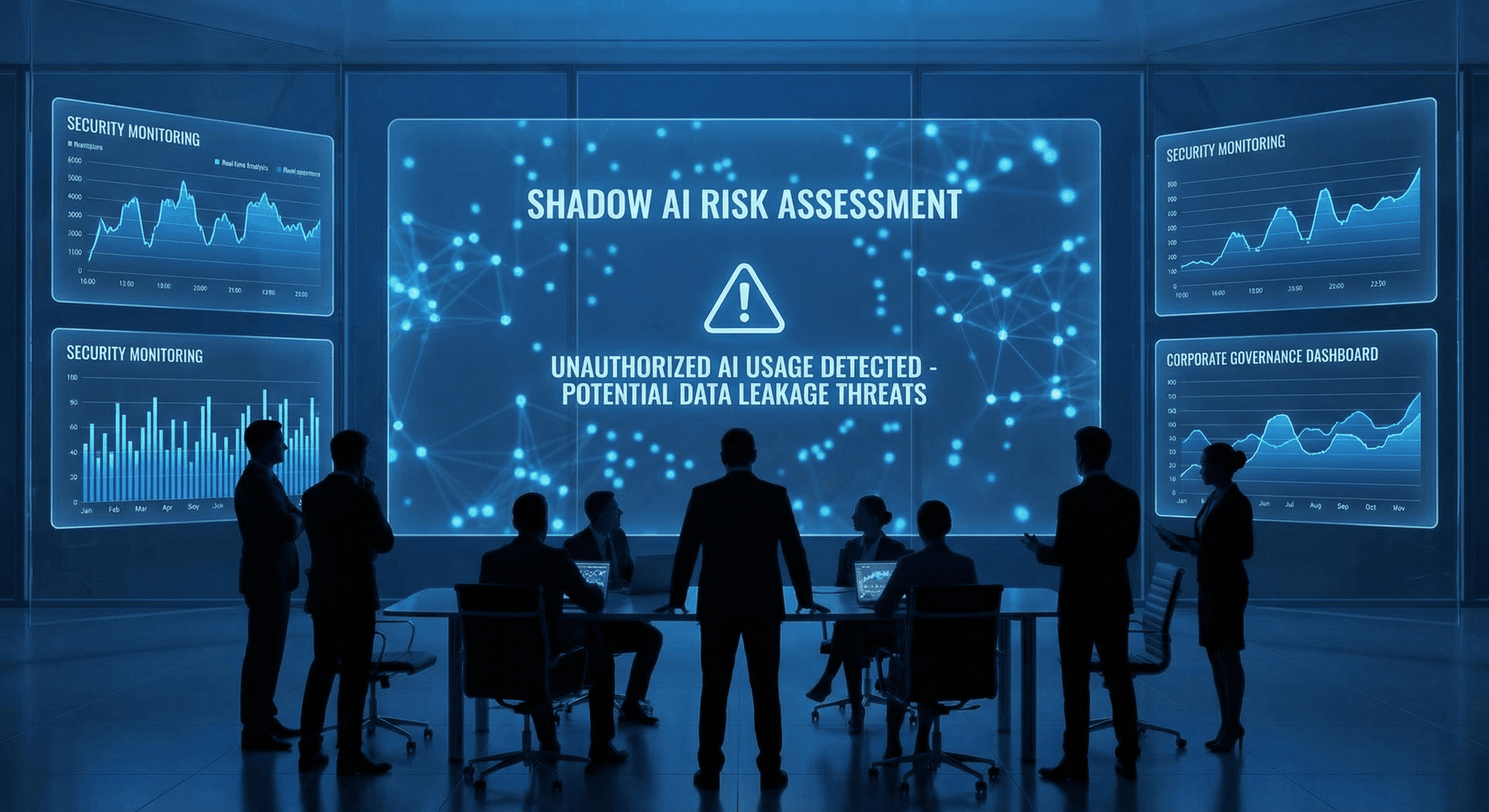
- Shadow agents are the real risk. Right now, somewhere in your business, a salesperson is probably using a personal ChatGPT account to draft proposals using customer data they pasted into the chat box. When the CRM goes headless, that same salesperson can wire up a personal AI tool to actually update Salesforce records — without any IT review. The distinction matters: a sanctioned AI Employee with credentials in a secure gateway is governance. A personal ChatGPT with someone's Salesforce credentials pasted into a prompt is a breach waiting to be reported to your insurance carrier.
- The local hiring math is changing. Fort Wayne and Northeast Indiana are tight labor markets for skilled sales operations, marketing operations, and CRM admin talent. A mid-market shop that previously needed to hire a $90,000-a-year Salesforce admin can now hire one experienced admin and pair them with an AI Employee that handles the bulk-update, dedupe, lead-routing, and reporting work. That's not a layoff story — it's a “we finally got the work done” story for businesses that have been understaffed in operations for years.
- Industries with regulatory exposure need a head start. If you're in healthcare, legal, financial services, or any vertical with audit obligations, the time to design your agent governance and approval gates is now — before someone in your business spins up an unmanaged agent against the live CRM. Our work with Fort Wayne law firms and CPA practices starts with that exact governance baseline before any agent gets a credential.
The Midwest has a real advantage in this cycle: we tend to deploy enterprise software conservatively, with smaller stacks and tighter scope. That conservatism becomes leverage when the platform layer goes agent-native, because there's less integration debt to retrofit.

Ready to operate your CRM with AI Employees that earn their keep?
Salesforce Headless 360 is the loudest signal yet that 2026 is the year your SaaS stack stops being something humans operate and starts being infrastructure your AI Employees operate. Cloud Radix builds AI Employees for Fort Wayne, DeKalb County, and Northeast Indiana businesses that need to move from “we use Salesforce” to “our AI Employees use Salesforce continuously, with audit logs and approval gates that satisfy our insurance carrier and our customers.” If you're rethinking how your CRM, marketing automation, or service desk should work in an agent-first world, book a call with our team — we'll walk through your current stack, your governance posture, and where an AI Employee can show measurable lift in the first 30 days.
Frequently Asked Questions
Q1.What is Salesforce Headless 360?
Headless 360 is Salesforce's reframing of its platform from a UI-driven CRM to a set of agent-callable infrastructure primitives. It exposes the same underlying objects, flows, and permissions that admins and developers have always used — minus the user interface — so that AI agents can operate the platform on behalf of humans. It does not replace Salesforce's existing UI; it adds a platform layer optimized for autonomous agents.
Q2.How is Headless 360 different from Salesforce Einstein or Agentforce?
Einstein and Agentforce are Salesforce's first-party AI features built on top of the existing platform — they're "AI for users." Headless 360 is the platform reconfigured so any AI agent, including third-party agents like a Cloud Radix AI Employee or an Anthropic Claude agent, can be the operator. Einstein is the helper; Headless 360 is the substrate that makes the agent-as-operator pattern possible regardless of which AI vendor you choose.
Q3.Do mid-market businesses in Fort Wayne actually need to care about this announcement?
Yes — possibly more than enterprises do. Headless 360 capabilities will land in your Salesforce tenant on the normal release cadence, and the same architectural shift is happening at HubSpot, Zoho, Microsoft Dynamics, and every other major CRM. The smaller your stack, the easier it is to architect a clean, governed AI Employee deployment in a single quarter — which is a meaningful competitive advantage over larger competitors with hundreds of integration points to retrofit.
Q4.What are the security risks of agent-callable CRM platforms?
The biggest risk is credential blast radius: an AI agent with admin-level Salesforce credentials can do anything a human admin can, instantly, at machine speed. Without a secure gateway, audit logging, and approval gates for high-blast-radius actions, a single misbehaving or compromised agent could mass-update or mass-delete records faster than a human can react. The mitigation is zero-trust agent architecture with isolated credentials, action-level approval gates, and real-time audit visibility.
Q5.Can our existing Salesforce admin team manage AI agents on the platform?
Partially. Salesforce admins already know the data model and permissions, which is the hard part. The new skill they need is governance for agent operators: defining which agent identities exist, scoping their permissions to least-privilege, configuring approval gates for high-impact actions, and monitoring agent activity in audit logs. Most teams pair their existing admin with an external AI architecture partner for the first deployment, then internalize the operating model from there.
Q6.Will Salesforce pricing change because of this shift?
Almost certainly, though Salesforce has not announced pricing changes tied to Headless 360. The longer-term trend across SaaS is a move from per-seat licensing to consumption-based or action-based pricing, because agents make per-seat pricing nonsensical when one human orchestrates dozens of agents. Mid-market businesses should avoid signing multi-year per-seat contracts without flexibility clauses, and should model their spend on a per-action basis as a planning exercise this year.
Sources & Further Reading
- VentureBeat: venturebeat.com/technology/salesforce-launches-headless-360 — Salesforce launches Headless 360 to turn its entire platform into infrastructure for AI agents.
- MIT Technology Review: technologyreview.com/2026/04/16/1135554 — Treating enterprise AI as an operating layer.
- MarkTechPost: marktechpost.com/2026/04/14/google-launches-skills-in-chrome — Google launches Skills in Chrome, turning reusable AI prompts into one-click browser workflows.
- National Institute of Standards and Technology: nist.gov/itl/ai-risk-management-framework — NIST AI Risk Management Framework.
- International Organization for Standardization: iso.org/standard/81230.html — ISO/IEC 42001:2023 Artificial Intelligence Management System.
- Salesforce: salesforce.com/agentforce — Agentforce product page.
Get Your CRM Agent-Ready
Cloud Radix builds governed, vendor-agnostic AI Employees that operate Salesforce, HubSpot, and every other major platform — with audit logs and approval gates your insurance carrier will recognize.