Key Takeaways
- The data-sovereignty conversation in 2026 has moved past the binary of “air-gapped vs. cloud.” The new frame is control within connection — maintaining unambiguous control over every regulated data flow while staying connected to AI vendors, supplier portals, and cloud platforms.
- Northeast Indiana's three critical-infrastructure-adjacent verticals — manufacturers along the I-69/I-469 corridor, regional utilities and water/wastewater operators, and healthcare operators — each face distinct regulatory exposure that a single generic AI governance posture cannot cover.
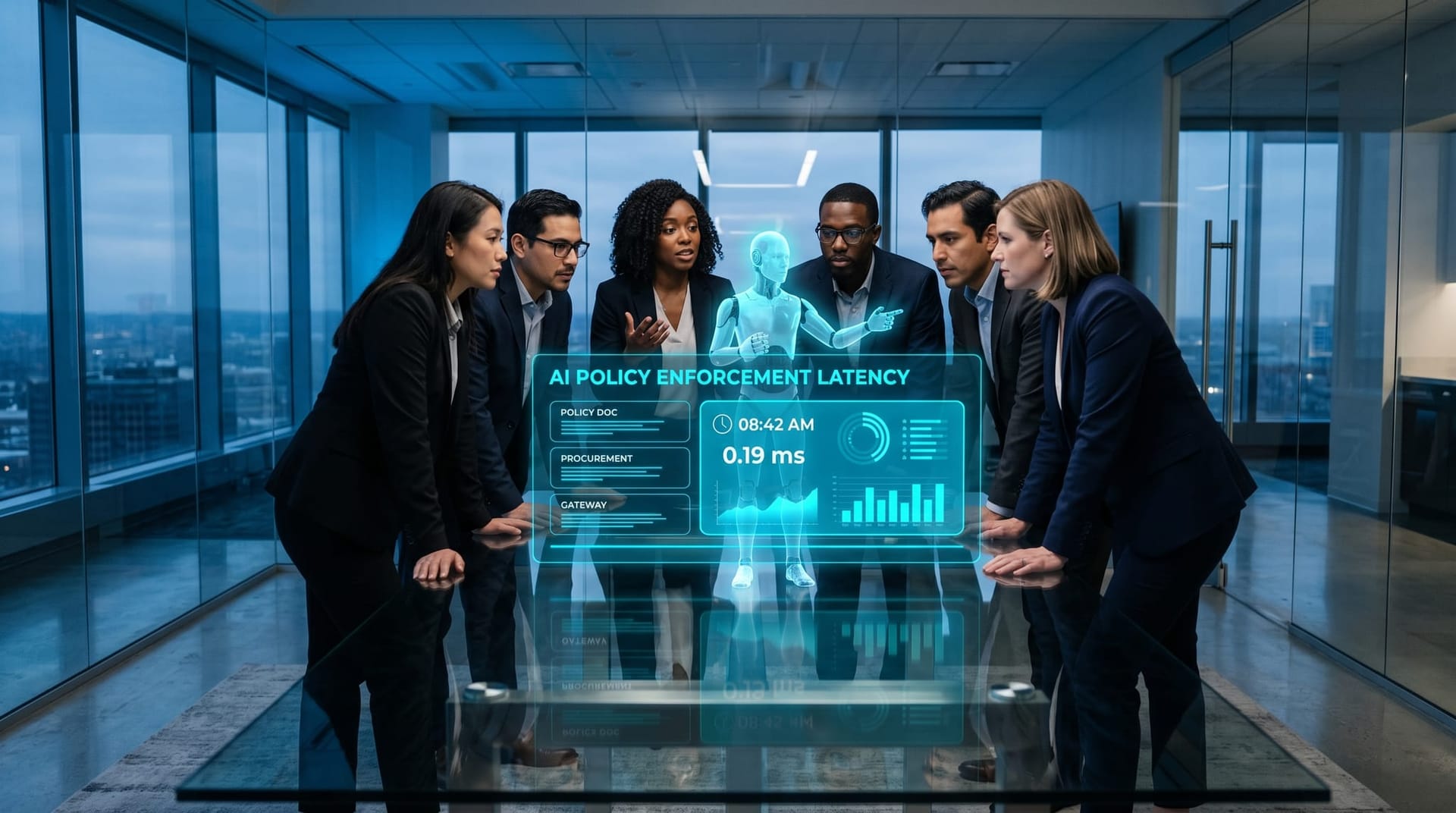
- A buyer-owned policy enforcement point (the Cloud Radix Secure AI Gateway) classifies, redacts, logs, and gates outbound data flows server-side — before any AI vendor sees them. That is the control-within-connection posture in practice.
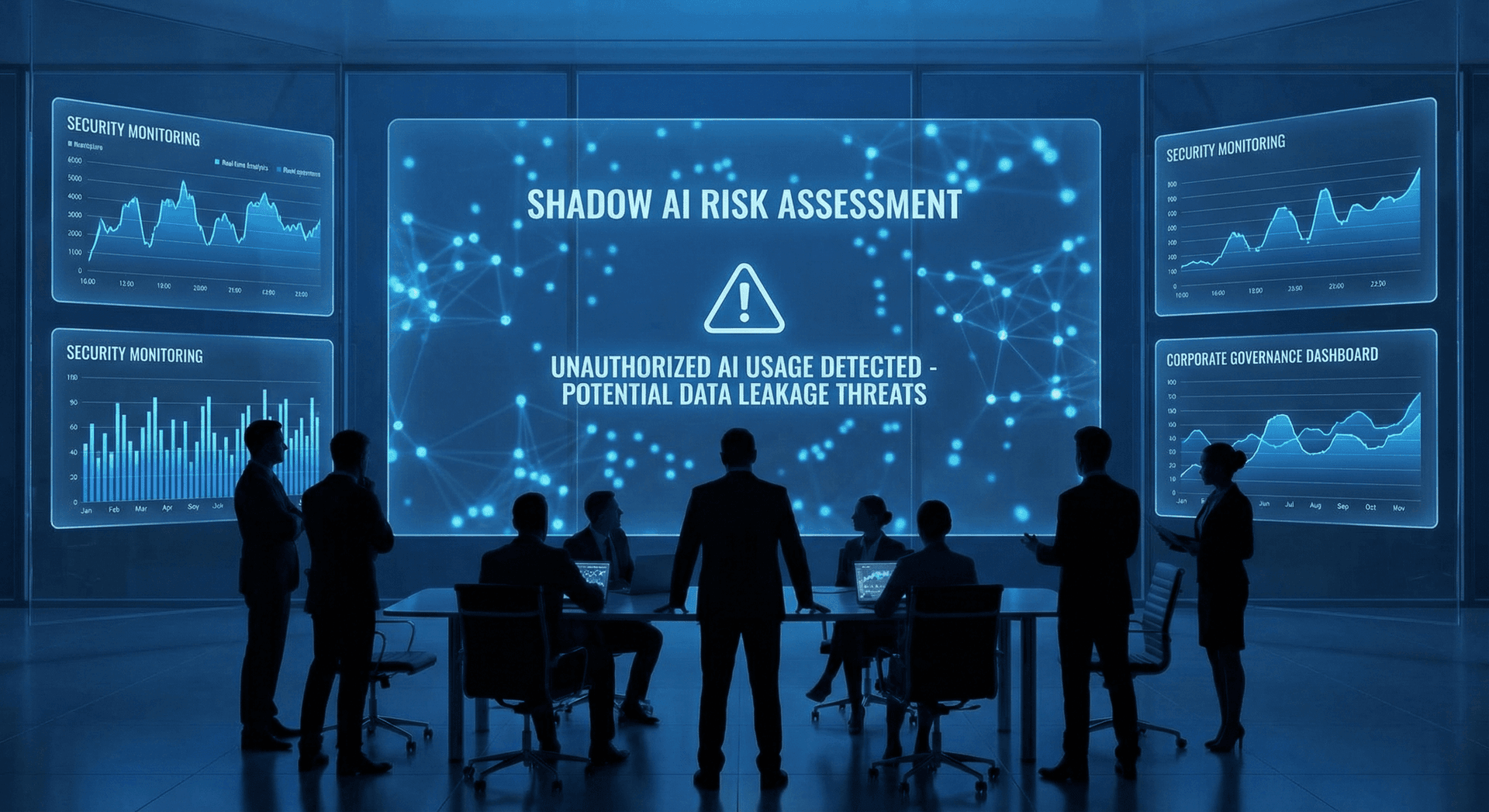
- The 6-question NE Indiana data sovereignty audit below scores your current posture. Fewer than 3 “yes” answers means you have uncontrolled data egress paths today.
- Vendor sub-processor sprawl is one layer of the problem. The 5-row Sovereignty Control Matrix below maps all five.
- Indiana state regulators — IURC, IDEM, and IDFI — are actively tightening data-handling expectations on connected systems in 2026.
What Does “Control Within Connection” Mean for NE Indiana?
A piece published by VentureBeat on May 28, 2026 puts a name on something we've been watching happen in client environments across Allen, DeKalb, Whitley, and Noble counties: the data-sovereignty conversation is no longer about whether to connect or not. It's about how you govern the connection you already have.
The phrase VentureBeat uses — control within connection — names a third option between two failing poles. Air-gap-everything breaks modern MES and EHR workflows. Connect-and-trust-the-vendor leaves regulated data in uncontrolled egress paths. The third option: stay connected, and own the enforcement point on that connection.
That enforcement point is what Cloud Radix's Secure AI Gateway is designed to be. First, here's who this post is for and what the stakes look like in NE Indiana specifically.

Who This Is For: Three NE Indiana Verticals With Real Regulatory Exposure
Three NE Indiana sectors face the sharpest intensified scrutiny in 2026:
Manufacturers along the I-69 / I-469 corridor — Auburn, Garrett, Huntertown, New Haven, Kendallville — running connected MES, ERP, and supplier-portal systems with growing AI integrations. When CNC floor data feeds an AI quality-prediction model hosted by a vendor you did not explicitly audit, you have an uncontrolled data egress path.
Regional utilities and water/wastewater operators in Allen, DeKalb, Whitley, and Noble counties, where the Indiana Utility Regulatory Commission (IURC) and the Indiana Department of Environmental Management (IDEM) are tightening data-handling expectations on connected OT systems. SCADA-adjacent telemetry routing through a cloud-based analytics layer touches regulatory space most operators have not formally mapped.
Healthcare operators — regional clinics, dental practices, behavioral health practices, and hospital satellites across Allen County — subject to HIPAA and ONC rules, plus Indiana-specific PHI handling expectations. AI clinical documentation tools that route dictation through a vendor's inference layer are processing PHI, full stop.
If your organization falls into one of these three categories, the 6-question audit below is where to start.
The 6-Question NE Indiana Critical Infrastructure Data-Sovereignty Audit
Run through these questions with your IT lead or compliance officer. Answer honestly — the value is in the gap revealed, not the score.

Audit Question 1: Can you enumerate every outbound data flow that touches a regulated system today?
What we're asking: Not a high-level diagram. A literal list: every API call, every log-shipping agent, every vendor integration, every AI plugin — anything that causes data originating in a regulated system (MES, EHR, SCADA historian, billing platform) to leave your network perimeter.
Acceptable answer: A maintained, version-controlled data flow inventory that was updated within the last 90 days and covers at least 95% of production integrations. Bonus: the inventory maps each flow to its data classification (PHI, PII, operational technology telemetry, IP, financial).
Red flag: “We think we know most of them” or “Our vendor handles that.” Neither is an answer.
Regulatory relevance: HIPAA's Security Rule (45 CFR § 164.312) requires covered entities to guard against unauthorized access to ePHI in transmission — controls you cannot implement for flows you haven't enumerated. IURC and IDEM audit expectations have tightened in 2026, and “we didn't know” is not a defensible posture.
Audit Question 2: For each outbound flow, do you know the AI vendor's sub-processor list and where data physically lands?
What we're asking: When your AI documentation tool, your predictive maintenance platform, or your AI-assisted billing tool sends data to a vendor, that vendor almost certainly sends it somewhere else — inference infrastructure, logging services, fine-tuning pipelines. Do you know where?
Acceptable answer: A documented sub-processor list for each AI vendor, reviewed within the last 6 months, with physical data-residency confirmed (U.S. only, specific regions, or explicit cross-border transfer documentation).
Red flag: You have a DPA with the vendor but have never reviewed their sub-processor page, or you assume U.S. residency because the vendor's homepage says “enterprise-grade security.”
Companion: Our sub-processor audit playbook goes deep on this one layer. This audit covers all five.
Audit Question 3: Do you have a buyer-owned policy enforcement point between your data and any AI vendor?
What we're asking: Is there a server-side layer that you control — not the vendor — that sits between your systems and every outbound AI call? Does that layer apply data classification, redaction, and access policy before data leaves your network?
Acceptable answer: Yes. A gateway, proxy, or policy enforcement point that you own (not a feature of your AI vendor's platform), with configuration under your control, logging to a store you own, capable of blocking or redacting specific data classes in real time.
Red flag: “We have the vendor's privacy mode turned on” or “We configured the model to not retain data.” Vendor-side controls are not buyer-owned enforcement. They are promises, not enforcement points.
Why this matters architecturally: The air-gapped alternative — discussed in our air-gapped sovereignty companion post — gives you control by severing the connection. Control within connection gives you control by owning the enforcement point on the connection you keep. Opposite architectural choices; this post covers the connected path.
Audit Question 4: Are your audit trails tamper-evident and queryable by humans on demand?
What we're asking: When a regulator asks “show me every outbound data flow involving PHI or SCADA telemetry over the last 90 days,” can you produce that within hours? Is the log store append-only and integrity-protected?
Acceptable answer: Structured, immutable audit logs in a system you own, covering AI vendor API calls, data classifications, redactions, and policy decisions. Retention period meets applicable regulatory requirements.
Red flag: Audit logs exist only inside the vendor's platform, or the answer to “can you query them now?” is “we'd have to ask the vendor.”
Audit Question 5: Can you redact or classify outbound prompts at the policy enforcement point before they leave your network?
What we're asking: Not can you ask users to avoid putting PHI in prompts. Can you automatically detect and redact regulated data elements — PHI, PII, SCADA telemetry identifiers, financial data — in outbound AI requests, server-side, before the request reaches the vendor's inference layer?
Acceptable answer: Yes. Automated, policy-driven, server-side classification and redaction running at the enforcement point, with configuration you own and audit logs capturing every redaction event.
Red flag: You rely on user training or prompt guidelines. User training is not a technical control. It is a documentation exercise.
Architecture note: This is a core function of the Cloud Radix Secure AI Gateway. Classification and redaction happen server-side, at the gateway layer, before any outbound call. The vendor's inference infrastructure never receives the raw regulated data element.
Audit Question 6: Have you mapped each regulated data class to a specific Indiana state regulator or federal regime?
What we're asking: PHI maps to HIPAA (and ONC for interoperability). Customer financial PII maps to the Indiana Department of Financial Institutions (IDFI) and potentially to federal banking regulators. Utility operational data maps to IURC. Environmental monitoring data maps to IDEM. Manufacturing IP has its own exposure surface under EAR/ITAR if defense-adjacent. Have you actually done this mapping?
Acceptable answer: A maintained data-classification matrix that maps each data class to its governing regime, the specific regulatory contact or rule citation, and the technical controls you have in place for that class.
Red flag: “We're HIPAA compliant” as a catch-all for every data class your organization touches. HIPAA compliance applies to PHI. It does not cover SCADA telemetry, manufacturing IP, or financial PII. Treating it as a universal posture leaves other data classes uncontrolled.
Audit Scorecard
Count your “yes” answers:
| Score | Posture |
|---|---|
| 0–2 yes | Unprepared. You have uncontrolled data egress paths that are likely already in use. Regulatory exposure is real and present. |
| 3–4 yes | Partial coverage. You have some controls but meaningful gaps. A structured audit will surface which flows are exposed. |
| 5–6 yes | Strong control-within-connection posture. You have the foundation. The next step is hardening, not building from scratch. |
In our experience, most NE Indiana mid-market operators starting this process score between 2 and 4. A score of 2 or below is not unusual — it is a reason to move.
Which Data Classes Need Which Controls? The Sovereignty Matrix

As covered earlier, vendor sub-processor sprawl is a significant sovereignty layer — but one of five. The full picture, mapped by data class:
| Data Class | Cross-Border Egress Allowed? | Vendor Sub-Processor Status | Policy Enforcement Point | Audit-Trail Owner |
|---|---|---|---|---|
| PHI — Clinical Notes | No. U.S.-only storage required under HIPAA BAA; cross-border egress is a reportable breach. | Documented in BAA; sub-processors must be U.S.-hosted or have explicit transfer mechanisms. | Server-side redaction before any outbound AI call; PHI must not transit vendor inference in raw form. | Buyer. Maintained by covered entity, not vendor. |
| SCADA / OT Telemetry | Restricted. Telemetry should not egress to non-U.S. infrastructure without regulatory review; IURC and IDEM expectations are tightening. | OT analytics vendors often use U.S. infra, but AI feature sub-processor chains are rarely audited. | Gateway classifies OT telemetry; anonymizes or aggregates before vendor egress. | Buyer. Tamper-evident, queryable by operators and regulators. |
| Customer PII | Context-dependent. Indiana customers: IDFI rules apply for financial PII; general PII follows Indiana Consumer Data Protection Act expectations. | Reviewed quarterly; AI vendor fine-tuning pipelines are high-risk exposure points. | PII detection and redaction at enforcement point; no raw PII in outbound prompts without policy approval. | Buyer. Access logs with purpose-of-access tagging. |
| Manufacturing IP | Conditional. Trade-secret and EAR-adjacent IP must not egress to offshore inference; defense-adjacent manufacturers face stricter controls. | Shared multi-tenant inference is higher-risk for IP; vendor infra location matters. | IP classifier flags design files and process parameters before AI vendor calls. | Buyer. IP egress events logged with user, system, and destination. |
| Financial PII | Restricted. IDFI-regulated entities must maintain data residency and access controls per Indiana financial data rules. | Accounting and FP&A AI tools often use shared cloud infra with limited sub-processor transparency. | Financial PII redacted before AI vendor calls; token-level masking for account numbers, SSNs, routing data. | Buyer. Retained per IDFI guidance. |
In our experience, organizations that have not explicitly built this matrix tend to discover that their “PHI compliant” posture has been extended informally to cover SCADA data, manufacturing IP, and financial PII — categories that require distinct controls and face distinct regulatory regimes.
How Does the Secure AI Gateway Enforce Sovereignty?
This is the architecture that makes the “connected” path viable — a description of where each control lives in a deployed configuration, not a theoretical overview.

The Gateway is a server-side enforcement surface between your internal systems and every outbound AI vendor call. The sequence before any data reaches a vendor:
Step 1 — Ingestion and classification. The outbound request arrives at the Gateway. The classification engine scans for regulated elements: PHI identifiers, PII tokens, OT telemetry signatures, IP markers, financial data patterns.
Step 2 — Policy evaluation. Classification is checked against buyer-owned policy rules: “PHI may not egress in raw form,” “SCADA telemetry may only reach vendor X,” “Financial PII must be masked.”
Step 3 — Redaction or blocking. Regulated elements violating policy are redacted (replaced with synthetic tokens) or the request is blocked, with a policy-violation event written to the audit log.
Step 4 — Sub-processor gating. The Gateway maintains an allowlist of approved vendor endpoints. Requests routing to unapproved destinations are blocked, regardless of the vendor's own routing logic.
Step 5 — Audit-trail capture. Every request, classification result, policy decision, and redaction event is written to an append-only, tamper-evident audit log in buyer-controlled infrastructure.
Step 6 — Approved egress. Only policy-cleared, redacted requests reach the vendor's inference layer. The vendor sees a sanitized request. Raw regulated data stays server-side.
The connection to the vendor is maintained. The control belongs to you.
Four NE Indiana Critical Infrastructure Scenarios

Scenario 1: Auburn / DeKalb Manufacturer — MES + ERP + Supplier Portal Exposure
An Auburn-area precision manufacturer running connected MES, ERP, and supplier-portal systems has, in 2026, almost certainly added AI-assisted features — quality prediction, supplier communication drafting, document automation.
The data class: Process parameters, quality metrics, supplier contracts. Trade-secret adjacent; defense-supply-chain manufacturers may also have EAR exposure on certain technical data.
The regulator: EAR enforcement sits with the Bureau of Industry and Security for defense-adjacent IP. For general manufacturing IP, trade-secret law and OEM contractual obligations impose de facto controls operators haven't formally mapped to AI vendor integrations.
The Gateway-mediated control: IP classification flags process parameters and design data before AI vendor inference. Supplier portal integrations route through the Gateway; sub-processor destinations are gated to approved U.S. endpoints. Audit logs capture every egress event, queryable by compliance teams or OEM customer auditors.
The Fort Wayne manufacturers SAP AI governance playbook covers ERP-specific governance in more depth.
Scenario 2: DeKalb County Water / Wastewater Utility — Connected SCADA-Adjacent Systems
A DeKalb County water or wastewater utility with connected SCADA-adjacent systems — remote monitoring, historian platforms, operational analytics — faces an exposure most operators haven't formally assessed: AI analytics features added to these platforms in 2024–2025 are processing operational telemetry through vendor inference infrastructure.
The data class: Treatment parameters, flow rates, chemical dosing records, infrastructure status indicators. Not PHI, not financial PII — but operationally sensitive data that reveals infrastructure vulnerabilities in aggregate.
The regulators: IURC has primary jurisdiction over regulated Indiana water utilities. IDEM oversees environmental compliance data, including discharge monitoring. Neither has issued explicit AI data-handling rules yet, but both are tracking connected-system practices and IDEM's expectations are tightening.
The Gateway-mediated control: OT telemetry classification at the enforcement point. Aggregate or anonymized telemetry routes to approved analytics vendors; raw identifiers and parameters are redacted or held server-side. Sub-processor gating blocks offshore inference infrastructure. Audit logs are queryable by operations staff and available for regulatory review.
Full air-gapping breaks the remote-monitoring capabilities utilities depend on. Control within connection is the operational path here.
Scenario 3: Allen County Hospital Satellite / Clinic — HIPAA + ONC Exposure
An Allen County hospital satellite or outpatient facility using AI-assisted clinical documentation — ambient AI scribes, AI-assisted coding, AI-generated care summaries — is processing PHI through vendor inference with every patient encounter.
The data class: PHI — clinical notes, diagnoses, medication records, patient identifiers. Subject to HIPAA's Privacy Rule and Security Rule, and to ONC's interoperability and information-blocking rules.
The regulators: HIPAA enforcement sits with the HHS Office for Civil Rights. ONC regulates health IT and interoperability. Indiana-specific PHI handling follows federal HIPAA preemption except where Indiana law is more stringent.
The Gateway-mediated control: PHI redaction before any outbound AI vendor call. The AI documentation tool receives a de-identified version of the encounter; identifiers are relinked server-side after inference. Vendor BAAs remain necessary but are no longer the primary control — raw PHI never transits vendor inference. All PHI egress events are logged in a buyer-controlled, tamper-evident audit store.
The Fort Wayne healthcare AI evidence vetting playbook covers the clinical evidence layer — sovereignty controls here are the data-governance complement.
Scenario 4: DeKalb County Dental or Behavioral Health Practice — HIPAA Exposure at Small-Practice Scale
A dental or behavioral health practice in DeKalb County — Garrett, Auburn, or surrounding communities — faces the same HIPAA exposure as the hospital satellite scenario, at a scale where dedicated compliance infrastructure is often absent.
The data class: Dental and behavioral health PHI. Behavioral health PHI is subject to additional sensitivity rules: 42 CFR Part 2 applies to substance use disorder records, and Indiana law adds further protections for mental health records. This is a higher-sensitivity PHI category than general clinical documentation.
The regulator: HIPAA, with OCR enforcement. Indiana's Mental Health and Addiction Code for behavioral health records. For dental, standard HIPAA PHI rules.
The Gateway-mediated control: At small-practice scale, the Gateway is a managed enforcement point that doesn't require a dedicated IT team. Configuration is handled by Cloud Radix as part of the AI consulting engagement; the practice owner retains policy ownership and audit access. PHI classification and redaction run automatically, configured once per data class and silent unless a policy decision requires human review.
The Sovereignty Controls Are the Infrastructure — Not the Afterthought
Data-sovereignty controls are not a compliance checkbox added after deployment. They are infrastructure plumbing that makes agentic AI trustworthy in regulated environments. Sovereignty questions belong in vendor selection and integration design — not surfaced for the first time during a regulatory inquiry.
For organizations running long-horizon agentic systems, the sovereignty surface expands further. See our long-horizon AI Employees and model sovereignty post for the procurement angle. NE Indiana financial services operators should also read the Fort Wayne financial services agentic AI data readiness post for the IDFI-adjacent layer.

Start the 6-Week NE Indiana Data Sovereignty Audit
If you scored 4 or below on the 6-question audit, Cloud Radix offers a structured 6-week Critical Infrastructure Data-Sovereignty Audit for NE Indiana manufacturers, utilities, and healthcare operators.
Weeks 1–2 — Data Flow Enumeration. Build or validate a complete inventory of outbound data flows touching regulated systems — every API, integration, and AI plugin — classified by data type and regulatory regime.
Weeks 3–4 — Control Gap Analysis. Map each flow against the 5-row Sovereignty Control Matrix, identify uncontrolled egress paths, and assess sub-processor chains for each AI vendor in your stack.
Weeks 5–6 — Gateway Configuration and Audit-Trail Stand-Up. Configure the Secure AI Gateway as your buyer-owned enforcement point, implement classification and redaction policies, and stand up tamper-evident audit logging in infrastructure you control.
Deliverable: a working control-within-connection posture, an ongoing audit-trail capability, and a regulatory-ready data flow inventory. Controls in place — not a report recommending controls.
Contact the Cloud Radix team to scope the engagement.
Frequently Asked Questions
Q1.What is “control within connection” and why does it matter for NE Indiana operators?
Control within connection — a frame from VentureBeat's May 2026 sovereignty piece — describes a posture where organizations remain connected to vendors, AI platforms, and cloud infrastructure while maintaining unambiguous, auditable control over every regulated data flow. For NE Indiana manufacturers, utilities, and healthcare operators, full air-gapping is operationally impractical — you need the connection — but uncontrolled connection creates regulatory and operational risk. Control within connection is the viable middle path.
Q2.How is the Cloud Radix Secure AI Gateway different from a vendor's built-in privacy controls?
Vendor privacy controls — 'don't train on your data,' 'privacy mode,' 'enterprise tier' — are promises, not controls you own. The Cloud Radix Secure AI Gateway is a server-side enforcement point you control: your configuration, your log store, your policy decisions, all made before data reaches the vendor. The vendor's inference layer never receives raw regulated data.
Q3.Which Indiana state regulators are most relevant for manufacturers thinking about AI data governance?
Manufacturers' primary AI data-governance exposure in Indiana depends on their data types. IURC is relevant if you operate regulated utility infrastructure. IDEM is relevant if your operations generate environmental compliance data. IDFI is relevant for any financial PII in your systems. For defense-supply-chain manufacturers, federal EAR rules (Bureau of Industry and Security) apply to certain technical data. Most manufacturers need to map their data classes to multiple regimes — there is no single 'Indiana manufacturing data rule' that covers all of it.
Q4.Is the NE Indiana data sovereignty audit only relevant for large organizations, or does it apply to small practices and smaller utilities too?
It applies to any regulated-sector organization using AI tools connected to vendor infrastructure, regardless of size. A DeKalb County dental practice faces the same PHI exposure through AI documentation tools as a large hospital system — the controls need to be operationally simpler, not absent. Smaller organizations often have less legacy integration complexity to unwind, making a control-within-connection posture faster and less expensive to stand up than at large enterprises.
Q5.How does the NE Indiana data sovereignty audit differ from the vendor sub-processor audit you published previously?
The vendor sub-processor audit addresses one specific layer: whether your AI vendors' sub-processor chains are routing your data to unvetted third parties. That is a critical layer, but it is one of five. This audit covers all five: outbound flow enumeration, sub-processor status, buyer-owned enforcement point, audit-trail quality, outbound redaction capability, and regulatory mapping. Sub-processor sprawl gets the most press attention; the other four are equally important and usually less well-addressed.
Q6.How does the air-gapped sovereignty approach relate to what you're describing here?
Air-gapping — physically or logically isolating a system from external networks — is a valid sovereignty control for specific use cases. Our air-gapped sovereignty post covers that architectural choice in detail, including when it makes sense for NE Indiana operators. This post covers the opposite architectural choice: staying connected to vendors and AI platforms while enforcing control at a buyer-owned enforcement point. Most organizations need to make both decisions — some systems may warrant air-gapping, others warrant control-within-connection — and the choice should be made deliberately, not by default.
Q7.How long does it take to get a working control-within-connection posture in place?
For a focused engagement — one or two regulated data classes, a defined set of AI vendor integrations — our 6-week audit delivers working Gateway configuration and audit-trail capability by end of engagement. For larger organizations, the enumeration and gap-analysis phases extend the timeline. The most common cause of delay is not technical complexity but the discovery, during flow enumeration, of integrations not on the initial inventory. That discovery is the whole point of starting with enumeration.
Sources & Further Reading
The framing in this audit draws on a recent VentureBeat piece on control-within-connection, plus the specific federal and Indiana regulatory regimes that govern NE Indiana operators. Primary sources:
- VentureBeat: venturebeat.com/data/control-within-connection-how-data-sovereignty-is-rewriting-the-rules-of-critical-infrastructure — Control within connection: How data sovereignty is rewriting the rules of critical infrastructure (May 28, 2026).
- Indiana Utility Regulatory Commission: in.gov/iurc — Primary jurisdiction over regulated Indiana utilities, including water and wastewater operators in Allen, DeKalb, Whitley, and Noble counties.
- Indiana Department of Environmental Management: in.gov/idem — Environmental compliance oversight, including discharge monitoring data and connected-system practices that touch IDEM expectations.
- U.S. Department of Health and Human Services — HIPAA: hhs.gov/hipaa — HIPAA Privacy Rule and Security Rule, including 45 CFR § 164.312 transmission security requirements that apply to every PHI flow.
- Office of the National Coordinator for Health Information Technology: healthit.gov/topic/about-onc — Interoperability and information-blocking rules that govern AI-assisted clinical documentation tools and PHI handling at hospital satellites and clinics.
- Indiana Department of Financial Institutions: in.gov/dfi — Financial PII residency and access control expectations for IDFI-regulated entities operating in Indiana.
Scope a NE Indiana Data Sovereignty Audit
We will walk through the 6-question audit with you, identify the highest-priority uncontrolled egress paths, and scope a 6-week engagement to stand up a buyer-owned control-within-connection posture.
Schedule a Free ConsultationNo contracts. No pressure. Just an honest conversation about where your data is going today.