
The question everyone asks — “will AI coding agents replace junior engineers?” — is the wrong question. It invites a yes-or-no forecast about a moving target, and the honest answer is that nobody knows. A better question, borrowed from good engineering practice, flips the frame: what would actually have to be true for a mid-market team to safely hand junior-level work to a coding agent? Spell out the conditions, then check them against the evidence. That turns a hype debate into an audit — and the audit produces a much more useful answer than the forecast ever could.
A recent analysis by Asif Razzaq lays out four such conditions, and the pattern that emerges is worth sitting with. Three of the four are not met today. The fourth — the one about markets and hiring, not technology — is already happening. That combination is not “replacement.” It is something more awkward: the automation of the tasks we used to give juniors, without the automation of the judgment those tasks were quietly building. For a lean team in Fort Wayne or anywhere else in the mid-market, that distinction is the whole ballgame.
Key Takeaways
- Reframing “will agents replace juniors?” as “what would have to be true first?” turns an unanswerable forecast into a checkable list of conditions.
- Condition 1 — reliability at real task lengths — isn't met: frontier agents succeed on nearly all sub-four-minute tasks but under 10% of tasks that take a human more than four hours, per METR.
- Condition 2 — benchmarks that measure real work — isn't met: OpenAI stopped reporting SWE-bench Verified in February 2026 after audits found most sampled problems had flawed test cases.
- Condition 3 — verification cheaper than human labor — isn't met: developer trust in AI accuracy is low and review capacity, not code generation, is now the constraint.
- Condition 4 — firms accepting a broken senior pipeline — is already happening: employment for 22–25-year-olds in AI-exposed roles has fallen well below trend.
- The practical takeaway for mid-market teams: use AI employees to augment throughput now, not to replace headcount you'll need in three years.
What Would Actually Have to Be True?
The value of the “what would have to be true” method is that it forces specifics. Instead of arguing about vibes, you name the conditions under which the claim would hold, and each condition becomes testable. Razzaq's MarkTechPost analysis proposes four, and they map cleanly onto the questions any operator should ask before betting on agent-run junior work.
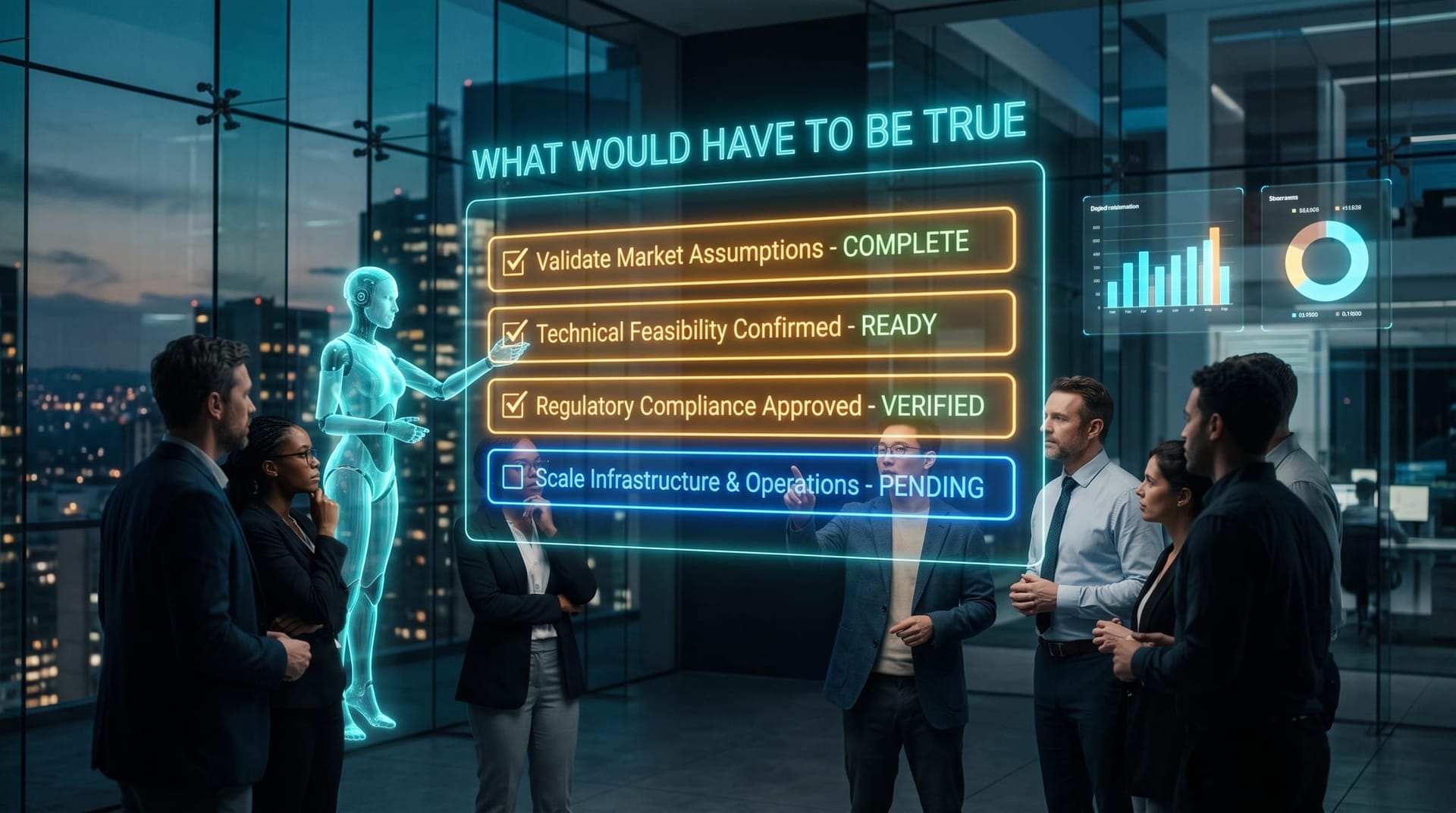
| Condition | What it requires | Met in 2026? |
|---|---|---|
| 1. Reliability at task length | Agents perform reliably on tasks the length of real junior work | No |
| 2. Benchmarks measure real work | Evaluations reflect the actual job, not a stripped-down slice | No |
| 3. Verification is cheap | Reviewing agent output costs less than doing the work | No |
| 4. Firms accept a broken pipeline | Businesses stop hiring juniors despite the long-term cost | Already happening |
The pattern is the point. The three conditions that depend on the technology being ready are unmet. The one condition that depends on market behavior is already in motion — which is exactly why this looks less like clean replacement and more like the entry-level squeeze is real even though the tools can't yet do the whole job.
Can Agents Handle Work at the Length of a Real Junior Task?
Condition one is about reliability over realistic task lengths, and here the best data comes from METR's time-horizon research. In their study of how long a task an AI can complete, METR found that “the length of tasks... that generalist frontier model agents can complete autonomously with 50% reliability has been doubling approximately every 7 months for the last 6 years.” That doubling curve is genuinely impressive, and it is why the “agents are coming for junior work” narrative has legs.
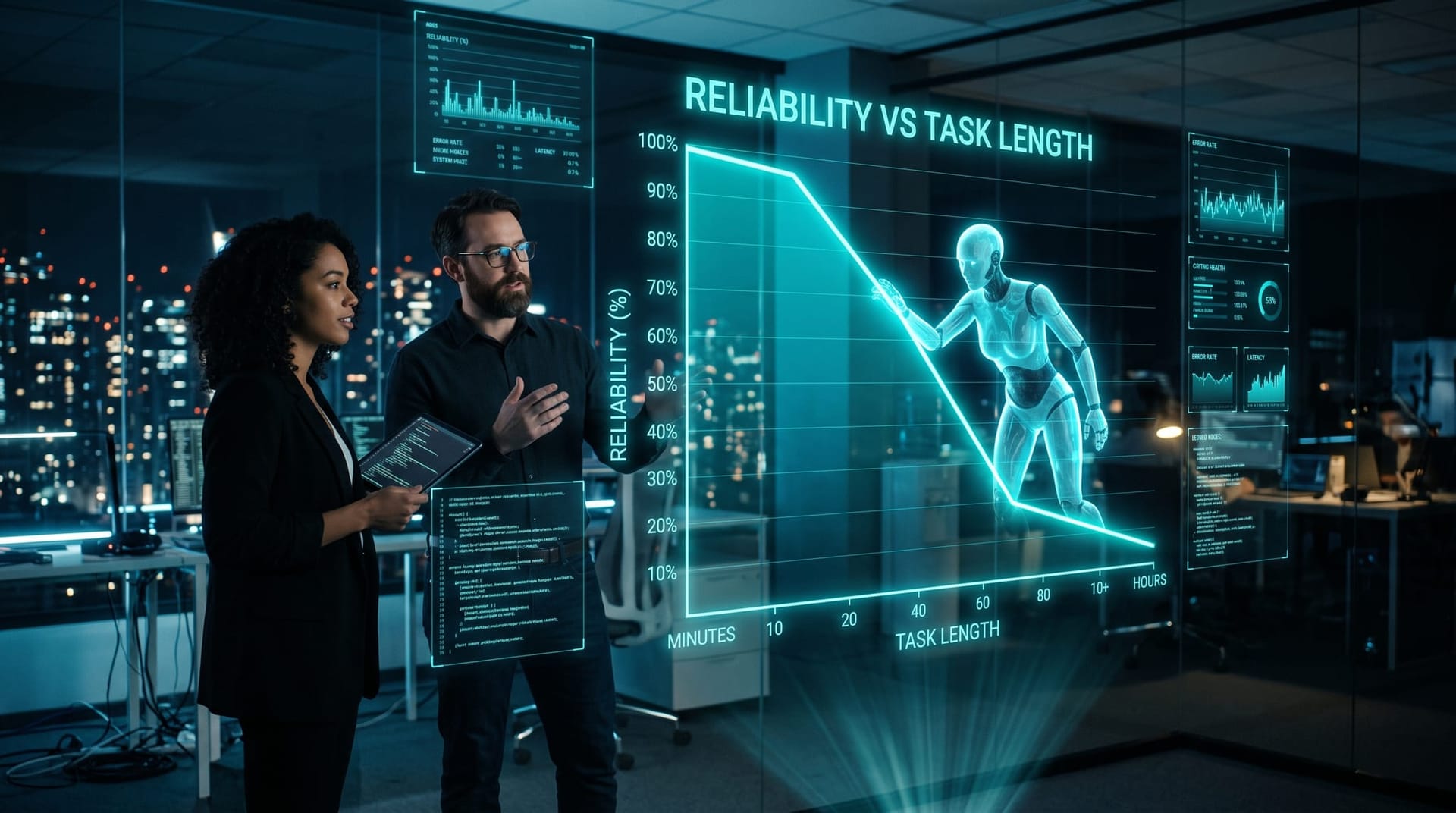
But two details puncture the tidy story. First, the shape of reliability: METR reports that “current models have almost 100% success rate on tasks taking humans less than 4 minutes, but succeed <10% of the time on tasks taking more than around 4 hours.” Junior engineering work is not a four-minute task. It is a multi-hour, multi-day slog through unfamiliar code, half-documented decisions, and “wait, why does it do that?” Second, and more subtle, the 50% reliability figure measures context-free work. A real junior's first six months are almost entirely context acquisition — learning the history, the quirks, the reasons behind past decisions. The benchmark measures the part of the job that has been stripped of the thing that makes it hard. Passing it is necessary but nowhere near sufficient.
Do Our Benchmarks Even Measure the Job?
Condition two asks whether our evaluations reflect real work — and 2026 delivered a blunt answer. According to the MarkTechPost analysis, OpenAI stopped reporting SWE-bench Verified, long the headline coding benchmark, in February 2026, after audits found that at least 59.4% of the sampled problems had flawed test cases that could reject functionally correct solutions. When the yardstick itself is bent, the numbers built on it stop meaning what people think they mean.
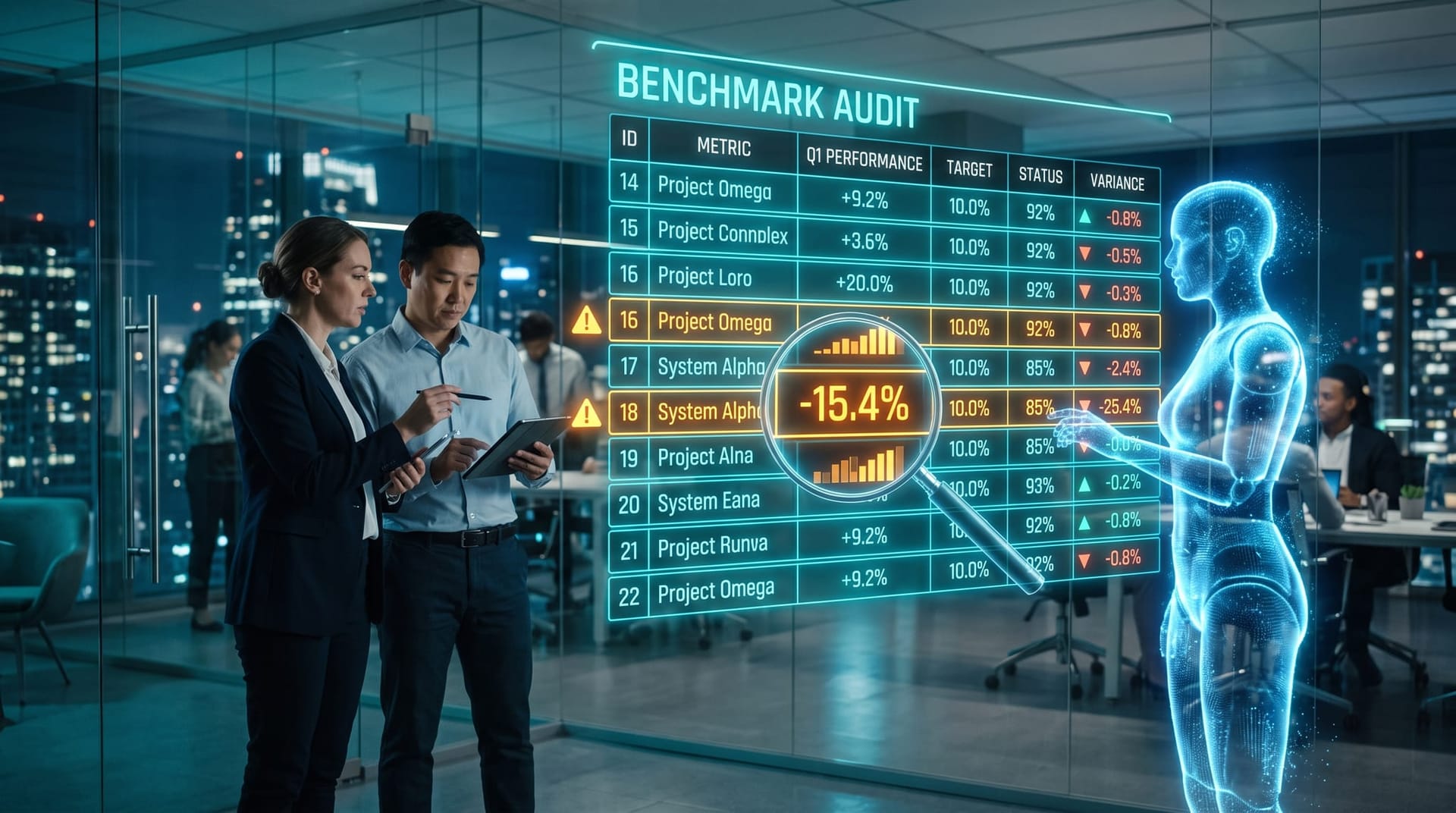
This matters for buyers specifically, because benchmark scores are how coding agents are sold. A jump from one impressive percentage to a slightly more impressive one, on a benchmark with contaminated or flawed problems, is not evidence that the tool can do a junior's job — it may just be evidence that the tool has seen the test. Newer, harder, less-contaminated evaluations tend to show steeper performance drop-offs on long-horizon work. This is precisely why we tell teams to look past the leaderboard when evaluating tools; our mid-market buyer's guide to coding agents argues for testing agents on your codebase and your tasks, because a public score is a marketing artifact, not a fitness test for your shop.
Is Verifying the Agent's Work Cheaper Than Doing It?
Condition three is the one that quietly decides everything: for agents to replace junior labor, verifying their output has to cost less than the labor they replace. If a senior spends as long reviewing and correcting agent code as they would have spent doing it — or mentoring a junior to do it — the economics collapse. And the evidence on verification cost is not encouraging.

Start with trust, because trust is a proxy for how much scrutiny each output demands. The 2025 Stack Overflow Developer Survey found that while 84% of developers use or plan to use AI tools, more developers now actively distrust the accuracy of AI output (46%) than trust it (33%), and only about 3% report highly trusting it. Among experienced developers — the people who would be doing the verifying — high distrust runs around 20%. Google's 2025 DORA report tells a compatible story from a different angle: roughly 90% of developers now use AI at work and more than 80% report productivity gains, yet, as TechTarget's coverage of the report noted, AI adoption continued to show a negative relationship with software delivery stability even as throughput rose. More code, shipped faster, that the system is less stable absorbing.
The sharpest single data point comes from a controlled study the MarkTechPost piece cites: in a randomized trial of experienced developers on real tasks, participants forecast that AI tools would speed them up by about 24% — and were measured running roughly 19% slower. The gap between how fast AI feels and how fast it actually is, is itself a hidden verification tax. This is why we keep returning to the idea that judgment is the scarce skill: as generation gets cheap, the bottleneck moves to review, direction, and the ability to tell right-looking from right. Condition three is not met, and it is the condition least likely to be met by a bigger model alone.
There is a structural reason verification stays expensive even as models improve. A junior's mistakes tend to be legible — wrong in obvious, teachable ways a senior can spot and correct in seconds. A capable agent's mistakes are the opposite: fluent, confident, and plausible, wrong in ways that survive a quick read and only surface under real scrutiny. That inverts the usual mentoring economics. With a junior, the review time falls as they learn; with an agent, the review time per unit of output stays stubbornly high because the failure mode is “looks right, isn't.” An operator who assumes agent code needs a lighter review than junior code has the risk exactly backwards — and it is that assumption, not the tool itself, that most often turns an AI productivity story into an incident report.
What's Already Happening Regardless of the Technology?
Condition four is different in kind. It does not ask whether the technology is ready; it asks whether firms will stop hiring juniors anyway — and that is already underway. The Stanford Digital Economy Lab's ongoing “canaries in the coal mine” research, drawing on payroll data covering roughly one in six American workers, found that the AI employment gap for young workers has widened to about 19%: employment for 22-to-25-year-olds in highly AI-exposed occupations, including software, now sits about 19% below where it would be if it had tracked less-exposed peers — up from around 15% a year earlier.

Two features of that finding matter. First, the mechanism is reduced hiring, not increased layoffs — firms are quietly not opening the junior req, not walking people out. Second, the decline is concentrated in “codified knowledge” roles, where the skills are documentable and therefore easier for AI to substitute, while “tacit knowledge” roles that depend on mentorship hold up or grow. Put plainly: the market is automating the apprenticeship while keeping the requirement for what the apprenticeship produced. That is a real problem, and it is not one a coding agent solves — it is one a coding agent causes when adopted without thought. It is also, bluntly, the bottleneck just moved: solving code generation surfaced everything downstream of it, including the pipeline that produces your future seniors.
What This Means for a Lean Northeast Indiana Team
For a small or mid-market shop — the kind of five-to-thirty-person operation we work with across Fort Wayne and Northeast Indiana — the honest read is “not yet, and here's what to do instead.” You cannot responsibly hand a coding agent the junior's seat, because the three technical conditions aren't met and the fourth, if you lean into it, quietly dismantles the bench you'll need in three years. But you also cannot afford to ignore tools that make a small team meaningfully faster.
The resolution is augmentation, not replacement. Point AI employees at the work that is genuinely reversible and verifiable — research, first-draft code, documentation, test scaffolding, code review assistance — where a human still owns the judgment call and the accountability. Keep hiring and growing juniors, but give each of them AI leverage so one person's throughput rises. If you are going to bring an agent onto the team, treat it like any other hire and interview an AI employee before you hire it: test it on your actual work, define what it owns, and decide in advance what it is never allowed to ship unreviewed.
The Reality Check, in One Line
Will AI coding agents replace your junior engineers? Not yet — three of the four conditions that would make it safe are unmet, and the one that's already true is a warning, not a green light. The teams that win the next few years won't be the ones that fire their juniors fastest. They'll be the ones that give a lean bench AI superpowers and keep the human judgment where it belongs.
That is exactly what Cloud Radix builds: AI employees that augment your team — handling research, drafting, and review so your people do more of the work only people can do. If you're weighing where AI fits in your Northeast Indiana operation without over-promising or gutting your pipeline, let's map the honest version together.
Frequently Asked Questions
Q1.Will AI coding agents replace junior engineers in 2026?
Not reliably. Of the four conditions that would have to be true for safe replacement — reliability at real task lengths, benchmarks that measure real work, verification cheaper than human labor, and firms accepting a broken senior pipeline — three are unmet in 2026. The technology can accelerate junior-level tasks, but it cannot yet own them end-to-end with the reliability the job requires.
Q2.What is the 'what would have to be true' framing?
It is a reasoning method that replaces an unanswerable forecast ('will X happen?') with a checkable list of conditions ('what would have to be true for X?'). Each condition becomes testable against evidence, so instead of debating opinions you audit reality. Applied to agentic coding, it reveals that the technical conditions are unmet while a market condition is already in motion.
Q3.Why did OpenAI stop reporting SWE-bench Verified?
Per the MarkTechPost analysis, OpenAI stopped reporting the SWE-bench Verified benchmark in February 2026 after audits found that a majority of sampled problems — at least 59.4% — had flawed test cases that could reject functionally correct solutions. When a benchmark's problems are flawed or contaminated, high scores on it stop being reliable evidence of real-world capability.
Q4.If agents can't replace juniors, why are junior jobs shrinking?
Because condition four — market behavior — doesn't depend on the technology being ready. Stanford's research found employment for 22-to-25-year-olds in AI-exposed occupations is roughly 19% below its expected trend, driven mainly by reduced hiring rather than layoffs. Firms are automating the tasks juniors used to do without automating the judgment those tasks built, which shrinks the pipeline that produces future seniors.
Q5.What should a mid-market team do instead of replacing juniors?
Use AI employees to augment rather than replace. Assign agents to reversible, verifiable work — research, first drafts, documentation, test scaffolding, review assistance — while a human keeps judgment and accountability. Keep hiring and developing juniors, but give each of them AI leverage so individual throughput rises. That preserves your future senior bench while still capturing productivity gains today.
Q6.Is verifying AI-generated code really that expensive?
It can be. Developer trust in AI accuracy is low — the 2025 Stack Overflow survey found more developers distrust AI output than trust it — and in a controlled study cited by MarkTechPost, experienced developers who expected a roughly 24% speedup from AI tools were measured about 19% slower. When review and correction cost as much as the original work, the economics of replacement don't hold; the value is in accelerating people who verify, not removing them. The teams that get the most out of coding agents are the ones that budget for verification up front and measure it, rather than assuming the tool eliminated the cost.
Sources & Further Reading
- MarkTechPost: marktechpost.com/2026/08/26/what-would-have-to-be-true-for-agentic-coding-to-replace-junior-engineers — What would have to be true for agentic coding to replace junior engineers.
- METR: metr.org/blog/2025-03-19-measuring-ai-ability-to-complete-long-tasks — Measuring AI ability to complete long tasks.
- Stanford Digital Economy Lab: digitaleconomy.stanford.edu/news/canariesaug26 — No widespread displacement, but the AI employment gap for young workers has widened to 19%.
- Stack Overflow: survey.stackoverflow.co/2025/ai — AI, the 2025 Stack Overflow Developer Survey.
- Google Cloud (DORA): cloud.google.com/blog/products/ai-machine-learning/announcing-the-2025-dora-report — Announcing the 2025 DORA report.
- TechTarget: techtarget.com/searchsoftwarequality/news/366631712/Google-DORA-Software-delivery-caught-up-to-AI-coding-tools — Google DORA: software delivery caught up to AI coding tools.
Map Where AI Actually Fits on Your Team
We will help your Northeast Indiana team put AI employees on the reversible, verifiable work that lifts throughput — without over-promising replacement or gutting the junior pipeline you'll need in three years.
Schedule a Free ConsultationNo contracts. No pressure. Just an honest conversation about where AI helps and where it doesn't.