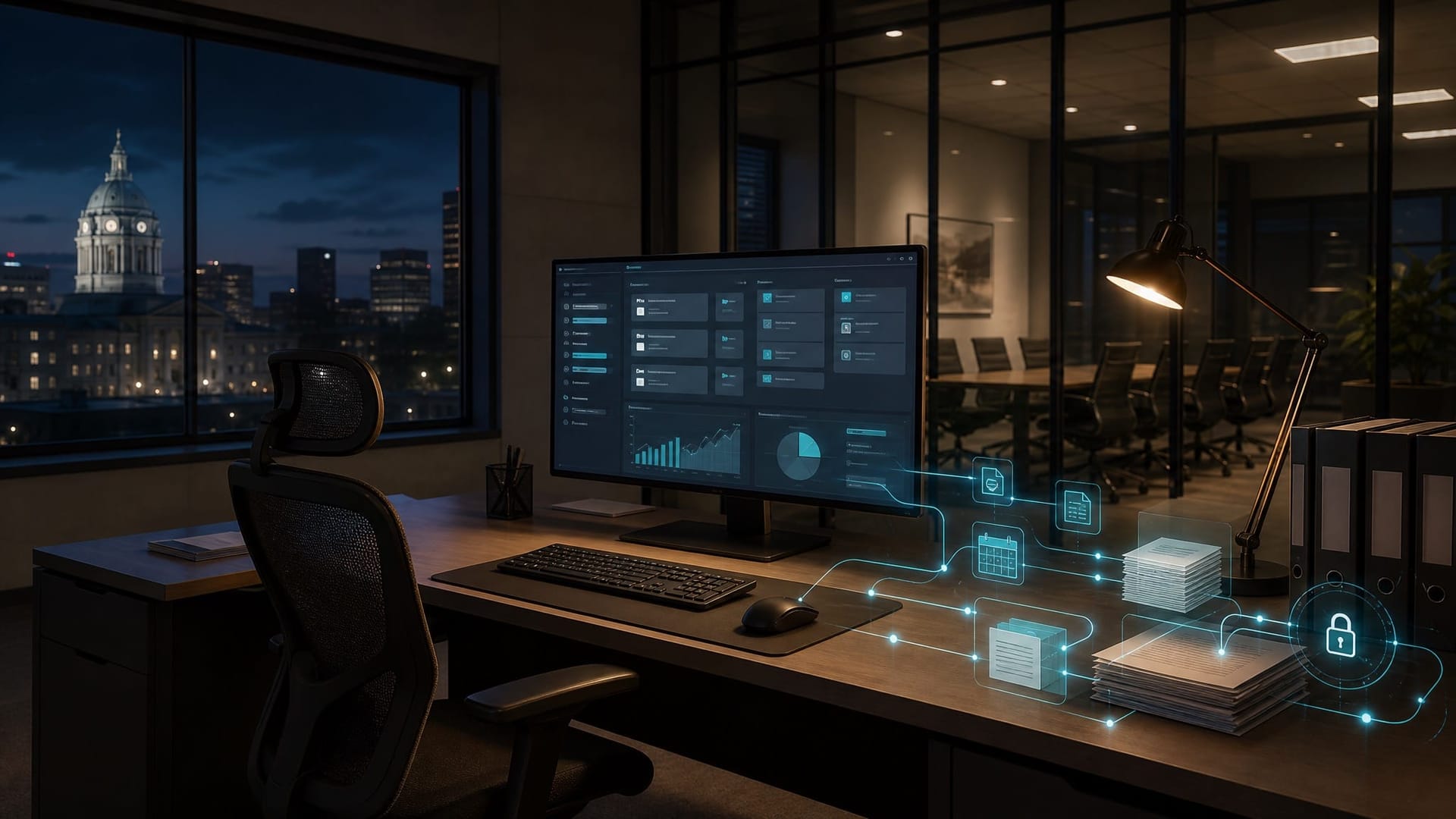
There is a quiet tell in how most teams use AI today. The tool sits in a tab. Someone remembers it exists, opens it, types a prompt, copies the answer, and closes the tab. The context evaporates. Tomorrow, the same person re-explains the same project to the same blank box. The AI never gets smarter about your business, because it never stays in the room long enough to learn. It is reactive by design — the opposite of a persistent AI teammate that stays on the job.
On June 23, 2026, the company that builds one of the frontier models decided that mode was a dead end — for its own product. Anthropic retired its reactive Claude-in-Slack bot and replaced it with “Claude Tag,” a persistent AI teammate that learns from a channel over time, monitors it in the background, and takes initiative without waiting to be summoned. That is not a feature update. It is a vendor deprecating the entire “open it, prompt it, close it” interaction pattern in favor of an AI that is simply already on the job.
For business owners and operations leaders in Northeast Indiana, this is the clearest market signal yet of where applied AI is going — and it maps almost exactly onto the thesis Cloud Radix has been building products around: the future of business AI is not a smarter chatbot you have to remember to use. It is an AI Employee that persists.
Key Takeaways
- Anthropic replaced its reactive Slack bot with Claude Tag, a persistent teammate that learns from the channel, works in the background, and surfaces things on its own.
- The shift that matters is the mode: from a reactive tool you invoke to a standing presence that holds context and takes initiative — not a change of platform.
- A tool nobody remembers to open produces no compounding value; persistence and memory are what turn AI from a novelty into leverage.
- “Works autonomously” is only safe when it is paired with scoped permissions, human approval gates, and an audit trail — the governance layer is the product, not an afterthought.
- Mid-market operators don't need a 24/7 staff to get this; a persistent AI Employee can hold standing context for a lean Auburn or Fort Wayne team.
- The risk isn't that AI replaces your people. It's that you keep paying for tools your team forgets to use.
What did Anthropic actually change, and why does it matter?

It helps to be precise, because the headline framing (“Anthropic kills its Slack app”) oversells it. Claude Tag still lives inside Slack. What changed is the kind of thing it is.
The previous integration was a conventional assistant: you would direct-message or @-mention Claude, it would answer the question in front of it, and that was the end of the interaction. According to TechCrunch's reporting, Claude Tag instead follows along with a channel and accumulates context as the work happens — Anthropic describes it as learning “ever more about the work” the longer it sits in the channel. There is a single shared Claude identity per channel: anyone can summon it with @Claude, anyone can see what it has been working on, and a colleague can pick up a thread from where the last person left off.
The piece that separates this from a chatbot is what Anthropic calls ambient behavior. With it enabled, Claude Tag proactively surfaces relevant information, flags issues, and follows up on threads or tasks that have gone quiet without resolution — no prompt required. As VentureBeat reported, it can break an assigned task into stages, execute them with the tools it has been given, and report progress back in the thread. The Next Web described the same product as an “always-on” teammate that lives in your channels, and Fortune framed it as a “virtual employee.” The product is in beta for Claude Enterprise and Team customers.
The reason this matters has nothing to do with Slack specifically. It is that the company with the most to gain from selling you more chat sessions decided the reactive-chat model caps out — and that the next unit of value is a teammate that stays, learns, and acts. When the frontier vendor votes against its own chatbot, mid-market buyers should read it as confirmation, not novelty.
Why does a “tool you have to remember to open” quietly fail?
This is the uncomfortable part, and it explains why so many AI pilots stall after the demo.
Adoption numbers look healthy on the surface. Harvard Business Review, citing McKinsey research, notes that around 88% of companies now report regular AI use. But the same analysis points to the gap underneath the headline: employees experiment with tools without integrating them deeply into how work actually gets done, performance gains plateau, and executives grow uneasy about ROI. Regular access is not the same as compounding value.
A reactive tool structurally fights against deep integration. Every interaction starts from zero. The tool has no standing memory of last week's decision, no awareness that a customer escalation has gone two days without a reply, no reason to check anything unless a human happens to think to ask. The burden of remembering to use it — and re-supplying all the context — sits entirely on the busiest people you have. In a lean shop, those people are exactly the ones who will quietly stop bothering.
This is the same pattern we described in the end of the chatbot era: the limiting factor was never model quality, it was the interaction model. An AI that only ever responds is bounded by how often a human initiates. An AI that persists and observes can act on the long tail of work that no one ever gets around to typing a prompt about. The difference compounds. By month six, the persistent system knows your accounts, your recurring issues, and your team's patterns; the reactive one still meets you as a stranger every morning.
Persistence, memory, monitoring: what are the actual mechanics?
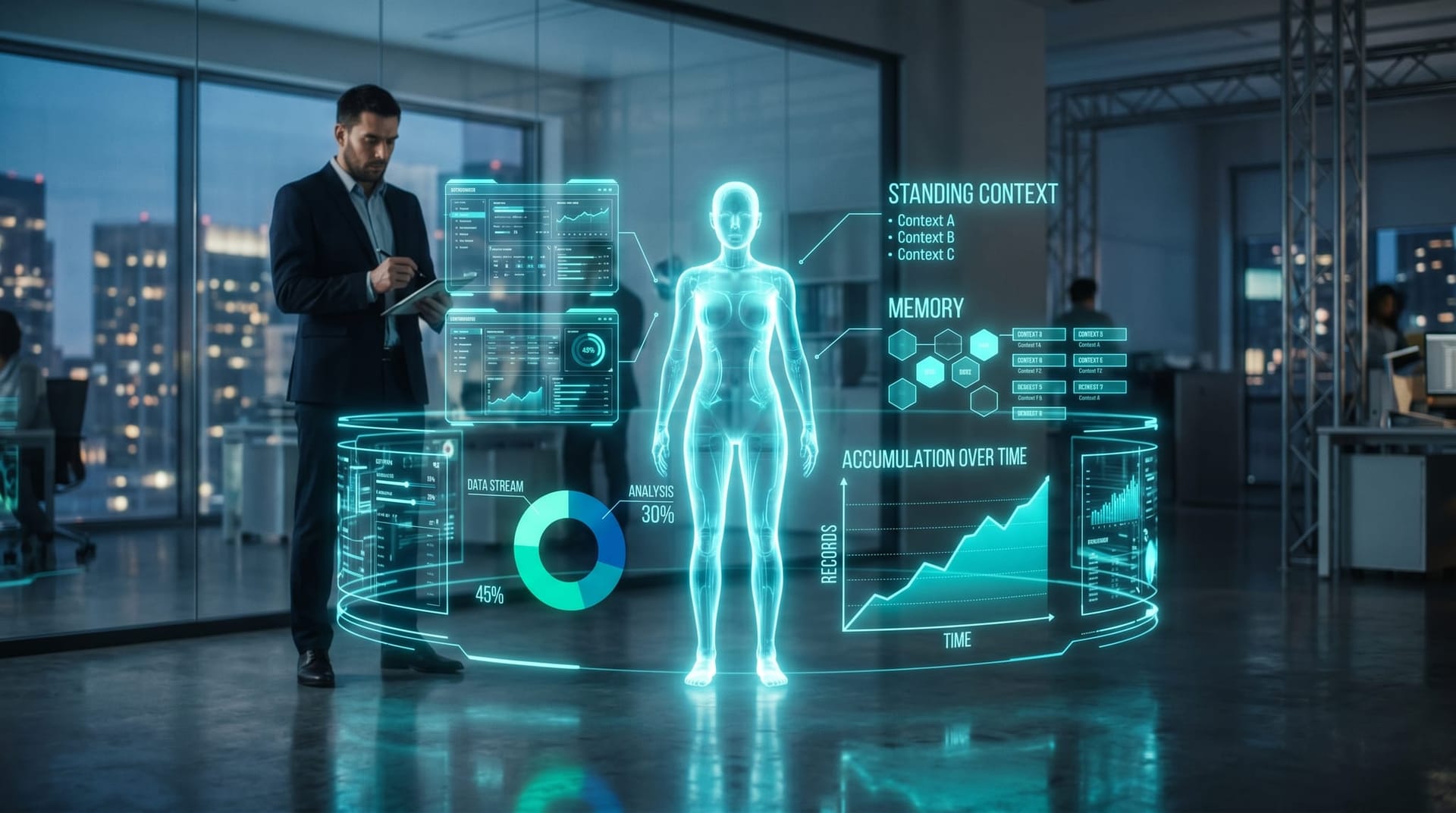
“Persistent teammate” is a marketing phrase until you break it into the parts that have to work. There are three, and they map cleanly onto capabilities Cloud Radix builds into AI Employees.
Standing context. The system has to capture and retain what is happening across conversations, not just the single thread in front of it. Claude Tag does this by following a channel; in a business deployment the equivalent is deliberate conversational context capture — ingesting the right channels, documents, and tickets so the AI Employee starts each task already informed rather than asking you to paste the background in.
Memory that compounds. Context is only useful if it carries forward and improves decisions over time. This is the difference between an assistant that is merely available and one that gets measurably better at your work. We dug into the architecture behind this in agent memory that compounds: the value of a persistent teammate is a curve, not a constant, because each resolved task makes the next one cheaper to handle.
Autonomous monitoring. The system watches for conditions worth acting on and either acts within its authority or escalates to a human. This is the ambient behavior Anthropic shipped, and it is genuinely the hard part — not because watching is difficult, but because deciding what deserves a human's attention versus an automatic action is where most of the engineering judgment lives.
It is worth being honest about the trade-offs here. A system that monitors and acts can also act wrongly, surface noise, or learn the wrong lesson from a bad example. Anthropic's own design leans on tight scoping to contain that risk, which brings us to the part of this story that most coverage under-weights.
How do you let an AI “work autonomously” without losing control?

This is the question every owner should ask before they are impressed by the demo, and it is the one Anthropic clearly took seriously.
Claude Tag is built with enterprise-grade isolation at the center. Per TechCrunch's account, administrators define separate Claude identities for different uses, each scoped to specific channels, specific tools, and specific data — and everything, including the AI's accumulated memories, stays inside those boundaries. The example given is blunt: a “legal” Claude cannot seed its memories into engineering channels. SiliconANGLE's coverage underscores the same enterprise-controls emphasis. Autonomy is granted narrowly and deliberately, not handed out wholesale.
That design choice is the whole ballgame for a real business. “Works autonomously” without scoping, approval gates, and an audit trail is not a feature — it is a liability waiting for an incident. The safe version pairs initiative with limits:
| Reactive chatbot | Ungoverned “autonomous” agent | Governed AI Employee |
|---|---|---|
| Acts only when prompted | Acts freely, broad access | Acts within scoped authority |
| No standing memory | Memory with unclear boundaries | Memory scoped to its role |
| No monitoring | Monitors and may act unchecked | Monitors, escalates for approval on high-stakes actions |
| Low risk, low leverage | High leverage, high risk | High leverage, contained risk |
The right-hand column is the only column a mid-market owner should accept. It is also where cross-app approval dialogs earn their keep: when the AI Employee wants to take a consequential action — sending an external message, changing a record, moving money — a human approves it in one click, and the decision is logged. Routine, low-risk work flows automatically; anything that could embarrass you or cost you waits for a yes.
We package these controls behind a Secure AI Gateway precisely so that “autonomous” never means “unsupervised.” For an even fuller picture of supervision, our piece on a manager agent supervising the work describes the layer that watches the watcher — a check that becomes more important, not less, as the AI takes on more standing initiative.
Is this just an enterprise story, or does it reach the mid-market?

It is easy to read “Claude Enterprise and Team customers” and conclude this is a Fortune 500 story. It isn't, and the mid-market is arguably where persistence pays off the most.
A 5,000-person company can afford to staff the gaps a reactive tool leaves behind. A 25-person professional-services firm in Auburn cannot. When a tool requires someone to remember to use it and re-feed it context, a large enterprise simply assigns that someone; a lean operator just loses the value. The persistent model inverts that math. The smaller and busier the team, the more it benefits from an AI Employee that holds the context no one has time to re-establish and watches the things no one has time to watch.
This is also the distinction worth drawing against parallel product shifts. OpenAI's workspace agents are pushing the same direction — standing, taskable agents inside the tools you already use rather than a separate destination you visit. Two frontier labs moving the same way in the same quarter is not a coincidence; it is the category redefining itself. The buyers who notice early get a head start on operationalizing it.
What does a persistent AI Employee look like for a Northeast Indiana operator?
Picture a home-services company in Fort Wayne — plumbing, HVAC, a dozen techs, an office manager who is also the dispatcher, the bookkeeper, and the de facto IT department. They tried an AI chatbot last year. For two weeks the office manager pasted in customer emails and got decent draft replies. Then a busy stretch hit, the tab stayed closed, and the tool became another subscription nobody could quite justify. That is the reactive-tool failure mode in miniature, and it is the norm across DeKalb and Allen County small businesses, not the exception.
Now picture the persistent version. An AI Employee sits in the channels where the work already happens. It already knows the regular commercial accounts and their service histories. When a customer reply has gone unanswered for a day, it flags the thread instead of waiting for someone to notice. When a quote needs following up, it drafts the follow-up and asks the office manager to approve before anything goes out. Nobody has to remember it exists, because it is the one keeping track. The human stays firmly in the loop on anything that touches a customer or a dollar — but the busywork that used to fall through the cracks at 6 p.m. on a Friday no longer does.
That is the difference between a tool your Northeast Indiana team has to remember to use and a teammate that is already on the job. For lean Midwest operators without the headcount to babysit software, persistence isn't a luxury feature — it is the entire reason the AI earns its seat.
Bringing a persistent AI Employee onto your team
The shift Anthropic just signaled with its own product is the one Cloud Radix designs for: AI that persists, learns your business, watches for what matters, and acts within limits you set. If your last experience with business AI was a chatbot your team stopped opening, the problem was probably the interaction model, not your team.
We build AI Employees that hold standing context, monitor the work that tends to slip, and route every consequential action through a human approval gate behind our Secure AI Gateway. If you want to see what a persistent teammate would actually do for a Fort Wayne or Northeast Indiana operation, explore our AI Employee solutions or tell us about your workflows and we'll map a concrete first deployment — one your team won't have to remember to use.
Frequently Asked Questions
Q1.What is the difference between an AI Employee and an AI chatbot?
A chatbot is reactive: it answers when you prompt it and forgets the context when you close the tab. An AI Employee persists — it holds standing context about your business, monitors the work in the background, and takes scoped actions or escalates for approval without waiting to be asked. The difference is whether value compounds over time or resets with every session.
Q2.Did Anthropic stop offering Claude in Slack?
Not exactly. Anthropic replaced its older reactive Claude-in-Slack integration with Claude Tag, a persistent teammate that still lives inside Slack but learns from the channel and works in the background. The change is to the interaction model — from a bot you summon to a teammate that stays — not a departure from Slack itself. Claude Tag launched in beta for Claude Enterprise and Team customers on June 23, 2026.
Q3.Is letting an AI work autonomously safe for a small business?
It is safe only when autonomy is scoped and supervised. That means narrow permissions, human approval gates on consequential actions like external messages or financial changes, and a complete audit trail. Routine low-risk work can run automatically, but anything that could harm a customer relationship or cost money should require a human yes. Autonomy without those controls is a risk, not a feature.
Q4.Will a persistent AI teammate replace my employees?
In our experience, the realistic outcome is that it absorbs the standing, low-judgment work that currently falls through the cracks — unanswered threads, overdue follow-ups, repetitive drafting — so your people spend their time on judgment and relationships. The bigger risk for most businesses isn't over-automation; it's paying for reactive tools the team forgets to use.
Q5.Why does memory matter so much for business AI?
Memory is what turns access into leverage. Without it, the AI meets your business as a stranger every day and you carry the cost of re-explaining everything. With scoped, persistent memory, each resolved task makes the next one faster and more accurate, so the system gets measurably better at your operation over time rather than staying generically capable.
Q6.How does a small Northeast Indiana team actually deploy this?
You start narrow: pick one channel or workflow where work reliably slips — say, customer follow-ups — and deploy a persistent AI Employee scoped to just that, with approval gates on anything outbound. Once it proves itself and your team trusts the boundaries, you widen its scope. Cloud Radix runs this through a Secure AI Gateway so permissions, memory, and approvals stay under your control from day one.
Sources & Further Reading
- VentureBeat: venturebeat.com/technology/anthropic-launches-claude-tag — Anthropic launches Claude Tag, replacing its Slack app with a persistent AI teammate that learns, monitors and works autonomously.
- TechCrunch: techcrunch.com/2026/06/23/anthropics-claude-tag — Anthropic's Claude Tag is learning your company, one Slack message at a time.
- Fortune: fortune.com/2026/06/23/anthropic-claude-tag-virtual-employee-tool-slack — Anthropic releases Claude Tag, a virtual employee that works within Slack.
- SiliconANGLE: siliconangle.com/2026/06/23/anthropic-debuts-claude-tag — Anthropic debuts Claude Tag, a more capable AI teammate that lives within Slack.
- The Next Web: thenextweb.com/news/anthropic-claude-tag-slack-always-on-ai-teammate — Anthropic launches Claude Tag, an always-on AI teammate that lives in your Slack channels.
- Harvard Business Review: hbr.org/2026/02/why-ai-adoption-stalls-according-to-industry-data — Why AI Adoption Stalls, According to Industry Data.
Want a Teammate Your Team Won't Forget to Use?
We'll map a concrete first deployment for your Fort Wayne or Northeast Indiana operation — a persistent AI Employee that holds context, watches the work that slips, and routes every consequential action through a human approval gate.
Schedule a Free ConsultationNo contracts. No pressure. Just an honest conversation about what would help your business.